Blue Heeler Guide: Intelligence, Temperament & Care Tips
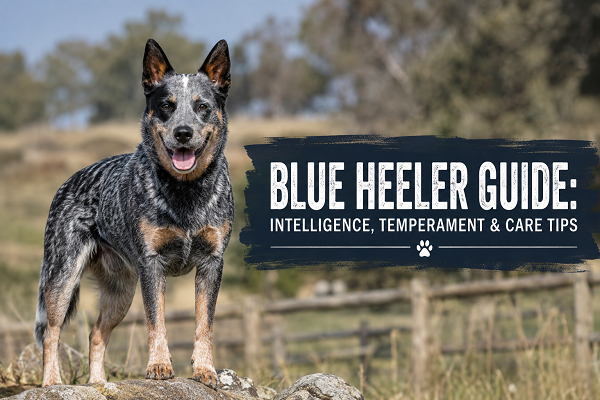
The Blue Heeler, officially called the Australian Cattle Dog, is one of the ten smartest dog breeds in the world according to canine psychologist Dr. Stanley Coren’s obedience-based intelligence study. They typically live 12 to 16 years, need 60 to 90 minutes of hard exercise daily, and carry breed-specific health risks including hereditary deafness (around 30% of dogs test deaf in at least one ear) and progressive retinal atrophy. They’re loyal, protective, and happiest with a job to do, which makes them brilliant working dogs but a handful for first-time owners who underestimate their drive.
If you’ve ever met a Blue Heeler that seemed to “read your mind” before you gave a command, you weren’t imagining it. I’ve handled and trained working dogs for years, and Heelers are consistently among the sharpest, most opinionated dogs I come across. This guide breaks down exactly what makes them tick, their brainpower, their quirks, their health risks, and how to actually live with one without losing your favorite couch cushions.
Table of Contents
- What Is a Blue Heeler?
- History and Origin of the Blue Heeler
- Physical Characteristics
- Blue Heeler Intelligence: How Smart Are They, Really?
- Temperament and Personality
- Training a Blue Heeler: What Actually Works
- Exercise and Mental Stimulation Needs
- Health and Lifespan
- Grooming and Diet
- Is a Blue Heeler Right for You?
- Blue Heelers in Working and Protection Roles
- Trainer Note: Why You Can Trust This Guide
- FAQs
- Conclusion
What Is a Blue Heeler?
Here’s something that trips up a lot of new owners: “Blue Heeler” isn’t actually a separate breed. It’s a nickname for the Australian Cattle Dog (ACD), based on the blue-speckled coat pattern that a lot of them carry. The same breed also goes by Red Heeler (for the red-speckled version), Australian Heeler, and Queensland Heeler.
So when someone asks “is a Blue Heeler a good dog?” they’re really asking about the Australian Cattle Dog, a medium-sized herding breed built to work cattle across some of the harshest terrain on earth.
They’re compact, muscular, and always look like they’re one command away from doing something useful. And that’s basically the whole personality in one sentence: a Blue Heeler without a job is a Blue Heeler looking for trouble.
History and Origin of the Blue Heeler
The story of the Blue Heeler starts with a problem: in the 1800s, Australian cattle ranchers imported herding dogs from England, and those dogs simply couldn’t handle the heat, distance, or half-wild cattle of the Outback.
A New South Wales cattleman named Thomas Hall decided to fix that. In the mid-1800s, he crossed blue-speckled Smooth Highland Collies with tamed dingoes, hoping to combine the collie’s herding instinct with the dingo’s toughness and heat tolerance. The result was known as “Hall’s Heelers,” and they worked cattle on Hall’s stations for decades before the breed spread beyond his family.
After Hall died in 1870, brothers Jack and Harry Bagust refined the breed further. They wanted a dog that was more loyal to its handler and comfortable around horses, so they added Dalmatian blood, which explains the speckled coat pattern we still see today. But the Dalmatian cross softened the herding drive, so they brought in the Australian Kelpie to restore it. That three-way blend, dingo, Dalmatian, Kelpie, with the original collie base, is essentially the recipe for the modern Australian Cattle Dog.
A few key milestones worth knowing:
- 1902: Robert Kaleski wrote the first official breed standard, formalizing the dog we now call the Australian Cattle Dog.
- 1980: The American Kennel Club officially recognized the breed, making it the 126th AKC-recognized breed.
- 1983: The AKC moved the breed from the Working Group to the newly formed Herding Group, where it remains today.
- Today: The Australian Cattle Dog sits around #47 on the AKC’s 2025 popularity rankings out of over 200 recognized breeds, respectably popular, but still far less common than Labradors or German Shepherds, which keeps demand (and puppy prices) fairly stable.
Physical Characteristics
Before we get into personality, here’s the quick physical rundown:
| Trait | Detail |
|---|---|
| Height | 17–20 inches at the shoulder |
| Weight | 35–50 pounds |
| Lifespan | 12–16 years |
| Coat | Short, dense double coat; weather-resistant |
| Colors | Blue, blue mottle, blue speckle, red speckle |
| AKC Group | Herding |
| AKC Popularity (2025) | #47 of 200+ breeds |
Puppies are actually born completely white (aside from any dark head markings), their true blue or red coloring doesn’t show up until around three to four weeks old. First-time breeders and new owners are sometimes shocked by this; it’s completely normal.
The body is built like a small athlete: deep chest, well-sprung ribs, and a slightly longer-than-tall frame that gives them the agility to dodge a kicking hoof. That same build is exactly why they excel in dog sports like agility and flyball.
Blue Heeler Intelligence: How Smart Are They, Really?
This is the part most breed guides gloss over with vague words like “very smart.” Let’s actually look at the data.
Canine psychologist Dr. Stanley Coren surveyed 199 dog obedience judges for his book The Intelligence of Dogs and ranked breeds by “working and obedience intelligence”, basically, how fast a dog learns a new command and how reliably it obeys. The Australian Cattle Dog landed at #10 out of over 130 breeds tested, in the top tier alongside Border Collies, Poodles, and German Shepherds. Dogs in this tier typically learn a brand-new command in fewer than five repetitions and obey it correctly at least 95% of the time.
But here’s the nuance a lot of articles miss: Coren’s ranking only measures one type of intelligence, obedience intelligence. Blue Heelers also score extremely high in what Coren called instinctive intelligence (doing the job they were bred for) and adaptive intelligence (independent problem-solving). Ask any Heeler owner and they’ll tell you their dog has figured out how to open a baby gate, unlatch a crate, or nudge a door closed to trap a sibling dog outside. That’s the adaptive side showing off.
Real-world example: A cattle dog named Skidboot, widely believed to be an Australian Cattle Dog, became a viral sensation in the early 2000s for his ability to perform complex, multi-step tricks, including taking out the trash and “playing dead” through a full mock hunting scene, after minimal repetition. His owner, Texas trainer David Hartwig, used him as proof of just how far this breed’s problem-solving ability can go when it’s channeled properly.
What this means for you as an owner: A smart dog isn’t automatically an easy dog. Heelers get bored fast, and a bored Heeler doesn’t sit quietly, it invents its own entertainment, which usually means digging, chewing, or herding your kids by nipping at their heels. Intelligence in this breed has to be paired with structure, or it works against you instead of for you.
Temperament and Personality
Blue Heelers are often described with the same handful of words: loyal, alert, protective, stubborn. All true. But here’s what that actually looks like day to day.
With family: Fiercely loyal, often bonding hardest to one specific person in the household. They’re affectionate but not typically “clingy” or needy the way a Labrador might be, it’s more of a quiet, watchful devotion.
With strangers: Naturally aloof and wary. This isn’t aggression; it’s a working-dog trait meant for guarding stock (and, by extension, guarding the family). Early and consistent socialization is non-negotiable, without it, wariness can tip into reactivity.
With children: This is where I have to be honest with people, because a lot of guides sugarcoat it. Heelers were bred to herd by nipping heels, and that instinct doesn’t disappear around kids. Running, screaming children can trigger a herding response, which often looks like nipping at ankles. It’s manageable with training and supervision, but it’s a real consideration for households with very young or highly active children.
With other animals: Prey drive is moderate to high, and Heelers can be territorial with other dogs, especially of the same sex. Early socialization and proper introductions matter a lot here.
Energy and drive: This isn’t a “nice apartment dog” in most cases. Heelers were built to trot behind cattle for eight-plus hours a day. That drive doesn’t switch off just because they live in a two-bedroom flat instead of a cattle station.
Training a Blue Heeler: What Actually Works
Here’s the good news: because Heelers are so intelligent, they pick up commands fast. Here’s the catch: they also get bored of repetition fast, and they’ll test boundaries constantly, because that independent streak is baked into their DNA from the dingo side of the family tree.
A Realistic Training Timeline
- 8–16 weeks: Basic socialization and name recognition, potty training, and gentle exposure to new people, sounds, and surfaces. This window is critical, the American Veterinary Society of Animal Behavior considers the first three months the prime socialization period, and under-socialized Heelers are far more likely to develop fear-based reactivity as adults.
- 4–6 months: Core obedience, sit, stay, come, leave it, plus bite inhibition work, which matters a lot for a breed with a natural nipping instinct.
- 6–12 months: Impulse control and structured exercise (leash manners, recall around distractions). Adolescence hits hard in this breed; expect some regression and stay consistent.
- 1–2 years: Advanced work, agility, herding trials, scent work, or job-specific training if the dog is being raised for working or protection-adjacent roles. Most Heelers aren’t considered fully “mature” in temperament until 2–3 years old.
Expert Training Tips
- Use positive reinforcement, but keep sessions short and varied. Five to ten minutes, several times a day, beats one long session. Repetition without variety bores this breed quickly.
- Give the nipping instinct a legal outlet. Herding balls, flirt poles, and tug games let the dog “herd” something appropriate instead of your toddler.
- Train the “settle” command early. Heelers rarely learn to relax on their own, you often have to teach it deliberately, or they’ll self-select into pacing and hyper-vigilance.
- Don’t rely on repetition-based drilling alone. Once a Heeler understands a command, endless repeats can actually cause them to disengage. Mix it up, add distance, add distractions, keep it interesting.
- Be the one who’s more stubborn. Heelers will test consistency. If you cave once, they’ll remember it and try again, sometimes for months.
If you’re building a training plan for a working or protection-line dog specifically, I go into a lot more of the day-by-day framework, drive-building, obedience layering, and problem-solving exercises, in my e-book, Foundations of Working Dog Training. It’s written for handlers who want a structured system rather than a list of random tips.
Exercise and Mental Stimulation Needs
Plan on 60 to 90 minutes of real exercise daily, not a slow walk around the block, but actual work: running, fetch, structured herding games, or a job like agility training. Under-exercised Heelers are notorious for:
- Destructive chewing and digging
- Excessive barking
- Herding/nipping at household members
- Escaping fenced yards (they can jump and dig their way out when bored)
Mental stimulation matters just as much as physical exercise. A 20-minute training session or a food puzzle can tire a Heeler out mentally in a way that a long walk sometimes can’t. Dog sports where this breed genuinely shines include:
- Agility — their build and problem-solving ability make them naturally competitive
- Flyball — high-drive, high-speed, and mentally engaging
- Herding trials — the closest thing to their original job
- Dock diving and scent work — good options in hotter climates or smaller spaces.
Health and Lifespan
Blue Heelers are a genuinely hardy breed, average lifespan is 12 to 16 years, which is long for a medium-sized dog. In fact, the breed holds one of the most famous longevity records in canine history: Bluey, an Australian Cattle Dog from Rochester, Victoria, lived to 29 years and 5 months (1910–1939) and was recognized by Guinness World Records as the longest-verified-lived dog ever recorded. She worked cattle and sheep for close to two decades before retiring. That title has occasionally been challenged by unverified claims over the years, but Bluey’s record remains the gold standard for documented canine longevity, and it says a lot about how robust this breed can be with an active life and good care.
That said, “hardy” doesn’t mean risk-free. Here are the conditions every prospective owner should know about:
1. Congenital Deafness
This is the big one for the breed, and it’s directly linked to the same piebald/merle-related genetics that produce the blue and red speckled coat. Studies on the breed have found hearing loss in roughly 30–40% of dogs tested, with a smaller percentage being deaf in both ears. Reputable breeders test litters using BAER (Brainstem Auditory Evoked Response) testing, which is the only reliable way to confirm hearing status in puppies. If you’re buying a puppy, ask to see BAER results, don’t just take the breeder’s word for it.
2. Progressive Retinal Atrophy (PRA)
An inherited, degenerative eye disease that starts with night blindness and can progress to full blindness. There’s no cure, but DNA testing exists for breeding stock, and most affected dogs adapt remarkably well to vision loss as long as their home environment stays consistent.
3. Hip and Elbow Dysplasia
A structural issue where the joint doesn’t form correctly, leading to arthritis and mobility problems over time. Veterinary estimates suggest up to 15% of Australian Cattle Dogs may carry a meaningful risk without careful breeding selection. OFA (Orthopedic Foundation for Animals) hip scoring is the standard screening tool responsible breeders use.
4. Primary Lens Luxation (PLL)
Less commonly discussed but genetically significant, a sudden dislocation of the eye’s lens that can cause acute pain and rapid vision loss if untreated. A genetic test exists, and responsible breeders screen for it.
What to Ask a Breeder
- Have the parents had hip and elbow evaluations (OFA or equivalent)?
- Has the litter had BAER hearing testing?
- Is there a PRA and PLL DNA test on file for the breeding pair?
- Can you meet at least one parent to assess temperament?
Expect to pay $800 to $2,500 USD for a puppy from a health-tested breeder, depending on lineage (working, show, or pet line) and region. Prices well below this range are a red flag for skipped health testing.
Grooming and Diet
Grooming is refreshingly low-effort for this breed:
- Brushing: Once a week normally; daily during their twice-yearly heavy shedding seasons.
- Bathing: Only as needed, over-bathing strips the natural oils from their weather-resistant coat.
- Nails, ears, teeth: Standard maintenance, trim nails monthly, check ears weekly (especially after swimming), and brush teeth a few times a week.
For diet, Heelers do well on a high-protein diet formulated for active/working medium breeds, typically 25–30% protein. Because they’re prone to weight gain once past their high-activity working years (especially after spay/neuter), portion control matters more than it might for a naturally leaner breed. Watch body condition, not just the bag’s feeding chart, a working-bred Heeler on a farm needs very different calories than a companion Heeler in a suburban backyard.
Is a Blue Heeler Right for You?
Ask yourself these questions honestly before bringing one home:
Good fit if you:
- Have an active lifestyle (running, hiking, farm work, dog sports)
- Can commit to daily training, not just puppyhood training
- Have a securely fenced yard or reliable off-leash training plan
- Want a dog that will bond deeply and protect the household
- Have older children (typically 8+) who understand boundaries with dogs
Reconsider if you:
- Work long hours with no one home to exercise/engage the dog
- Live in a small apartment with no nearby space to run
- Have toddlers or very young children without close supervision plans
- Want a low-maintenance, laid-back companion dog
- Are a first-time dog owner uncomfortable with a strong-willed personality.
Blue Heelers in Working and Protection Roles
While German Shepherds, Malinois, and Rottweilers dominate the K9 and protection-dog conversation, Blue Heelers have quietly built a reputation in niche working roles:
- Livestock and farm security — their original job, and still one of the best fits for the breed’s drive and alertness
- Search and detection support — their scenting ability and stamina make them capable in scent-work and lower-intensity detection programs, though they’re less common in formal police/military K9 units than shepherd-type breeds
- Personal protection foundations — while not a traditional “protection breed” in the Malinois/Rottweiler sense, their natural territorial instinct and bond to their handler give them a strong foundation for property-alert and deterrence work when properly trained
- Herding trial competition — this is where the breed’s working intelligence is most visibly on display, and it remains the clearest window into what they were actually built to do
If you’re building any kind of structured working or protection program around a high-drive breed like this, the training principles matter more than the breed label.
Trainer Note: Why You Can Trust This Guide
This guide was written from hands-on experience working with high-drive herding and working breeds, cross-referenced against veterinary sources (PetMD, VCA Animal Hospitals), breed authorities (American Kennel Club, Dogs Queensland), and Dr. Stanley Coren’s peer-reviewed intelligence research. Health statistics were checked against veterinary and genetic-screening data current as of 2026. Where claims are disputed (like unverified longevity records beyond Bluey’s Guinness-certified 29 years), that’s noted rather than presented as fact because a good trainer tells you what’s actually confirmed, not just what sounds impressive.
FAQs
1. Are Blue Heelers good family dogs?
They can be, especially in active households with older kids. Their loyalty and protectiveness are real assets, but their herding instinct (nipping at heels) means close supervision is important with young or highly active children.
2. How smart is a Blue Heeler compared to other breeds?
Very smart, they rank #10 out of over 130 breeds in Dr. Stanley Coren’s obedience-intelligence study, putting them in the same top tier as Border Collies, Poodles, and German Shepherds.
3. Do all Blue Heelers go deaf?
No, but the risk is real: studies suggest roughly 30–40% of Australian Cattle Dogs have some degree of hearing loss, linked to the same genetics behind their speckled coat. BAER testing on puppies is the only way to confirm hearing status.
4. How much exercise does a Blue Heeler need per day?
Plan for 60–90 minutes of real physical activity daily, plus mental stimulation like training games or puzzle feeders. Under-exercised Heelers commonly become destructive or overly nippy.
5. What is the average lifespan of a Blue Heeler?
Typically 12 to 16 years. The breed also holds the Guinness World Record for longest-verified canine lifespan, Bluey, an Australian Cattle Dog, lived 29 years and 5 months.
Conclusion
The Blue Heeler isn’t a dog you can coast with. It’s smart enough to outthink an unprepared owner, driven enough to turn boredom into chaos, and loyal enough to make all of that worth it once you meet its needs. If you can commit to real daily exercise, structured training that keeps evolving as the dog grows, and early socialization to soften that natural wariness of strangers, you’ll end up with one of the most capable, devoted dogs in the working-breed world.
Actionable next steps if you’re considering or already own a Blue Heeler:
- Book a hearing (BAER) and hip evaluation early if you got your dog from an unverified breeder
- Start structured obedience training in the first 16 weeks, don’t wait for “bad habits” to show up first
- Build in at least an hour of real physical and mental work daily, non-negotiable
- If you want a working or protection-capable dog, invest in a proper drive-development training system rather than generic obedience classes.
Got a Blue Heeler story, a training question, or a “how do I stop the ankle-nipping” emergency? Drop it in the comments, this breed produces some of the best (and most chaotic) stories in the working-dog world.

Her work centers on applied training across obedience, detection, protection, and operational readiness, with a strong focus on Military Working Dogs (MWDs) and security K9 programs. Rather than relying on theory alone, Rofiat emphasizes proven training methods built on repetition, consistency, and real-world conditioning principles that prepare both dogs and handlers for high-pressure tasks.
Through articles, training content, and documentaries, she shares experience-based insights from the field, highlighting how structured training, clear communication, and trust between handler and dog directly impact performance and reliability.
Drawing from years of frontline experience, she is also the author of “Beyond the Bark: Inside a Pro Handler’s Playbook for Raising the Ideal Dog,” a practical guide designed to help dog owners and handlers apply professional training principles in everyday situations.
She remains committed to responsible K9 development, continuous skill refinement, and practical education for handlers, trainers, and dog professionals.
- Best Dog for Security and Family: Top 7 Breeds - September 8, 2026
- How Much Exercise Does a Springer Need? Full Guide - September 8, 2026
- Blue Heeler Guide: Intelligence, Temperament & Care Tips - September 7, 2026