How to Train a Reactive or Aggressive Dog Without Getting Bit (Expert Protocols)
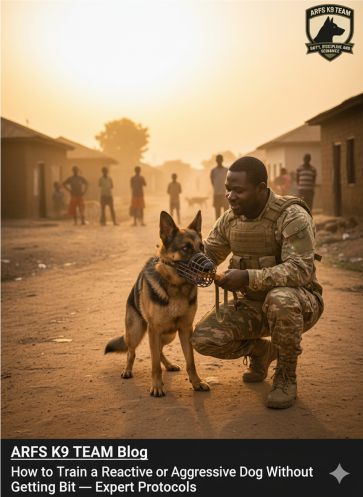
Dealing with a reactive or aggressive dog is one of the most emotionally draining and intimidating challenges a dog owner can face. The sudden lunging, intense barking, growling, snapping, or biting can leave owners feeling anxious, embarrassed, and even afraid of their own dog. Many people withdraw from walks, stop inviting guests over, or feel isolated because they don’t know how to safely manage their dog’s behavior.
At ARFS K9 Team, we regularly work with dogs exhibiting a wide range of reactivity and aggression from highly protective working K9s to family dogs with trauma, fear-based responses, or genetic predispositions. One truth remains consistent across all cases: safety always comes first. Without safety, effective training is impossible.
This comprehensive guide outlines expert, field-tested protocols derived from professional K9 training and canine behavior science. These methods focus on reducing the risk of bites, reshaping emotional responses, and giving dogs the structure they need to succeed without intimidation, force, or outdated dominance tactics.
IMPORTANT DISCLAIMER
If your dog has a bite history, displays severe aggression, or you feel unsafe handling them, consult a certified professional dog trainer, veterinary behaviorist, or experienced K9 behavior specialist immediately. This article provides general educational guidance, not a replacement for hands-on professional intervention. Safety for you, your dog, and the public must always be the top priority.
Understanding the Difference Between Reactive and Aggressive Dogs
Before attempting any training, it is essential to understand what kind of behavior you are dealing with. Reactivity and aggression are often confused, but they are not the same.
What Is Reactivity?
Reactivity is typically an emotional overreaction to a specific trigger. Common triggers include:
- Other dogs
- Strangers or visitors
- Loud noises
- Fast-moving objects
- Confined spaces
Reactive dogs may bark, lunge, growl, or pull intensely on the leash. While the behavior can look aggressive, it is often rooted in fear, frustration, anxiety, or over-arousal, not a true intent to cause harm. Many reactive dogs are actually trying to increase distance from what scares them.
What Is Aggression?
Aggression involves a real intent to threaten or cause harm. This may include:
- Snapping
- Nipping
- Biting
- Sustained growling with stiff body language
Aggression can stem from fear, pain, resource guarding, territorial instincts, poor early socialization, or genetics. Aggressive behavior requires stricter safety protocols and usually professional oversight.
While the protocols in this article apply to both reactive and aggressive dogs, true aggression demands more caution, management, and expert guidance.
Expert Protocols for Safe and Effective Training
Protocol 1: Prioritize Safety First (Muzzle Training & Management)
Safety is non-negotiable. No training can succeed if people are at risk of being bitten.
Muzzle Training (Not Muzzle Forcing)
A muzzle is a safety tool, not a punishment.
- Use a basket-style muzzle (such as Baskerville or similar), which allows panting, drinking, and treat delivery.
- Introduce the muzzle before you actually need it.
- Pair the muzzle with positive experiences: food, praise, calm environments.
- Start with short sessions and gradually increase duration.
A properly trained dog sees the muzzle as a neutral or even positive object, not something to fear.
A muzzle does not fix aggression. It simply prevents injury while you address the root cause.
Environmental Management
Until progress is made, prevent exposure to situations that trigger reactions.
- Avoid dog parks and crowded areas
- Walk during quiet hours
- Use private or enclosed spaces for training
- Secure your home with crates, gates, or closed doors during visits
Equipment Matters
- Use a secure martingale collar or well-fitted harness
- Avoid retractable leashes
- Always maintain a firm but calm grip
Protocol 2: Identify Your Dog’s Threshold and Stay Below It
Professional K9 handlers never push dogs past their emotional breaking point.
What Is a Threshold?
A dog’s threshold is the distance or intensity at which they can notice a trigger without reacting.
Signs your dog is over threshold:
- Barking or lunging
- Growling
- Ignoring food
- Stiff body posture
- Dilated pupils
Once over threshold, learning shuts down.
How to Train Below Threshold
- Identify exactly what triggers your dog
- Determine the minimum safe distance
- Begin training farther away than you think you need
- If your dog reacts, increase distance immediately
Training below threshold allows the brain to stay calm and receptive.
Protocol 3: Counter-Conditioning and Desensitization (Changing Emotions, Not Just Behavior)
This is the core protocol for long-term success.
Counter-Conditioning Explained
The goal is to change your dog’s emotional response from:
“That thing is scary”
to
“That thing predicts good things”
Step-by-Step Technique
- Position your dog below threshold
- The moment your dog notices the trigger:
- Start feeding high-value treats (chicken, cheese, hot dogs)
- Continue feeding until the trigger disappears
- Stop feeding immediately when the trigger is gone
Over time, the trigger becomes a predictor of rewards rather than fear.
Desensitization
- Gradually decrease distance
- Progress slowly and consistently
- Never rush the process
This method is backed by behavioral science and used by top trainers worldwide.
Protocol 4: Build Focus and Engagement With the Handler
Reactive dogs need a clear alternative behavior.
Teach “Watch Me”
- Start in low-distraction environments
- Reward eye contact generously
- Build reliability before adding triggers
Redirect Attention
When a trigger appears at a safe distance:
- Ask for “Watch Me”
- Reward immediately
- Reinforce calm engagement
Emergency U-Turn
Unexpected triggers happen.
- Teach a fast “turn” or “let’s go” command
- Practice it frequently
- Use it to safely exit situations
This skill can prevent dangerous encounters in real life.
Protocol 5: Leadership, Structure, and Predictability
Dogs with behavioral challenges thrive on clarity and consistency.
Establish Clear Rules
- Predictable routines
- Consistent commands
- Calm structure at home
Emotional Control From the Handler
Dogs read human emotions exceptionally well.
- Stay calm
- Avoid yelling or panicking
- Breathe and move deliberately
Confidence from the handler builds confidence in the dog.
Short, Effective Sessions
- 5–10 minutes per session
- End on success
- Multiple sessions per day
Consistency beats intensity every time.
What Professional K9 Trainers Avoid at All Costs
❌ Punishment-Based Corrections
- Leash pops
- Alpha rolls
- Yelling
- Physical force
These methods suppress behavior temporarily but increase fear and aggression long-term.
❌ Forced Socialization
Throwing a reactive dog into “social” situations can permanently worsen behavior.
❌ Ignoring Warning Signals
Growling, freezing, or “whale eye” are communication, not disobedience.
Punishing warnings often leads to unpredictable bites.
Common Mistakes Dog Owners Make
- Moving too fast
- Skipping muzzle conditioning
- Training over threshold
- Being inconsistent
- Expecting quick fixes
Behavior change takes time, repetition, and patience.
When to Seek Professional Help Immediately
You should contact a professional if:
- Your dog has bitten someone
- Aggression is escalating
- You feel unsafe handling your dog
- Progress has stalled despite consistent effort
A qualified trainer or veterinary behaviorist can tailor protocols specifically to your dog’s needs.
The Bottom Line: Safety, Patience, and Commitment
Training a reactive or aggressive dog is not a quick fix, it is a long-term investment. With the right protocols, many dogs can learn to navigate the world calmly and safely.
By prioritizing safety through muzzle training and management, respecting your dog’s threshold, applying counter-conditioning techniques, and building strong handler engagement, you can significantly reduce reactive and aggressive behavior over time.
Most importantly, remember this:
Your dog is not “bad.” They are communicating discomfort, fear, or confusion in the only way they know how.
At ARFS K9 Team, we believe every dog deserves the opportunity to live a balanced, calm life and every owner deserves the knowledge and tools to make that possible.

Her work centers on applied training across obedience, detection, protection, and operational readiness, with a strong focus on Military Working Dogs (MWDs) and security K9 programs. Rather than theory alone, Rofiat emphasizes proven training methods, repetition, consistency, and real-world conditioning that prepare dogs and handlers for high-pressure tasks.
Through articles, training content, and documentaries, she shares experience-based insights drawn from the field, highlighting how structured training, clear communication, and trust between handler and dog directly impact performance and reliability.
She remains committed to responsible K9 development, continuous skill refinement, and practical education for handlers, trainers, and dog professionals.
- Detection Tactics Every Dog Owner Should Know to Prevent Counter-Surveillance and Tracking - February 11, 2026
- STOP Feeding Your Dogs These Common Human Stews - February 9, 2026
- German Shepherd vs Belgian Malinois: Which Breed Is More Intelligent for Working and Security Roles - February 6, 2026


