Best Dog Breeds for First-Time K9 Handlers (Expert Guide)
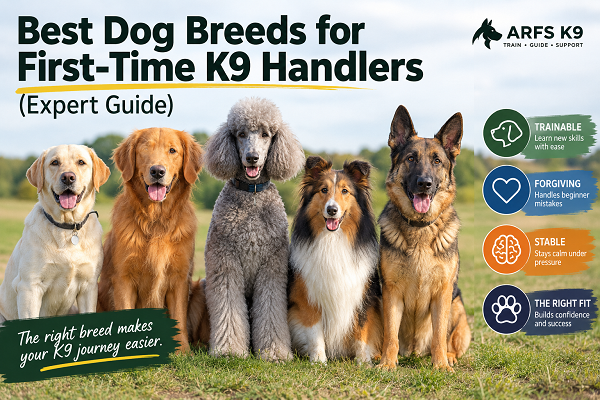
The best dog breeds for first-time K9 handlers are the Labrador Retriever, Golden Retriever, Standard Poodle, Shetland Sheepdog, and (with the right breeder and some coaching) the German Shepherd. These dogs learn fast, forgive beginner mistakes, and stay steady under pressure. Skip high-drive breeds like the Belgian Malinois until you’ve trained at least one dog through adolescence.
Table of Contents
- What “Beginner-Friendly” Really Means for a K9 Handler
- The Best Breeds for First-Time K9 Handlers at a Glance
- The 5 Best Dog Breeds for First-Time K9 Handlers
- Labrador Retriever
- Golden Retriever
- Standard Poodle
- Shetland Sheepdog
- German Shepherd (With Conditions)
- Breeds to Wait On Until You Have More Experience
- Match the Breed to Your K9 Goal
- Working Lines vs Show Lines: The Choice Most Guides Skip
- How to Pick a Healthy, Well-Bred Dog
- Your First 90 Days: A Realistic Training Timeline
- Why You Can Trust This Guide
- Frequently Asked Questions
- Final Thoughts
Introduction
Here’s the mistake I see again and again. A new handler falls in love with a dog because of what it does on a police demo or a viral video. Then the dog arrives, and everything falls apart by month six.
The dog isn’t bad. The match is bad.
Most “best breeds for first-time owners” lists are written for people who want a pet. You’re asking a different question. You want to handle a dog: build obedience, maybe try scent work, maybe step toward protection or security basics one day. That changes which breeds make the shortlist.
In this guide, you’ll learn:
- What traits actually make a breed forgiving for beginners
- The five best breeds for first-time K9 handlers, with honest downsides
- Which popular working breeds to wait on (and why)
- How working-line and show-line dogs differ
- How to spot a healthy puppy and a trustworthy breeder
- What your first 90 days should look like
Let’s get into it.
What “Beginner-Friendly” Really Means for a K9 Handler
“Beginner-friendly” doesn’t mean easy. Every dog needs daily work. It means the dog forgives your mistakes while you learn.
You will make mistakes. Your timing will be late. You’ll repeat a command five times. You’ll reward the wrong moment. A beginner-friendly dog shrugs that off and keeps trying. A tougher dog uses your mistakes to run its own plan.
Look for these traits:
- Biddable: The dog wants to work with you, not around you.
- Stable nerves: A slammed door or a loud truck doesn’t send it into panic.
- Moderate drive: The dog has energy and focus, but it can switch off at home.
- Soft to correction: It recovers fast when you get something wrong.
- People-friendly: It doesn’t need constant management around strangers.
- Clear body language: You can read stress and excitement early. Our guide on reading dog body language helps here.
Drive 101: The Word Every Handler Needs to Know
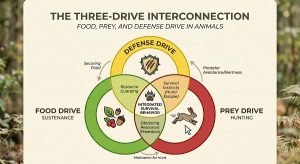
“Drive” is how strongly a dog wants to chase, grab, or guard. Handlers usually talk about three types:
- Food drive: How hard the dog works for treats.
- Prey drive: The urge to chase and catch moving things like balls, toys, or squirrels.
- Defense drive: The urge to protect itself, you, or its space when it feels threatened.
Beginners do best with a dog that has good food drive, medium prey drive, and low defense drive. You can reward that dog easily and manage it without a professional’s timing. High prey and defense drive can still make a great working dog. In a first-time handler’s hands, though, they can turn into a problem fast.
The Best Breeds for First-Time K9 Handlers at a Glance
I’ve rated each breed on a 1 to 5 scale based on how it works for a beginner handler. These are my handler ratings from field experience, not lab scores, so use them as a starting point.
| Breed | Trainability | Forgives Mistakes | Daily Exercise | Grooming Needs | Best K9 Pathway |
|---|---|---|---|---|---|
| Labrador Retriever | 5 | 5 | 60–90 min | Low | Detection and scent work, obedience |
| Golden Retriever | 5 | 5 | 60–90 min | Medium to high | Obedience, therapy, scent work |
| Standard Poodle | 5 | 4 | 60–90 min | High (professional grooming) | Obedience, agility, scent work |
| Shetland Sheepdog | 5 | 3 | 45–60 min | Medium to high | Agility, competitive obedience |
| German Shepherd (balanced working line) | 5 | 3 | 90+ min | Medium (sheds heavily) | Tracking, protection foundations |
How popular are these breeds? Very. The American Kennel Club’s 2025 registration ranking put the Labrador Retriever at No. 2, the Golden Retriever at No. 3, the German Shepherd at No. 4, and the Poodle at No. 6, behind only the French Bulldog at the top. Popularity doesn’t prove a dog suits you, but it does mean you’ll find plenty of breeders, trainers, and classes for these breeds almost anywhere.
The 5 Best Dog Breeds for First-Time K9 Handlers
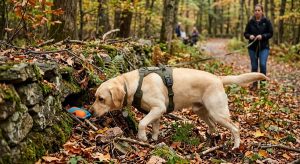
1. Labrador Retriever: The Best All-Round Starter K9
If I had to hand one breed to a brand-new handler, I’d pick the Lab. It isn’t flashy. It’s just hard to ruin.
Labs love food, love people, and bounce back fast from mistakes. They also carry real working credentials. The AKC’s Detection Dog Task Force says sporting breeds, including Labradors, are the most popular choice for explosives detection work. Sporting breeds seem less intimidating to the public, and their hunting instinct and sharp noses carry over well to searching for odors. Labs also work in passenger-facing roles for the same reason: a friendly dog calms a crowd instead of scaring it.
Why beginners succeed with Labs:
- Strong food motivation makes reward training simple
- Steady temperament in new places
- Easy to find breeders, trainers, and classes worldwide
- Real pathway into scent and detection work
Watch out for:
- Adolescent chaos. Between roughly 8 months and 2 years, many Labs behave like teenagers with a 30 kg body. Expect pulling, jumping, and selective hearing. This phase passes. Stay consistent.
- Weight gain. A Lab that eats too much and moves too little develops joint stress. Measure meals.
- Hips and elbows. Ask for parent health testing (more on that later).
Best for: Beginners who want a forgiving, trainable dog with a real working future.
2. Golden Retriever: The Handler-Focused Partner
Goldens share the Lab’s friendly nature, but they usually run a little softer. They tune into your mood. Raise your voice and a Golden often shuts down or looks worried instead of pushing back.
That sensitivity helps beginners who like a calm, communicative style. It also means you need to stay patient. Harsh correction hurts this breed’s confidence quickly.
Why beginners succeed with Goldens:
- Very responsive to praise and soft guidance
- Excellent in obedience, therapy work, and scent games
- Gentle with children and visitors when well socialized
Watch out for:
- Coat care. Plan for brushing several times a week and heavy seasonal shedding.
- Health history. Goldens have a higher cancer risk than many breeds. Ask breeders about cancer in the pedigree, not only hips and elbows.
- Too friendly for security work. If you dream of a protection dog, a Golden won’t deliver.
Best for: Handlers who value connection, families with children, and anyone aiming at obedience or therapy work.
3. Standard Poodle: The Brain With Hidden Muscle
Poodles get unfair treatment because of the fancy haircut. Underneath, a Standard Poodle is an athletic water retriever with a quick mind and a strong work ethic. It ranked No. 6 in the AKC’s 2025 popularity list for good reason.
Poodles learn new cues in a handful of repetitions. That speed rewards a clear handler and punishes a sloppy one. If you get your timing wrong, a Poodle will faithfully learn the wrong thing. So this dog helps beginners improve fast, but it won’t hide your errors.
Why beginners succeed with Poodles:
- Fast learner with strong focus
- Low-shedding coat (good news for allergy-prone homes)
- Athletic enough for agility, obedience, and scent work
- Comes in Standard, Miniature, and Toy sizes (for K9 work, I’d stay with Standard or Miniature)
Watch out for:
- Grooming costs and time. Expect a professional groom roughly every four to eight weeks, plus brushing at home.
- Boredom. A bored Poodle invents jobs, like emptying your trash or herding your toddler.
Best for: Handlers who like training sessions, enjoy teaching tricks and skills, and want a low-shedding athlete.
4. Shetland Sheepdog: The Compact Performer
Shelties look like tiny Collies and think like honors students. They shine in agility and competitive obedience. They also fit smaller homes better than any other breed on this list.
Because they’re herding dogs, they can also be sound-sensitive, barky, and prone to nipping at heels when excited. A beginner who ignores those habits early will deal with them for years.
Why beginners succeed with Shelties:
- Very quick learners that thrive on structure
- Manageable size for apartments and small yards
- Strong handler focus, especially in sports
Watch out for:
- Barking. Teach a “quiet” cue in the first month.
- Sensitivity. Loud, chaotic homes can stress this breed.
- Herding habits. Redirect nipping with a toy or a job before it sticks.
Best for: Handlers in smaller homes who want agility or obedience sports.
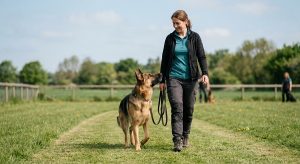
5. German Shepherd: Best Pick for Protection Interest (With Conditions)
The German Shepherd stays near the top of every working dog list for good reason. It appears in police, military, and security programs around the world. If you want to understand why this breed is so capable, our article on German Shepherd intelligence goes deeper.
Can a first-time handler train one? Yes. But the Shepherd earns a spot on this list with conditions, because it asks more from you than the first four breeds:
- You need a breeder who tests temperament, not just looks. A nervy or fearful Shepherd is much harder to handle than a stable one.
- You must socialize heavily and early. Shepherds can turn wary of strangers and other dogs if you skip this step.
- You need a coach. Join a good obedience club or hire a trainer for the first year. Don’t try to learn alone.
- You need time. Plan on 90 minutes or more of exercise and mental work per day.
Watch out for:
- Hip dysplasia. According to the OFA database summarized by the UK’s UFAW, about 20% of German Shepherds screened between 1974 and 2015 showed hip dysplasia. A Swiss study of hip scores found the rate in the breed fell from 46% to 18% between 1995–1999 and 2010–2016, which shows careful breeding makes a real difference.
- Boredom behavior. An under-worked Shepherd chews, digs, and barks.
Best for: Committed beginners who want a future in tracking, security, or protection foundations and will invest in coaching.
Breeds to Wait On Until You Have More Experience
Some breeds look perfect on paper for K9 work. They also eat inexperienced handlers alive. I’d hold off on these until you’ve finished training at least one dog through adolescence.
Belgian Malinois
The Malinois sits near the top of many police and military programs. That’s exactly the problem. Programs choose them for extreme drive, speed, and sharpness, and they have professional handlers, structured schedules, and kennel support.
Comparison guides for first-time owners tend to agree here. One popular breed comparison tells new large-breed owners who want a serious working dog to pick the German Shepherd as the safer choice. Another rating site scores the Malinois 1 out of 5 for beginner-friendliness and the German Shepherd 2 out of 5. Those scores come from a website’s opinion, not research, but they match what I see in the field: a Malinois that doesn’t get hard daily work finds its own entertainment, and the results can be expensive.
Dutch Shepherd
Close cousin to the Malinois, with a similar energy and intensity. Same advice applies.
Cane Corso, Rottweiler, and Doberman Pinscher
These breeds all rank in the AKC’s top 15 (the Cane Corso at No. 11, Rottweiler at No. 8, Doberman at No. 15 in 2025). Their popularity hides how much handling skill they need. Large guardian breeds demand confident, consistent leadership and early socialization. Learn on a more forgiving dog first.
The rule I give new handlers: if the breed shows up in police and military programs because of its intensity, don’t make it your first dog.
Match the Breed to Your K9 Goal
“First K9” can mean very different things. Pick your goal first, then match the breed.
| Your Goal | Strong Starter Breeds | Why |
|---|---|---|
| Solid obedience and a calm companion | Labrador, Golden Retriever | Forgiving, food-motivated, steady |
| Scent work or detection hobby | Labrador, Golden Retriever, Standard Poodle | Strong noses, searching instinct |
| Agility or dog sports | Sheltie, Standard Poodle | Fast, athletic, handler-focused |
| Tracking and protection foundations | German Shepherd (balanced working line) | Courage, trainability, work ethic |
| Therapy or community visits | Golden Retriever, Labrador | Gentle and sociable |
Notice that the AKC task force says German Shepherds, Belgian Malinois, and Dutch Shepherds remain the preferred breeds for patrol work and dual-purpose patrol and detection dogs. Sporting breeds lead in pure detection. So if your dream is detection, you don’t need a shepherd at all. A Lab will take you further, faster.
Working Lines vs Show Lines: The Choice Most Guides Skip
This single decision changes your dog’s behavior more than breed does, and most “best breeds” articles never mention it.
Working lines come from parents bred and tested for drive, nerves, and ability. They have more energy, more focus, and a stronger need for a job.
Show lines come from parents bred mostly for appearance and conformation. They tend to be calmer, but temperament and soundness vary a lot from breeder to breeder.
Here’s the part new handlers miss: neither label guarantees a good dog. A bad working-line breeder produces anxious, over-the-top dogs. A bad show-line breeder produces soft or unsound ones. Breeders who specialize in the German Shepherd often argue about this endlessly, and some say show-line structure hurts the breed’s hips and back. I’ve seen good and bad on both sides.
My advice for a first-time handler:
- For Labs and Goldens, choose a breeder who produces dogs for both sport or field work and family life. Those “dual-purpose” lines tend to balance energy and calm well.
- For German Shepherds, choose a balanced working line with proven nerves, and ask the breeder to describe each parent’s temperament and training titles. Avoid extreme drive for a first dog.
- Ask every breeder: “What kind of home does this dog not suit?” A good breeder answers honestly. A bad one says, “Anyone can handle this puppy.”
Reputable working-line German Shepherd breeders often charge several thousand dollars per puppy. One working-line breeder guide puts the range at roughly $3,500 to $6,500. Prices vary by country and by breeder, so treat that as a ballpark rather than a quote. A very cheap puppy usually costs more later in vet bills and training.
How to Pick a Healthy, Well-Bred Dog
You can choose the right breed and still end up with the wrong dog. Use this checklist.
The Breeder Checklist
- Health testing: Ask for hip and elbow scores on both parents (OFA in the US, BVA in the UK, or the equivalent in your country). Ask for any breed-specific tests too, such as eye and heart checks.
- Meet the mother: She should look relaxed and friendly, not fearful or aggressive.
- See the environment: Puppies should live in a clean space and get early handling.
- Ask about socialization: Good breeders expose puppies to sounds, surfaces, and people before 8 weeks.
- Check the paperwork: Make sure registration and pedigree papers are real. Our guide on spotting fake AKC registered dogs shows the warning signs.
- Expect a waiting list and questions. Good breeders interview you, too.
The Puppy Check (Quick Field Test)
When you meet a litter or an adult dog, watch for these things:
- Does the dog come to you? A confident dog approaches calmly.
- How does it handle a surprise? Drop your keys from waist height. A stable dog glances, recovers, and keeps going.
- Will it follow you? Walk away a few steps. A biddable dog tags along.
- Does it recover from being handled? Gently roll the dog onto its back for a second. A steady dog settles. A frantic or terrified dog is a red flag.
- Does it want to play with a toy and with you? That’s the start of workable drive.
This isn’t a full temperament test, and a professional evaluation is better. But it filters out the extremes.
What About Adult Dogs and Mixed Breeds?
Don’t dismiss adult dogs. With an adult, you see the size, energy, and temperament already. Shelter staff and foster homes can often tell you how the dog behaves around people, handling, and alone time. Mixed breeds can work well too, though their traits are harder to predict. Our mixed breed dogs guide explains what to look for.
Your First 90 Days: A Realistic Training Timeline
New handlers ask me, “How long until my dog is trained?” Here’s the honest answer: foundation skills take weeks, but reliability takes months.
Weeks 1–2: Settle in and build trust
- Set a feeding and potty routine
- Start name recognition and eye contact
- Short, happy sessions of 3 to 5 minutes, several times a day
Weeks 3–6: Foundation commands
- Sit, down, come, and a loose leash
- Introduce a marker word (“yes”) that tells the dog it earned a reward
- Begin crate and alone-time practice
- Keep socializing, with calm, positive meetings
Weeks 7–12: Add real life
- Practice commands with mild distractions: a quiet park, a friend walking by
- Add duration to sits and downs
- Join a group class so your dog learns to focus near other dogs
Months 4–12: Proof it
- Build reliability in busy places
- Expect setbacks during adolescence, usually around 6 to 18 months
- Keep your sessions short and your standards clear
Basic obedience can start to look good in four to eight weeks. Rock-solid reliability in distracting places usually takes six months to a year of steady work. The AKC task force notes that working detection dogs typically go to work at 18 months to 2 years of age. Even professionals wait for the dog to mature.
The Mistakes That Slow New Handlers Down
- Repeating commands instead of waiting and rewarding
- Training only when the dog misbehaves
- Skipping socialization because the dog “seems fine”
- Using harsh corrections when the problem is a lack of clear teaching
Read our guide to common dog training mistakes before you start. It’ll save you weeks.
If you want a deeper, step-by-step system from the field, my e-book Beyond the Bark: Inside a Pro Handler’s Playbook for Raising the Ideal Dog walks through the same principles I use with working dogs, adapted for everyday owners.
Why You Can Trust This Guide
I wrote this guide from the handler’s side of the leash. Here’s my background:
- I’m Cpl. Rofiat Muritala, a military working dog instructor and handler with more than 14 years at the Nigerian Army Dog Centre.
- My training covers advanced obedience, K9 patrol, and explosive detection courses, and my work includes dog selection, foundation training, and performance evaluation.
- I led obedience, explosive detection, agility, and tactical movement demonstrations at the Nigerian Army Day Celebration (NADCEL) 2026.
I also checked the numbers. The popularity rankings come from the AKC’s 2025 registration statistics. The detection-dog information comes from the AKC Detection Dog Task Force. The hip dysplasia figures come from the OFA data summarized by UFAW and a peer-reviewed Swiss study in Frontiers in Veterinary Science. Where I’m giving experience-based opinion, such as the 1 to 5 handler ratings, I say so.
Frequently Asked Questions
1. What is the best dog breed for a first-time K9 handler?
The Labrador Retriever is the best all-round choice. It’s trainable, forgiving, food-motivated, and proven in real detection work. Golden Retrievers and Standard Poodles also work very well for beginners.
2. Can a first-time handler train a German Shepherd?
Yes, but with conditions. Choose a breeder who tests temperament, socialize heavily in the first year, join a class or hire a trainer, and plan for at least 90 minutes of daily exercise and mental work. Without those, a Shepherd can overwhelm a beginner.
3. Is a Belgian Malinois good for beginners?
Usually not. Malinois are bred for extreme drive and need daily, structured work from an experienced handler. Most first-time handlers do better starting with a Lab, a Golden, or a balanced German Shepherd.
4. How long does it take to train a first K9?
Basic obedience takes about four to eight weeks of daily practice. Reliable behavior in busy places often takes six months to a year, and adolescence can cause setbacks between roughly 6 and 18 months.
5. Which breed is best for detection or scent work as a beginner?
Labrador Retrievers lead the way. The AKC’s task force names Labs, Golden Retrievers, German Shorthaired Pointers, German Wirehaired Pointers, and Vizslas among sporting breeds that excel at detection. For beginners, the Lab and the Golden are the easiest to handle.
Final Thoughts
Choosing your first K9 isn’t about picking the “toughest” or most impressive breed. It’s about picking the dog that helps you learn.
Here’s the short version:
- Pick a Lab or Golden if you want the most forgiving start.
- Pick a Standard Poodle or Sheltie if you want a sport-minded, fast-learning partner.
- Pick a German Shepherd only if you’ll invest in a good breeder, early socialization, and a coach.
- Wait on the Malinois and other high-drive breeds until you’ve raised and trained one dog through adolescence.
- Choose the breeder as carefully as the breed. Health testing and temperament matter more than papers or price tags.
Start with a dog that makes you better. In a year, you’ll have the skills, and the confidence, to handle almost anything.
Want more handler-tested guides like this? Subscribe to our weekly articles roundup newsletter at https://arfsk9team.com.ng/newsletter/ and get new K9 training and breed advice in your inbox every week.

Her work centres on obedience, detection, protection and operational readiness. She favours proven methods built on repetition, consistency and real-world conditioning, so that both dogs and handlers are prepared for high-pressure tasks.
Rofiat represented the Nigerian Army Dog Centre at the Nigerian Army Day Celebration (NADCEL) 2026, where she led demonstrations in obedience, explosive detection, agility and tactical movement. Through articles, training content and documentaries, she shares field-based insight into how structured training, clear communication and trust between handler and dog affect performance and reliability.
She is the author of Beyond the Bark: Inside a Pro Handler's Playbook for Raising the Ideal Dog, a practical guide that helps dog owners and handlers apply professional training principles in everyday situations.
- K9 Advantix Dosage Chart & Safety Guide for Dogs - October 19, 2026
- How to Set Up & Use Bousnic Dog Training Collar - October 18, 2026
- Westminster Dog Show 2026: Winners & Full Results - October 17, 2026