Integrating Smart Home Technology with Your K9 Team for Maximum Detection
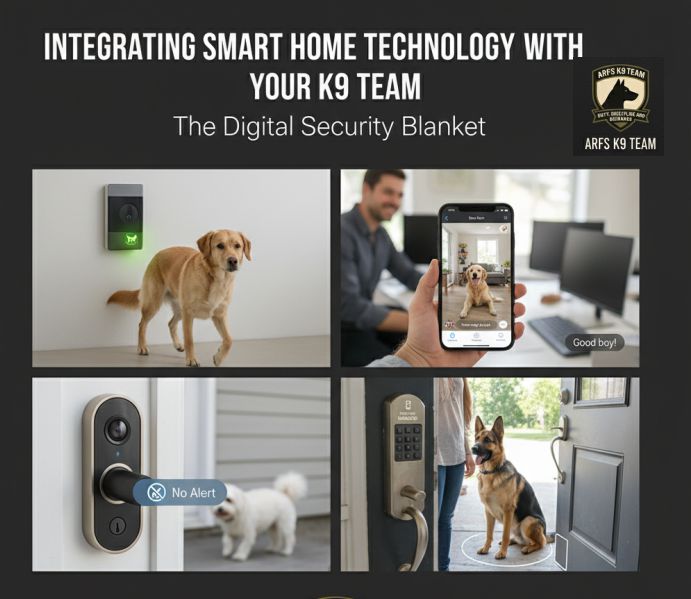
The landscape of home security has changed dramatically over the last decade, largely due to the rise of smart home technology. Devices that once seemed futuristic like motion sensors, smart doorbells, automated locks, and environmental sensors have now become mainstream. These innovations promise homeowners peace of mind, allowing them to monitor their property from virtually anywhere. But for those of us who rely on a K9 team member as part of our security, integrating these technologies presents a unique challenge: how can we enjoy the benefits of smart home devices without triggering endless false alarms or undermining the dog’s natural role as the ultimate security system?
At ARFS K9 Team, we see smart home technology not as a replacement for a trained canine’s instincts but as a force multiplier. When carefully selected and thoughtfully integrated, smart devices can create a “digital security blanket” that enhances your dog’s abilities, monitors your home around the clock, and even ensures the safety of your most loyal security partner, your dog.
The Challenge: Pet-Induced False Alarms
If you own a dog and a smart home security system, you likely know the struggle of false alerts caused by pets. Motion sensors can trigger alarms every time your dog runs across the living room. Doorbell cameras may send notifications whenever your pup walks near the front door or plays with a toy outside. These devices are designed to alert you to threats, but in many homes, they get triggered by completely normal canine activity.
The result is notification fatigue. Homeowners start ignoring alerts, muting notifications, or even disabling features entirely, which defeats the purpose of having a smart home security system. To fully leverage smart technology while keeping your K9 team effective, it’s crucial to choose devices specifically designed with pets in mind.
Smart Tech Checklist: What to Look For
When evaluating smart home devices for a dog-friendly household, look for features that consider your pet’s presence. Below is a detailed guide from ARFS K9 Team:
| Smart Device Category | K9-Centric Feature | Security Benefit |
|---|---|---|
| Motion Sensors | Pet Immunity or Weight Calibration: Detects motion while ignoring objects under a certain weight threshold (e.g., 40–80 lbs). | Reduces false alarms so you can trust real alerts. |
| Indoor Cameras | Two-Way Audio: Allows communication with your dog while you’re away. | Reduces anxiety, minimizes barking, destructive behavior, and lets you intervene remotely. |
| Doorbell Cameras | AI Person Detection: Differentiates humans, animals, and objects. | Prevents constant notifications from your dog or wildlife near the door. |
| Smart Locks | Keypad Access or Geo-Fencing: Provides automated locking and entry control. | Ensures doors are never accidentally left unlocked, preventing escapes. |
| Environmental Sensors | Temperature or Smoke Alarms with Pet Alerts: Integrates with monitoring services to detect hazards. | Protects your dog from fires, extreme heat, or cold when you are away. |
Selecting devices with these pet-aware features ensures your dog’s natural security instincts are complemented rather than hindered by technology.
Integration Strategy: Making the K9-Tech Partnership Work
Installing smart home devices isn’t enough. To create a harmonious system, your technology must work with your dog rather than against them.
Strategic Sensor Placement
Where you install motion sensors, cameras, and environmental sensors can make or break the effectiveness of your system. Consider these tips:
- Height Matters – Avoid mounting motion sensors at floor level. Placing them 6–7 feet high and angling them toward the middle of the room helps prevent false alarms triggered by your dog’s movement.
- Avoid Dog Routes – Identify high-traffic areas such as routes from the couch to the water bowl and angle sensors away from these paths.
- Mind Furniture – Dogs often jump on couches or beds, bringing them closer to sensors. Observe your dog’s favorite spots and test your system placement to reduce accidental triggers.
Proper placement ensures your system detects genuine threats while ignoring everyday canine activity.
Geo-Fencing for Safety and Security
Geo-fencing isn’t just a tech gimmick, it’s a practical tool for K9 owners. By setting virtual boundaries, you can monitor your dog’s movements and protect your property:
- Automatic Locking – Many smart locks can automatically engage when the last family member leaves the home, preventing your dog from slipping outside.
- Pet Tracker Alerts – If your dog wears a GPS-enabled collar, you can define a geo-fenced area around your property. If your dog crosses this boundary, you receive an immediate alert, giving you critical minutes to act before your K9 is at risk.
Geo-fencing adds a digital layer of protection that works seamlessly with your dog’s training.
Enhancing Your Dog’s “Alert” Command with Technology
A trained K9’s bark is an instinctive alarm system, capable of identifying threats long before a camera sees them. Smart devices can amplify the effectiveness of your dog’s alert signals:
- Noise-Activated Recording – Configure cameras to start recording when specific sounds like barking, glass breaking, or door knocks are detected. This ensures important events are captured without hours of irrelevant footage.
- Remote Calming – If an alert occurs and your dog begins barking, two-way audio allows you to give commands or soothe your dog remotely. This maintains discipline and reinforces that threats are monitored and under control.
By combining instinct with technology, your dog’s response to genuine security threats becomes even more precise and reliable.
Smart Home Technology That Benefits Both You and Your Dog
Some devices go beyond security and help improve your dog’s well-being, comfort, and daily routine:
- Smart Feeders – Automatically dispense meals and track feeding times. Ideal for maintaining a consistent diet when you’re away.
- Climate Control – Smart thermostats can adjust the temperature for your dog’s comfort, preventing overheating or hypothermia.
- Automated Lighting – Motion-sensor lights can prevent accidents if your dog moves around at night and can deter intruders by simulating occupancy.
Integrating these devices ensures your dog remains comfortable, safe, and happy while maintaining top-tier security coverage.
Choosing the Right Smart Home Ecosystem
Not all smart home ecosystems are equally compatible with pets. ARFS K9 Team recommends considering:
- Amazon Alexa + Ring – Works well with pet-aware cameras and smart locks.
- Google Nest – AI-powered motion detection reduces false alerts from pets and supports environmental monitoring.
- Apple HomeKit – Provides tight integration for geo-fencing, notifications, and smart locks with pet-friendly automation options.
Choosing the right ecosystem ensures your technology and canine team operate seamlessly, minimizing conflicts and maximizing home security.
Common Mistakes to Avoid
Even with the best equipment, K9 owners sometimes make these errors:
- Neglecting Training – Technology is a tool, not a replacement. Ensure your dog is trained to respond to commands and alerts.
- Overloading Notifications – Too many alerts create fatigue. Configure devices to only notify you of meaningful events.
- Ignoring Maintenance – Sensors and cameras require periodic checks to remain reliable. Dust, loose connections, and outdated firmware can reduce accuracy.
Avoiding these mistakes keeps your K9-tech partnership efficient, reliable, and stress-free.
Conclusion: Your K9 Remains the Core Processor
No smart home device can replicate a well-trained dog’s instincts. Cameras detect motion, locks secure doors, and alarms sound warnings but your dog detects intent, behavior, and subtle cues that AI cannot yet recognize.
By selecting pet-aware devices, placing sensors strategically, utilizing geo-fencing, and integrating technology into your dog’s daily routine, you create a multi-layered security system that is both effective and reliable. Smart technology should enhance your K9 team, not replace it.
Remember, your dog is more than a pet, they are a critical part of your home security infrastructure. When combined with smart home technology, instinct and innovation work hand-in-paw, keeping your home and loyal K9 partner safe.
Call to Action
What smart home device has made the biggest difference in managing your K9’s security role? Share your experiences and tips below. Your insights could help other dog owners create a smarter, safer home.

Her work centers on applied training across obedience, detection, protection, and operational readiness, with a strong focus on Military Working Dogs (MWDs) and security K9 programs. Rather than theory alone, Rofiat emphasizes proven training methods, repetition, consistency, and real-world conditioning that prepare dogs and handlers for high-pressure tasks.
Through articles, training content, and documentaries, she shares experience-based insights drawn from the field, highlighting how structured training, clear communication, and trust between handler and dog directly impact performance and reliability.
She remains committed to responsible K9 development, continuous skill refinement, and practical education for handlers, trainers, and dog professionals.
- Detection Tactics Every Dog Owner Should Know to Prevent Counter-Surveillance and Tracking - February 11, 2026
- STOP Feeding Your Dogs These Common Human Stews - February 9, 2026
- German Shepherd vs Belgian Malinois: Which Breed Is More Intelligent for Working and Security Roles - February 6, 2026


