Obedience vs Instinct: The Two Types of Dog Intelligence Every Handler Must Understand
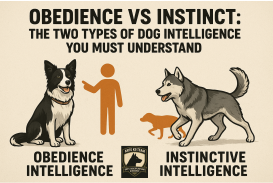
When people discuss dog intelligence, the conversation often stops at one question: “Which breed is the smartest?” While breed differences exist, seasoned handlers, trainers, and working-dog professionals know the reality: canine intelligence is not one-dimensional. A dog’s mind is shaped not just by genetics, but also by training, environment, socialization, and purpose. To truly understand how dogs think, learn, and perform, you must recognize the two core types of canine intelligence:
- Obedience Intelligence
- Instinctive Intelligence
Recognizing the difference between these two types of intelligence and how they complement each other can completely transform your approach to training, handling, and living with a dog. Whether you are a professional K9 handler, a competitive sport enthusiast, a breeder, or a pet owner, mastering this balance is key to unlocking peak performance, harmony, and mutual understanding with your canine companion.
What Is Canine Intelligence, Really?
Dog intelligence goes far beyond performing cute tricks or solving puzzles. At its core, it is about:
- How a dog processes information
- How it responds to guidance
- How it solves problems independently
- How it behaves when no command is given
Some dogs excel because they listen exceptionally well. Others shine because they act effectively without direction. This distinction is what separates obedience intelligence from instinctive intelligence and it’s a difference that can define a dog’s success in work, sports, or daily life.
1. Obedience Intelligence: The Learners, Followers, and Responders
Obedience intelligence refers to a dog’s ability to learn, retain, and execute commands reliably. Dogs with high obedience intelligence thrive in structured environments with clear leadership, consistent repetition, and positive reinforcement.
Key Characteristics of Obedience Intelligence
- Quick Learning Ability
Dogs with strong obedience intelligence often require fewer repetitions to learn new commands. They can quickly adapt to new routines and retain behaviors over long periods. - Strong Compliance
They respond reliably to commands even amidst distractions, making them ideal for environments where precision and discipline are essential. - Guided Problem-Solving
Rather than improvising, these dogs look to their handler for direction. They excel when expectations and procedures are clearly defined. - High Handler Sensitivity
These dogs can read body language, tone, and emotional cues, enhancing teamwork and mutual trust.
Breeds Known for High Obedience Intelligence
Some dog breeds are naturally predisposed to obedience intelligence:
- Border Collie – Exceptional command comprehension, highly responsive
- German Shepherd – Disciplined, dependable, and versatile under pressure
- Golden Retriever – Eager to please, emotionally intelligent, and cooperative
- Poodle – Fast learners, adaptable, and attentive
- Doberman Pinscher – Alert, obedient, and handler-focused
These breeds often dominate obedience trials, service roles, and precision-based work.
Best Applications for Obedience-Intelligent Dogs
Obedience intelligence shines in roles requiring structured, predictable performance, including:
- Police and military K9 units
- Service and assistance dogs (e.g., guide dogs)
- Competitive obedience and agility sports
- Therapy and emotional support work
- First-time dog owners seeking a highly trainable companion
However, obedience intelligence alone is not a guarantee of success in unpredictable environments. Dogs that rely solely on obedience may struggle to act independently when situations demand quick, instinct-driven decisions.
2. Instinctive Intelligence: The Natural Problem-Solvers and Born Workers
Instinctive intelligence, in contrast, is largely inherited. It represents a dog’s natural ability to perform tasks it was bred for, often without formal training. This type of intelligence is driven by genetics, innate drive, and survival instincts, operating below conscious learning.
Key Characteristics of Instinctive Intelligence
- Task-Specific Natural Ability
Dogs may display herding, guarding, tracking, or retrieving skills naturally without any structured instruction. - Independent Decision-Making
Instinctive dogs often act without waiting for commands, relying on environmental cues and internal motivation. - Breed-Purpose Focus
A dog with strong instinctive intelligence often becomes deeply absorbed in its natural role, sometimes even at the expense of obedience. - High Drive and Motivation
Instinct-driven dogs tend to have intense energy and a strong sense of purpose, which must be channeled correctly for productive behavior.
Breeds Known for High Instinctive Intelligence
Instinctive intelligence is common in working and heritage breeds:
- Bloodhound – Renowned for scent tracking and investigative persistence
- Belgian Malinois – Alert, protective, and natural threat-detection specialists
- Siberian Husky – Endurance-driven, pack-aware, and pulling instincts
- Australian Cattle Dog – Independent thinking with strong herding instincts
- Terriers – Natural hunters with relentless prey drive
These dogs excel in real-world problem-solving but may frustrate inexperienced handlers who do not understand how to channel their instincts.
Best Applications for Instinctive-Intelligent Dogs
Dogs with instinctive intelligence thrive in tasks that rely on natural skills rather than learned obedience, such as:
- Search and rescue operations
- Detection of drugs, explosives, or human scent
- Herding and livestock management
- Protection and security roles
- Hunting, tracking, and fieldwork
Without proper guidance, instinctive intelligence can become stubborn, destructive, or even dangerous, emphasizing the importance of balanced training.
The Critical Difference: Obedience vs Instinct in Real Life
Many training failures occur because handlers misinterpret intelligence. A dog that ignores commands is not necessarily “stupid” or “disobedient”, it may simply be operating on instinct. Conversely, a highly obedient dog may struggle in dynamic, real-world situations because it waits for direction rather than acting independently.
Why Understanding Both Types Is Essential
- Faster, Smarter Training – Align training techniques with a dog’s natural thinking patterns.
- Reduced Behavioral Issues – Mismanaged instincts can lead to aggression, anxiety, or destructive behavior.
- Improved Working Performance – Elite working dogs combine instinctive action with controlled obedience.
- Stronger Handler-Dog Bond – Understanding a dog’s mind fosters trust, not frustration.
Real-World Example: Belgian Malinois
The Belgian Malinois is a prime example of balanced intelligence in working dogs. Used extensively in police and military roles, these dogs combine:
- Obedience intelligence – Command responsiveness and handler control
- Instinctive intelligence – Threat detection, tracking, and natural protective drive
Too much obedience can suppress drive, while too much instinct creates chaos. The result? Balance leads to excellence, allowing the handler and dog to perform at peak efficiency under pressure.
How to Train Dogs with Both Types of Intelligence
1. Identify Your Dog’s Dominant Intelligence
Observe:
- How quickly they learn new commands
- How they behave without instruction
- What natural behaviors emerge without guidance
2. Channel Instinct, Don’t Suppress It
Use instinct as motivation rather than trying to suppress it:
- Scent dogs learn obedience through tracking exercises
- Herding dogs practice control through livestock work
- Protection dogs train discipline through structured bite work
3. Blend Obedience into Natural Drives
Integrating obedience into a dog’s natural behavior ensures engagement and success:
- Reward instinct-driven problem-solving with praise and treats
- Create structured exercises that mimic natural tasks
- Encourage independent decision-making within safe boundaries
4. Use Clear Leadership and Positive Reinforcement
Dogs thrive when they understand expectations, rules, and consequences. Positive reinforcement builds confidence while maintaining respect for the handler.
5. Be Patient and Flexible
No single approach fits all dogs. Some require more direction, while others require firm boundaries. Successful handlers adapt their techniques to the unique personality and intelligence of their dog.
Conclusion: True Intelligence Is Balance
Dog intelligence is not about tricks, accolades, or titles. It is about function, purpose, and understanding.
- A dog with only obedience intelligence may lack initiative in unstructured situations.
- A dog with only instinctive intelligence may lack control or focus.
The most effective dogs—and the most successful handlers understand both minds working together. Recognizing obedience intelligence and instinctive intelligence allows handlers to:
- Build elite working partnerships
- Strengthen the human-canine bond
- Prevent training frustration
- Achieve peak performance
Every dog has a unique mind, shaped by nature and nurture. Understanding how that mind works is the first step toward leading it wisely and compassionately, ensuring both safety and harmony.
By appreciating and balancing obedience and instinct, handlers unlock not only a dog’s potential but also the joy of a truly cooperative and responsive companion.

Her work centers on applied training across obedience, detection, protection, and operational readiness, with a strong focus on Military Working Dogs (MWDs) and security K9 programs. Rather than theory alone, Rofiat emphasizes proven training methods, repetition, consistency, and real-world conditioning that prepare dogs and handlers for high-pressure tasks.
Through articles, training content, and documentaries, she shares experience-based insights drawn from the field, highlighting how structured training, clear communication, and trust between handler and dog directly impact performance and reliability.
She remains committed to responsible K9 development, continuous skill refinement, and practical education for handlers, trainers, and dog professionals.
- Detection Tactics Every Dog Owner Should Know to Prevent Counter-Surveillance and Tracking - February 11, 2026
- STOP Feeding Your Dogs These Common Human Stews - February 9, 2026
- German Shepherd vs Belgian Malinois: Which Breed Is More Intelligent for Working and Security Roles - February 6, 2026


