How to Stop a Dog Pulling on the Leash
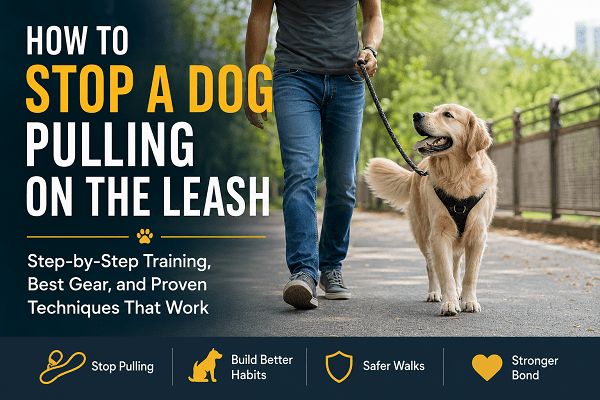
If your dog turns every walk into a tug-of-war, you are not alone. Leash pulling is one of the most common dog behavior problems, but it is also one of the most fixable with the right training, equipment, and consistency. In this guide, you will learn why dogs pull, which tools actually help, how to train loose-leash walking step by step, how long it usually takes, common mistakes to avoid, and when to get professional help.
Table of contents
Introduction
Why dogs pull on the leash
Best gear for leash training
How to stop a dog pulling on the leash
Training timeline and what to expect
Common mistakes that slow progress
Special cases: puppies, strong breeds, and reactive dogs
Safety, health, and handler tips
FAQs
Conclusion
Introduction
If you have ever felt like your dog is walking you instead of the other way around, you already know the problem: leash pulling makes walks stressful, unsafe, and exhausting. It can also turn a simple daily routine into a power struggle, especially when your dog is young, excited, strong, or easily distracted.
The good news is that loose-leash walking is teachable, and you do not need harsh corrections to get there. In this article, you will learn how to stop dog pulling on the leash using practical training steps, smart equipment choices, and a realistic plan you can actually stick with.
Why Dogs Pull
Dogs usually pull because moving forward is rewarding. The world is full of smells, sights, sounds, and interesting targets, and a tight leash often simply means “I want that thing faster.” In other words, pulling is not your dog being stubborn; it is your dog repeating a behavior that has worked before.
Poor leash habits can also develop because the dog has never been taught a clear rule for how to walk beside you. UC Davis notes that lack of proper training is a common cause, and that training works best when it rewards the behavior you want rather than only reacting to what you do not want.[vetmed.ucdavis]
There is also a safety side to this. Leash-related injuries sent an estimated 422,659 adults to US emergency departments from 2001 to 2020, and the annual number rose more than fourfold during that period. Another study reported 356,746 estimated leash-related injuries from 2001 to 2018, with many caused by pulling or trips and tangles.
Best Gear for Leash Training
The right gear will not train your dog by itself, but it can make training much easier. For many dogs, a front-clip harness is one of the most useful tools because the leash attachment at the chest helps redirect forward momentum when the dog pulls.
If you are unsure which harness design provides the best control and pressure distribution, our guide on Best Tactical K9 Harness: What Military Handlers Look For explains the key features that make a harness safer and more effective for leash training.
A head halter can also help with very strong pullers, though it needs proper fitting and careful introduction. AVSAB notes that head halters can reduce pulling while risking less neck and spine damage than chain collars when used appropriately.
Here are the most helpful tools for leash training:
A fixed-length leash, usually 4 to 6 feet.
A well-fitted front-clip harness.
High-value treats cut into tiny pieces.
A treat pouch or pocket for quick rewards.
Optional clicker, if you like marker training.
A flat collar with ID tags for backup identification, not for correction.
Avoid leaning on harsh tools as your first solution. Positive-reinforcement methods are recommended by veterinary and behavior organizations because they teach the dog what to do instead of simply suppressing the unwanted behavior.
This approach aligns with what professional handlers understand about training: long-term reliability comes from discipline, consistency, and clear communication rather than trying to dominate the dog.
How to Stop a Dog Pulling on the Leash
The simplest way to stop dog pulling on the leash is to teach one rule very clearly: loose leash = forward movement, pulling = no progress. The moment your dog learns that a tight leash makes the walk stop, while a loose leash makes the walk continue, the game changes.
1. Start in a boring place
Begin indoors, in a hallway, backyard, or another low-distraction area. This makes it much easier for your dog to succeed before you move to the real world.
Stand still and let your dog notice that calm behavior earns rewards. If your dog is beside you and the leash is loose, mark the behavior with “yes,” a click, or praise, then give a treat right next to your leg so staying close becomes valuable.
2. Reward the loose leash immediately
Timing matters. Reward your dog the instant the leash stays slack, even if it is only for one or two steps at first. UC Davis recommends starting with just a couple of steps next to you and slowly increasing the distance as your dog improves.
A useful picture is the leash making a soft “J” shape rather than a straight line. That curve tells you the dog is walking with you, not dragging ahead.
3. Stop the walk when pulling starts
When the leash tightens, stop moving forward right away. Many trainers use the “tree” method: become still, wait for the leash to loosen, then continue once your dog re-engages calmly.
This is one of the most important lessons your dog can learn. Pulling does not get them closer to the goal; loose leash walking does.
4. Use direction changes
If your dog surges ahead, turn and walk the other way. A quick U-turn can interrupt the pulling pattern and bring your dog’s attention back to you.
Do not overdo it with punishment or force. The point is to make pulling unproductive, not to scare the dog or create more tension on the lead.
5. Build in short training sessions
Short, frequent practice works better than one long, frustrating walk. Five-minute sessions several times a day can make a surprising difference because your dog gets repeated chances to succeed.
If your dog loses focus easily, keep the early sessions very short and highly rewarding. End on a win before your dog gets over threshold or frustrated.
6. Increase distractions slowly
Once your dog can walk nicely in quiet areas, begin adding difficulty step by step. Move from the living room to the yard, then to the sidewalk, then to a calmer street, and only later to busier places.
This gradual approach is important because many dogs can walk well at home and then fall apart in exciting environments. That does not mean training failed; it means you need more practice at each level.
7. Use the right reinforcement pattern
At first, reward often. As your dog gets better, you can slowly reduce how often you treat, but do not rush it. Early in training, frequent rewards help your dog understand exactly which behavior pays off.
A simple example: if your dog takes three loose steps beside you, mark and reward. After a few successful sessions, ask for five steps, then eight, then ten.
Training Timeline and What to Expect
There is no one-size-fits-all timeline because age, breed, arousal level, and the dog’s history all matter. A well-managed puppy may improve in days or weeks, while an adult dog with years of rehearsal may need several weeks of consistent practice.
A useful expectation is this: the first visible progress often comes quickly in low-distraction settings, but real-world reliability takes longer. Training is a skill, not a trick, so the goal is steady improvement rather than perfection overnight.
Some dogs also need equipment support while they learn. Front-clip harnesses and head halters can make walks manageable during the training phase, especially for large or powerful dogs.
Common Mistakes That Slow Progress
A lot of leash training fails because the rules change from one walk to the next. If pulling sometimes works, the dog learns that pulling is worth trying again. Consistency is what turns a habit into a new habit.
Common mistakes include:
Using the leash to hold your dog in place while still walking forward.
Waiting too long to reward calm walking.
Practicing only when your dog is already highly excited.
Switching between methods every few days.
Asking for too much too soon.
Using harsh corrections that increase tension or fear.
Another big mistake is skipping management. If your dog always blasts out the front door, the walk begins in a state of excitement and pulling is more likely. Calm exits, brief pauses, and a sit at the door can help reset the pattern before the walk even starts.
Special Cases and Fixes
Puppies
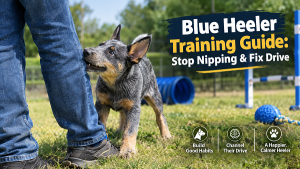
Puppies do not know leash manners yet, so your job is to make walking beside you rewarding from the start. Keep sessions very short, use tiny treats, and avoid expecting adult-level focus. Early success matters more than distance.
Building leash skills early is much easier when you understand how young dogs learn and develop confidence during training. Many of the same principles used in professional K9 puppy development apply to everyday pet training as well.
Strong Breeds and High-drive Dogs
Powerful dogs need both training and management. A front-clip harness or head halter can make them safer to handle while you teach the skill. This is especially helpful if you are dealing with a Malinois, a Husky, a Labrador with a lot of excitement, or any dog that hits the end of the leash like a freight train.
Some breeds are naturally more intense, energetic, and quick to learn than others. Understanding the differences in trainability and working drive can help you adjust your leash-training expectations and methods.
Reactive Dogs
If your dog pulls because of fear, reactivity, or frustration, you may need behavior work in addition to loose-leash walking. In that case, the problem is not just “how to stop a dog pulling on the leash,” but how to help the dog stay under threshold around triggers. A trainer or veterinary behaviorist can help you build a plan that is safer and more specific.
Safety and Handler Tips
Dog walking injuries are a real issue, not just an annoyance. In one study, the most common injuries were finger fractures, traumatic brain injuries, and shoulder sprains or strains, and older adults had higher fracture risk. That is a strong reason to treat leash manners as a safety skill, not just a convenience.
To reduce risk for both you and your dog:
Hold the leash securely without wrapping it around your hand.
Use a fixed-length leash for training.
Keep your dog on the side you can control best.
Avoid walking while checking your phone.
Choose quieter routes during training.
Fit harnesses properly so they do not chafe or slip.
If you are walking a very strong dog, consider footwear and stance too. Good balance, loose elbows, and awareness of distractions can keep you from getting yanked off your feet when your dog suddenly lunges toward a squirrel or another dog.
Want Faster Results?
If your dog pulls, ignores commands outdoors, or struggles to focus around distractions, the problem is usually bigger than the leash itself. Loose-leash walking becomes much easier when your dog understands obedience, engagement, and handler communication.
In Beyond the Bark, you’ll learn the same foundational principles used by professional handlers to build better focus, control, and reliability in everyday dogs.
👉 Grab your copy of Beyond the Bark here: https://amzn.to/4ebgjq9
Frequently Asked Questions
1. How long does it take to stop leash pulling?
Many dogs show early progress within a few training sessions, but dependable loose-leash walking often takes weeks of consistent practice. The more your dog has rehearsed pulling, the longer the habit usually takes to change.
2. Is a harness better than a collar for pulling?
For many pulling dogs, yes. A front-clip harness can reduce pulling pressure and improve control, while head halters can help with stronger dogs when fitted and introduced properly.
3. Should I stop walking my dog if they pull?
You do not need to stop walks entirely, but you should stop forward movement every time the leash tightens during training. That makes pulling unrewarding and teaches your dog that only a loose leash keeps the walk going.
4. Does exercise before a walk help?
Yes, in many cases. UC Davis recommends starting training after your dog has had sufficient exercise rather than using the walk itself as the exercise session.
5. What if nothing works?
If your dog is still pulling after consistent training, check the fit of the gear, lower the distraction level, and consider working with a qualified trainer or veterinary behaviorist. Persistent pulling can also be tied to reactivity, frustration, or anxiety, which may need a different plan.
Conclusion
Stopping leash pulling is not about winning a battle; it is about teaching a clearer habit. When you reward loose-leash walking, stop moving when the leash tightens, and practice in low-distraction settings before moving to harder ones, your dog learns that calm walking is the fastest way forward.
At its core, loose-leash walking is an obedience skill. Dogs that understand how to focus on their handler while managing distractions generally progress much faster than dogs that rely solely on instinct or excitement.
If you want better walks, start small: choose the right gear, keep sessions short, reward generously, and stay consistent. That simple combination is what turns a chaotic walk into a relaxed, enjoyable routine for both of you.

Her work centres on obedience, detection, protection and operational readiness. She favours proven methods built on repetition, consistency and real-world conditioning, so that both dogs and handlers are prepared for high-pressure tasks.
Rofiat represented the Nigerian Army Dog Centre at the Nigerian Army Day Celebration (NADCEL) 2026, where she led demonstrations in obedience, explosive detection, agility and tactical movement. Through articles, training content and documentaries, she shares field-based insight into how structured training, clear communication and trust between handler and dog affect performance and reliability.
She is the author of Beyond the Bark: Inside a Pro Handler's Playbook for Raising the Ideal Dog, a practical guide that helps dog owners and handlers apply professional training principles in everyday situations.
- Local Dog Breeds: Temperament, Health & Training Guide - October 6, 2026
- How Long Do Military Working Dogs Serve? Full Guide - October 5, 2026
- National Puppy Day 2026: Date, Best Deals & Freebies - October 4, 2026