Doberman Pinscher: The Most Misunderstood Guard Dog
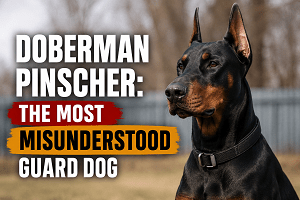
If you’ve ever worked with a Malinois, you’ll know that not every protection dog looks or acts the same. But when you mention the Doberman Pinscher, most people immediately picture a scary, aggressive monster with cropped ears and a menacing stare. That image? It’s mostly wrong.
The Doberman Pinscher is widely considered the most misunderstood guard dog in the world. Despite being bred specifically for protection and personal security, modern Dobermans are loyal, intelligent, and surprisingly gentle dogs when properly raised. In K9 circles, experienced handlers know the Dobie isn’t dangerous by nature, he’s misunderstood because of Hollywood stereotypes, poor breeding, and outdated cosmetic practices like ear cropping.
This article breaks down the real facts about Dobermans: their temperament, training needs, the difference between European and American lines, and whether they’re actually good with kids. If you’re choosing a guard dog for your family or curious about why this breed has such a dark reputation, you’ll get the truth here, not the Hollywood version.
Table of Contents
Introduction: The Dobie’s Dark Reputation
History: How Louis Dobermann Created the Ultimate Guard Dog
Why Are Dobermans So Misunderstood?
Doberman Temperament: What Real Handlers Know
European vs. American Doberman: The Critical Difference
Training Your Doberman for Protection Work
Dobermans as Family Guard Dogs
Exercise, Care, and Health Requirements
FAQs About Doberman Pinschers
Conclusion: Giving the Dobie the Credit He Deserves
History: How Louis Dobermann Created the Ultimate Guard Dog
The Doberman Pinscher wasn’t accidently bred. In the late 1800s, a German tax collector named Louis Dobermann (1834–1894) needed a dog that could protect him while he collected taxes in dangerous areas of Apolda, Germany. He didn’t want a lapdog, he wanted a protection dog that was fast, loyal, intimidating, and trainable.
Dobermann selectively bred several breeds to create his perfect working dog:
Rottweilers (for strength and guarding instinct)
German Pinschers (for agility and temperament)
Weimaraners (for scenting ability and elegance)
Greyhounds (for speed)
Possibly Black and Tan Terriers (for tenacity)
The result was a compact, muscular dog weighing 60–100 pounds with an incredible presence. The breed was officially recognized in Germany by 1899 and arrived in the United States by 1908.
Unlike many breeds developed for hunting or herding, the Doberman was created for one purpose: owner protection. The Doberman remains one of the world’s most respected working dogs, bred specifically to perform a job rather than simply serve as a companion.
Why Are Dobermans So Misunderstood?
The Dobie’s reputation isn’t based on reality. It’s based on three major factors:
1. Hollywood Fear-Mongering
From Turner & Hooch to Oliver & Company, movies have portrayed Dobermans as mindless killers. In reality, well-bred Dobermans are stable, friendly dogs unless you threaten their family.
2. Poor Breeding Practices
In the 1970s–80s, opportunistic breeders produced Dobermans for appearance over temperament. This created dogs with aggressive or mean tendencies that weren’t typical of the breed.
3. Ear Cropping and Tail Docking
The traditional cropped ears and shortened tail made Dobermans look more menacing. Many people now associate the breed with this aggressive appearance, even though modern kennel clubs in Europe have banned ear cropping.
Here’s the truth: A properly bred Doberman Pinscher is:
Loyal to his family
Intelligent and trainable
Protective without being aggressive
Gentle with children raised in his pack
The breed isn’t dangerous by nature. He’s misunderstood because people confuse bad breeding with breed traits.
Doberman Temperament: What Real Handlers Know
When you’re working with protection dogs, temperament matters more than looks. After handling dozens of K9s, I can tell you that the Doberman temperament is unique:
Key Temperament Traits
The Doberman has an innate ability to protect his family and anticipate danger. Much of this comes from the breed’s combination of obedience and instinctive intelligence, a balance that separates exceptional protection dogs from average companions. He’s not a bark-and-chase dog like some breeds. Instead, he evaluates threats and acts strategically.
But there’s a catch: Dobermans can be domineering if not properly trained. They’re not ideal for first-time dog owners unless you commit to obedience training from puppyhood.
Success in K9 Work
While the Belgian Malinois dominates modern police K9 units today, Dobermans were historically used by:
German police units (1900s–1950s)
U.S. Marine Corps during WWII (as “Devil Dogs”).
Private security firms worldwide
Dobermans earned a respected place among historic military working dogs, although today breeds like the Belgian Malinois and German Shepherd dominate operational deployments.
The breed’s decline in police work wasn’t because they’re bad, they’re actually excellent protection dogs. It’s because Malinois are slightly faster and require less maintenance. But for personal protection and family guard dog work, the Dobie remains a top choice.
European vs. American Doberman: The Critical Difference
If you’re choosing a guard dog, this is the most important question: Is a European Doberman different from an American one? Yes, significantly.
Key Differences Between European and American Dobermans
European Dobermans are bred strictly for working ability. They have higher protection drives, stronger jaws, and more pigment. If you want a dog for protection work or serious security, go European.
American Dobermans are bred for show standards. They’re calmer, more forgiving, and better for families who want a guard dog without intense working drive.
The Doberman Pinscher Club of America recognizes both types, but experienced handlers know the difference matters. Don’t buy a show-line American if you need a working dog and don’t buy an intense European if you just want a family pet.
Training Your Doberman for Protection Work
When you’re training a Doberman for protection work, you’re working with a dog that’s already wired to guard. But that doesn’t mean he’s automatic. You need structure.
Handler’s Note: Training a protection breed like the Doberman requires far more than teaching commands. Understanding drive, structure, leadership, socialization, and real-world behavior can make the difference between a reliable protector and a difficult dog. If you’re serious about raising a stable, well-balanced dog, my e-book, Beyond the Bark: Inside a Pro Handler’s Playbook for Raising the Ideal Dog, provides practical insights used by experienced handlers to build obedience, confidence, and trust from puppyhood through adulthood.
👉 Explore Beyond the Bark here: Beyond the Bark: Inside a Pro Handler’s Playbook for Raising the Ideal Dog
Training Timeline for Doberman Protection Work
Total training time: 12–18 months for a fully certified protection dog.
Training Methods That Work
Dobermans respond very well to positive reinforcement. They’re intelligent but can be stubborn. Best practices include:
Reward-based training (treats, praise, play)
Consistent boundaries (no mixed signals)
Early socialization (expose to people, places, sounds)
Bite work with qualified trainers only
Threat assessment drills (teach when to act)
⚠️ Warning: Never use harsh punishment. Dobermans bond intensely, and abuse destroys that bond permanently.
Cost of Professional Training
Basic obedience: $500–$1,000
Advanced protection: $2,000–$5,000
Full K9 certification: $5,000–$10,000+
Buying a trained European Doberman from a professional program can cost $8,000–$15,000.
Dobermans as Family Guard Dogs
Are Dobermans good with kids? This is the question every family asks.
The truth: Dobermans love human companionship but are not the best breed for small children if improperly bred or raised. Here’s what you need to know:
Doberman Behavior with Children
A Doberman will consider family children as “puppies in the pack” and protect them
They can endure tight hugs but have shorter patience than Labrador or Golden Retrievers
They’re tolerant of kids, but only to some extent
Limit contact between infants and Dobies, this breed can be snappy with pinchy behavior
The Doberman Pinscher Club of America warns that young children and Doberman puppies are not a good mix
Best Practices for Families
Raise puppy with kids (not the reverse)
Teach children respect (no pulling ears, chasing, or rough play)
Supervise all interactions until dog is 2+ years old
Choose American line for family pets (calmer temperament)
Avoid pinchy behavior triggers (young kids grabbing dog’s face)
Bottom line: Dobermans excel in protecting kids but aren’t great “nannies”. If you want a family guard dog that prioritizes child safety, the Dobie is excellent but only with proper training and supervision.
Exercise, Care, and Health Requirements
How much exercise does a Doberman need daily? This breed is a strong, high-energy working dog that requires serious activity.
Daily Exercise Requirements
Total exercise: 1–2 hours daily
Brisk walking: 30–45 minutes off-leash minimum
High-intensity activity: Running, fetch, tug work
Mental stimulation: Training puzzles, obedience, scent work
Dobermans need purposeful high-intensity activity plus mental work. Their daily routine is much closer to a working dog lifestyle than that of a typical household pet, which is why structure and mental engagement are so important. Bored Dobermans become destructive, they’ll chew furniture, dig yards, or develop anxiety.
Health Considerations
Common Doberman health issues:
Dilated Cardiomyopathy (DCM): 10–15% of breed (heart disease)
Wobbler Syndrome: Cervical spinal condition
Hypothyroidism: Hormone imbalance
Bloat (GDV): Life-threatening stomach condition
Lifetime cost of owning a Doberman: $15,000–$25,000 (including food, vet care, training).
Grooming Needs
Coat: Short, smooth, hard (low maintenance)
Brushing: Weekly
Nail trimming: Every 2–3 weeks
Ear cleaning: Weekly (especially if uncropped)
Bathing: Monthly or when needed.
FAQs About Doberman Pinschers
1. Are Dobermans actually dangerous or just misunderstood?
Dobermans are misunderstood, not inherently dangerous. Well-bred Dobermans are stable, friendly dogs unless you threaten their family. Aggression usually comes from poor breeding, lack of training, or abuse, not breed nature. The dark reputation is Hollywood fear-mongering, not reality.
2. Is a European Doberman different from an American one?
Yes, significantly. European Dobermans are working/protection lines with higher drive, stronger jaws, darker pigment, and more muscle. American Dobermans are show/appearance lines, calmer, and better for families. Choose European for protection work, American for family pets.
3. Are Dobermans good with kids?
Dobermans are tolerant of kids but not ideal for first-time owners or very young children. They protect family children as “pack puppies” but have shorter patience than Labs or Goldens. Limit infant contact and supervise all interactions.
4. How much exercise does a Doberman need daily?
Dobermans need 1–2 hours of exercise daily. This includes brisk walking (30–45 minutes off-leash), running, fetch, and mental stimulation. Bored Dobermans become destructive.
5. Do Dobermans require ear cropping and tail docking?
No. Ear cropping and tail docking are cosmetic practices, not requirements. Most European kennel clubs have banned ear cropping. Modern owners increasingly keep natural ears/tails. The dog’s temperament and training matter far more than appearance.
Conclusion: Giving the Dobie the Credit He Deserves
The Doberman Pinscher is the most misunderstood guard dog in the world, but not because he’s dangerous. He’s misunderstood because of Hollywood stereotypes, poor breeding, and outdated cosmetic practices.
Here’s what you now know:
✅ Well-bred Dobermans are stable, loyal, and gentle with families
✅ European lines are intense working dogs; American lines are calmer family pets
✅ They excel at protecting children but aren’t “nanny dogs”
✅ They need 1–2 hours of daily exercise plus mental work
✅ Ear cropping is optional, modern ethics favor natural appearance
Actionable Advice
If you’re choosing a guard dog for your family:
Buy from a reputable breeder who tests temperament
Choose American line for families, European line for protection work
Start obedience training at 8 weeks with positive reinforcement
Supervise all child interactions until dog is 2+ years old
Commit to 1–2 hours daily exercise or don’t get a Dobie
The Doberman isn’t a monster. He’s a brilliant, loyal protector who deserves credit for what he actually is: one of the most intelligent and devoted working dogs ever created.
If you’ve ever met a properly bred Doberman, you know the truth. He’s not scary, he’s misunderstood. And now, thanks to this article, you understand why.

Her work centres on obedience, detection, protection and operational readiness. She favours proven methods built on repetition, consistency and real-world conditioning, so that both dogs and handlers are prepared for high-pressure tasks.
Rofiat represented the Nigerian Army Dog Centre at the Nigerian Army Day Celebration (NADCEL) 2026, where she led demonstrations in obedience, explosive detection, agility and tactical movement. Through articles, training content and documentaries, she shares field-based insight into how structured training, clear communication and trust between handler and dog affect performance and reliability.
She is the author of Beyond the Bark: Inside a Pro Handler's Playbook for Raising the Ideal Dog, a practical guide that helps dog owners and handlers apply professional training principles in everyday situations.
- Bousnic Dog Training Collar Review: Is It Safe? - September 30, 2026
- Gravy Train Dog Food Review: Ingredients & Recalls - September 30, 2026
- How to Spot Fake AKC Registered Dogs: 5 Warning Signs - September 29, 2026