Cardigan Welsh Corgi Health Issues & Back Care Guide
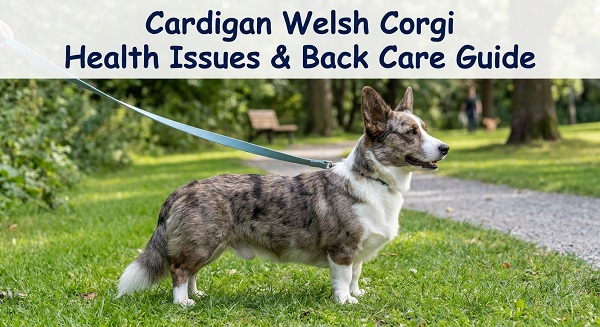
The most common Cardigan Welsh Corgi health issues are back problems (especially intervertebral disc disease, or IVDD), inherited eye disease (progressive retinal atrophy), degenerative myelopathy (a painless, late-life spinal disease), obesity and dental disease. Back care comes down to five habits: keep your Cardigan lean, limit repeated jumping, use ramps and non-slip floors, lift them properly, and act fast at the first sign of back pain. Breeders can screen for IVDD risk, PRA and degenerative myelopathy with simple DNA tests, so ask for the results before you buy a puppy.
Table of Contents
- Introduction: Why Cardigan Back Care Matters
- Cardigan Welsh Corgi Health at a Glance
- Why Cardigans Have Back Problems
- IVDD in Cardigan Welsh Corgis
- Warning Signs of Back Pain (Don’t Miss These)
- IVDD Grades and Treatment Options
- Degenerative Myelopathy vs IVDD
- Eye Problems in Cardigan Welsh Corgis
- Other Health Issues to Watch
- Daily Back Care: A Practical Plan
- Health Testing and Choosing a Puppy
- Trainer’s Notes: What Experience Teaches
- Frequently Asked Questions
- Final Thoughts
Introduction: Why Cardigan Back Care Matters
Picture this. Your Cardigan Welsh Corgi leaps off the couch like they’ve done a thousand times. This time they land, yelp, and refuse to move. Your stomach drops.
Cardigan Welsh Corgi health issues aren’t rare bad luck. They come from the same body that makes this breed so charming: a long spine on short legs. That build helped Welsh herders nip at cattle heels and dodge kicks for centuries. Today, it also puts the back under extra strain.
Here’s the good news. Most back injuries in Cardigans are easier to prevent than to treat. And when something does go wrong, fast action changes the outcome.
In this guide, you’ll learn:
- The main health problems in Cardigan Corgis and how common they are
- Why their back is vulnerable (and what the genetics say)
- The early signs of pain that most owners miss
- How vets grade and treat disc disease
- How to tell IVDD from degenerative myelopathy
- A simple daily back care plan you can start tonight
- Which DNA tests to ask your breeder about
I wrote this for both first-time Corgi owners and experienced handlers. Where many articles lump Pembroke and Cardigan Corgis together, I’ll stick to what matters for Cardigans specifically.
Cardigan Welsh Corgi Health at a Glance
Let’s start with the big picture. Cardigans are sturdy dogs overall. They typically live 12 to 15 years, and one large UK survey put their median age at death around 12 years and 2 months. That’s a solid number for a dog with this build.
Adult Cardigans stand about 10.5 to 12.5 inches (26.7 to 31.8 cm) tall. Males usually weigh 30 to 38 lb (13.6 to 17.2 kg) and females 25 to 34 lb (11.3 to 15.4 kg). Those numbers matter, because every extra pound lands on that long spine.
The 2004 UK Kennel Club health survey listed cancer (28.3%), old age (24.6%) and neurological disorders (15.2%) as the leading causes of death in the breed. Notice that neurological problems, which include spinal disease, sit third on that list.
Here’s a quick overview:
| Condition | What it affects | Typical timing | Can you test for it? |
|---|---|---|---|
| IVDD (disc disease) | Spine | Adulthood, often middle age | Yes, a DNA risk test (CDDY) |
| Degenerative myelopathy (DM) | Spinal cord | Usually 9+ years | Yes, SOD1 DNA test |
| PRA (rcd3) | Retina | Night blindness from about 6 weeks | Yes, DNA test |
| Lens luxation | Eye lens | Adulthood | Yes, ADAMTS17 test |
| Obesity | Whole body, spine, joints | Any age | Body condition scoring |
| Dental disease | Teeth and gums | From early adulthood | Regular vet checks |
Why Cardigans Have Back Problems
Cardigans are what vets call a chondrodystrophic breed. That’s a mouthful, so here’s the plain version: their legs grow short through a genetic change, and their spinal discs wear out earlier than normal.
Two separate things are going on:
- Chondrodysplasia (CDPA): This causes the short legs. The trunk stays normal size. Corgis and Dachshunds both carry it.
- Chondrodystrophy (CDDY): This is a different mutation. It also shortens the legs, but it also makes the discs between the vertebrae lose their cushioning early. That raises the risk of disc herniation.
Both come from extra copies of a gene called FGF4. The CDDY version sits on chromosome 12, and research links it directly to IVDD risk.
What the Numbers Say
Embark’s veterinary research summary reports that dogs with one or two copies of the CDDY/IVDD variant face roughly a 46-fold higher risk of an IVDD event and a 5 to 15-fold higher risk of needing disc surgery. It also notes that one copy carries a similar risk to two copies in most breeds. So a “carrier” isn’t safe.
There’s an honest gap, too. The Cardigan Welsh Corgi Club of America says no reliable breed-wide statistics exist for IVDD in Cardigans. Most research has focused on Dachshunds. If you see an article quoting a precise “X% of Cardigans get IVDD,” ask where the number came from. I’d rather tell you what we don’t know than hand you a made-up figure.
Weight, Age and Lifestyle
Genetics load the gun, but lifestyle often pulls the trigger. Extra body weight, slippery floors, repeated hard jumps and rough play all add stress. You can’t change your dog’s DNA. You can change almost everything else.
IVDD in Cardigan Welsh Corgis
Think of the discs in your dog’s spine as jelly-filled cushions between the bones. In IVDD, a cushion hardens with age, then bulges or bursts. The material presses on the spinal cord or nerves.
That pressure causes pain, weakness and, in bad cases, paralysis.
Type I vs Type II Disc Disease
- Type I: The disc material bursts out suddenly. This is typical for short-legged breeds like Cardigans. A dog can go from playing to screaming in pain within minutes.
- Type II: The disc slowly bulges over months or years. It’s more common in older, larger dogs.
Cardigans usually face Type I. That’s why attacks can feel so sudden and frightening.
Where Does It Strike?
Most disc problems show up in the mid-to-lower back (thoracolumbar region), where the body bends most. Neck discs can also rupture. Neck IVDD looks different: your dog may hold their head low, cry when you touch their neck, or refuse to lower their head to eat.
Warning Signs of Back Pain (Don’t Miss These)
Dogs hide pain. Corgis, being stoic herders, hide it even better. I’ve seen owners miss the early signs for weeks because “he’s just getting older.”
Watch for these:
- Sudden reluctance to jump on the couch or into the car
- Trouble with stairs or small steps
- Yelping when picked up or touched along the spine
- A hunched back or tucked belly
- Trembling, panting or restlessness at rest
- Stiff or “wobbly” back legs
- Knuckling, where the paw drags or flips over
- Refusing to eat or drink from a lowered bowl (neck pain)
Emergency Signs: Go to the Vet Now
Some signs mean you shouldn’t wait for tomorrow’s appointment. Vets list these as emergencies:
- Sudden severe back or neck pain
- Dragging or collapsing back legs
- Can’t stand or walk
- Loss of bladder or bowel control, or being unable to pee
First aid tip: Keep your dog calm and still. Carry them with one hand under the chest and one supporting the rear, so the back stays level. Never give human painkillers like ibuprofen or paracetamol. They can seriously harm dogs, and they can mask pain, which may tempt your dog to move too much.
IVDD Grades and Treatment Options
When you reach the vet, they’ll test your dog’s reflexes, walking and pain response. Then they’ll grade the problem. The UK system uses five grades:
| Grade | What your dog shows |
|---|---|
| 1 | Back or neck pain only |
| 2 | Wobbly but still walking |
| 3 | Can’t walk, but can still move the legs |
| 4 | Paralysed, but still feels deep pain |
| 5 | Paralysed, with no deep pain sensation |
Some clinics use a reversed scale, so always ask what your vet’s numbers mean.
Conservative (Non-Surgical) Treatment
For grades 1 and 2, strict rest, pain control and vet-guided care often work. Rest usually means crate or small-pen confinement for several weeks (your vet sets the exact time). Dogs on this plan often walk normally again within one to three weeks, though some take two months or more.
The big risk? Your dog feels better after a week and bounces around. That’s how many dogs re-injure themselves. Stay strict.
Surgery
For grades 3 to 5, or any dog who’s getting worse, vets often recommend surgery. A review of published studies reports successful outcomes in 86 to 96% of non-ambulatory dogs who still have deep pain sensation. Most walk again within about 7 to 14 days after surgery.
When deep pain is gone, success drops. Studies range widely, with an average around 50%. Time matters here: some sources suggest surgery within 24 hours gives the best chance. About 5 to 10% of grade 5 dogs also develop myelomalacia, a progressive and fatal spinal cord condition.
Reherniation can happen. Studies report a recurrence rate of about 20 to 28% in dogs, which is why ongoing back care continues after recovery.
Rehabilitation Matters
Recovery isn’t only about the surgery or the crate. A Korean study on neck IVDD found that rehab therapy after surgery improved success rates, especially in dogs with severe signs before surgery. Ask your vet about a canine rehabilitation therapist. Hydrotherapy, balance work and gentle strengthening can make a real difference.
Cost varies widely by country and clinic. Spinal surgery and rehab often run into thousands of dollars or pounds. Get a written estimate, and read our tip on insurance below.
Degenerative Myelopathy vs IVDD
This is where many owners get confused. Both cause back leg weakness. They’re very different diseases.
Degenerative myelopathy (DM) is a slow, progressive disease of the spinal cord. It links to a mutation in the SOD1 gene and resembles ALS in people. Most dogs show signs at 9 years or older.
The Key Differences
| Feature | IVDD | Degenerative myelopathy |
|---|---|---|
| Pain | Usually painful | Usually painless |
| Onset | Often sudden | Gradual, over months |
| Typical age | Adulthood, can strike early | Usually 9+ years |
| Treatment | Rest, medication, surgery | No cure; rehab and support |
| DNA test | CDDY risk test | SOD1 test |
DM often starts with scuffing back paws, wobbling and weak hind legs. Dogs usually aren’t in pain, which is a clue. Because DM and IVDD can look alike, your vet needs to rule out disc disease first, usually with imaging.
Not every dog with two copies of the SOD1 mutation gets sick, but they have a higher risk. The OFA offers a cheek-swab DNA test that you can do at home.
There’s no cure. But consistent physiotherapy, safe exercise, good grip on floors and a supportive cart can keep a DM dog comfortable and active for longer. Many owners tell me the cart gives their dog a new lease of life.
Eye Problems in Cardigan Welsh Corgis
Eyes get ignored in most Corgi health articles, but they’re a big part of Cardigan health. And here’s something other guides miss: one eye disease is unique to Cardigans.
Progressive Retinal Atrophy (PRA-rcd3)
PRA-rcd3 is an inherited disease that causes the retina to break down. According to the UK Kennel Club, puppies may show night blindness by 6 weeks, and many affected dogs are completely blind by 1 to 2 years. It’s an autosomal recessive condition, meaning a dog needs two copies of the faulty gene to be affected. Carriers look fine but can pass the gene on.
A simple DNA test finds it. Because it’s recessive, breeders can avoid affected puppies by never mating two carriers. Genetic testing labs in Europe list the rcd3 test at around €42.70.
Lens Luxation and Other Eye Issues
Cardigans also show up with a higher incidence of lens luxation (linked to the ADAMTS17 gene), persistent pupillary membrane and retinal dysplasia in breed databases. Signs of lens luxation include a red, painful or cloudy eye. That’s an emergency, because it can quickly lead to glaucoma.
Ask your vet about an annual eye exam, and ask your breeder for eye exam results.
Other Health Issues to Watch
Obesity
Cardigans love food, and a heavy Cardigan is a Cardigan at risk. Extra weight adds pressure to the spine and joints.
Here’s a quick home check: you should feel the ribs easily under a thin fat layer, and see a waist when you look from above. If you can’t feel ribs, it’s time to cut back.
Practical tips:
- Measure meals with a scale, not a scoop
- Count treats as part of the daily food total
- Use part of their kibble for training rewards
- Weigh your dog monthly and log it
Dental Disease
Small mouths often mean crowded teeth. Plaque builds faster. Brush several times a week and book regular dental checks. Dental disease isn’t just about breath; bacteria can reach the heart and kidneys over time.
Cancer and Senior Health
Cancer topped the cause-of-death list in the Kennel Club’s 2004 survey. You can’t prevent most cancers, but you can catch them early. Run your hands over your dog weekly and report any new lump. Our essential dog grooming tips for a healthy puppy include a simple hands-on check routine you can use for adult dogs too.
Infections and Basic Care
Cardigans catch the same infections as all dogs, such as parvo, distemper and rabies, so keep vaccinations current and use parasite prevention.
Daily Back Care: A Practical Plan
Now for the part you can start tonight. Think of back care as lots of small habits, not one big rule.
1. Control Jumping (Don’t Ban Movement)
Cardigans are athletes. Don’t wrap them in cotton wool. Instead:
- Use ramps or pet steps for couches, beds and cars
- Block stairs for puppies and for dogs with back pain
- Teach “wait” so your dog doesn’t launch off furniture
- Avoid games with repeated hard jumping, like leaping for balls over and over
Teaching self-control also helps. Our guide to exercising a working dog explains how to give a herding dog a full workout without relying on high-impact games.
2. Make Floors Safe
Slippery floors make dogs scramble, and scrambling twists the spine. Add runners, rugs with non-slip backing or yoga mats in the areas where your dog plays and turns.
3. Lift Correctly
Support the chest and rear at the same time. Never lift by the front legs or scoop from under the belly alone. Teach children the right way, too.
4. Choose the Right Gear
A well-fitted harness spreads pressure across the chest and avoids pulling on the neck. That’s important for dogs with neck disc risk. If you want to know what to check before you buy, our guide on what handlers look for in a K9 harness covers fit and hardware in detail.
5. Build Core Strength
A strong core protects the spine. Safe options include:
- Slow, controlled walks on varied surfaces
- Swimming or hydrotherapy (ask your vet first)
- Gentle hill walking
- “Sit-to-stand” repetitions on a non-slip surface, a few at a time
- Balance cushions under vet or physio guidance
Most healthy adult Cardigans do well with roughly an hour of varied activity a day, split into sessions. Adjust it for age and any back history.
6. Protect Growing Puppies
Puppy joints and spines are still developing, and vets advise limiting jumping and stairs in the first 12 to 18 months. Skip forced running next to a bike, and don’t do intense agility until your vet confirms the growing stage is over.
Starting early with calm crate time also helps later, since crate rest is the backbone of IVDD recovery. A dog who already loves their crate handles recovery far better. If you’re raising a new puppy, my e-book Beyond the Bark walks you through the basics of building routines from day one.
7. Plan for Emergencies
Do these now, while everything is calm:
- Save your 24-hour emergency vet’s number
- Ask whether your vet can do spinal imaging or refer you to a specialist
- Consider pet insurance for a Corgi puppy before any back issue appears. Most policies exclude pre-existing conditions
- Keep a small crate or pen ready for strict rest
Health Testing and Choosing a Puppy
If you’re buying a Cardigan, good breeding is your best protection. Responsible breeders test their breeding dogs and happily share results.
Tests to Ask About
| Test | Why it matters |
|---|---|
| CDDY/IVDD | Shows IVDD risk genetics |
| PRA-rcd3 | Prevents blind puppies |
| Degenerative myelopathy (SOD1) | Shows DM risk |
| Eye exam (annual) | Spots lens luxation and other eye problems |
| Hip evaluation | Checks joint health |
Several labs sell breed panels. One European panel combines DM, PRA-rcd3, vWD1, stumpy tail and the CDPA/CDDY test for €154.70. The University of Missouri’s lab lists multi-test pricing starting at $100 for two tests, up to $175 for five. Prices change, so check current rates.
Questions to Ask the Breeder
- Can I see the DNA test results for both parents?
- Have the parents had eye exams?
- Have any puppies or relatives had back problems or paralysis?
- How old were the parents and grandparents when they died, and why?
- What’s your health guarantee?
A breeder who gets defensive or says “Corgis don’t have problems” is waving a red flag. A good breeder welcomes these questions. If you’re thinking about adopting an adult Cardigan from a rescue, ask about the dog’s weight history and any past back episodes.
Trainer’s Notes: What Experience Teaches
I work with working and herding dogs, and a few lessons keep repeating.
Fitness protects. The Cardigans that stay lean and muscular nearly always move better than their chubby siblings, even at the same age. A fit dog has a stronger “back brace” of muscle.
Training is back care. A Cardigan who knows “wait,” “off” and “settle” doesn’t need to be physically blocked from every launch. Calm behavior protects the spine more than any gadget.
Early detection beats everything. The owners who do best are those who notice small changes, like hesitation at the car door, and call the vet that day.
Crate rest is a skill. Dogs who’ve been taught to relax in a crate before an injury cope much better with rest. Practice it when your dog is healthy.
Note: This guide gives general education based on published research and handler experience. It doesn’t replace a vet’s exam. Always consult a licensed veterinarian for diagnosis and treatment.
Frequently Asked Questions
What are the most common health problems in Cardigan Welsh Corgis?
The most common problems are back disease (IVDD), obesity, inherited eye diseases such as PRA-rcd3 and lens luxation, dental disease, and, in older dogs, degenerative myelopathy. Cancer is also a leading cause of death in the breed, according to a UK Kennel Club survey.
Are Cardigan Welsh Corgis prone to back problems?
Yes. Their long back and short legs make them prone to intervertebral disc disease. Genetic research shows that the chondrodystrophy gene variant raises IVDD risk many times over. You can’t eliminate the risk, but keeping your dog lean, limiting hard jumps and using ramps lowers the strain.
Is it okay for a Cardigan Corgi to use stairs and jump on furniture?
Occasional stairs are usually fine for a healthy adult, but puppies and dogs with back pain should avoid them. Repeated jumping from furniture adds stress to the spine. Ramps, pet steps and a trained “wait” are safer options.
How can I tell if my Cardigan has a back injury or something less serious?
Look for yelping, a hunched back, reluctance to jump, wobbly hind legs or refusing to move. Sudden dragging of the back legs or loss of bladder control needs emergency care. When in doubt, call your vet. A day’s delay can matter with spinal problems.
What’s the difference between IVDD and degenerative myelopathy in Cardigans?
IVDD is usually painful and can strike suddenly, while degenerative myelopathy is a slow, painless spinal cord disease that usually shows up at 9 years or older. A vet will often use imaging to tell them apart. DNA tests exist for both risk factors.
Final Thoughts
Cardigan Welsh Corgis give you plenty of years of joy, and with smart care, you can help protect that long, low spine.
Here’s the short version:
- Know the big risks: IVDD, PRA-rcd3, degenerative myelopathy, obesity and dental disease.
- Keep your Cardigan lean. This is the single biggest thing you control.
- Limit repeated jumping, add ramps and non-slip floors, and lift with two hands.
- Learn the early warning signs, and treat dragging legs or loss of bladder control as an emergency.
- If you’re buying a puppy, ask for DNA and eye results for both parents.
- Teach calm behavior and crate comfort now, before you ever need them.
Start tonight with one small step: check your dog’s body condition, then set up one ramp. Those two moves alone can make a real difference.
Want more practical K9 and dog health tips? Subscribe to our weekly articles roundup newsletter and get new guides in your inbox every week.
Sources and Further Reading
- WebMD: What to Know About Cardigan Welsh Corgis
- Cardigan Welsh Corgi Club of America: IVDD
- Embark: Chondrodystrophy and IVDD (CDDY/IVDD)
- Genocan: CDPA/CDDY test for Cardigan Welsh Corgi
- The Kennel Club (UK): PRA-rcd3 DNA test
- OFA: Degenerative Myelopathy
- University of Missouri Canine Genetics Laboratory: DNA testing
- Eurovetgene: Welsh Corgi Cardigan test packages
- LABOKLIN: Combination Welsh Corgi panel
- Dachshund IVDD UK: Clinical grading scale
- Dachshund IVDD UK: Literature review of IVDD in dogs
- Dachshund IVDD UK: Will my dog recover?
- Rehabilitation after cervical IVDH surgery (Veterinární Medicína, 2019)
- Longevity and mortality in Kennel Club registered dog breeds (Canine Genetics and Epidemiology)
- Wikipedia: Cardigan Welsh Corgi (cites the 2004 Kennel Club survey)
- iDog breed database: Cardigan Welsh Corgi

Her work centres on obedience, detection, protection and operational readiness. She favours proven methods built on repetition, consistency and real-world conditioning, so that both dogs and handlers are prepared for high-pressure tasks.
Rofiat represented the Nigerian Army Dog Centre at the Nigerian Army Day Celebration (NADCEL) 2026, where she led demonstrations in obedience, explosive detection, agility and tactical movement. Through articles, training content and documentaries, she shares field-based insight into how structured training, clear communication and trust between handler and dog affect performance and reliability.
She is the author of Beyond the Bark: Inside a Pro Handler's Playbook for Raising the Ideal Dog, a practical guide that helps dog owners and handlers apply professional training principles in everyday situations.
- Food Aggression Dog Training: Pro K9 Guide - November 21, 2026
- DIY Dog Scent Training: Easy 4-Week Home Guide - November 20, 2026
- Buckeye Puppies Review: 5 Red Flags to Check - November 19, 2026