Is a King Shepherd a Good Guard Dog? Handler’s Guide

Yes, a King Shepherd can be a very good guard dog, but mainly as a deterrent and alarm dog, not as a dog built for specialist bite work. Its size (males reach 27–31 inches and 90–150 lb), deep bark, and reserved attitude toward strangers make most intruders think twice. It guards best when it’s socialized early, trained in obedience first, and kept as part of the family. It’s not the best pick if you want an intense, high-drive police-style dog. A King Shepherd also comes with real costs: a 10–12 year lifespan, a high bloat risk, and a legal duty on you to control a very large dog.
Table of Contents
- Introduction: The Big Dog Question
- What Is a King Shepherd? (Quick Background)
- Three Levels of “Guard Dog”: Where the King Shepherd Fits
- King Shepherd Temperament: Natural Guarding Instinct
- King Shepherd vs German Shepherd vs Malinois: Guard Dog Comparison
- How to Test a Puppy’s Guarding Potential
- Training a King Shepherd to Guard: A Handler’s Timeline
- Common Mistakes That Ruin a Guard Dog
- Health and Lifespan: What Affects a Guard Dog’s Career
- Real Cost of Owning a King Shepherd Guard Dog
- Law and Liability: What Most Articles Skip
- Who Should (and Shouldn’t) Get One
- Handler’s Note: How I Judge a Guard Dog
- FAQs
- Conclusion and Next Steps
Introduction: The Big Dog Question
You’re standing at a breeder’s fence. A 120-pound King Shepherd looks at you, doesn’t bark, and just watches. You think, “Now that’s a guard dog.”
But is it? Size alone doesn’t protect a home. I’ve seen huge dogs that wag at burglars and smaller dogs that stop a stranger at the gate. So the real question isn’t “Is it big?” It’s “Will this dog guard reliably, stay safe around my family, and fit my life for ten years?”
Most pages on this topic repeat the same few lines: “protective, loyal, not aggressive.” They rarely tell you how much guarding to expect, how to test a puppy, what the dog costs, or what happens legally if your dog bites someone. That’s the gap this guide fills.
Here’s what you’ll learn:
- Where a King Shepherd fits on the guard dog scale (alarm, deterrent, or protection)
- How it compares with the German Shepherd and Belgian Malinois
- A week-by-week style training timeline
- Health risks and costs that affect a guard dog’s working life
- The legal side of owning a big guard dog
- Who should buy one, and who shouldn’t
Let’s get into it.
What Is a King Shepherd? (Quick Background)
The King Shepherd is a young, American-developed breed. According to the King Shepherd Club of America, it was started in 1990 by Shelley Watts-Cross and David Turkheimer. They wanted a dog that looked like a German Shepherd but was bigger and had fewer inherited health problems. A breed club formed in 1995.
Key facts:
| Detail | What to know |
|---|---|
| Parent breeds | German Shepherd in every dog; often Shiloh Shepherd and/or Alaskan Malamute; some lines include Great Pyrenees, and older lines trace back to the Akita |
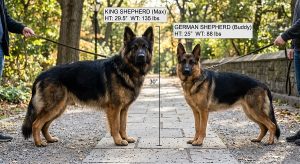
| Male size | 27–31 inches, 90–150 lb |
| Female size | 25–27 inches, 75–110 lb |
| Lifespan | Usually quoted at 10–12 years |
| Recognition | Not AKC-recognized; registered with groups such as ARBA and the King Shepherd Club of America |
| Status | Still described by its own club as a breed in development |
That last point matters. Because the breed is still developing, two King Shepherds can look and act quite different. One may lean toward the calm Malamute side. Another may act more like a German Shepherd. The breeder and the parents matter more here than they do with an established breed.
Three Levels of “Guard Dog”: Where the King Shepherd Fits
Almost every article treats “guard dog” as one thing. It isn’t. In K9 work we think in three levels:
- Alarm dog (watchdog). Notices strangers and barks. Doesn’t need to be aggressive.
- Deterrent dog. Looks and sounds serious enough that a person decides to go elsewhere. Size and attitude do the job.
- Protection dog. Trained to physically stop a threat on command. This needs elite temperament, professional training, and a handler who can control it every second.
Where the King Shepherd fits: It’s excellent at levels 1 and 2. At level 3, it can do some work, but most King Shepherds aren’t bred for the sharp drive that police and military programs look for. Those programs usually pick Belgian Malinois and German Shepherd working lines for a reason.
That’s not a weakness. For most homes, a calm deterrent that loves the kids is exactly what you want.
King Shepherd Temperament: Natural Guarding Instinct
Let’s talk about what you’ll actually see day to day.
What the breed is known for:
- Reserved with strangers. Many watch a visitor quietly before deciding how to react.
- Loyal and attached to family. The dogs are often described as “clingy,” which helps with guarding but means they struggle when left alone.
- Calm confidence. Breeders aim for a steadier nervous system than a typical working German Shepherd.
- Bark with a reason. Many bark mainly when something feels wrong.
Breed profiles from sources such as Dogster and PetGuide say King Shepherds are protective but not aggressive. I agree with the “not aggressive” part as a goal, but I want you to hear this as a handler: temperament is inherited, then shaped. A well-bred King Shepherd that’s isolated in a backyard can still become fearful or reactive. A fearful big dog is more dangerous than a confident one.
Does Size Really Scare Intruders?
Often, yes. Most burglars want an easy target. A big dog barking inside the house is a strong reason to skip the home. But a deterrent only works if the dog is visible, loud, and present. A King Shepherd kept in a distant kennel doesn’t deter much.
The Bite Force Myth
You’ll see “bite force” numbers on many pages. Here’s the truth: there’s no reliable, published bite-force testing for King Shepherds. The figure usually quoted (around 238 psi) belongs to the German Shepherd, and even that number varies by study and method. Don’t buy or reject a dog because of a PSI number. Control, temperament, and training matter far more.
King Shepherd vs German Shepherd vs Malinois: Guard Dog Comparison
| Feature | King Shepherd | German Shepherd | Belgian Malinois |
|---|---|---|---|
| Typical weight | 75–150 lb | 50–90 lb | 40–80 lb |
| Guarding style | Deterrent / family guardian | Versatile: alarm to protection | Intense protection and apprehension |
| Energy level | Moderate to high | High | Very high |
| Best for | Families wanting a calm, big deterrent | Active owners, many roles | Experienced handlers and working roles |
| First-time owner friendly? | Often yes, with training | Sometimes | Rarely |
| Typical lifespan | 10–12 years | 9–13 years | 12–14 years |
| Joint stress risk | High (size) | Moderate–high | Lower |
My take: If your top goal is a family home with a strong deterrent, the King Shepherd is a smart choice. If you want a dog for real protection sport or security work, go with a proven working-line German Shepherd or Malinois from a program that tests drive and nerve.
For more on how these working breeds are chosen, read our guide on what makes a dog a working dog.
How to Test a Puppy’s Guarding Potential (What Most Guides Skip)
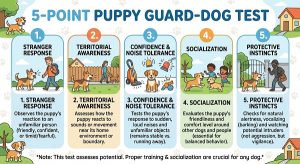
You can’t judge a guard dog from a cute photo. Here’s a simple checklist I use when evaluating young dogs. Do these at 7–8 weeks and again around 12 weeks, with the breeder’s permission:
- Meet the parents. Are they calm, confident, and happy to see you after a short introduction? Avoid parents that are fearful, hyper-aggressive, or hide.
- Sound test. Drop a metal bowl at a distance. A good puppy startles, then recovers within seconds and investigates.
- Stranger test. Does the puppy approach a new person with curiosity? Hiding in the corner is a warning sign. Charging and biting wildly is another.
- Surface test. Walk the pup across slippery floor or a wobbly board. Confident pups try again.
- Recovery test. How fast does the puppy bounce back after something odd happens?
Ask the breeder for:
- Hip and elbow scores for both parents (OFA, PennHIP, or the equivalent in your country)
- Results for common inherited conditions, including von Willebrand’s disease and degenerative myelopathy
- A written health guarantee
- Names of families who own earlier litters
If a breeder says “King Shepherds don’t need health testing because they’re a healthier cross,” walk away. A “healthier” claim means nothing without test results.
Training a King Shepherd to Guard: A Handler’s Timeline
Here’s the big rule I give every owner: obedience first, guarding second. A dog that doesn’t come when called, or let go when told, shouldn’t be trusted with any protection work. Dogs are rarely “too aggressive.” They are usually under-trained.
Phase 1: Weeks 8–16 — Socialization
Your goal is a confident, not suspicious, puppy.
- Meet 50+ different people (hats, uniforms, umbrellas, different ages).
- Walk on different surfaces and hear different sounds.
- Keep every experience positive. Don’t force a nervous puppy.
- Start crate training and calm alone-time right away.
Why it matters: a giant breed that hasn’t seen the world by four months can react out of fear later. Fear plus 120 lb is a problem.
Phase 2: Months 4–12 — Obedience Foundation
Teach the commands that make guarding safe:
- Sit, down, stay, come (the “recall” is the most important)
- Leave it and drop it
- Place (go to a spot and stay)
- Quiet (stop barking on command)
Practice around distractions: doorbells, visitors, other dogs. For a deeper command list, see our post on 10 essential protection dog commands.
Many of these dogs are soft-natured and sensitive. Use rewards, a calm voice, and short sessions of 5–10 minutes. Harsh corrections can make a big dog shut down.
Phase 3: Months 12–18 — Controlled Alert Training
At this stage, you teach the dog to alert, not attack:
- Bark on cue at the door or gate, then quiet on cue.
- Reward watchfulness. Mark and reward the dog for noticing a person approaching, then reward again for settling.
- Boundary awareness. Teach the dog where the yard line is, with you present.
This builds a dependable alarm and deterrent without risky bite work.
Phase 4: 18+ Months — Maintenance (and Professional Help If You Want Protection Work)
Most King Shepherds don’t reach full mental maturity until around two years. If you want real protection training, hire a certified protection trainer. Look for someone who:
- Tests the dog’s nerves and temperament first
- Teaches control and “out” (release) before bite work
- Works with the whole family
- Can show a track record with named clients or programs
Never try to “make your dog mean” at home. That’s how bites, lawsuits, and euthanasia happen.
Daily Routine for a Guard-Ready King Shepherd
| Time | Activity |
|---|---|
| Morning | 30–45 minute walk, then breakfast |
| Midday | 10-minute obedience or scent game |
| Evening | 30-minute walk or play, then dinner |
| Night | Dog sleeps inside, near the family |
Most sources suggest at least an hour of daily activity. Don’t let a puppy do heavy jumping, long runs, or stairs until its joints mature, usually around 18 months.
Common Mistakes That Ruin a Guard Dog
- Chaining or kenneling the dog outside all day. Isolation breeds frustration and barking at everything.
- Skipping socialization because “I want a guard dog.”
- Encouraging aggression by teasing or rough play.
- Buying on size alone. Bigger isn’t better if the temperament is weak.
- Ignoring health tests. A guard dog that can’t walk at age six can’t guard.
- Over-feeding. Extra weight on a giant dog is hard on hips and heart.
- Assuming one dog does it all. Dogs don’t replace locks, lights, and cameras.
Health and Lifespan: What Affects a Guard Dog’s Career
A guard dog is only useful when it’s healthy. King Shepherds are often described as healthier than German Shepherds, but breed sources still list several concerns:
| Condition | Why it matters | What you can do |
|---|---|---|
| Bloat (gastric torsion) | Life-threatening emergency in large, deep-chested dogs | Feed 2–3 smaller meals, avoid hard exercise around meals, ask your vet about a preventive gastropexy |
| Hip and elbow dysplasia | Pain, limping, early retirement | Buy from parents with joint scores, keep weight lean |
| Von Willebrand’s disease | Bleeding disorder | Ask for genetic test results |
| Degenerative myelopathy | Progressive hind-limb weakness | Genetic testing of parents |
| Hypothyroidism | Weight gain, low energy | Routine bloodwork |
| Exocrine pancreatic insufficiency (EPI) | Poor digestion, weight loss | Vet diagnosis and enzymes |
Lifespan: Expect 10–12 years. Giant breeds age faster, so plan for senior care (joint support, vet checks twice a year) from around age 7.
Feeding: One breed guide suggests roughly 3–4 cups of dry food a day for an adult, split into at least two meals. Your dog’s exact amount depends on age, activity, and the food’s calories. Ask your vet.
Real Cost of Owning a King Shepherd Guard Dog
Most competing pages skip this section. Prices vary by country and breeder, so use these as planning ranges, not promises.
| Cost | Typical range (USD) | Notes |
|---|---|---|
| Puppy from a reputable breeder | $1,500–$3,000+ | Often quoted by breeders; health-tested parents cost more |
| Vet, vaccines, neutering/spaying (first year) | $500–$1,200 | Larger dogs cost more for anesthesia and medication |
| Food | $60–$150 per month | Based on large and giant-breed dry food |
| Training (group classes) | $150–$500 for a course | Private training costs more |
| Professional protection training | $2,000–$10,000+ | Depends on the trainer and program |
| Insurance | $40–$100 per month | Check if your policy covers large breeds and liability |
| Gear (strong crate, harness, leash) | $200–$500 | Buy for a 100+ lb dog |
These are my planning estimates, not quotes. Check local prices.
Rule of thumb: Budget at least $1,500–$2,500 a year after the first year, plus an emergency fund for bloat surgery, which can run into the thousands.
Looking for gear that holds up on a big dog? Check our tactical K9 harness guide.
Law and Liability: What Most Articles Skip
A big guard dog makes you responsible for a big risk. Rules differ by country, state, and city, so check yours. Here are the basics:
- United States: Many states hold owners responsible when their dog bites, sometimes even for a first bite. Homeowner’s and renter’s insurance may exclude certain breeds, or any dog with a bite history. Call your insurer before you bring the dog home.
- United Kingdom: Under the Dangerous Dogs Act 1991, an owner can face prosecution if a dog is dangerously out of control, including on private property. King Shepherds aren’t a banned type, but you’re still responsible. The Guard Dogs Act 1975 also sets rules for guard dogs at business premises (a handler present or the dog secured, plus warning signs).
- Europe and elsewhere: Rules vary widely. Some places require licenses, insurance, or temperament tests for large dogs.
Practical steps:
- Put up a clear “Dog on Premises” sign.
- Keep the dog behind a secure fence and locked gate.
- Keep a lead on in public. Always.
- Never leave a big dog alone with visiting children.
- Keep vet and training records. They help if a dispute ever arises.
This is general information, not legal advice. Talk to a local lawyer or your insurer for your area.
Who Should (and Shouldn’t) Get One
A King Shepherd is a good fit if you:
- Want a loyal family dog that also deters intruders
- Have a home with space and a secure yard (or can give serious daily exercise)
- Can be home most of the day or include the dog in your routine
- Are ready to train for two years
- Can pay for large-dog food and vet care
Think twice if you:
- Work long hours and leave the dog alone (these dogs can get bored, anxious, and destructive)
- Live in a small apartment with no exercise plan
- Want an “attack dog” for show or revenge (wrong dog, wrong reason)
- Are a first-time owner who can’t afford a trainer
- Have no plan for a 10-12 year commitment
Handler’s Note: How I Judge a Guard Dog
When I assess a dog for guard work, I don’t start with breed. I ask four questions:
- Is the dog stable? Can it recover quickly from surprise?
- Is it controllable? Does it obey with distractions around?
- Is it clear? Does it tell friends from threats, or bark at everything?
- Is it healthy and sound? Can it work comfortably for years?
A dog that fails #1 or #2 isn’t a guard dog; it’s a liability. Breed gives you odds. Training and testing give you answers.
What I’d also say: No dog replaces good security habits. Pair your dog with locks, lighting, and an alarm. A dog is a layer, not the whole system.
For readers who want a complete training roadmap, my e-book Beyond the Bark: Inside a Pro Handler’s Playbook for Raising the Ideal Dog walks through handler-level training step by step.
FAQs
1. Is a King Shepherd a good guard dog for a family?
Yes, for most families. It’s big, loyal, and watchful, and it usually does well with kids it grows up with. It works best as a deterrent and alarm dog. Early socialization and obedience training are what keep it safe and predictable.
2. Are King Shepherds aggressive?
Not by nature. Breed clubs and guides describe them as protective without being aggressive. But any large dog can become reactive if it’s poorly bred, under-socialized, or isolated. Good breeding and training make the difference.
3. Is a King Shepherd better than a German Shepherd as a guard dog?
It depends on your goal. A King Shepherd is bigger, often calmer, and a strong deterrent for families. A German Shepherd (especially a working line) usually has more drive and versatility for real protection or security work.
4. Can a first-time owner handle a King Shepherd?
Many can, if they commit to early training and socialization and budget for a trainer. The dog’s size makes mistakes costly. If you’ve never owned a dog, start with group classes the week the puppy arrives.
5. How much does a King Shepherd cost?
Puppies from reputable breeders are often quoted at about $1,500–$3,000 or more. Add yearly costs for food, vet care, training, and insurance, which can easily reach $1,500–$2,500 or more. Always ask for health test results before paying a deposit.
Conclusion and Next Steps
So, is a King Shepherd a good guard dog? Yes, as a family guardian and deterrent. Its size, loyalty, and watchful nature do a lot of the work. But it isn’t a shortcut. The best King Shepherd guard dogs come from health-tested parents, careful socialization, and a handler who trains obedience before anything else.
Your action plan:
- Decide which level you need: alarm, deterrent, or protection.
- Find a breeder who shows hip, elbow, and genetic test results.
- Test the puppy using the 5-point checklist.
- Socialize hard in the first 16 weeks.
- Build obedience for a year before any guard-style work.
- Check your insurance and local laws before the dog comes home.
- Add locks, lights, and alarms. Never rely on the dog alone.
Want weekly handler-tested tips on working dogs, training, and gear? Subscribe to our weekly articles roundup newsletter and get new guides straight to your inbox.
Also read: Obedience vs Instinct: How to Balance Drive and Control
Sources:
- About King Shepherds — King Shepherd Club of America
- King Shepherd Dog Breed Guide — Dogster
- King Shepherd Dog Breed Health, Temperament, Training — PetGuide

Her work centres on obedience, detection, protection and operational readiness. She favours proven methods built on repetition, consistency and real-world conditioning, so that both dogs and handlers are prepared for high-pressure tasks.
Rofiat represented the Nigerian Army Dog Centre at the Nigerian Army Day Celebration (NADCEL) 2026, where she led demonstrations in obedience, explosive detection, agility and tactical movement. Through articles, training content and documentaries, she shares field-based insight into how structured training, clear communication and trust between handler and dog affect performance and reliability.
She is the author of Beyond the Bark: Inside a Pro Handler's Playbook for Raising the Ideal Dog, a practical guide that helps dog owners and handlers apply professional training principles in everyday situations.
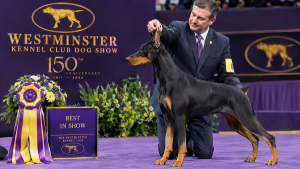
- Westminster Dog Show 2026: Winners & Full Results - October 17, 2026
- 10 K9-Approved Tricks to Teach Your Dog (Step-by-Step) - October 16, 2026
- COBA National Dog Championship 2026: Full Guide - October 15, 2026