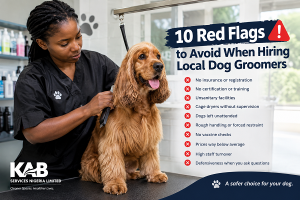
10 Red Flags to Avoid When Hiring Local Dog Groomers
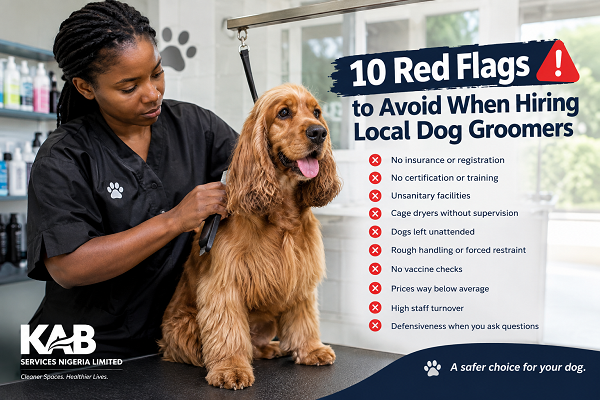
The biggest red flags when hiring a dog groomer are no proof of insurance, no verifiable certification or training, unsanitary facilities, cage dryers used without constant supervision, dogs left unattended on tables, rough or forceful handling, no vaccine checks, prices far below the local average, high staff turnover, and defensiveness when you ask questions. If you spot two or more of these during a visit or phone call, keep looking.
Table of Contents
- Introduction: Why This List Could Save Your Dog’s Life
- Red Flag #1: No Proof of Insurance or Business Registration
- Red Flag #2: No Certification, Training, or Verifiable Experience
- Red Flag #3: They’re Vague or Defensive About Their Methods
- Red Flag #4: Cage Dryers Used Without Constant Supervision
- Red Flag #5: An Unsanitary or Overcrowded Facility
- Red Flag #6: They Don’t Ask for Vaccination Records
- Red Flag #7: Dogs Left Unattended on Tables or in Kennels
- Red Flag #8: Rough Handling, Forced Restraint, or “We Sedate Anxious Dogs”
- Red Flag #9: Prices Way Below the Local Average
- Red Flag #10: No Background Checks and Constant Staff Turnover
- Trainer’s E-E-A-T Note: Why You Can Trust This List
- FAQs
- Conclusion: Trust Your Gut and Your Dog’s Body Language
Introduction: Why This List Could Save Your Dog’s Life
Here’s the thing nobody tells you when you’re googling “dog groomer near me” at 11pm: in most countries, anyone can call themselves a professional dog groomer. No exam. No license. No inspection. Peggy Harris, certification coordinator for the National Dog Groomers Association of America (NDGAA), put it bluntly to WebMD: no state licenses pet groomers, and someone can just buy a pair of scissors and a clipper and call themselves a groomer. That hasn’t really changed in 2026, a handful of U.S. states have floated licensing bills, but grooming is still one of the least regulated pet-care industries in the world.
That gap is exactly why “red flags” matter more here than almost anywhere else in pet care. You’re handing your dog, sharp scissors, hot dryers, and all, to someone with zero mandatory oversight.
I’ve spent years around working and family dogs, and I’ve heard the horror stories that never make it into the shiny five-star reviews: dogs coming home nicked and shaking, a client whose Shih Tzu was left in a heated drying cage for “just five more minutes,” dogs that flinch at the word “grooming” for months afterward. Most groomers are genuinely good, careful professionals. But the bad ones don’t advertise themselves as bad, they hide behind a clean storefront and a cute Instagram page.
By the end of this article, you’ll know exactly what to look for (and listen for) before you ever hand over your dog’s leash, plus the specific questions that make untrained groomers squirm.
Red Flag #1: No Proof of Insurance or Business Registration
This is the fastest gut-check you can run, and it takes 30 seconds.
Ask: “Can I see your liability insurance certificate?” A legitimate grooming business, whether it’s a mobile van, a home-based setup, or a full salon, carries liability insurance and, in most places, some form of business registration. This covers you if your dog is injured, gets sick from something in the facility, or if property damage happens.
Why it matters: Insurance isn’t just paperwork. Groomers who carry it have usually also gone through some baseline vetting from an insurer, and they have something to lose if they cut corners. If a groomer hems, haws, or tells you “insurance isn’t really necessary for what I do,” that’s your first sign to walk.
Red Flag #2: No Certification, Training, or Verifiable Experience
Since there’s no license requirement in most places, certification from an independent body is the closest thing you’ll get to a quality guarantee. Look for credentials from organizations like:
- National Dog Groomers Association of America (NDGAA), offers certified master groomer status through skills testing
- International Professional Groomers, Inc. (IPG)
- International Society of Canine Cosmetologists (ISCC)
- Country-specific bodies such as the British Dog Groomers’ Association (BDGA) in the UK, or Pet Industry Association Australia (PIAA) certifications
A groomer doesn’t need to be certified to be good, plenty of skilled groomers learned through years of apprenticeship rather than formal exams. But as PDGA notes in its own groomer red-flag guide, a knowledgeable groomer should still be able to explain where they trained, who mentored them, or which grooming school they attended, if they go vague on their background, that’s a warning sign.
Ask this: “How long have you worked specifically with [your dog’s breed/coat type]?” A double-coated Husky, a curly-coated Poodle, and a wiry-coated Schnauzer need completely different tools and techniques. A groomer who’s only ever worked short-haired breeds shouldn’t be “winging it” on your Bernese Mountain Dog.
Red Flag #3: They’re Vague or Defensive About Their Methods
Good groomers love explaining what they do. It’s one of the clearest tells in this whole list.
Ask a groomer how they handle a nervous or reactive dog, and watch their face. A trustworthy answer sounds something like: “We go slow, use positive reinforcement, take breaks, and if a dog’s too stressed that day, we stop and reschedule.” As industry sources point out, if a groomer’s method for handling anxiety is simply to hold the dog down and push through it regardless of how distressed the dog gets, that’s a serious red flag.
Similarly, watch how they react when you ask about safety protocols, certifications, or their process. A good groomer welcomes the questions. As one groomer resource puts it, if they get annoyed or defensive when you ask about their process, certifications, or safety protocols, that’s a signal to find someone else, good groomers welcome questions.
Red Flag #4: Cage Dryers Used Without Constant Supervision
This one deserves its own section because it’s genuinely a life-or-death issue, and it’s the single most under-discussed red flag on most “top 10” lists online.
Heated drying cages/cabinets aren’t inherently dangerous, they’re common, and used correctly, they’re fine. The danger comes from inattention. Here’s what’s actually happened:
- In 2008, a 6-year-old Lhasa Apso named Sadie died from internal burns and bleeding after being left in a heated drying cage at a California Petco.
- A two-year-old golden retriever named Colby Jack died of heatstroke in a Virginia Petco’s drying cage in 2016, the company later admitted its animal care protocols weren’t followed and pledged to stop using that type of kennel dryer.
- Master groomer Linda Law, a 30+ year NDGAA veteran who runs her own grooming school, told reporters her salons stopped using cage dryers back in the late 1980s because too many groomers weren’t setting the temperature correctly and would get busy and simply forget about the dog.
Veterinarian Dr. Debra Eldredge recommends being direct about it: specify that you want your pet dried with cool air and/or towels only, especially for brachycephalic (flat-faced) breeds, which struggle to breathe in dryer cages, and for older or overweight dogs, who are especially vulnerable to heatstroke.
What to ask: “Do you use cage dryers? If so, how often is my dog physically checked while inside?” The correct answer is every 5–10 minutes, minimum, with a human physically laying eyes on the dog, not just a beeping timer.
Red Flag #5: An Unsanitary or Overcrowded Facility
Walk in before you book. Trust your nose before you trust the website photos.
A responsible grooming salon smells like shampoo, not urine or bleach-masking-something-worse. Floors should be clear of clumped fur and standing water. Tools, clippers, combs, scissors, should be visibly cleaned between dogs, not caked with hair from the last three clients.
Unsanitary conditions aren’t just gross, they spread parasites, ringworm, kennel cough, and bacterial infections between dogs. If the shop is cramming more dogs into kennels or cages than staff can reasonably supervise, that’s also a crowding red flag that raises the odds of an accident going unnoticed.
Red Flag #6: They Don’t Ask for Vaccination Records
A groomer who doesn’t ask for proof of core vaccinations, rabies, DHPP, and typically Bordetella (kennel cough), is cutting a corner that protects every dog in that building, including yours. If a receptionist says “it’s fine, just bring them in” with no paperwork required, that’s a real signal about how seriously the whole operation takes health and safety standards.
Red Flag #7: Dogs Left Unattended on Tables or in Kennels
This sounds obvious, but it’s one of the most common causes of grooming injuries. Dogs occasionally leap or fall off grooming tables while still attached to a grooming loop (a noose-style restraint), and the result can be strangulation or a broken neck. Some U.S. states have actually written this directly into proposed pet-grooming legislation, for example, New York’s certification bill for pet groomers explicitly states that pets shall not be left unattended while at the grooming facility, and shall not be left unattended on a grooming table or in a bath tub.
Ask directly: “Is someone always physically present when a dog is on the table?” The answer should be an immediate, unequivocal yes, not “usually” or “we try to.”
Red Flag #8: Rough Handling, Forced Restraint, or “We Sedate Anxious Dogs”
If you hear yelping, staff yelling, or see a dog being yanked, pinned, or forced into position, leave, don’t finish the appointment, don’t come back for pickup later, just leave now. Rough handling doesn’t just risk a physical injury; it can create long-term fear and behavioral problems around grooming, vets, and even strangers touching your dog.
One thing that should be an automatic dealbreaker: any groomer who offers to sedate your dog to get through a stressful session. Sedatives given by a non-veterinary professional carry real risk of overdose or an allergic reaction. If your dog is that anxious about grooming, the right move is a vet-supervised grooming appointment, not a back-room sedative from someone without a veterinary license.
Red Flag #9: Prices Way Below the Local Average
Everyone loves a deal, but grooming is one service where “too cheap” should worry you, not excite you.
For context, typical full-groom pricing in 2026 runs roughly $40–$90 in the U.S. for a medium-sized dog, £25–£60 in the UK, and €30–€70 across much of Western Europe, depending on coat type and city. If a groomer nearby is quoting half that with no explanation, ask why. It might mean they’re rushing dogs through in a fraction of the normal time, reusing dirty water or tools between clients, skipping ear cleaning or nail trims to save time, or using cheap, harsh shampoos that trigger skin reactions. Low price alone isn’t a red flag, but an unexplained rock-bottom price almost always means something’s being cut.
Red Flag #10: No Background Checks and Constant Staff Turnover
If you’re using a grooming company rather than an independent groomer, ask whether staff go through background checks before they’re allowed to handle client dogs. As one pet-care industry executive put it, dog care is serious business, and background checks are non-negotiable.
Also pay attention if you notice a completely different face handling your dog every single visit. High turnover often signals poor management, low pay, or a stressful, poorly run workplace, none of which bode well for how carefully your dog is treated when you’re not in the room.
Trainer’s Note: Why You Can Trust This List
I’m not a licensed groomer myself, I work primarily in K9 training, handling, and working-dog care but grooming and coat maintenance is a routine part of keeping any working or family dog healthy, and I’ve sat in on enough grooming sessions with client dogs, military working dogs, and my own animals to know exactly what a calm, professional session looks like versus a rushed, careless one. Every stat, quote, and legislative reference in this article is pulled from named, checkable sources: the NDGAA, WebMD’s veterinary review team, published grooming-industry incident reports, and actual state legislation, not recycled blog opinions. If you want more hands-on grooming guidance specifically for puppies, we’ve also put together a full puppy grooming routine guide that pairs well with this checklist.
FAQs
1. How do I know if a dog groomer is legit?
Check for visible proof of liability insurance, ask about certifications (NDGAA, IPG, ISCC, or a national equivalent), and watch how they answer questions about their methods. A legit groomer explains their process clearly and never gets defensive.
2. Are cage dryers safe for dogs?
They can be, but only with constant human supervision and correct temperature settings. Multiple documented dog deaths have occurred when dogs were left unmonitored in heated cage dryers for too long, especially flat-faced breeds and older or overweight dogs.
3. Should a groomer ask for my dog’s vaccination records?
Yes, always. A groomer who skips this step is putting every dog in the facility at risk of disease, not just yours.
4. Is a cheap dog groomer always a bad sign?
Not automatically, but a price far below the local average deserves a direct question about what’s included. Cutting corners on time, sanitation, or products is a common way groomers keep prices artificially low.
5. What should I do if I see a groomer mishandling a dog?
Leave immediately, remove your dog from the situation if possible, and report the incident to the business owner and, if it’s a franchise location, to corporate. In serious injury cases, contact your local animal welfare authority.
Conclusion: Trust Your Gut and Your Dog’s Body Language
Most groomers genuinely love dogs and take real pride in their work. But because so much of this industry runs on trust rather than regulation, it’s on you to do the vetting a license would normally handle.
Here’s the shortest version of everything above: ask for insurance proof, ask about certifications, watch how they answer your questions, check the facility in person, and never ignore your dog’s own reaction after a visit. If your usually happy dog suddenly cowers at the mention of “grooming day,” that’s data too, dogs don’t lie about how they were treated.
If this checklist helped, take a look at our guide on managing shedding between grooming visits, or if you’re choosing a new dog and want one that’s easier on your grooming budget from day one, check our list of low-maintenance dog breeds with basic grooming needs. And if you want a deeper, practical roadmap for raising a well-adjusted, well-groomed working or family dog from day one, our team’s e-book Beyond the Bark covers this alongside training, health, and handling fundamentals.
Want more guides like this delivered straight to your inbox every week? Subscribe to the ARFS K9 Team newsletter for weekly, no-fluff dog care and training tips.

Her work centres on obedience, detection, protection and operational readiness. She favours proven methods built on repetition, consistency and real-world conditioning, so that both dogs and handlers are prepared for high-pressure tasks.
Rofiat represented the Nigerian Army Dog Centre at the Nigerian Army Day Celebration (NADCEL) 2026, where she led demonstrations in obedience, explosive detection, agility and tactical movement. Through articles, training content and documentaries, she shares field-based insight into how structured training, clear communication and trust between handler and dog affect performance and reliability.
She is the author of Beyond the Bark: Inside a Pro Handler's Playbook for Raising the Ideal Dog, a practical guide that helps dog owners and handlers apply professional training principles in everyday situations.
- Lagos Dog Carnival 2026: Full Guide, Dates & Events - October 25, 2026
- 10 Red Flags to Avoid When Hiring Local Dog Groomers - October 24, 2026
- Can You Handle a Cane Corso Puppy? 7 Hard Truths - October 23, 2026