What Is a Working Dog? Traits, Breeds & K9 Careers Guide

A working dog is any dog specifically bred and trained to perform a functional job for humans, like detection, protection, herding, or search and rescue, rather than living purely as a companion animal. Unlike service dogs, working dogs don’t have automatic public access rights under laws like the ADA, and their “working dog” status comes from their trained task, not their breed or paperwork.
Table of Contents
- Introduction: The Question Most Guides Get Wrong
- What Exactly Is a Working Dog? (Quick Definition)
- Working Dog vs. Service Dog vs. Therapy Dog vs. Pet: A Side-by-Side Comparison
- The AKC Working Group: 31 Breeds Built for a Job
- Modern Working Dog Categories (That Have Nothing to Do With AKC Groups)
- What It Actually Costs and Takes to Build a Working Dog
- The Health and Temperament Standards Most Articles Skip
- Could Your Dog Be a Working Dog? A Realistic Self-Check
- Working Dog Etiquette: What To Do (and Not Do) Around One
- Trainer’s Note: Where This Guide Comes From
- Frequently Asked Questions
- Conclusion
Introduction: The Question Most Guides Get Wrong
Here’s the problem I run into constantly, both online and at demonstrations: people ask “what is a working dog” and get an answer built around a checklist of breeds. Rottweiler, husky, Saint Bernard, done. That’s not wrong, exactly. But it skips the part that actually matters to most readers, how a dog becomes a working dog, what it costs, how long it takes, and whether their own dog could ever do it.
I’ve spent over 14 years handling military working dogs (MWDs) and training security K9s, and the question I get asked most by everyday dog owners isn’t “which breeds are in the Working Group.” It’s “could my dog actually do this job, and what would it even take?” So that’s what this guide is built around. You’ll get the breed information, sure. But you’ll also get real training timelines, real costs, the health screening standards professional programs actually use, and a straight answer about whether your own dog has working-dog potential.
What Exactly Is a Working Dog? (Quick Definition)
A working dog is a dog trained and deployed to perform a specific, functional task that serves a practical human need, not companionship alone. That includes police and military K9s, detection dogs, herding dogs actively managing livestock, search and rescue (SAR) dogs, and personal protection dogs.
The legal and practical definition hinges on function, not breed registry. A Belgian Malinois lounging on your couch all day is a pet. A Belgian Malinois clearing vehicles at a border checkpoint is a working dog. Same breed, completely different classification, because the job, not the pedigree, is what defines the category.
Three things separate a true working dog from a well-trained pet:
- Task-specific training measured against a certification standard (think narcotics detection certification, or a Schutzhund/IGP protection title), not just basic obedience.
- Operational deployment — the dog is actually used to perform the task, regularly, under real conditions.
- Selection for drive, meaning the dog was chosen (or bred) specifically because it has the prey drive, nerve strength, or herding instinct the job demands, traits most family pets were never selected for.
Working Dog vs. Service Dog vs. Therapy Dog vs. Pet: A Side-by-Side Comparison
This is where I see the most confusion, even among experienced dog owners. Here’s the breakdown that actually clears it up:
| Category | Primary Purpose | Public Access Rights | Legal Protection | Example |
|---|---|---|---|---|
| Working Dog | Performs an operational task (detection, protection, SAR, herding) | None automatic, access depends on the employer/agency | No federal public-access law | Police K9, military MWD, livestock guardian |
| Service Dog | Assists one person with a disability through trained tasks | Full public access | Protected under the ADA (US) | Guide dog, mobility assistance dog |
| Therapy Dog | Provides comfort in group settings (hospitals, schools) | Invitation-only, no legal right | None under the ADA | Hospital visitation dog |
| Emotional Support Animal (ESA) | Provides comfort through presence | Housing only | Fair Housing Act (housing, not public access) | Companion dog with ESA letter |
| Family Pet | Companionship | None | None task-related | Household dog |
The mix-up happens most often between working dogs and service dogs, so it’s worth spelling out directly: a service dog is trained to perform specific tasks for one individual with a disability (guiding, alerting to seizures, retrieving items), and federal law protects that handler’s right to bring the dog into restaurants, stores, and other public spaces. A working dog, by contrast, is typically part of an institutional team, a police department, a military unit, a security company, or a farm and its access to any given space depends entirely on that employer’s policy, not federal disability law.
Curious how a working dog stacks up against an everyday pet dog day-to-day? I broke that down thoroughly in what actually separates a working dog from a pet dog, covering lifestyle, legal status, and daily routine differences in more depth.
The AKC Working Group: 31 Breeds Built for a Job
The American Kennel Club currently recognizes 205 breeds total, and 31 of them sit inside the official Working Group, the group specifically built around breeds developed for heavy physical labor: guarding, sledding, water rescue, and drafting. (Fun fact: until 1983, herding breeds were lumped into this same group too, until the AKC split off a dedicated Herding Group of 14 breeds.)
Guardian and Protection Breeds
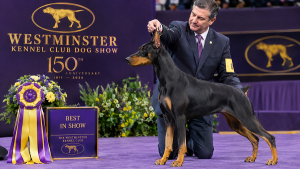
- Doberman Pinscher — Streamlined, sharp-minded, originally bred in 1890s Germany specifically as a personal protection dog for tax collector Karl Friedrich Louis Dobermann.
- Rottweiler — Descended from Roman drover dogs that once herded cattle across the Alps alongside legions; today a common choice for personal protection and police work in parts of Europe.
- Giant Schnauzer — A German cattle-driving breed later adopted widely into police service.
- Cane Corso — An Italian guardian breed dating back to Roman war dogs, prized for its confidence and territorial instinct.
For anyone comparing the two most common modern security breeds head-to-head, I put together a full German Shepherd vs. Belgian Malinois breakdown covering intelligence, trainability, and which one tends to hold up better in operational roles.
Arctic and Draft Breeds
- Siberian Husky — Bred by the Chukchi people of northeastern Siberia for endurance sled work over long distances at moderate speed.
- Alaskan Malamute — Built for heavy hauling rather than speed; named for the Mahlemut Inuit people of northwest Alaska.
- Newfoundland — Webbed feet and a water-resistant double coat make this breed a genuine water-rescue specialist, historically used by fishermen off the coast of Newfoundland, Canada.
- Saint Bernard — Famous for alpine avalanche rescue work through the Great St. Bernard Hospice in Switzerland, credited with saving an estimated 2,000+ lives between the 17th and 19th centuries.
Mountain and Farm Draft Breeds
- Bernese Mountain Dog — A Swiss farm dog bred for pulling carts and driving cattle.
- Greater Swiss Mountain Dog — One of the oldest Swiss breeds, used historically to haul goods between farms and markets.
Modern Working Dog Categories (That Have Nothing to Do With AKC Groups)
Here’s something a lot of guides gloss over: most working dogs today aren’t even from the AKC Working Group. The Belgian Malinois sits in the Herding Group. The Labrador Retriever and German Shorthaired Pointer sit in the Sporting Group. What actually makes a dog a working dog now is the job, full stop.
1. Detection Dogs
A dog’s nose contains roughly 220–300 million scent receptors, compared to somewhere around 5–6 million in a human nose. That’s not a small edge, it’s an entirely different sensory world. Detection dogs use that biological advantage to identify:
- Narcotics and controlled substances
- Explosives (military and TSA-style checkpoint work)
- Invasive agricultural products at border crossings
- Medical alerts, some dogs are trained to detect drops in blood sugar or the onset of a seizure
Breeds most commonly used: Labrador Retriever, German Shorthaired Pointer, Belgian Malinois, and historically the gold standard for trailing work, the Bloodhound, whose scent evidence has held up in U.S. courtrooms for over a century.
I get asked constantly how reliable these dogs actually are in the field, so I wrote a dedicated breakdown of how accurate military and detection dogs really are at finding explosives, with real operational numbers instead of marketing claims.
2. Guard and Combat Canines
- Police K9 units
- Military Working Dogs (MWDs)
- Personal protection dogs
- Livestock guardian dogs (Anatolian Shepherd, Great Pyrenees, Kangal)
The Belgian Malinois dominates this space for a reason most people don’t fully appreciate: it’s lighter than a German Shepherd (usually 40–80 lbs versus 50–90 lbs), which means faster direction changes, less joint strain over a long career, and a work drive that borders on relentless. That’s exactly why it’s become the default choice for elite military units worldwide, including U.S. special operations canine programs.
3. Search and Rescue (SAR) Dogs
SAR dogs are split into specialties based on how they search:
- Air-scent dogs — work off-lead, following scent carried through the air
- Trailing dogs — follow a specific individual’s scent trail on the ground
- Water search dogs — detect drowning victims from a boat or shoreline
- Avalanche rescue dogs — trained across snowfields in mountain regions
Border Collies and Australian Shepherds show up frequently here because of their stamina and quick-turn agility on unstable terrain, though German Shepherds and Labradors remain the most widely deployed SAR breeds overall.
What It Actually Costs and Takes to Build a Working Dog
This is the part almost nobody breaks down clearly, and it’s the single biggest thing separating “I trained my dog to detect treats” from an actual certified working dog.
Realistic numbers from U.S. law enforcement K9 programs:
- A prospect dog with the right drive and health clearances typically costs $8,000–$15,000 to purchase before any training begins.
- Formal police K9 training programs run another $12,000–$15,000 per dog, covering obedience, task specialization, and certification testing.
- Ongoing annual costs (vet care, food, gear, continued certification) commonly add several thousand dollars more per year.
- According to Jim Watson, director of the North American Police Work Dog Association, roughly 50,000 police K9s are actively deployed across U.S. federal, state, and local agencies today.
- A dog’s working career typically runs 6–9 years, with a total lifespan around 10–12 years, noticeably shorter than most companion breeds, largely due to the physical demands of the job.
Training timeline, realistically:
- 8–16 weeks — foundational obedience and drive assessment
- 3–6 months — task specialization (bite work, scent imprinting, tracking, or herding drills, depending on role)
- 6–12 months — environmental proofing (crowds, gunfire, vehicles, unfamiliar terrain)
- Ongoing — certification renewal, usually annually, for the dog’s entire working life
For a deeper walkthrough of exactly how military dogs move through this pipeline from selection to deployment, see how military working dogs are actually trained, stage by stage.
Cadaver and human-remains detection dogs, for comparison, achieve documented accuracy rates of 95–98% once fully certified, making them, by a wide margin, the most reliable tool available for that kind of search work, ahead of ground-penetrating radar or manual search teams.
The Health and Temperament Standards Most Articles Skip
Not every dog with the right pedigree makes it through a working dog program and that’s actually by design. Reputable programs wash out a significant percentage of candidates, because a working dog with a genetic weak spot or an unstable nerve base is a liability, not an asset.
What professional selection programs actually screen for:
- Hip and elbow scores through OFA (Orthopedic Foundation for Animals) or PennHIP evaluation, dysplasia ends careers early and is a leading cause of medical retirement
- Nerve strength testing — how the dog recovers after a sudden loud noise, a startling visual, or unfamiliar footing
- Prey and hunt drive assessment — measured through toy engagement and search persistence, not just enthusiasm
- Environmental soundness — exposure to slick floors, stairs, crowds, and traffic during early puppy testing (often between 7–16 weeks)
- Handler bondability — some very driven dogs are actually too independent to work reliably with a human partner
This is the piece most “what is a working dog” articles skip entirely, and it’s exactly why so many well-meaning owners assume their high-energy dog would “make a great K9” when the reality is far more selective. Programs like the U.S. military’s Department of Defense Military Working Dog program reportedly reject a large share of candidate dogs before training even begins, purely on temperament and health grounds.
Could Your Dog Be a Working Dog? A Realistic Self-Check
I get this question at almost every demonstration I run. Here’s a fair, honest way to think it through, not to discourage you, but to set realistic expectations.
Signs your dog might have real working-dog potential:
- Sustains focus on a single task (toy, scent, object) for several minutes without losing interest
- Recovers quickly from a startle, a dropped pan, a loud vehicle, a strange noise, rather than staying rattled
- Shows strong drive for a reward (toy or food) that borders on obsessive
- Has clean hip/elbow health with no signs of structural issues
- Is between roughly 1–3 years old, since most professional programs prefer dogs young enough for a full training cycle ahead of them
Signs your dog is a wonderful pet, but not a working-dog candidate:
- Gets rattled by loud noises and takes a long time to settle back down
- Loses interest in tasks quickly or gets easily distracted
- Shows nervousness or avoidance around unfamiliar people, surfaces, or environments
- Has diagnosed joint, spine, or vision issues
There’s no shame in the second list; most dogs, including plenty of purebred “working line” dogs, land there. What matters is knowing which one you’re dealing with before you invest time or money chasing a role your dog was never built for.
Working Dog Etiquette: What To Do (and Not Do) Around One
If you spot a dog in a vest or uniform on the job, here’s the short version:
- Don’t approach or pet without asking the handler first, always
- Don’t call out, whistle, or make noise to get the dog’s attention
- Don’t use flash photography near an active working dog
- Do ask the handler if you’d like to say hello, many are happy to introduce their dog when they’re off-task
A moment of distraction during scent work or patrol isn’t just rude, it can genuinely compromise the task, and in protection or apprehension scenarios, it can put people at real risk.
Trainer’s Note: Where This Guide Comes From
I’m Rofiat Muritala, a veteran military K9 handler with 14+ years of hands-on experience across military working dogs, security operations, obedience, explosive detection, and tactical movement, including representing the Nigerian Army Dog Centre at NADCEL 2026. Everything in this guide is drawn from real selection, training, and fieldwork, not secondhand research. If you want a deeper, practical walkthrough of professional training principles you can apply at home, I wrote Beyond the Bark: Inside a Pro Handler’s Playbook for Raising the Ideal Dog, which breaks down the same structured methods professional K9 programs use, adapted for everyday dog owners.
Frequently Asked Questions
1. What is the difference between a working dog and a service dog?
A working dog is trained for an operational role such as police K9 work, detection, protection, SAR and does not have automatic public access rights. A service dog is trained to perform specific tasks for one individual with a disability, and its handler’s public access is protected under the ADA in the United States.
2. Do all working dogs have to be AKC Working Group breeds?
No. The AKC’s Working Group covers 31 specific breeds bred historically for labor like guarding and sledding, but most working dogs today, Belgian Malinois (Herding Group), Labrador Retriever (Sporting Group), come from entirely different AKC groups. What defines a working dog is the job it currently performs, not its group classification.
3. How much does it actually cost to train a police or protection K9?
Purchasing a suitable prospect dog typically runs $8,000–$15,000, and formal training programs add another $12,000–$15,000 per dog before certification. Ongoing annual care and recertification add several thousand dollars more each year.
4. Why is the Belgian Malinois so dominant in police and military work right now?
It combines exceptional stamina, sharp responsiveness, and a lighter frame (40–80 lbs) than breeds like the German Shepherd, which allows faster direction changes and reduces long-term joint strain, a major reason it’s become the top choice for elite tactical and military canine programs worldwide.
5. How can I tell if my own dog has working-dog potential?
Look for sustained focus on tasks, quick recovery from loud noises or startles, obsessive drive for a toy or food reward, clean hip and elbow health, and an age under roughly 3 years. Dogs that get easily rattled or lose interest quickly are usually better suited to companion life than operational work and that’s perfectly fine.
Conclusion
A working dog earns that title through function, not breeding paperwork, a specific job, done to a certification standard, under real conditions. Whether it’s a Bloodhound trailing a missing hiker, a Malinois clearing a checkpoint, or a Newfoundland pulling a swimmer from open water, the common thread is purpose-built training layered on top of genetics that were selected for exactly that purpose.
If you’re weighing whether your own dog could take on working-dog training, start honestly: assess drive, nerve strength, and health before you assess ambition. And if you’re simply trying to understand the working dogs you see in your community, at the airport, on patrol, or on a farm, the biggest favor you can do them is respecting their focus and asking the handler before you interact.
If you want to go deeper on how these differences play out day to day, my breakdown of local dogs versus true working dogs is a good next read.

Her work centres on obedience, detection, protection and operational readiness. She favours proven methods built on repetition, consistency and real-world conditioning, so that both dogs and handlers are prepared for high-pressure tasks.
Rofiat represented the Nigerian Army Dog Centre at the Nigerian Army Day Celebration (NADCEL) 2026, where she led demonstrations in obedience, explosive detection, agility and tactical movement. Through articles, training content and documentaries, she shares field-based insight into how structured training, clear communication and trust between handler and dog affect performance and reliability.
She is the author of Beyond the Bark: Inside a Pro Handler's Playbook for Raising the Ideal Dog, a practical guide that helps dog owners and handlers apply professional training principles in everyday situations.
- How to Enter the COBA National Dog Championship - October 20, 2026
- K9 Advantix Dosage Chart & Safety Guide for Dogs - October 19, 2026
- How to Set Up & Use Bousnic Dog Training Collar - October 18, 2026