Reason Why Explosive Detection Dogs Are Often Successful
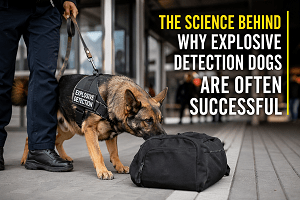
A dogs’ nose can do what gadgets struggle with, sniffing danger fast. Whether at an airport or near a checkpoint, they move quicker than most tools ever could. Yet it isn’t just natural talent that makes them effective, it’s hours shaped by routine and repetition. Smell sticks to memory through tiny chemical signals only their brains decode easily. Each alert comes from layers built long before any mission began.
Ever curious about how these dogs perform so well, yet unsure what shapes their results? This guide explains every part clearly, using everyday words. What makes them work becomes obvious here.
Table of Contents
- Why Detection Dogs Matter
- What Success Rate Actually Means
- The Biology of a Dog’s Nose
- How Dogs Smell Explosives
- Training Systems for Better Accuracy
- real world results compared to lab tests
- What Affects How Well Detection Works
- False Positives versus False Negatives
- The Handler Often Overlooked
- Limits and Science Hurdles
- Why Dogs Are Better Than Tech
- Future of Explosive Detection Dogs
- Handlers and Trainers Practical Insights
- FAQs
1. Why Detection Dogs Are Important
When it comes to staying safe today, moving fast and getting things right separates trouble from calm. Around the world, teams rely on explosive detection dogs since these animals bring sharp smelling skills along with quick movement and flexibility, something tech has yet to match.
Thousands of trained K9 teams operate daily in high-risk environments, from airports and cargo facilities to military checkpoints, making them one of the most trusted tools in counter-terrorism operations.
Luck has nothing to do with it. What works is method, tested step by step.
2. What Success Rate Actually Means
Hold on a second. That idea of one true success number? Doesn’t exist.
Performance gets checked by means of
- Detection accuracy (hit rate)
- False positive rate (incorrect alerts)
- False negative rate (missed threats)
In controlled certification environments, well-trained explosive detection dogs typically achieve 90%–98% accuracy (check our article on How Accurate Are Military Dogs in Detecting Explosives).
Out in the open, though, patterns start to shift. Simple setups face messy shifts once they meet actual days. Reality adds layers that plans often miss. Unseen factors twist what seemed clear at first glance.
3. The Science Behind How Dogs Smell
Biology kicks things off when it comes to catching what’s hidden. Success in spotting rests right there at the start.
Dogs? They’re more than keen noses, they’re living detectors built by nature.
Key Scientific Facts:
- Dogs have up to 300 million olfactory receptors (humans have ~6 million).
- They can detect odor concentrations at parts-per-trillion levels.
- Smell takes up much more space in their mind. A big chunk of thinking power goes straight to scents. Processing odors fills an unusually large area. Much of what they sense ties back to scent work. The nose rules a wide section of mental real estate
So what happens when you see it live? That is how it plays out.
Hidden somewhere beneath soil, tucked in a car, or buried in baggage, explosive vapors too small to see still leave a trail. A sniff from a well-taught dog picks up what machines often miss. Training turns instinct into precision, moment by moment. Each breath the animal takes filters clues others wouldn’t notice. Luggage zippers, tire wells, dirt clods, none hide entirely. Even sealed containers leak hints detectable by nose alone. The dog pauses when it finds something off. Not magic, just focus shaped through repetition. Vapor trails fade fast, yet remain long enough for the right hunter.
4. How Dogs Smell Explosives
Flying through the air after an explosion, bits of chemicals known as VOCs come loose. These invisible pieces spread quickly once set free by blasts.
A few tiny particles escape from stable explosives, floating free. Air carries these faint traces without warning.
Dogs don’t smell the bomb itself, they detect:
- Chemical signatures
- Vapor trails
- Residual odor particles
The Process:
- Explosive emits vapor molecules
- Air currents spread the scent
- Dog samples air using rapid sniffing
- Brain identifies learned odor pattern
- Dog signals detection (alert behavior)
This is why dogs can sometimes detect explosives:
- Inside containers
- Buried underground
- Hidden in vehicles
Yet release of odor molecules makes it possible.
5. training systems that improve accuracy
A gift for scenting won’t carry a dog far. It takes practice, day after day to shape that instinct into something steady, something useful.
Core Training Methods:
1. Odor Imprinting
Barking isn’t their only talent, some pups learn to sniff out danger by recognizing sharp chemical odors. When they point it out, a treat follows close behind.
2. Positive Reinforcement
A small prize might follow a right signal. Praise often comes after an accurate alert. Getting something fun can tag along with good performance. A kind word shows up when the response fits.
3. Double-Blind Testing
One person handles the test, another checks results, neither is told where bombs are placed, so guesses stay out of it.
4. Distraction Conditioning
Dogs are trained to ignore:
- Food
- Noise
- Crowds
- Other animals
5. Continuous Re-certification
Dogs need to show they can find things, time after time.
Start with curiosity about how dogs learn, then discover what happens behind the scenes when pros train.
6. Actual Results Compared to Lab Trials
Here’s the spot most get it wrong about sniffer canines.
Controlled Environment:
- Known scent placement
- Stable weather
- Minimal distractions
- Result: Very high accuracy (often 90%+)
Real-World Environment:
- Unknown odor locations
- Weather interference
- Hidden or masked explosives
- Human stress
Outdoors, spotting things gets harder, a study found it fell to about 91%, unlike spotless lab results. Real conditions tend to weaken performance, even when tech seems flawless inside.
In another large-scale evaluation, top-performing teams achieved 79%–86% detection rates under challenging conditions.
True, dogs work well, yet they can still make mistakes.
7. What Affects How Well Detection Works
Several variables directly affect success rates.
1. Training Quality
One thing stands out above all. When instruction falls short, results cannot be trusted.
2. Handler Skill
Not every move a dog makes is obvious. Yet people who walk them often notice small shifts, how an ear twitches, or when breathing changes slightly.
3. Environment
- Wind disperses scent
- Steam escapes faster when things get hotter
- Rain suppresses odor
4. Explosive Type
Most explosive materials carry a sharper smell compared to weaker ones.
5. Fatigue
Fatigue chips away at a dog’s attention, mistakes creep in. When pushed too long, their sharpness fades, like a radio signal turning staticky.
6. Odor Availability
When jars seal tight, smells stay trapped inside, noses struggle to catch them.
8. False Positives Compared With False Negatives
Mistakes make more sense when you dig into them.
False Alarm No Explosive Detected
Causes:
- Residual odor
- Cross-contamination
- Handler influence
False Negative Missed Explosive
Less common, though riskier.
Causes include:
- Odor containment
- Environmental disruption
- Incomplete training
Bombs missed carry heavier consequences than alarms wrongly triggered, so training setups lean toward catching too much rather than too little.
9. The Often Overlooked Handler
It’s strange how often folks overlook this fact
A well-trained canine might excel, yet everything hinges on the person holding the leash. The animal picks up scents fast, still without guidance it misses cues. Skills matter, but direction shapes outcomes more than instinct ever could.
The handler:
- Breathing shifts might show up first. Body tension often follows, moving through muscles like quiet signals. Posture adjusts without words being said. These small signs link together, each one hinting at what comes next
- Directs search patterns
- Prevents bias
- Maintains discipline
Research shows that team performance, not just dog ability determines success.
Mistakes creep in fast when team talk breaks down.
10. Limits and Science Hurdles
Even elite detection dogs have limitations.
Quantity Generalization Issue
A study found dogs trained on small explosive samples struggled to detect larger quantities of the same substance unless specifically trained for it.
Other Limitations:
- Novel explosive compounds
- Scent masking techniques
- Environmental extremes
- Handler bias
That’s the reason staying sharp through ongoing practice matters so much.
11. Why Dogs Are Better Than Tech
Besides better tech in machines, dogs still do more when it counts. Though gadgets improve fast, four-legged partners win where it matters most.
Why?
- Real-time detection
- Mobility in complex terrain
- Ability to track scent trails
- Adaptability to new environments
Few tools copy a dog’s nose, though machines try hard indoors. Out where it matters, nothing runs like the real thing.
12. Future of Explosive Detection Dogs
Not man’s best friend against gadgets. Instead, tails wagging alongside circuits. Not either or more like fur meeting firmware. Machines don’t replace barks, they walk beside them. Not rivalry. More like a leash connecting two worlds.
Emerging trends include:
- Hybrid detection systems
- Improved training standardization
- Advanced scent simulation tools
- Data-driven performance tracking
One aim stands out, less guesswork, more consistency between groups. Teams move together when expectations are clear, yet each finds their own rhythm. What matters grows obvious over time, not forced but shaped by steady effort. Differences fade where routines strengthen. Uniformity isn’t copied, it emerges.
13. Handlers and Trainers Practical Tips
For those working with dog training or protection jobs, this is what counts:
- Train across multiple environments
- Use varied explosive samples
- Avoid predictable patterns
- Prioritize handler-dog communication
- Every now and then, test without knowing details ahead of time
And most importantly:
Consistency beats intensity.
14. FAQs
1. Could a dog trained to find explosives ever make a mistake?
Actually, lab tests show numbers near 98%, yet daily use brings different results.
2. Do dogs detect bomb scents even when hidden behind metal? What about underwater hiding spots, can their noses pick up traces there too?
Fine, but only when smells stay trapped. Leak one molecule, though, suddenly someone notices. Perfect seals help, yet even then, risk lingers.
3. What makes dogs bark at nothing once in a while?
Most times it’s about leftover smell, mixed signals, or someone reading things wrong, never just luck. A dog might react because something lingers where it shouldn’t. Mistakes happen when people think they see intent where there isn’t any. What feels unpredictable often has quiet causes behind it. The real reason hides in small details others ignore.
4. Which is better: dogs or machines?
Barking companions adapt faster when things shift around them. Machines shine where rules stay fixed and tasks repeat without surprise.
5. Training a dog to detect explosives usually takes several months. Some programs last up to six months or more. Each dog learns at its own pace. Focus shapes how fast progress happens. Experience builds through repeated drills. Handlers work closely throughout the process. Success shows in real situations. Time varies based on the individual animal.
Most times half a year up to two full years, shaped by how hard the practice sessions are plus what level needs reaching.
6. Do certain breeds perform better?
Yes, breeds like Belgian Malinois and German Shepherds are commonly used due to drive and trainability, though accuracy differences are minimal when properly trained.
Final Thoughts
Biology gives them an edge, training sharpens it, while handlers make it work. Success comes less from flawless performance, more from how pieces fit together.
Their success rates are the result of:
- Science (olfaction and chemistry)
- Discipline (training systems)
- Psychology (behavior and bonding)
When these three come together, a rare kind of strength emerges, simple, quiet, yet among the strongest safeguards known.

Her work centres on obedience, detection, protection and operational readiness. She favours proven methods built on repetition, consistency and real-world conditioning, so that both dogs and handlers are prepared for high-pressure tasks.
Rofiat represented the Nigerian Army Dog Centre at the Nigerian Army Day Celebration (NADCEL) 2026, where she led demonstrations in obedience, explosive detection, agility and tactical movement. Through articles, training content and documentaries, she shares field-based insight into how structured training, clear communication and trust between handler and dog affect performance and reliability.
She is the author of Beyond the Bark: Inside a Pro Handler's Playbook for Raising the Ideal Dog, a practical guide that helps dog owners and handlers apply professional training principles in everyday situations.
- Bousnic Dog Training Collar Review: Is It Safe? - September 30, 2026
- Gravy Train Dog Food Review: Ingredients & Recalls - September 30, 2026
- How to Spot Fake AKC Registered Dogs: 5 Warning Signs - September 29, 2026