Black Mouth Cur: The Underrated All-American Working Dog
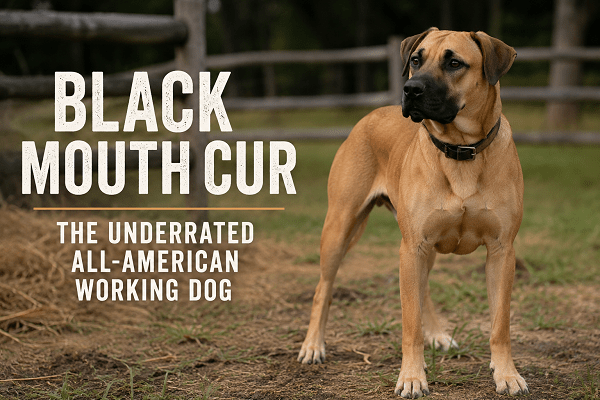
The Black Mouth Cur is a medium-to-large American working dog with a short coat and a dark muzzle. It usually weighs 35 to 100 pounds, lives about 12 to 16 years, and was bred to hunt, herd and guard on Southern farms. It needs 60 to 90 minutes of hard exercise every day, bonds deeply with its family, and does best with experienced, active owners rather than first-timers or apartment dwellers.
Table of Contents
- Introduction
- What a Black Mouth Cur Really Is (Quick Facts)
- History: Where the Breed Came From (and the Old Yeller Myth)
- Black Mouth Cur vs Similar Breeds
- Size, Coat and Looks (and Why Weights Vary So Much)
- Temperament and Personality
- What a Black Mouth Cur Actually Does for Work
- How to Train a Black Mouth Cur: A Handler’s Timeline
- Exercise Needs: A Sample Day
- Health, Lifespan and Health Tests
- What a Black Mouth Cur Costs
- Where to Find One (and What to Check First)
- Is a Black Mouth Cur Right for You?
- Why Trust This Guide
- FAQs
- Conclusion
Introduction
Ever watched a dog work a hog trail for hours, then lie at the kids’ feet like nothing happened? That’s the Black Mouth Cur. It’s one of America’s toughest all-purpose farm dogs, yet most people still lump it in with “yellow mixed breed.”
That mistake costs real money and real heartache. People adopt a Black Mouth Cur because it looks like a friendly Lab mix, then discover a dog with a five-out-of-five prey drive and an engine that doesn’t quit.
In this guide, you’ll learn where the breed came from, how big it gets, what it costs, how to train it, and how to tell if one fits your life. I’ll also cover things most guides skip: the Old Yeller myth, how it compares with Catahoulas and Mountain Curs, and a real age-by-age training plan.
What a Black Mouth Cur Really Is (Quick Facts)
The Black Mouth Cur (often shortened to BMC) is a cur-type dog. “Cur” means a tough, multi-purpose working dog bred for ability, not looks. You’ll also see it called the Southern Black Mouth Cur, Southern Cur or Yellow Black Mouth Cur.
The United Kennel Club (UKC) describes it as a powerful, agile tree dog of medium size and says judges should evaluate it as a working dog. Here are the numbers at a glance:
| Trait | What to expect |
|---|---|
| Height | 16 to 25 inches (UKC minimum: 18 in for males, 16 in for females) |
| Weight | Roughly 35 to 100 lb, depending on line (UKC minimum: 40 lb males, 35 lb females) |
| Lifespan | About 12 to 16 years, sometimes longer |
| Coat | Short, dense, low maintenance |
| Colors | Yellow, red, fawn, brown, buckskin, brindle, black |
| Energy | Very high |
| Prey drive | Very high |
| Best home | Active, experienced owners with space |
One fun fact: not every Black Mouth Cur actually has a black mouth. Some have a muzzle the same color as their coat, and the UKC standard allows dogs with or without a black muzzle or mask.
History: Where the Breed Came From (and the Old Yeller Myth)
Here’s the honest truth: nobody knows the exact origin. Some writers place the breed in the mountains of Tennessee. Others say Mississippi. The UKC itself says the origin is uncertain.
What we do know is the pattern. Settlers needed one dog that could do everything. Breed references describe the BMC spreading from Mississippi into Kentucky, Missouri, North Carolina and Tennessee, then into the Big Thicket region of Southeast Texas. As Americans moved west, the dogs moved with them as hunters and family guardians.
The breed organized late. The Southern Black Mouth Cur Breeders Association formed in 1987, and the UKC recognized the breed on November 1, 1998. The American Kennel Club doesn’t list it as a full breed, which tells you something: this dog was shaped by work, not by show rings.
Was Old Yeller a Black Mouth Cur?
This is the question everyone asks, and the answer is “in the book, probably.”
Fred Gipson’s 1956 novel Old Yeller (a 1957 Newbery Honor book) describes the title dog as a yellow cur. Many people believe Gipson modeled him on a Yellow Black Mouth Cur, though a Blue Lacy (the state dog of Texas) is sometimes named too. The Disney film that followed used a rescued Labrador-Mastiff mix named Spike, so the screen version isn’t a BMC at all.
Here’s why the story matters for owners. Old Yeller defends the family from a bear and a rabid wolf in the story. That’s fiction, but it captures the BMC’s reputation: fierce protector, devoted to its people. It also sets unrealistic expectations. A real BMC needs training to turn that instinct into good judgment.
Black Mouth Cur vs Similar Breeds
Most buyers get confused between American cur and hunting breeds. This comparison clears it up. (Most top-ranking guides skip it.)
| Breed | How it differs from the Black Mouth Cur |
|---|---|
| Mountain Cur | Slightly smaller and more agile. The BMC is larger and more widely known. |
| Catahoula Leopard Dog | More independent and intense. The BMC is a bit more manageable and fits family life better. |
| Florida Cracker Cur | Bred as a cattle dog in Florida; often a bit heavier-boned than other curs. Often confused with the BMC. |
| Plott Hound / Treeing Walker Coonhound | More scent-driven and vocal. The BMC is more of an all-rounder. |
| Labrador mixes (“Florida brown dog”) | Many are part Lab, some BMC and a little hound. Looks similar, but often lower drive. |
Cur vs Hound: The Simple Version
A hound mainly follows a scent trail or chases by sight, and tells you where the game is by barking. A cur does more. It can trail, but it also catches, holds, herds and guards. Think of a hound as a specialist and a cur as a Swiss Army knife.
Size, Coat and Looks (and Why Weights Vary So Much)
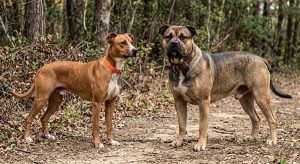
If you’ve researched this breed, you’ve probably seen confusing numbers. One guide says 35 to 60 pounds. Another says 45 to 100. Both are “right,” and here’s why.
BMCs come from working lines, and breeders select for ability, not a fixed size. A compact dog bred for squirrels and raccoons is a different build from a heavy dog bred to catch hogs. The UKC only sets minimums (40 pounds for males, 35 for females). So always ask the breeder about the parents’ weight and job, not just “the breed standard.”
The coat is short, dense and tough. It sheds lightly to moderately and needs only a weekly brush. The head is broad and flat, the ears drop, the chest is deep, and the tail is long and usually isn’t docked. The UKC says a well-proportioned BMC is square or just slightly longer than tall, and it should be shown in “hard, muscular condition.”
Temperament and Personality
The BMC bonds hard. Lemonade’s breed ratings give it 5 out of 5 for loyalty and alertness, and 4 out of 5 for guarding instinct. At home, it’s playful with people it trusts and surprisingly calm once its exercise is done.
With strangers, it’s reserved. That same breed data scores “good with strangers” just 2 out of 5. Some reference books also note that these dogs can be very protective of children, sometimes even objecting when a parent corrects a child.
Then there’s prey drive: 5 out of 5. That’s the number first-time owners ignore. A BMC sees a cat, a chicken or a squirrel as a job, not a neighbor.
So here’s the thing: this isn’t an aggressive breed. It’s an intense one. The difference is direction. A BMC with a job and clear rules is steady and sensible. A BMC with boredom and no rules invents its own work: digging, escaping, chasing, guarding the fence line a little too hard. If you’ve ever wondered why some dogs bite or snap, read our guide on 12 reasons dogs bite and how to stop them. Most of those reasons (fear, frustration, poor socialization) apply directly to this breed.
Good With Kids and Other Pets?
The honest answer is “it depends on raising.” BMCs can be wonderful with children in their own household. But their size and energy call for supervision around toddlers, and they may be tense with unfamiliar dogs. Early introduction to cats and other pets matters. Even then, I’d never promise a cat-safe BMC. Management (baby gates, leashes, separate spaces) is part of the deal.
What a Black Mouth Cur Actually Does for Work
Most guides say “hunts, herds and guards” and stop. Let’s get specific.
- Hog and big-game work: Southern hunters use BMCs on feral pigs and bear. The breed has a reputation for catching and killing game on the ground, though it can also tree and bay (hold the animal in place until the hunter arrives).
- Small game: Raccoon, squirrel and deer are common quarry too. The UKC calls it a fast, hard hunter that finds game using eyes, ears and nose.
- Livestock: Cattle driving and general farm work. This is where the “cur” heritage shows.
- Home guardian: Watchful and territorial. It alerts first and acts second when well trained.
Why does this matter if you just want a pet? Because the dog inside your living room is the same dog. Its brain wants to track, chase and hold. Your job is to give those instincts a safe outlet, such as scent games, tracking, sprint work and structured fetch. That’s the same logic we use with professional K9 teams: a dog that has a purpose is a calmer dog.
How to Train a Black Mouth Cur: A Handler’s Timeline
Black Mouth Cur training works best when it feels like teamwork, not a power struggle. The BMC is smart (4 out of 5 for trainability), but it also has an independent streak, because it was bred to make decisions in the field. Use reward-based training with clear, consistent rules.
Here’s the timeline I’d follow. These are typical windows, and every dog moves at its own pace.
| Age | Focus | Goal |
|---|---|---|
| 8 to 16 weeks | Socialization, handling, crate comfort, name response | Meet 50+ new people, surfaces, sounds and animals, all positive |
| 4 to 6 months | Leash manners, “leave it,” place/settle, recall on a long line | Calm focus around distractions |
| 6 to 12 months | Impulse control, off-switch training, reliable recall in safe areas | Dog can wait, watch you, then release to play |
| 12 to 24 months | Real job: tracking, scent work, farm tasks | Mature judgment and steady behavior |
Three Skills That Matter More for a Cur Than for Most Breeds
- Recall on a long line. Use a 30-foot line until the dog comes back through real distractions, not just in your yard. Don’t trust off-leash recall near wildlife before 12 months, and treat it with caution even after.
- “Leave it” and “watch me.” These interrupt prey drive. Practice at a distance from a squirrel before you practice at ten feet.
- An off-switch. Teach the dog to settle on a mat for 10 to 20 minutes after exercise. A dog that can’t relax is a dog you’ve only exercised, not trained.
Start with the basics in our guide to essential protection dog commands if you want your Cur to be a watchful guardian without becoming overprotective.
If you want a full, step-by-step system for raising a calm, reliable dog (including puppy structure, consistency and handler mistakes to avoid), my book Beyond the Bark: Inside a Pro Handler’s Playbook for Raising the Ideal Dog walks through it in plain language.
A Common Mistake I See
Picture this scenario. A family adopts a one-year-old yellow “Lab mix” that turns out to be mostly BMC. It’s smart, so they assume training is easy. They take two 20-minute walks a day. By month three, the dog is digging under the fence and bolting after squirrels.
The fix isn’t a harsher collar. It’s doubling the physical work, adding 15 minutes of scent or obedience work a day, and tightening the rules. Within weeks, the same dog is calmer. The breed didn’t change. The job did.
Exercise Needs: A Sample Day
A BMC needs at least 60 to 90 minutes of vigorous exercise a day, plus mental work. That’s more than a neighborhood stroll. For a closer look at how much exercise working dogs really need, see our guide on how often to exercise a working dog.
Here’s a sample day that works for most adult BMCs:
- Morning (30 to 40 min): Brisk walk, jog or hike on a harness. A well-fitted harness protects the neck and gives you control on trails.
- Midday (10 to 15 min): Scent game or obedience drill. Hide a toy or treat and let the dog hunt for it.
- Afternoon or evening (30 to 40 min): Fetch, flirt pole, swimming or a trail run.
- Night: Settle on the mat. Feed from a puzzle toy to finish the day calmly.
Without this, expect chewing, digging and barking. Lemonade rates the breed 3 out of 5 for both digging and chewing, and those numbers go up fast when exercise drops. Remember that puppies shouldn’t do long, high-impact runs while their joints are still growing. Build up slowly and ask your vet for guidance.
Health, Lifespan and Health Tests
The BMC is generally healthy and hardy, with a lifespan of about 12 to 16 years. Some sources list up to 18, but plan on the lower, more realistic range.
Common concerns listed by breed guides include:
- Hip dysplasia and elbow dysplasia (joint development problems that lead to arthritis)
- Torn cranial cruciate ligament (CCL), which often shows up as a sudden back-leg limp after hard play
- Epilepsy
- Allergies and ear infections
- Progressive retinal atrophy (PRA), an inherited eye disease
Because this is a working-line dog without a big registry, health testing is not guaranteed. Ask breeders for these tests, which vets typically recommend for the breed:
- OFA hip and elbow evaluation
- CAER eye exam by an ophthalmologist
- OFA thyroid evaluation
- Cardiac evaluation by a board-certified cardiologist
Daily Care Basics
- Brush weekly (more during seasonal shedding).
- Check ears after outdoor work, especially after water.
- Keep the dog lean. Extra weight is hard on those hips and knees.
- Do a paw, tick and skin check after every field or trail session.
- Feed a high-quality, protein-based diet matched to age and workload. Most adults eat roughly 1,100 to 1,400 calories a day, split into two meals.
Health note: this guide is educational. Your vet is the right person to confirm diet, vaccines and any joint or seizure concerns for your dog.
What a Black Mouth Cur Costs
Most competitors give a vague “puppies are not the most expensive.” Here’s a clearer picture, using US estimates from a major pet insurer’s breed data. Your local prices will differ, so treat these as a starting point.
One-time costs
| Item | Typical range |
|---|---|
| Purchase from a reputable breeder | $500 to $2,000 |
| Rescue or shelter adoption | $50 to $300 |
| First vet care (exam, vaccines, microchip) | $300 to $600 |
| Supplies (crate, bed, leash, bowls, toys) | $200 to $400 |
| Basic obedience and puppy classes | $150 to $300 |
Yearly costs
| Item | Typical range |
|---|---|
| Food and treats | $600 to $1,000 |
| Routine vet care | $500 to $1,000 |
| Toys and supplies | $200 to $400 |
| Professional grooming (optional) | $100 to $300 |
What this adds up to: roughly $2,000 to $6,000 in year one, then about $1,400 to $2,700 a year after that. Add pet insurance or an emergency fund. Joint surgery for a torn knee ligament or hip dysplasia can cost far more than any item above.
Where to Find One (and What to Check First)
You have two main routes.
Rescue and shelter. This is often the easiest way to find a BMC. Southern shelters are crowded, and rescue groups move many dogs north. The ASPCA alone increased shipments of dogs from the South from about 500 in 2014 to more than 40,000 in 2018. Adoption fees can be as low as $50 to $300.
There’s a catch. A shelter label of “Lab mix” or “hound mix” may hide a high-drive Cur. Ask the shelter how the dog behaves around other animals, how it handles stress, and how it does on a leash. A DNA test can help, but behavior in a trial period tells you more.
Breeder. Look for a breeder who works their dogs and can show you the parents. Red flags include no health tests, puppies always available, and no questions asked about your home. Good signs: a waiting list, a contract, and willingness to take the dog back if things don’t work out.
Before you commit, run this checklist:
- Can I give this dog 60 to 90 minutes of hard exercise every day, rain or shine?
- Do I have a secure fence at least 5 to 6 feet high? (Curs are athletic and curious.)
- Do I have cats, rabbits, chickens or small dogs that need protection?
- Am I ready to train daily for the first 12 to 18 months?
- Can I afford vet care for joint or neurological issues?
Is a Black Mouth Cur Right for You?
It’s a great match if you:
- Hike, hunt, run or work outdoors most days
- Have experience with driven dogs
- Own rural or suburban land with a secure yard
- Want a loyal, alert dog that bonds closely
It’s a poor match if you:
- Live in an apartment (Lemonade rates apartment suitability 1 out of 5)
- Are a first-time dog owner (also rated 1 out of 5)
- Want a couch-first companion
- Have small pets you can’t separate safely
Not sure if a high-drive dog fits your life? Our article on the difference between a working dog and a pet dog will help you decide.
Why Trust This Guide
Who wrote it. Cpl. Rofiat Muritala is a Nigerian Army military working dog instructor and handler with more than 14 years of experience at the Nigerian Army Dog Centre. Her background includes advanced obedience, K9 patrol and advanced explosive detection certifications, and she led obedience, explosive detection, agility and tactical movement demonstrations at the Nigerian Army Day Celebration (NADCEL) 2026.
What this guide is based on. I’ll be upfront: the Black Mouth Cur isn’t a military breed, and the breed facts here come from published standards and guides, including the UKC breed standard, Lemonade’s breed data, Dogster and Wikipedia’s breed summary with its cited references. The training approach (structure, repetition, early socialization and giving a driven dog a purpose) comes from my years of instructing working dogs. Always confirm health and diet decisions with your vet.
Where this guide improves on others. It explains why weights vary, compares the BMC with similar breeds, settles the Old Yeller question, gives an age-by-age training plan and puts real cost numbers on ownership.
FAQs
1. Is a Black Mouth Cur a good family dog?
Yes, for the right family. A well-socialized BMC is loyal and protective with its own household. It needs daily hard exercise, supervision around young children, and consistent rules. It’s not ideal for first-time owners or apartments.
2. How much exercise does a Black Mouth Cur need?
Plan on 60 to 90 minutes of vigorous exercise every day, plus mental work such as scent games or obedience drills. A short walk won’t be enough, and an under-exercised BMC often digs, chews and escapes.
3. Are Black Mouth Curs aggressive?
Not by nature, but they are intense. They have high prey drive, protective instincts and wariness of strangers. With early socialization, clear training and enough exercise, most are steady and sensible. Without them, they can become reactive or defensive.
4. How much does a Black Mouth Cur cost?
In the US, a puppy from a reputable breeder typically costs $500 to $2,000, while rescue adoption often runs $50 to $300. Budget about $1,400 to $2,700 per year for food, vet care and supplies, plus extra for emergencies.
5. Was Old Yeller a Black Mouth Cur?
In Fred Gipson’s novel, Old Yeller is a yellow cur, and many people believe the character was modeled on the Yellow Black Mouth Cur. The 1957 Disney film, however, used a Labrador-Mastiff mix named Spike.
Conclusion
The Black Mouth Cur earns its “underrated” label. It’s tough, smart and deeply loyal, and it can hunt, herd, guard and still curl up at your feet when the work is done. But it only shines for owners who match its energy.
Here’s what to do next:
- Be honest about your time. If you can’t give 60 to 90 minutes of daily exercise, choose another breed.
- Ask for health tests (hips, elbows, eyes, thyroid, heart) and meet the parents or foster history.
- Start socialization at 8 weeks and keep it positive.
- Give the dog a job, even a simple one like scent work.
- Budget $2,000 to $6,000 for year one, plus an emergency fund.
Get it right, and you’ll own one of the most capable dogs you’ll ever meet.
Want more guides like this every week? Subscribe to our weekly articles roundup newsletter and get new K9 training, breed and health tips straight to your inbox.
Sources and Further Reading
- United Kennel Club (UKC) official Black Mouth Cur breed standard
- Lemonade Pet: Black Mouth Cur breed guide (ratings, health tests, cost estimates; updated October 2026)
- Dogster: Black Mouth Cur breed guide (size, lifespan and health overview; updated July 2026)
- Wikipedia: Black Mouth Cur, with its cited references (origins, breed club, Florida brown dog)
- Stateline: Rescue Network Sends Southern Puppies North (ASPCA transport figures)
- Wikipedia and Disney sources on Old Yeller (novel, film and the dog actor Spike)

Her work centres on obedience, detection, protection and operational readiness. She favours proven methods built on repetition, consistency and real-world conditioning, so that both dogs and handlers are prepared for high-pressure tasks.
Rofiat represented the Nigerian Army Dog Centre at the Nigerian Army Day Celebration (NADCEL) 2026, where she led demonstrations in obedience, explosive detection, agility and tactical movement. Through articles, training content and documentaries, she shares field-based insight into how structured training, clear communication and trust between handler and dog affect performance and reliability.
She is the author of Beyond the Bark: Inside a Pro Handler's Playbook for Raising the Ideal Dog, a practical guide that helps dog owners and handlers apply professional training principles in everyday situations.
- Therapy Dog Training Costs & Steps: 2026 Guide - October 8, 2026
- Dog Agility Course Layout: Easy DIY Setup - October 7, 2026
- Local Dog Breeds: Temperament, Health & Training Guide - October 6, 2026