STOP Feeding Your Dog Human Stew: 7 Hidden Dangers
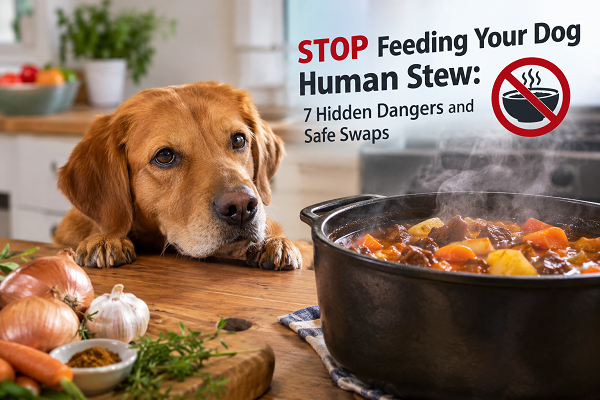
Can dogs eat human stew? Not the pot your family eats. Beef, carrots and potatoes are fine on their own, but most stews also hold onion, garlic, stock cubes, heavy salt and a lot of oil. Onion and garlic can cause Heinz body hemolytic anemia in dogs, and garlic is 3 to 5 times more toxic than onion. Fat can trigger pancreatitis. The safe way to share dinner is to set aside a plain portion of meat and vegetables before you season the pot.
What if your dog already ate some? Check the ingredients, estimate how much your dog ate compared with their weight, and call your vet if onion, garlic or a large amount was involved. Symptoms can take days to show up.
Table of Contents
- Can Dogs Eat Human Stew? The Honest Answer
- Which Stews Are Riskiest? (Comparison Table)
- Onion and Garlic: The Hidden Blood Killer
- Stock Cubes and Salt: The Sodium Problem
- Oil and Fat: The Pancreatitis Trigger
- Other Stew Ingredients That Cause Trouble
- Warning Signs and Timeline
- My Dog Ate Stew: What to Do Now
- Safe Swaps and a Dog-Friendly Stew Recipe
- Field Notes From a K9 Handler
- FAQs
- Conclusion
Introduction
Picture this. The pot is bubbling, the kitchen smells amazing, and your dog sits by your feet with those hopeful eyes. You ladle a little gravy over their kibble. It feels like love.
Here’s the problem. Human stew is one of the most common ways dogs get food-related illness at home. This isn’t about one country or one cuisine. It could be a beef stew in the UK, a chili in the US, a curry in India, an adobo in the Philippines or a pepper-and-tomato stew in West Africa. The things that make stew taste great to us (onion, garlic, salt, oil, strong spices) are the same things that put a dog’s organs under strain.
I’ve worked with military and security dogs for over 14 years, and diet damage is rarely dramatic. Nobody feeds a dog a bowl of raw onions. It’s the slow drip: a spoonful here, a gravy-soaked bit of meat there.
In this guide you’ll learn which stews are riskiest, how much onion, garlic and salt it takes to hurt a dog (using real veterinary numbers), what the warning signs look like day by day, what to do if your dog already ate some, and what to feed instead.
Can Dogs Eat Human Stew? The Honest Answer
Let’s be fair. Stew isn’t poison by nature. Some vet-reviewed sources say a dog can enjoy beef stew in moderation if it has no onions, garlic, or too much salt or spice.
That’s true, but there’s a catch. In a real family kitchen, almost no stew meets that standard. Onion goes in first. Garlic goes in second. A stock cube or seasoning blend goes in third, and that often hides even more onion and garlic powder.
So here’s how I think about it:
- Safe ingredients: plain cooked beef, chicken or turkey, carrots, green beans, pumpkin, plain potato.
- Unsafe cooking: onion, garlic, leek, chives, heavy salt, stock cubes, lots of oil, hot pepper, wine, raisins.
The answer to “can dogs eat stew” is really “can dogs eat what’s in the stew before you cook it your way.” That’s why I always tell owners to pull out a dog portion first. I’ll show you how in section 9.
Which Stews Are Riskiest? (Comparison Table)
Most articles stop at beef stew. But dogs around the world get offered very different pots. Here’s how common stew styles stack up.
| Stew type | Main hidden dangers | Risk level |
|---|---|---|
| Tomato-and-pepper stew (West African style) | Onion, hot pepper, stock cubes, heavy oil | Very high |
| Ofada / palm oil stews | Palm oil load, onion, locust beans, offal, salt | Very high |
| Jollof and other “stew-base” rice | Onion, garlic, tomato paste, bouillon, oil | High |
| Curry and masala | Onion, garlic, chili, ghee or oil | Very high |
| Chili con carne | Onion, garlic, chili powder, cumin | Very high |
| Western beef stew or pot roast | Onion, red wine, stock, bay leaf | High |
| Irish or lamb stew | Onion, leek, fatty lamb | High |
| Tagine | Onion, garlic, raisins, strong spices | High |
| Adobo-style braise | Garlic, salt, soy sauce | High |
| Plain meat-and-veg boiled without seasoning | Almost none | Low |
Notice the pattern. Nearly every traditional stew uses onion or garlic as its base, which is why “just a little” adds up fast.
Onion and Garlic: The Hidden Blood Killer
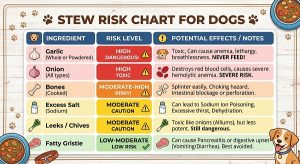
Onion, garlic, leeks, chives and shallots all belong to the allium family. They contain compounds that damage a dog’s red blood cells. Vets call the result Heinz body hemolytic anemia, which means the red cells burst and the body can’t carry enough oxygen.
Two facts surprise most owners:
- Cooking doesn’t make it safe. Dogs have been affected after eating raw, cooked, dehydrated or granulated onions and garlic. Powders are worse, because they pack more toxin per gram.
- The damage runs on a delay. Blood changes can begin within 24 hours, but signs of anemia can take several days to appear.
That delay is why so many owners miss the link. Your dog seems tired on Thursday, but the stew scraps were Sunday.
How much is too much?
The Merck Veterinary Manual says clinical signs have been reported after dogs ate 15 to 30 grams of raw onion per kilogram of body weight. Here’s what the low end of that range looks like. A medium onion weighs about 110 g.
| Dog weight | Raw onion at 15 g/kg | Roughly equals |
|---|---|---|
| 5 kg (11 lb) | 75 g | ⅔ of a medium onion |
| 10 kg (22 lb) | 150 g | 1 to 1½ medium onions |
| 25 kg (55 lb) | 375 g | 3 to 4 medium onions |
| 35 kg (77 lb) | 525 g | About 5 medium onions |
Read this table carefully, because it can mislead. It shows where signs have been reported. It is not a safe limit. Some sources report blood changes at lower doses, and repeated small exposures can cause problems just like one large dose. Garlic needs far less, and onion or garlic powder in gravy and seasoning is even more concentrated.
So will one spoonful of gravy hurt a 25 kg Labrador? Probably not. Will it hurt a 5 kg Chihuahua that gets stew scraps three times a week? That’s a real risk. Small dogs, repeat exposure and powders are where I see trouble.
Breed note: Japanese breeds such as the Akita and Shiba Inu are often listed as more sensitive to alliums. No breed is truly safe.
Stock Cubes and Salt: The Sodium Problem
Stock cubes, bouillon and liquid seasoning are in stews all over the world. A single cube often carries a gram or more of sodium. Many also contain onion and garlic powder, plus flavor enhancers like MSG.
Here are the numbers. Signs of salt poisoning in dogs can appear after 2 to 3 g of salt per kg of body weight, and the lethal dose is around 4 g per kg. That means a 3 kg Yorkshire Terrier could get sick after roughly 1 to 1½ teaspoons of pure salt.
Now the honest part. Eating a bowl of salty stew rarely hits that level. Salt toxicosis is unlikely when a dog’s sodium regulation works and fresh water is available. The bigger issues are:
- Chronic high sodium for dogs with heart or kidney disease.
- Concentrated cubes and seasoning pastes that stack salt, onion and garlic into one spoon.
- A dog with no water bowl nearby after a salty meal.
Vomiting is the usual first sign, appearing within several hours. Other signs include heavy thirst, tremors and wobbly walking. If you see those, call a vet right away.
My rule: never stir a seasoned stew into a dog’s food, and always leave fresh water out.
Oil and Fat: The Pancreatitis Trigger
Stew is oily by design. Palm oil, vegetable oil, butter and animal fat all go in the pot. In many pepper stews, a bright layer of oil floats on top. That layer is where the fat concentrates, and I’ve seen owners spoon it straight over kibble because “it smells good.”
The pancreas releases enzymes to digest fat. A sudden fat overload can inflame it, and that is pancreatitis. Even one large helping of fatty food in a single sitting may be enough to trigger an attack.
Is palm oil toxic? Not in itself. The problem is the size of the dose and who’s eating it. A ladle of oily stew is a huge fat load for a small dog.
What it costs
Treating pancreatitis can cost anywhere from about $200 to over $1,000, and estimates for hospital stays run around $2,000 to $5,000. Costs vary a lot by country and clinic.
What comes after
- Dogs who recover need a low-fat diet, and vets often aim for under 20 g of fat per 1,000 kcal.
- If more than 80% of the pancreas is damaged, dogs can develop diabetes.
- Miniature Schnauzers are known for high blood fat and a higher pancreatitis risk, so fatty leftovers are a bigger gamble for them. Overweight dogs of any breed face higher risk too.
Watch for: repeated vomiting, a hunched “prayer” stance, a tender belly, no appetite and lethargy.
Other Stew Ingredients That Cause Trouble
Onion, salt and oil get the headlines. These get overlooked:
- Cooked bones. Oxtail, chicken thighs, goat meat and bone-in cuts are stew favorites. Cooked bones turn brittle and splinter. They can cause choking, mouth and throat injuries, or a blockage. If your dog swallowed a chunk, read our guide to urgent obstruction symptoms to watch for before you “wait and see.”
- Hot pepper and strong spices. Scotch bonnet, chili and curry powder irritate a dog’s gut. Repeated exposure can mean chronic vomiting, diarrhea and gas. Dogs don’t “get used to” spice. They just stop showing obvious reactions.
- Tomato paste. Concentrated paste is acidic and can upset sensitive stomachs. Green tomatoes and tomato vines should never be given.
- Red wine and alcohol. Common in beef stew and coq au vin. Alcohol is dangerous for dogs, especially small ones.
- Raisins and grapes. They show up in some tagines. Both are toxic to dogs and can cause kidney failure.
- Nutmeg. A common stew and gravy spice that is toxic to dogs in larger amounts.
Warning Signs and Timeline
Different ingredients cause problems at different speeds. This table helps you match symptoms to the likely cause.
| When | What you may see | Likely cause |
|---|---|---|
| 0 to 6 hours | Vomiting, drooling, thirst, tummy discomfort | Salt, spice, fat |
| Within 24 hours | Often nothing visible, but blood damage may be starting | Onion, garlic |
| 1 to 3 days | Repeated vomiting, hunched posture, painful belly, no appetite | Pancreatitis |
| 2 to 5 days | Pale or yellow gums, weakness, fast breathing, dark or red urine | Anemia from onion or garlic |
Go to a vet immediately if you see: pale or white gums, collapse, tremors, seizures, repeated vomiting, a swollen or painful belly, or dark urine.
My Dog Ate Stew: What to Do Now
Don’t panic, but don’t ignore it. Here’s the order I’d follow:
- Stop access. Remove the pot, bowl and any leftovers.
- Check the recipe. Did it include onion, garlic, leek, stock cubes, wine, raisins or bones?
- Estimate the amount. Note your dog’s weight, how much they ate and when.
- Call your vet or a poison line. In the US, the ASPCA Animal Poison Control Center is (888) 426-4435 and Pet Poison Helpline is (855) 764-7661. Both may charge a fee. Elsewhere, call your local emergency vet. They can advise you before you arrive.
- Don’t induce vomiting on your own. Do it only if a vet tells you how. Wrong methods can make things worse.
- Monitor for 72 hours. Check gum color, energy, appetite and urine each day.
What the vet will probably do
If the stew was eaten recently, the vet may induce vomiting and give activated charcoal. Severe cases can need a blood transfusion, and follow-up blood tests check recovery. The encouraging news is that once the food is gone and the dog stops eating it, the body can recover with proper treatment. Early calls make treatment cheaper and safer.
Safe Swaps and a Dog-Friendly Stew Recipe
Your dog can still share dinner. You just need to do it the smart way.
The “pull-out” trick
Before you add onion, garlic, salt, cubes or oil, scoop a small portion of the plain meat and vegetables into a separate pan. Cook it unseasoned. Your dog sits at the table, you eat your stew, and nobody gets hurt.
Safe stew swaps
- Plain boiled chicken or turkey (no skin, no bones)
- Boiled or steamed white fish with every bone removed
- Plain rice
- Carrots, green beans, pumpkin, sweet potato (plain)
- Boiled egg as an occasional topper
- Low-sodium broth made for dogs, with no onion or garlic
If you’re comparing options for your dog’s daily meals, our complete guide to dry, wet, raw and homemade dog food explains what each type does best.
Simple dog-friendly stew (for a 10 kg dog, about 4 to 5 topper servings)
- 300 g lean beef or skinless chicken thigh, bones removed, cubed
- 1 carrot, diced
- 1 cup green beans, chopped
- ½ cup pumpkin or sweet potato, cubed
- 3 cups plain water (no salt, no cubes, no onion or garlic)
Simmer for about 40 minutes until soft. Cool it, skim off the fat from the top, and serve as a topper on your dog’s normal food. Keep it in the fridge for up to 3 days or freeze in portions.
Portion rule: keep extras like this to roughly 10% of daily calories, so your dog’s main diet stays complete and balanced.
Want a ready-made option? Dog-formulated canned stews exist and are made to be complete and balanced. Just check the label before buying. One leftover human can of stew isn’t the same thing.
How to ease off table food
Quitting stew cold turkey can upset a gut used to rich meals. Go gradual:
- Week 1: Replace half the stew topper with plain boiled meat or vegetables.
- Week 2: Cut stew to a small taste, mostly plain meals.
- Week 3: Stew is gone; use plain toppers or the complete food only.
- Ongoing: Keep fresh water available at all times, and rotate safe toppers so meals stay interesting.
Field Notes From a K9 Handler
Why you can trust this guide: I’m Cpl. Rofiat Muritala, a Nigerian Army military working dog instructor and handler with more than 14 years at the Nigerian Army Dog Centre. I’ve trained dogs in obedience, patrol and explosive detection. This guide is built on veterinary toxicology references (the Merck Veterinary Manual, ASPCA and Pet Poison Helpline guidance) and on what I’ve seen about feeding discipline in working dogs. It’s for education, not a replacement for your vet.
In professional K9 units, feeding is strict on purpose. A working dog’s focus, stamina and health come straight from the bowl. Handlers don’t pass gravy to a patrol dog, and strangers don’t feed unit dogs. That isn’t being harsh. A sluggish or sick dog is a risk on the job.
Your family dog deserves the same standard. The stakes are lower, but the logic holds. For more on how professional programs approach nutrition, read our piece on maintaining good health in military working dogs. And if you want my full playbook on building daily habits (feeding rules, structure, consistency), my book Beyond the Bark: Inside a Pro Handler’s Playbook for Raising the Ideal Dog covers it step by step.
Frequently Asked Questions
Can dogs eat beef stew if I leave out the onion and garlic?
Yes, with conditions. It also needs to be low in salt, low in fat, free of stock cubes and free of cooked bones. In practice, cooking a separate plain portion is easier than changing the family pot.
Is a little gravy on my dog’s food okay?
I’d skip it. Gravy is where fat, salt and onion or garlic powder are most concentrated. A small dog can get a big dose from a few spoonfuls, and repeat “tastes” add up.
Can I give my dog jollof rice or spicy tomato-pepper stew?
No. These usually contain onion, garlic, bouillon, hot pepper and a lot of oil. Offer plain boiled rice with plain cooked meat instead.
How long after eating onion or garlic will my dog show symptoms?
Blood changes can start within 24 hours, but visible anemia (pale gums, weakness, dark urine) may take several days. Call your vet early instead of waiting for symptoms.
Is bought bone broth or stock safe for dogs?
Only if it’s made for pets, low in sodium and free of onion and garlic. Regular human stock and bouillon almost always contain both.
Conclusion
Sharing food with your dog comes from love, but love works best with the right facts. Here’s the short version:
- Onion and garlic damage red blood cells, and symptoms can show up days later.
- Stock cubes and salt strain the body, and cubes often hide even more onion and garlic.
- Oil and fat can trigger painful, expensive pancreatitis.
- Bones, wine, raisins, nutmeg and hot pepper add risks people forget.
Here’s what to do today:
- Pull out a plain dog portion before you season the pot.
- Keep a stock of plain boiled meat and vegetables ready as toppers.
- Save your vet’s number and a poison hotline on your phone.
Your dog trusts you at every meal. Make each one count.
Get weekly K9 health and training tips. Subscribe to our weekly articles roundup newsletter and get new guides straight to your inbox.

Her work centres on obedience, detection, protection and operational readiness. She favours proven methods built on repetition, consistency and real-world conditioning, so that both dogs and handlers are prepared for high-pressure tasks.
Rofiat represented the Nigerian Army Dog Centre at the Nigerian Army Day Celebration (NADCEL) 2026, where she led demonstrations in obedience, explosive detection, agility and tactical movement. Through articles, training content and documentaries, she shares field-based insight into how structured training, clear communication and trust between handler and dog affect performance and reliability.
She is the author of Beyond the Bark: Inside a Pro Handler's Playbook for Raising the Ideal Dog, a practical guide that helps dog owners and handlers apply professional training principles in everyday situations.
- Dog Agility Course Layout: Easy DIY Setup - October 7, 2026
- Local Dog Breeds: Temperament, Health & Training Guide - October 6, 2026
- How Long Do Military Working Dogs Serve? Full Guide - October 5, 2026