7 Underrated Dog Breeds With Great Problem-Solving Skills
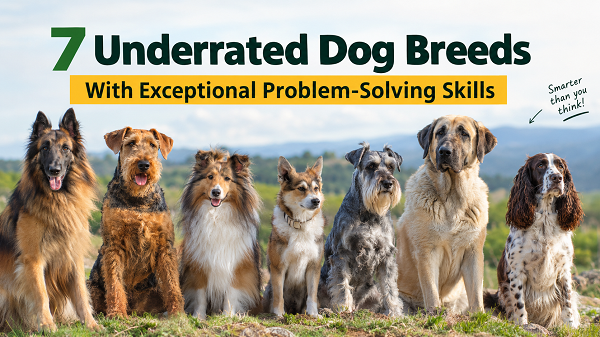
The most underrated dog breeds with problem-solving skills are the Belgian Tervuren, Airedale Terrier, Shetland Sheepdog, Norwegian Lundehund, Standard Schnauzer, Anatolian Shepherd and English Springer Spaniel. Standard “smartest dog” rankings measure how fast a dog obeys. These breeds shine at adaptive intelligence: reading a situation, testing options and making decisions without waiting for a command.
Table of Contents
- Introduction
- What “Problem-Solving” Really Means in a Dog
- How We Chose These 7 Breeds
- Quick Comparison Table
- The 7 Breeds (Tervuren, Airedale, Sheltie, Lundehund, Standard Schnauzer, Anatolian Shepherd, English Springer Spaniel)
- 4 Simple Problem-Solving Tests You Can Try at Home
- How to Train a Dog That Thinks for Itself
- Which Breed Fits You?
- A Big Caveat: Breed Is Only Part of the Story
- Why You Can Trust This Guide
- FAQs
- The Bottom Line
Introduction
Ask ten people for the smartest dog breeds and you’ll hear the same four names: Border Collie, Poodle, German Shepherd, Golden Retriever. Every list repeats them. So if you want a dog that can actually think, how do you find one nobody’s talking about?
Here’s the problem. Most rankings measure obedience. They tell you how fast a dog learns “sit,” not how it handles a locked gate, a changing scent trail or a flock of sheep with nobody giving orders. Those are different skills, and handlers who work with dogs every day know it.
In this guide, you’ll learn what problem-solving intelligence looks like, meet seven underrated breeds that have it, and see where each one struggles. You’ll also get a home test, training tips and a way to pick the right breed for your life. Whether you’re a pet owner or a working-dog handler, you’ll leave with something practical.
What “Problem-Solving” Really Means in a Dog
Quick answer: Problem-solving in dogs is adaptive intelligence: working out how to reach a goal when the situation is new. It’s different from obedience, which is how well a dog follows commands it already knows.
Stanley Coren, the psychologist behind the famous ranking, described three aspects of dog intelligence: instinctive, adaptive, and working and obedience intelligence. Think of them like this:
- Instinctive intelligence: What the breed was built to do. Herding, retrieving, guarding.
- Adaptive intelligence: What the dog figures out for itself. Opening a latch. Finding the way round a fence.
- Working and obedience intelligence: How well it learns and follows human commands.
Coren’s well-known list is built on that third type only. It’s based on a survey of 208 dog obedience judges across North America. That’s useful, but it leaves out the dogs that think independently. A livestock guardian that decides on its own whether a noise is a threat won’t score well in an obedience ring. It might be the smartest dog on the farm.
That’s the gap this list fills.
How We Chose These 7 Breeds
“Underrated” is a slippery word, so here’s our definition. Each breed on this list:
- Shows strong adaptive or independent thinking in real work, not just in tricks.
- Gets far less attention than the usual “top 5 smartest” breeds.
- Has a documented track record, such as war service, conservation programs, detection work or herding trials.
- Comes with honest limits. Every smart breed has a catch.
One honest note. A few of these dogs rank high on Coren’s obedience list (the Sheltie is 6th). They’re underrated for problem-solving and working roles, not for trainability. We’ll flag which is which.
Quick Comparison Table
| Breed | Coren obedience rank | Size | Problem-solving style | Biggest watch-out |
|---|---|---|---|---|
| Belgian Tervuren | 14th | Large (45–75 lb) | Calm, assess-then-act | Needs 1–2 hrs hard exercise daily |
| Airedale Terrier | Above-average tier (~29th) | Large | Bold, independent | Won’t follow rules it thinks are pointless |
| Shetland Sheepdog | 6th | Small | Anticipates and predicts | Barks a lot; common drug-sensitivity gene |
| Norwegian Lundehund | Not ranked | Small (12–18 lb) | Physical, creative | Serious digestive disease risk |
| Standard Schnauzer | About 20th | Medium (30–45 lb) | Observant, analytical | Clever but headstrong |
| Anatolian Shepherd | Not a “command” breed | Giant | Autonomous threat judgment | Not for casual owners |
| English Springer Spaniel | 13th | Medium | Methodical, scent-based | Needs a job or it gets frantic |
1. Belgian Tervuren: The Calm Strategist
Everybody knows the Belgian Malinois. Far fewer people know its longer-coated cousin. In popularity terms, the Tervuren sits around 104th of 202 breeds.
Why it’s underrated. The Tervuren does the same work as the Malinois (police, protection, herding) but with a pause. Handlers often describe a dog that takes a second to read the scene before it moves. That brief assessment cuts mistakes in messy, changing situations. Coren ranked it 14th, in the “excellent working dogs” class, so it’s smart on the obedience side too.
Real-world proof. The first recorded champion of the AKC herding championship was a Tervuren. Herding is pure problem-solving. The dog must read sheep, terrain and handler signals all at once.
Problem-solving strengths:
- Reads situations before reacting
- Remembers routes, patterns and sequences
- Works at a distance with little direction
Watch-outs. This is a high-energy dog. Sources suggest 1 to 2 hours of vigorous exercise daily, and under-exercised Tervs may start herding and nipping people. Health-wise, ask breeders about epilepsy; one breed guide says it tends to begin between ages 2 and 5. Also ask about hip and elbow scores.
Best for: Experienced owners and handlers who want control and clear thinking, not raw intensity.
2. Airedale Terrier: The “King of Terriers” With a Strategist’s Mind
Most terriers act first and think later. The Airedale tends to do it the other way round.
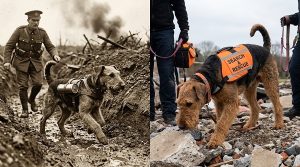
Why it’s underrated. People see a scruffy, bearded terrier and miss a dog with a serious service history. Back in World War I, the British trained Airedales as messengers and rescue dogs. In 1916, Lieutenant Colonel Edwin Richardson supplied two Airedales, Wolf and Prince, as message carriers. They proved themselves, and the breed was given more duties, including locating injured soldiers on the battlefield. The British War Dog School was officially created in 1917.
The famous case: Jack. The best-known story is Jack, an Airedale with the Sherwood Foresters. His battalion was cut off, and he was sent through shellfire with a message on his collar. The accounts say he was badly wounded, kept going, delivered the message and died soon after. A word of caution: some websites claim Jack received the Victoria Cross. I couldn’t verify that anywhere reliable, so I left it out. Check any claim like that before you repeat it.
Problem-solving strengths:
- Makes decisions without constant handler input
- Combines a strong nose with persistence
- Adapts when conditions change
Watch-outs. Independence is the Airedale’s gift and its headache. It asks “why?” before it obeys. Heavy-handed training backfires. Some larger-type Airedales are also more prone to hip dysplasia, so ask about hip scores.
Best for: Confident handlers who like a dog with opinions, and who’ll train with fairness rather than force. Our guide on why “stubborn” dogs usually need better reinforcement is a good place to start.
3. Shetland Sheepdog: Small Body, Predictive Brain
Don’t be fooled by the “mini-Lassie” look.
Why it’s underrated. The Sheltie is already a star on the obedience side. Coren ranked it 6th out of 132 breeds, learning new commands in fewer than 5 repetitions and obeying first time 95% of the time or better. What people miss is the predictive thinking. A good Sheltie watches your body language and moves before you ask. In herding terms, it heads off the problem before the sheep scatter.
Problem-solving strengths:
- Anticipates handler movement and intent
- Picks up subtle changes in the environment
- Learns long command chains quickly
Watch-outs. Shelties are big talkers; one breed review rates their barking tendency as high. They can also be sensitive, so harsh corrections shut them down. The biggest health point is the MDR1 gene mutation. Washington State University lists the Sheltie at roughly 15% frequency, though rates vary by country and survey. Dogs with it can react badly to common drugs such as ivermectin. A simple DNA test tells you, and it’s worth doing before any medication.
Best for: Active owners who want a small, responsive dog for agility, alert work and structured home life.
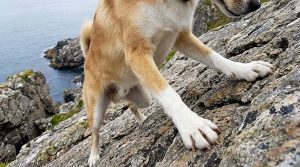
4. Norwegian Lundehund: The Escape-Artist Engineer
This is the most unusual dog on the list, and probably the rarest.
Why it’s underrated. In 2021 AKC registration statistics, the Lundehund was the rarest breed, ranking 197 of 197. It wasn’t even recognized by the AKC until 2011, so obedience judges never had a chance to rate it. Its intelligence is physical and creative.
What it was bred for. The Lundehund hunted puffins along the Norwegian coast for over 400 years, scrambling over cliffs and into caves. The anatomy matches the job: six fully developed toes on all four feet, a very flexible spine and shoulders, and ears that fold shut. A dog like that doesn’t solve a barrier by going through it. It tries a dozen angles until one works.
Problem-solving strengths:
- Tests many routes and techniques
- Finds weak points in fences, gates and enclosures
- Strong climbing and squeezing ability
Watch-outs. This one is serious. Lundehunds are prone to Lundehund syndrome, a digestive disease. A mortality study found it caused 30% of deaths before age 11. The gene pool is also small. If you’re considering one, work only with breeders connected to the national breed club and ask about gastrointestinal health history. And secure your garden properly.
Best for: Patient, informed owners who want a clever small dog and can handle special care.
5. Standard Schnauzer: The Sharp Detective
It’s the original schnauzer, and the one that gets forgotten next to the Mini and Giant.
Why it’s underrated. Dogtime lists it as ranking 99th among 155 AKC breeds. That’s low for a dog with this record. Its job history includes carrying dispatches and aiding Red Cross workers in World War I. Coren’s list puts it in the “excellent” group, around 20th.
Why it’s a good thinker. The Standard Schnauzer watches everything. It notices what’s changed in a room, which door is open and who’s behind you. Handlers describe a proportionate dog: it responds to what’s actually there rather than overreacting to every noise.
Problem-solving strengths:
- Notices patterns and inconsistencies quickly
- Opens latches, doors and gates if you let it practice
- Weighs a situation before escalating
Watch-outs. PetMD calls Standard Schnauzers clever but headstrong in training. Pushy handlers get pushback. The good news on health: the same source says the breed has a lifespan of 13–16 years and no major breed-wide health conditions, though you should still ask about hip scores and eye health.
This is where discipline-based training pays off: clear rules, fair consequences and plenty of mental work.
Best for: Families and handlers who want a medium-sized watchdog with a thinking mind.
6. Anatolian Shepherd: The Independent Protector
This is the dog that proves obedience scores don’t measure everything.
Why it’s underrated. The Anatolian was bred to guard flocks across big territories with little human supervision. In the Cheetah Conservation Fund’s program, the breed’s history is described as 6,000 years of protecting livestock in Turkey, with an independent nature that lets it manage flocks with minimal help from herders.
Real-world proof: Namibia. Since 1994, the Cheetah Conservation Fund has placed guard dogs, mainly Anatolian Shepherds and Kangals, with Namibian farmers. Over 25 years, 634 dogs were placed, and they reduced livestock losses for 91% of respondents. Founder Dr. Laurie Marker has reported drops of 80–100% on farms with guard dogs. Fewer losses mean farmers have less reason to shoot cheetahs, so the dogs are quietly protecting an endangered cat. Here’s a detail I like: the study found age at placement didn’t affect livestock losses, even though farmers assumed young dogs were less effective.
Problem-solving strengths:
- Judges whether a threat is real, and how serious
- Balances restraint with force
- Holds attention for long stretches without direction
Watch-outs. These are big dogs; the combined Anatolian and Kangal group can reach 150 lb. They need secure fencing, early socialization and an owner who understands guardian instinct. They’re not a “dog park” dog and not an apartment dog.
Best for: Farms, rural properties and experienced owners who understand livestock guardian breeds.
7. English Springer Spaniel: The Methodical Hunter
Springers are everywhere as pets, but few people realize how good they are at structured thinking.
Why it’s underrated. Coren put it 13th, so it isn’t unknown. But the public sees an excitable family dog and misses the deduction going on behind that wagging stub.
Real-world proof: Buster and Theo. In March 2003, Buster, a British Army explosives search dog, found a cache of weapons and bomb-making material hidden in a wall cavity, covered with tin and blocked by a wardrobe. He received the Dickin Medal, often called the animals’ Victoria Cross. Years later, Theo served in Afghanistan and holds the record for the most operational finds by an arms and explosives search dog, with 14.
A Springer works through a search area methodically, eliminating each possibility. We cover why detection dogs succeed in complex scent work in our article on how explosive detection dogs succeed.
Problem-solving strengths:
- Decodes scent trails and works out search patterns
- Stays focused and consistent over long searches
- Rules out wrong options systematically
Watch-outs. A Springer without a job becomes frantic and destructive. Give it scent games and retrieves, not just walks.
Best for: Active families, hunters and anyone interested in detection or scent work.
4 Simple Problem-Solving Tests You Can Try at Home
These are informal. They’re not scientific tests, and they won’t predict a dog’s future. But they show you how your dog thinks. Always use safe, tasty treats, and stop if your dog gets frustrated.
- The towel test. Drape a light towel over your dog’s head. Watch how long it takes to get out. Quick and calm is a good sign. Frantic or giving up is useful information too.
- The cup test. Hide a treat under one of three cups while your dog watches. Does it go straight to the right cup, or hunt through all three?
- The detour test. Hold a treat on the other side of a low barrier or open fence. Does the dog push straight at it, or work out the way round?
- The treat-puzzle test. Use a simple treat-dispenser toy. A “thinker” pauses, studies it, then changes tactics. A “brute-force” dog just chews or bats it around.
What to look for: not speed, but strategy. Does the dog try something different after a failed attempt? That’s adaptive intelligence in action.
How to Train a Dog That Thinks for Itself
Independent thinkers need a different approach from obedience-first dogs. Here’s what works.
- Explain, don’t force. Smart dogs ask why. Reward the right choice and make wrong choices boring. Force creates a dog that either shuts down or fights back.
- Teach “choices,” not just commands. Let the dog solve little puzzles daily, such as a snuffle mat, a hidden toy or a new route on a walk.
- Keep sessions short. Five to ten minutes of focused work beats an hour of repetition. Independent dogs get bored fast.
- Raise the difficulty slowly. Make each puzzle slightly harder than the last, so the dog wins most of the time.
- Build the stop button first. Independent dogs need a reliable recall and “leave it” before you give them freedom.
- Don’t punish clever mischief. If your dog opens a gate, that’s not defiance. It’s a puzzle you didn’t know you’d set. Manage the environment and redirect the energy.
None of this means you skip structure. Clear rules, steady routines and fair handling are what turn a clever dog into a reliable one.
Which Breed Fits You?
- First-time owner with an active lifestyle: Shetland Sheepdog or English Springer Spaniel.
- Experienced handler wanting a calm, controlled worker: Belgian Tervuren.
- Confident owner who enjoys a strong-minded dog: Airedale Terrier or Standard Schnauzer.
- Farm or rural property with livestock: Anatolian Shepherd.
- Patient, informed owner prepared for special care: Norwegian Lundehund.
A Big Caveat: Breed Is Only Part of the Story
Before you buy a puppy based on any list, including this one, know this: breed predicts much less than most people think. A large 2022 study in Science analyzed DNA from 2,155 purebred and mixed-breed dogs, combined with 18,385 owner surveys. Its headline finding: breed explains just 9% of variation in behavior in individual dogs.
That doesn’t mean breed is meaningless. Traits like responsiveness to direction were more heritable by breed, though they still varied a lot between individual dogs. So use breed as a starting point. Then look hard at the individual dog: its parents, its early socialization and how it responds to the tests above. A well-bred, well-raised mixed-breed dog can out-think a poorly bred purebred.
Why You Can Trust This Guide
This article was written by Cpl. Rofiat Muritala, a Nigerian Army military working dog instructor and handler with more than 14 years of experience at the Nigerian Army Dog Centre. Her work covers dog selection, foundational training, behavior shaping and performance evaluation, along with obedience, K9 patrol and advanced explosive detection certification. She represented the Nigerian Army Dog Centre at NADCEL 2026.
How we sourced this guide: breed facts and rankings come from Coren’s research, the AKC and veterinary sources. Case studies come from conservation research (Cheetah Conservation Fund), military records and published studies. Where I couldn’t verify a claim, I said so.
Frequently Asked Questions
1. What are the most underrated dog breeds with problem-solving skills?
The Belgian Tervuren, Airedale Terrier, Shetland Sheepdog, Norwegian Lundehund, Standard Schnauzer, Anatolian Shepherd and English Springer Spaniel. Each shows strong independent thinking in real work, but none gets the attention that Border Collies or German Shepherds do.
2. Are underrated smart breeds harder to train?
Often, yes, for inexperienced handlers. Dogs bred to think independently, like the Airedale and Anatolian Shepherd, question commands that seem pointless to them. They respond best to fair, consistent training with plenty of mental work and clear rewards.
3. How can I tell if my dog is a good problem-solver?
Try the home tests above. Look for strategy, not speed. A good problem-solver pauses, studies the problem and changes approach after a failed attempt. These are informal checks, not scientific measures.
4. Is the Sheltie really smarter than most big working breeds?
On obedience ranking, it’s near the top. Coren put it 6th out of 132 breeds. It isn’t “smarter” than a German Shepherd in every way, but it’s often underestimated because of its size.
5. Does breed guarantee how smart my dog will be?
No. Research suggests breed explains only about 9% of behavior variation in individual dogs. Genetics, early socialization, health and training all matter, so judge the individual dog, not just the label.
The Bottom Line
Smart dogs come in more shapes than the usual lists suggest. The Tervuren thinks before it moves. The Airedale makes its own calls. The Sheltie sees problems coming. The Lundehund engineers its way past barriers. The Standard Schnauzer notices everything. The Anatolian judges threats alone. The Springer works a problem methodically until it’s solved.
What to do next:
- Decide whether you want obedience-first or independent-thinker intelligence.
- Match the breed to your lifestyle, not to a ranking.
- Run the home tests with any puppy or adult dog you’re considering.
- Ask breeders about health testing for the issues flagged above: epilepsy, hips, MDR1, Lundehund syndrome.
- Plan daily mental work, not just exercise.
If you want the professional framework behind this, from building reliable obedience to handler communication and trust, check out my e-book, Beyond the Bark: Inside a Pro Handler’s Playbook for Raising the Ideal Dog.
Want more handler-tested breed guides and training tips every week? Subscribe to our weekly articles roundup newsletter.

Her work centres on obedience, detection, protection and operational readiness. She favours proven methods built on repetition, consistency and real-world conditioning, so that both dogs and handlers are prepared for high-pressure tasks.
Rofiat represented the Nigerian Army Dog Centre at the Nigerian Army Day Celebration (NADCEL) 2026, where she led demonstrations in obedience, explosive detection, agility and tactical movement. Through articles, training content and documentaries, she shares field-based insight into how structured training, clear communication and trust between handler and dog affect performance and reliability.
She is the author of Beyond the Bark: Inside a Pro Handler's Playbook for Raising the Ideal Dog, a practical guide that helps dog owners and handlers apply professional training principles in everyday situations.
- K9 Advantix Dosage Chart & Safety Guide for Dogs - October 19, 2026
- How to Set Up & Use Bousnic Dog Training Collar - October 18, 2026
- Westminster Dog Show 2026: Winners & Full Results - October 17, 2026