Top Low-Maintenance Security Dog Breeds
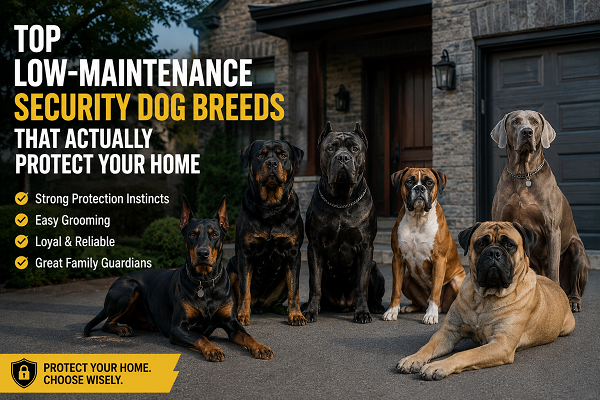
The best low-maintenance security dog breeds are the Bullmastiff, Boerboel, Rottweiler, Great Dane, Boxer, Cane Corso, Doberman Pinscher and Rhodesian Ridgeback. They all have short coats that need only a weekly brush, and they guard by instinct instead of needing years of bite-work. Be honest about one thing, though: a short coat doesn’t mean a short to-do list. The Bullmastiff and Boerboel are the easiest overall, while the Doberman and Ridgeback need far more exercise than their grooming suggests.
Table of Contents
- Introduction
- What “Low-Maintenance” Really Means for a Security Dog
- Watchdog, Guard Dog or Protection Dog? Know the Difference
- The 8 Breeds, Ranked From Easiest to Hardest Upkeep
- Maintenance Scorecard: All 8 Breeds Side by Side
- The Health Bills Nobody Warns You About
- What It Really Costs (Year One and Ten Years)
- Insurance, Landlords and Local Laws
- Best Breed for Your Climate
- How to Pick the Right Breed for Your Situation
- The Minimal Training Plan That Actually Works
- Breeds That Look Easy but Aren’t
- Why Trust This Guide
- FAQs
- Conclusion
Introduction
Here’s a question I hear all the time: “Can I get a dog that really protects my family without losing every weekend to grooming, training and exercise?” Good news, you can. The best low-maintenance security dog breeds exist, and they’re some of the most reliable guardians in the world.
But here’s the catch. Most lists online only talk about coats. They tell you a Doberman “barely sheds” and stop there. They skip the heart screening, the bloat risk, the 60-plus minutes of daily exercise and the insurance phone call that can cost you your dream breed. That’s how people end up with a “low-maintenance” dog that wears them out.
This guide fixes that. You’ll learn what low maintenance really means, how all eight breeds rank from easiest to hardest upkeep, what they truly cost in year one and over ten years, which health problems to screen for, and how to avoid the mistakes I see handlers and owners make again and again.
What “Low-Maintenance” Really Means for a Security Dog
When people say low maintenance, they usually mean grooming. That’s only one of six upkeep areas. A truly low-maintenance guard dog scores well on most of these:
- Grooming: short coat, weekly brushing at most, no clipping or salon visits.
- Exercise: 30 to 60 minutes a day, not two hours of hard work.
- Training demand: guards by instinct, learns basic obedience without constant correction.
- Temperament: watches and judges instead of barking at every passing bike.
- Health costs: fewer expensive, predictable medical problems.
- Lifestyle fit: copes with your climate, your space and your schedule.
No breed on this list wins in all six. That’s why I rank them by total upkeep, not by coat length alone.
What low-maintenance does not mean: no training, no socialization, no supervision. Every dog here is large and powerful. Skip the basics and you’ll have an unpredictable animal, no matter how little it sheds.
Watchdog, Guard Dog or Protection Dog? Know the Difference
Most “best guard dog” articles blur these three jobs. They’re not the same, and picking the wrong one is the biggest mistake I see.
- Watchdog: alerts you with barking. It sounds the alarm but doesn’t confront anyone.
- Guard dog: deters and guards its territory. Its size, stance and presence make intruders think twice.
- Protection dog: trained to physically defend a person on command. This takes professional training and carries real legal responsibility.
All eight breeds below work well as watchdogs and guard dogs through natural instinct. None of them should be pushed into protection work without a qualified trainer. If you just want a loud early warning, a Boxer does that. If you want a calm, deterring presence, think Bullmastiff or Great Dane. For a deeper look at what separates instinct from trained work, read our guide on how often to exercise a working dog, because exercise and mental work shape guarding behavior more than most owners realize.
The 8 Breeds, Ranked From Easiest to Hardest Upkeep
I’ve ordered these from the most hands-off to the most demanding. Lifespan figures follow American Kennel Club (AKC) breed ranges, so expect some variation between individual dogs.
1. Bullmastiff: The Quiet Gatekeeper
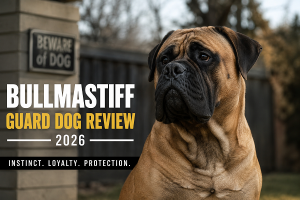
- Grooming: short coat, weekly brush, plus a towel for drool
- Exercise: 30 to 45 minutes a day
- Lifespan: about 7 to 9 years
- Guard style: silent deterrent that pins and holds
- Heat tolerance: low (short muzzle, heavy body)
English gamekeepers developed the Bullmastiff in the 1800s to track poachers and pin them down without mauling them. That “restraint over aggression” design still shows. A Bullmastiff doesn’t bark much. It plants itself between you and the problem.
This is the closest thing to a couch-friendly guardian. The trade-offs are drool, snoring, a short lifespan and a dog that needs a confident owner. Most people forget that “calm” and “easy to train” aren’t the same thing. Bullmastiffs can be stubborn.
Best for: calm homes, estate-style properties, owners who want presence without noise.
2. Boerboel: The Steady Farm Guardian
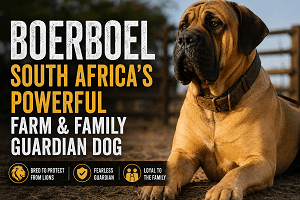
- Grooming: short coat, weekly brush
- Exercise: 30 to 60 minutes a day
- Lifespan: about 9 to 11 years
- Guard style: watchful, escalates only when needed
- Heat tolerance: good
South African farmers bred the Boerboel to guard isolated homesteads from predators and intruders. Only the sturdy, level-headed dogs passed on their genes. The result is a dog that studies a situation before it reacts.
It copes with heat better than most mastiff types, which matters if you live somewhere hot. The catch is its independent mind. Without early leadership and boundaries, that confidence turns into stubbornness. Always check local rules too, since some countries restrict this breed.
Best for: spacious properties, warm climates, experienced or committed first-time giant-breed owners.
3. Rottweiler: The Calm, Confident All-Rounder
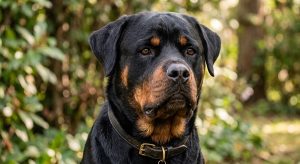
- Grooming: short double coat, weekly brush (heavier twice a year)
- Exercise: 45 to 90 minutes a day
- Lifespan: about 9 to 10 years
- Guard style: guards by presence and steady attention
- Heat tolerance: moderate
Rottweilers come from Roman drover dogs that moved cattle across the Alps. That steady working temperament is why they’re calm indoors and don’t waste energy on nervous barking. Many Rottweilers settle into a relaxed rhythm once they’ve had their daily exercise.
Here’s a stat most lists skip: one veterinary study put the lifetime bloat (GDV) risk of Rottweilers at 3.9%, compared with 36.7% for Great Danes. So in the giant-breed world, a Rottweiler is a far safer bet for that emergency. Hip and elbow dysplasia are the main concerns, which is why a health-tested breeder matters.
Best for: families, active owners, anyone wanting a proven guardian with manageable grooming.
4. Great Dane: The Gentle Deterrent
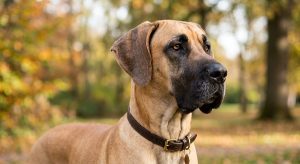
- Grooming: short coat, weekly brush
- Exercise: 45 to 60 minutes a day
- Lifespan: about 7 to 10 years
- Guard style: deters through size and a deep bark
- Heat tolerance: moderate
German breeders originally developed the Great Dane to hunt boar and guard estates. Today it’s more of a deterrent than a fighter. Most intruders don’t test a 140-pound dog. It barks when there’s a reason and then flops back down.
Grooming is easy. Medical care is not. The Great Dane has the highest lifetime bloat risk of any breed studied, around 37%. Add heart disease, joint problems and a short lifespan, and the “low maintenance” label needs a big asterisk. We’ll cover how to cut that risk in the health section below.
Best for: big homes, gentle-natured households, owners who can afford strong health coverage.
5. Boxer: The Loud, Loving Alarm
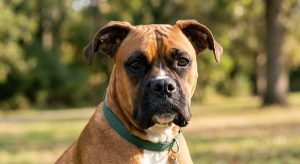
- Grooming: very short coat, quick weekly brush
- Exercise: 60 minutes a day (high energy)
- Lifespan: about 10 to 12 years
- Guard style: alert watchdog, plays hard with family
- Heat tolerance: low (flat-faced breed)
Boxers get overlooked on guard lists because they’re so goofy. Don’t let the clown act fool you. A Boxer notices everything and tells you about it. Think of it as the best alarm system you can hug.
Be honest about the limits, though. A Boxer deters casual trouble, but it won’t intimidate a determined intruder the way a Rottweiler or Boerboel can. Boxers are brachycephalic (short-muzzled), so they overheat quickly. Exercise them early or late in the day, and ask your vet about heart screening, since Boxers can develop a heart condition called ARVC.
Best for: families with kids, owners who want an alert, affectionate dog.
6. Cane Corso: The Serious Estate Guardian
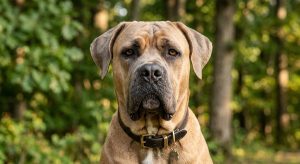
- Grooming: short coat, weekly brush
- Exercise: 45 to 60 minutes a day plus mental work
- Lifespan: about 9 to 12 years
- Guard style: watchful, reserved, imposing
- Heat tolerance: moderate
The Cane Corso is an Italian mastiff-type descended from Roman guardian dogs. It’s calm and bonded to family, but grooming is the only truly easy part. This breed needs a confident, consistent handler and plenty of early socialization. It isn’t a first-dog breed.
If you’re stuck between this and another giant guardian, our Boerboel vs Cane Corso comparison breaks down strength, temperament and training needs side by side.
Best for: experienced owners, larger properties, people who’ll commit to structured training.
7. Doberman Pinscher: The Sleek Shadow
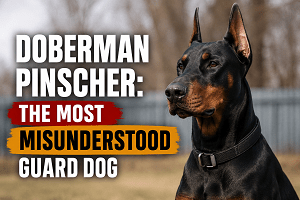
- Grooming: very short coat, wipe with a mitt
- Exercise: 60 to 90 minutes a day
- Lifespan: about 10 to 12 years
- Guard style: sharp, alert, very responsive
- Heat tolerance: moderate (feels the cold)
Karl Friedrich Louis Dobermann, a German tax collector who also ran the local dog pound, set out in the 1890s to breed a loyal personal guardian. He got one. Dobermans are affectionate “velcro dogs” that follow you from room to room.
They’re the easiest breed on this list to groom and one of the hardest to keep busy. A bored Doberman gets creative in ways your furniture won’t enjoy. They also carry the biggest heart-health warning of any breed here: studies report dilated cardiomyopathy (DCM) in roughly 40% of North American Dobermans and close to 60% of European ones over their lifetimes. Buy only from breeders who screen hearts and use DNA testing.
Best for: active households, owners who want a dog that works with them daily.
8. Rhodesian Ridgeback: The Dignified Athlete
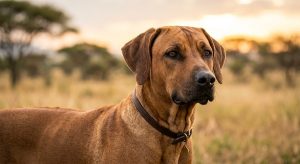
- Grooming: short coat, weekly brush, little odor
- Exercise: 60 to 90 minutes a day
- Lifespan: about 10 to 12 years
- Guard style: reserved, positions itself between you and strangers
- Heat tolerance: very good
Bred in southern Africa to help hunters track lions, the Ridgeback is calm and dignified at home but built like a runner. It’s the most athletic dog on this list, and it guards by exception: quiet most of the time, firm when it counts.
It’s “low maintenance” only for the coat. If you can’t give it real exercise, it won’t settle. Ridgebacks also think for themselves, so expect patient, consistent training instead of instant obedience.
Best for: active owners in warm climates who enjoy daily runs or hikes.
Maintenance Scorecard: All 8 Breeds Side by Side
This table scores the upkeep areas other guides ignore. “Low” is good for you.
| Breed | Grooming | Exercise | Training Demand | Health-Cost Risk | Heat Tolerance | Overall Upkeep |
|---|---|---|---|---|---|---|
| Bullmastiff | Low (drool) | Low | Medium | Medium | Low | Lowest |
| Boerboel | Low | Low-Medium | Medium-High | Medium | Good | Low |
| Rottweiler | Low-Medium | Medium | Medium | Medium | Moderate | Low-Medium |
| Great Dane | Low | Low-Medium | Low-Medium | High | Moderate | Medium |
| Boxer | Very Low | High | Medium | Medium | Low | Medium |
| Cane Corso | Low | Medium | High | Medium | Moderate | Medium-High |
| Doberman | Very Low | High | Medium | High | Moderate | High |
| Rhodesian Ridgeback | Low | High | Medium-High | Medium | Very Good | High |
The Health Bills Nobody Warns You About
Grooming savings can disappear fast if your dog needs emergency care. Two conditions deserve real attention.
Bloat (GDV) in Great Danes and Other Deep-Chested Breeds
Bloat happens when the stomach fills with gas and twists. It kills fast. A Purdue University study found that roughly 30% of dogs that develop bloat die or need to be euthanized. Great Danes carry a lifetime risk of around 37%.
Here’s how to cut the risk:
- Ask your vet about a preventive gastropexy (stomach tacking), often done during neutering. Research shows it sharply reduces the chance of a deadly twist.
- Skip raised food bowls. The Purdue data linked them to a 110% higher bloat risk. Many owners still use them because older advice recommended it.
- Slow fast eaters with a slow-feed bowl. Fast eating raised risk by about 15%.
- Split meals into two or three smaller servings and rest your dog after eating.
- Know the signs: pacing, drooling, a swollen belly, retching with nothing coming up. Go to an emergency vet immediately. There’s no home remedy.
Heart Disease in Dobermans and Boxers
DCM often shows up silently until it’s advanced. Reputable Doberman breeders screen parents with heart tests and DNA panels (the DCM tests cost around $100). After you bring your dog home, vets commonly recommend yearly cardiac checks starting around two to three years old. Boxers need similar attention for ARVC.
Joints in Every Giant Breed
Hip and elbow dysplasia affect nearly all large breeds. Keep your dog lean (extra weight shortens lives), avoid hard jumping on growing joints, and ask breeders for hip and elbow scores on both parents.
What It Really Costs (Year One and Ten Years)
These are typical ranges in US dollars. UK and European prices run similar once you convert to pounds or euros. Your local costs will vary.
| Item | Typical Cost |
|---|---|
| Puppy from a health-testing breeder | $1,500 – $4,500 |
| Vaccines, neutering, first-year vet care | $700 – $1,500 |
| Group obedience course (6 to 8 weeks) | $150 – $400 |
| Large or giant breed food (per year) | $600 – $1,200 |
| Gear: crate, sturdy leash, harness, bed, bowls | $250 – $500 |
| Grooming kit (one-time) | Under $100 |
| Pet insurance (per year, varies widely) | $600 – $1,800 |
| Realistic year-one total | $3,500 – $7,000 |
Over a ten-year life, expect roughly $15,000 to $30,000 for a giant guardian once you add food, routine vet care and a few surprise bills. A bloat surgery alone often runs several thousand dollars. Meanwhile, you’ll skip the $80 to $150 salon visit every six to eight weeks that heavy-coated breeds need, which saves around $500 to $1,000 a year.
If you want a trainer’s step-by-step system for the first year, including socialization milestones and the mistakes that cost owners the most, my book Beyond the Bark: Inside a Pro Handler’s Playbook for Raising the Ideal Dog walks through it in plain English.
Insurance, Landlords and Local Laws
Check these before you pay a deposit, not after.
- Homeowners and renters insurance: several breeds here, often Rottweilers, Dobermans, Cane Corsos and Great Danes, appear on insurer restriction lists in the US. Some insurers now judge each dog’s bite history and temperament instead. Call yours and ask directly.
- Standalone liability cover: if your insurer refuses, a dog liability or umbrella policy can fill the gap.
- Landlords: many rental agreements cap dog weight or ban specific breeds. Get permission in writing.
- Local breed laws: some countries and cities restrict certain giant guardian breeds, the Boerboel among them in a few places. Check your local authority before importing or buying.
- Your responsibility: you’re legally accountable for what your dog does. Secure fencing, warning signs and a solid recall matter more than any breed label.
Best Breed for Your Climate
Short coats cut grooming but give no protection from weather. Here’s what I’d tell a buyer.
- Hot climates: Rhodesian Ridgeback and Boerboel handle heat best. Avoid pushing Boxers and Bullmastiffs outdoors in midday heat, since their short muzzles make cooling harder.
- Cold climates: Dobermans and Great Danes feel the cold and may need a coat in winter. Rottweilers cope better thanks to their double coat.
- Mixed or humid climates: Rottweilers and Cane Corsos are the most adaptable middle ground.
Whatever you choose, provide shade, fresh water and cool indoor rest space. Never leave any of these breeds in a parked car.
How to Pick the Right Breed for Your Situation
Ask yourself these questions honestly:
- How experienced are you? First-time giant-breed owners usually do best with a Rottweiler, Boxer or Bullmastiff. Corsos, Boerboels and Ridgebacks reward experienced hands.
- How much space and time do you have? A Bullmastiff relaxes in a modest home. A Doberman or Ridgeback needs real daily exercise even if the yard is big.
- Do you have kids or lots of visitors? Well-socialized Boxers and Rottweilers often cope better with chaos than reserved breeds like the Cane Corso.
- What’s your budget for surprises? If a $5,000 emergency would hurt, think twice about the Great Dane or Doberman unless you carry good insurance.
Quick matches:
- Easiest overall: Bullmastiff
- Best for hot weather: Boerboel or Ridgeback
- Best first guard dog: Rottweiler (with a good trainer)
- Best family alarm: Boxer
- Best deterrent by sheer size: Great Dane
The Minimal Training Plan That Actually Works
You don’t need bite-work. You do need consistency. In my years handling working dogs, the pattern is the same every time: owners who put in a small daily effort early get a calm adult dog, and owners who “wait until later” get a problem.
- 8 to 16 weeks: socialization window. Introduce people, surfaces, sounds, cars, other dogs and gentle handling. Make every meeting positive. This period shapes temperament more than anything else you’ll do.
- 4 to 6 months: foundation obedience. Sit, down, stay, come when called, loose-leash walking. A group class does the job.
- 6 to 12 months: boundaries and impulse control. Teach the dog to wait at doors, settle when visitors arrive and respect the property line. Guarding instinct starts to show here, and consistent handling keeps it calm.
- 12 to 36 months: maturity. Most breeds settle around 2 years, giants closer to 3. Keep practicing, and keep socializing.
Daily time commitment: plan on about 15 to 20 minutes of focused training, plus the exercise from each breed profile above. Mix in mental work like scent games, because a tired mind keeps a big dog calmer than a long walk alone.
Breeds That Look Easy but Aren’t
Some popular “guard dog” picks only look low-maintenance. I’d keep these off a hands-off shortlist:
- German Shepherd: double coat sheds heavily and the breed needs lots of mental work.
- Belgian Malinois: short coat, but one of the highest energy and drive levels of any working breed. It needs a job.
- Giant breeds with corded or heavy coats: grooming time can match a salon visit.
If you’re really after an easy-going dog and a guard role is a bonus, our list of the 10 best low-maintenance dog breeds with basic grooming needs covers calmer, smaller options.
Why Trust This Guide
This guide comes from a working handler’s view, not a copy-and-paste breed list. The author, Cpl. Rofiat Muritala, is a Nigerian Army military working dog instructor and handler with more than 14 years at the Nigerian Army Dog Centre. Her background covers dog selection, foundational training, behavior shaping and performance evaluation, and she led obedience, detection, agility and tactical movement demonstrations at the Nigerian Army Day Celebration (NADCEL) 2026.
For data, we relied on American Kennel Club breed profiles, the AKC Canine Health Foundation, Purdue University bloat research, and published veterinary studies on Doberman cardiomyopathy and Great Dane bloat. Costs are estimates and will vary by country. Always speak to your vet and a qualified trainer before choosing a breed.
FAQs
1. What is the easiest low-maintenance guard dog to own?
The Bullmastiff is the easiest overall. It needs modest exercise, only weekly brushing and little barking. First-time owners with a good trainer often do well with a Rottweiler too.
2. Do low-maintenance guard dogs still need professional training?
Yes. Every large guardian breed needs early socialization and basic obedience. You don’t need expensive protection training unless you specifically want a trained personal protection dog, but skipping the basics is a mistake.
3. Which low-maintenance guard dog sheds the least?
Dobermans, Boxers and Great Danes shed lightly. Rottweilers shed more, especially during seasonal coat changes. No short-coated breed is truly non-shedding, so a weekly brush keeps hair under control.
4. Are low-maintenance guard dogs good with children?
Often yes, when socialized from puppyhood and supervised. Boxers, Rottweilers and Great Danes tend to be the most tolerant. Reserved breeds like the Cane Corso and Bullmastiff can also be great with their own family but cautious with unfamiliar kids.
5. How much does a low-maintenance security dog cost in year one?
Expect roughly $3,500 to $7,000 once you add the puppy, vet care, training, food, gear and insurance. Giant breeds sit at the higher end, especially for food and medical costs.
Conclusion
You don’t have to choose between a dog that protects your family and a dog that’s easy to live with. The Bullmastiff, Boerboel, Rottweiler, Great Dane, Boxer, Cane Corso, Doberman and Ridgeback all pair guarding instinct with simple grooming. But “low maintenance” depends on more than the coat. Check exercise, health risks, climate fit, insurance and your own experience before you fall for a breed.
Your action plan:
- Pick the breed that fits your real lifestyle, not the one that looks toughest.
- Buy from a breeder who health-tests parents (hips, elbows, hearts), or adopt from a reputable rescue.
- Call your insurer and landlord before you commit.
- Make the 8-to-16-week socialization window your top priority.
- Budget for the surprises, especially if you choose a Great Dane or Doberman.
Do that, and you’ll get what you came for: a calm, watchful guardian who protects your home without taking over your weekends.
Want more practical K9 advice like this? Subscribe to our weekly articles roundup newsletter and get new training, breed and security guides delivered every week.

Her work centres on obedience, detection, protection and operational readiness. She favours proven methods built on repetition, consistency and real-world conditioning, so that both dogs and handlers are prepared for high-pressure tasks.
Rofiat represented the Nigerian Army Dog Centre at the Nigerian Army Day Celebration (NADCEL) 2026, where she led demonstrations in obedience, explosive detection, agility and tactical movement. Through articles, training content and documentaries, she shares field-based insight into how structured training, clear communication and trust between handler and dog affect performance and reliability.
She is the author of Beyond the Bark: Inside a Pro Handler's Playbook for Raising the Ideal Dog, a practical guide that helps dog owners and handlers apply professional training principles in everyday situations.
- How to Enter the COBA National Dog Championship - October 20, 2026
- K9 Advantix Dosage Chart & Safety Guide for Dogs - October 19, 2026
- How to Set Up & Use Bousnic Dog Training Collar - October 18, 2026