Best Nutrition Supplements for Working Dogs: Vet Facts
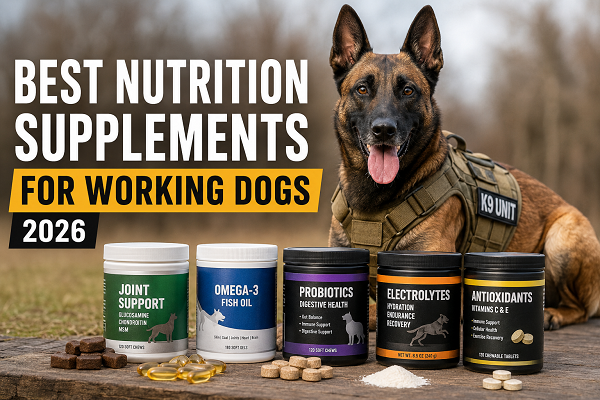
What are the best nutrition supplements for working dogs? The best-supported supplements for working dogs are marine omega-3s (EPA and DHA) for joints and recovery, a proven probiotic for stress-related diarrhea, and a joint formula with glucosamine and chondroitin or green-lipped mussel for dogs that run, jump, and bite hard. Most healthy working dogs on a high-quality performance diet need only one or two of these, not a full cabinet of products. Always dose by body weight and check with your vet first.
Do working dogs need supplements at all? Not always. A complete, high-fat, high-protein working diet covers the basics. Supplements make sense when your dog has a specific job-related need: joint stress, travel stress, heat, weight loss, or age.
Table of Contents
- Do Working Dogs Really Need Supplements?
- Fix the Food First
- Supplement Evidence at a Glance
- Omega-3 Fish Oil: The Top Pick
- Joint Supplements: What Helps and What’s Hype
- Probiotics for Stress and Travel
- Hydration, Electrolytes, and Hot-Weather Work
- Energy and Weight-Gain Boosters
- Calming Supplements: Handle With Care
- Supplements by Job Type
- Supplements by Life Stage
- How to Pick a Safe, Honest Product
- Seven Mistakes We See Handlers Make
- A Simple Starter Plan
- Why You Can Trust This Guide
- FAQs
- Final Thoughts
Introduction
Ever notice how the supplement aisle is louder than the actual science? Every bottle promises “peak performance,” and every label sounds like a miracle. Meanwhile your Malinois is limping a little after Tuesday’s bite work, and you’re standing there wondering if a $60 tub is the fix or just fancy marketing.
Here’s the problem. Working dogs (police K9s, protection dogs, detection dogs, search and rescue dogs, herders) put far more strain on their bodies than a family pet. But most online lists just repeat product names and affiliate links. They rarely tell you what’s proven, what’s guesswork, how much to give, or when to skip a product entirely.
In this guide, you’ll learn which supplements have real evidence behind them, how to calculate a sensible dose, how to match supplements to your dog’s job, and how to spot a bad product before you buy it. I’ll also point out where the science is thin, because honest handlers beat hype every time.
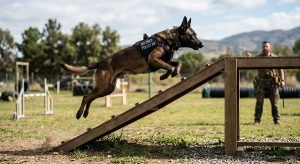
1. Do Working Dogs Really Need Supplements?
Short answer: sometimes. Most vet sources agree that healthy dogs on a complete, balanced diet don’t need extras. Working dogs sit in a gray zone. They burn more energy, load their joints harder, and face more stress than pets do.
Think about a patrol dog doing hard stops, a detection dog searching for hours in heat, or a protection dog jumping a fence 30 times in training. That wear adds up. Osteoarthritis alone is estimated to affect up to 20% of dogs over one year old, and working breeds like German Shepherds are over-represented in hip and elbow problems.
So supplements aren’t about “boosting” a dog. They’re about filling specific gaps and protecting the body parts your dog’s job wears out fastest: joints, gut, muscles, and hydration.
Here’s a good rule I give new handlers: if you can’t name the problem a supplement solves, don’t buy it yet.
2. Fix the Food First
No supplement rescues a weak diet. Before you add anything, check these basics:
- Calories match the workload. Working dogs often need well above the normal maintenance amount on heavy days. Sled dogs are the extreme example, but even a busy patrol dog can need noticeably more than a house dog of the same weight.
- Fat and protein are high enough. Many performance diets run around 20-30% fat on a dry-matter basis, with solid animal protein. Check the label for a “complete and balanced” statement (AAFCO in the US, FEDIAF in Europe).
- Body condition is right. You should feel the ribs easily without seeing them. A dog carrying 2-3 extra kilos puts extra stress on every joint, and no pill beats a lean dog.
- The diet is steady. Sudden food changes cause stomach upset. Change over 7-10 days.
Also remember that many supplements add calories. Fish oil is pure fat, at roughly 9 kcal per gram. A big joint dose can quietly add a few hundred calories on top of the meal, so adjust the bowl.
3. Supplement Evidence at a Glance
Here’s how I sort supplements. This table is the quick-scan version of the whole article.
| Supplement | Evidence strength | Best for | How long to see results | Main watch-out |
|---|---|---|---|---|
| Marine omega-3 (EPA + DHA) | Strongest | Joints, recovery, skin, coat | 4-12 weeks | Underdosing; calories; vitamin E needs |
| Probiotics (strain-specific) | Moderate, strain-dependent | Stress diarrhea, travel, kenneling | Days to 2 weeks | Not every probiotic works; pick a tested strain |
| Glucosamine + chondroitin | Mixed | Early joint wear | 4-8 weeks | Results vary dog to dog |
| Green-lipped mussel | Moderate, smaller studies | Joint stiffness | 6-8 weeks | Shellfish allergies; quality varies |
| Electrolyte support | Situational | Heavy work, heat | Same day | Don’t make home salt mixes |
| Calorie/fat boosters | Practical, strong | Dogs losing weight | 1-3 weeks | Pancreatitis risk with sudden fat jumps |
| Calming supplements | Weak to moderate | Mild stress, travel | Varies | Can hide a training or health problem |
| Multivitamins on top of complete food | Low value | Rarely needed | N/A | Over-supplementing minerals |
4. Omega-3 Fish Oil: The Top Pick for Working Dogs
If I could only give you one supplement, it would be this one. Omega-3s are the best-researched supplement for canine joint and inflammatory problems. Veterinary nutrition reviews keep ranking them at the top. A systematic review covering 23 randomized trials (about 978 dogs) found consistent benefits, mostly in dogs, with joint disease leading the list.
Why EPA and DHA matter (and flaxseed doesn’t cut it)
The active ingredients are EPA and DHA, which come from fish oil, krill oil, and algae oil. Flaxseed and chia contain ALA, a plant omega-3. Dogs convert ALA into EPA and DHA very poorly, so flaxseed won’t do the same job. Tufts University veterinary nutritionists make this exact point.
What does it do for a working dog?
- Helps calm joint inflammation after hard work
- Supports skin and coat (useful for dogs in dust, mud, or humid climates)
- In one multicenter trial, dogs on omega-3s improved their weight-bearing on arthritic limbs over about 90 days compared with controls
- Dogs on a high-omega-3 diet needed less carprofen (an NSAID) in a published study, which matters for dogs you’d rather keep off long-term pain meds
How much should you give?
This is where most online guides fail, and where most handlers underdose. Here’s the honest picture:
- General skin, coat and wellness: roughly 20-55 mg combined EPA+DHA per kg of body weight daily.
- Joint support in an active dog: often 75-100 mg per kg daily.
- Clinical osteoarthritis (vet-guided): research and Tufts guidance point to 310-370 mg per kg of metabolic body weight (kg to the power of 0.75).
Here’s a worked example. A 30 kg (66 lb) Malinois has a metabolic weight of about 12.8. At 310 mg, that’s around 4 grams of EPA+DHA a day. A typical 1,000 mg fish oil capsule holds only about 300 mg of EPA+DHA, so you’d need roughly 13 of them. That’s why concentrated liquids matter. As one veterinary source puts it, giving a single 1,000 mg capsule to a 40 kg dog is significant underdosing.
But notice the gap. Maintenance doses and therapeutic doses are very different. One review of studies found doses ranging from 50 to 310 mg/kg/day, so no one number fits every dog. Also, one trial using 110 mg/kg found the benefit in arthritic dogs was small. So omega-3s help, but they aren’t magic. Ask your vet to set the dose for your dog.
Omega-3 buying tips
- Check the label for mg of EPA and DHA per serving, not just “fish oil 1,000 mg.”
- Choose oil from small fish like sardines, anchovies, or from algae if your dog has fish allergies (algae is DHA-heavy).
- Look for added vitamin E, since higher omega-3 intake raises antioxidant needs.
- Store it cool and dark. Rancid oil does more harm than good. If it smells sharply fishy or off, bin it.
- Stop or adjust before surgery, and tell your vet if your dog takes NSAIDs or blood thinners. High doses can affect clotting. Avoid going far above vet guidance (some sources flag doses above about 370 mg/kg/day as risky).
If you want a refresher on how much work your dog needs to keep joints strong in the first place, read our guide on how often to exercise a working dog.
5. Joint Supplements: What Helps and What’s Hype
Glucosamine, chondroitin, green-lipped mussel, MSM, collagen. Walk into any pet store and you’ll see all of them. Let’s separate the signal from the noise.
The honest truth: omega-3s have more solid evidence than glucosamine and chondroitin. Several veterinary reviews rank them first. The others show improvement in some studies and nothing in others. That doesn’t mean they’re useless. Many handlers see real changes in stiffness. It means you shouldn’t expect miracles or buy the most expensive tub on faith.
Here’s one detail I wish more owners knew. A study on actual working dogs with joint problems found that neither the nutraceutical nor carprofen fully worked for them, and researchers suggested the heavier workload as the reason. In other words, working dogs may need more than the standard pet dose and more than a pill. Weight control, warm-ups, rest days, and a proper vet exam matter just as much.
Joint ingredients ranked by what we see
- Marine omega-3: strongest evidence (see above).
- Green-lipped mussel: a good source of joint-cartilage building blocks plus omega-3s, with smaller supportive studies.
- Glucosamine and chondroitin: safe for most dogs, mixed results. Worth a 6-8 week trial.
- Undenatured type II collagen (UC-II): promising in smaller trials; ask your vet.
- MSM: common in blends, with limited evidence on its own.
Practical tip: trial one change at a time
Start one product, give it 6-8 weeks, and track a simple score: stiffness after rest, willingness to jump, and recovery time after work. Adding three products at once means you’ll never know which one worked, and you may be wasting money.
6. Probiotics for Stress and Travel
Here’s a scenario every handler knows. Your dog travels to a new training site, changes kennels, or deploys, and two days later the stool turns to soup. Stress diarrhea is one of the most common reasons working dogs lose training days.
Probiotics are one of the few supplements with studies in actual working-dog populations:
- Sled dogs: a study of Enterococcus faecium SF68 (the strain in Purina’s Fortiflora) found supplemented dogs had significantly fewer days with severe diarrhea and recovered faster than placebo dogs.
- Police and military dogs: a Free University of Berlin thesis tested E. faecium DSM 7134 in police and Bundeswehr working dogs. Stool consistency improved in individual dogs, and immune cell activity was higher in the probiotic group (the researchers called for more studies).
- Transport stress: a 2025 study of a new E. faecium strain (Kimate-X), isolated from the feces of healthy police dogs, found lower stress hormones in dogs after transport.
- A reality check: in a shelter study, the benefit was clear for cats, but differences in dogs weren’t statistically significant because diarrhea was uncommon in both groups.
So probiotics work best as targeted tools, not daily candy. Pick a product that names the exact strain and CFU count, and start it 5-7 days before a stress event (travel, kenneling, a new course) and continue through it.
When to see your vet: diarrhea that lasts more than 48 hours, includes blood, or comes with vomiting or lethargy isn’t a probiotic problem. It needs a vet.
7. Hydration, Electrolytes, and Hot-Weather Work
Most supplement guides skip this, and it’s a big gap. A working dog’s biggest daily risk isn’t a missing vitamin. It’s heat and dehydration, especially in tropical and summer conditions.
What helps:
- Fresh water at every stop, and a collapsible bowl in the vehicle. Offer small amounts often.
- Pre-wetting food or adding water or low-sodium broth (no onion or garlic) to boost fluid intake.
- Canine-specific electrolyte products during long, hot, or heavy work days, if your vet agrees.
- Cooling gear and shade. We covered which options really work in our dog cooling vest guide.
What to avoid:
- Human sports drinks. They often contain sugar or sweeteners. Never use anything with xylitol, which is toxic to dogs.
- Home-made salt mixes. Too much sodium is dangerous.
- Forcing water into a dog showing heatstroke signs. Heavy panting, drooling, stumbling, or collapse means cool the dog and go to a vet immediately.
8. Energy and Weight-Gain Boosters
Some working dogs just can’t hold weight. Think of a busy detection dog or a deployed K9 that burns more than it eats. Before you add anything, rule out worms, dental pain, and illness with your vet. Then try this order:
- Feed more of the same quality diet, split into 2-3 meals so the dog isn’t stuffed before work.
- Switch to a more energy-dense food, often easier than adding toppers.
- Add fat gradually, such as fish oil or a vet-approved oil, in small steps over a week or two. Sudden fat jumps can trigger diarrhea or pancreatitis, particularly in sensitive breeds.
- Use veterinary or performance recovery products if needed, and follow the label.
A good rule: feed the main meal at least 2-3 hours before hard work and give a small recovery snack within an hour after. Never feed a large meal right before or after intense exercise. Deep-chested breeds like German Shepherds are at higher risk of bloat (gastric dilatation-volvulus), which is an emergency.
9. Calming Supplements: Handle With Care
L-theanine, tryptophan, and similar “calming” ingredients are popular for noise sensitivity and travel stress. The evidence is weaker than for omega-3s, and results vary.
Here’s the K9 angle. For a protection or detection dog, you want a dog that’s calm but still sharp. Anything that dulls drive or reaction time is a problem. And if a dog suddenly seems anxious, it may be pain, health, or poor training rather than a missing nutrient. Fix the cause first.
Also be careful with CBD products. Quality and dosing are inconsistent, and rules differ by country. Talk to your vet before trying one.
10. Supplements by Job Type
Here’s how we’d think about it by role. These are starting points, not prescriptions.
| Job | Main body stress | Smart supplement focus |
|---|---|---|
| Police / patrol and protection | Hard stops, bites, jumps, stress | Omega-3, joint support, probiotic for travel |
| Detection (drugs, explosives, scent) | Long searches, heat, focus | Hydration support, omega-3, probiotic |
| Search and rescue | Rough terrain, long hours | Omega-3, joint support, paw care, hydration |
| Herding and livestock work | Endurance, sprinting, turning | Omega-3, joint support, calorie control |
| Sport (IGP, agility, ring) | Impact, repetition | Omega-3, joint support, recovery nutrition |
| Hunting dogs | Cold water, cover, long days | Omega-3, skin support, calorie boost |
11. Supplements by Life Stage
Puppies (especially large breeds): Skip extra calcium and “bone builders.” Over-supplementing calcium in large-breed puppies is linked to developmental bone and joint problems. Feed a proper large-breed puppy food and let the diet do its work. Omega-3 (DHA) is generally fine at vet-guided doses.
Young adults (1-5 years): Usually need the least. Focus on food quality, conditioning, and rest. Add omega-3 if the workload is heavy.
Prime and older working dogs (6+ years): This is where joint supplements and omega-3s earn their keep. Get regular vet checks, because arthritis often hides until the dog is hurting.
Retired dogs: Dial down calories as activity drops, keep omega-3 and joint support, and watch weight closely.
12. How to Pick a Safe, Honest Product
The supplement industry isn’t tightly regulated in most countries. Here’s the checklist we use:
- Quality seal. In the US, look for the NASC (National Animal Supplement Council) Quality Seal. Elsewhere, look for batch testing and manufacturing standards.
- Clear ingredient amounts. If the label says “proprietary blend” with no amounts, skip it.
- Active ingredients per serving (mg of EPA+DHA, glucosamine, CFU for probiotics).
- Batch testing / certificate of analysis for contaminants such as heavy metals.
- Realistic claims. “Cures arthritis” or “boosts performance 200%” is a red flag.
- Species-specific formulas. Human products may include xylitol or unsafe doses.
- A company that answers questions. Email them. A good brand replies with specifics.
- Vet sign-off. Especially if your dog takes medication.
13. Seven Mistakes We See Handlers Make
- Buying the “all-in-one” product and assuming it’s enough. Many contain tiny, ineffective doses.
- Adding everything at once, so you can’t tell what works.
- Underdosing omega-3s with a single human-size capsule.
- Giving flaxseed oil and calling it fish oil.
- Skipping the vet exam. Limping isn’t always “just joints.”
- Ignoring calories from oils and chews.
- Using supplements instead of rest, conditioning, and weight control. Supplements support the basics. They never replace them.
14. A Simple Starter Plan
Here’s a no-nonsense plan you can adapt with your vet:
- Week 0: Vet check. Confirm weight, joints, and diet.
- Weeks 1-2: Fix the food (quality, calories, steady schedule).
- Weeks 2-10: Start one omega-3 product at a vet-approved dose. Track stiffness, recovery, and stool.
- Before any travel or deployment: Start a strain-specific probiotic 5-7 days early.
- Week 10: Review. If joints still lag, discuss adding a joint blend or other options with your vet.
- Ongoing: Re-weigh monthly, adjust calories, and review the plan every 6 months.
That’s it. Two or three well-chosen products beat a shelf of random ones.
Dog parasites can also drain performance, so pair your nutrition plan with a good prevention routine. Our K9 Advantix II tick care guide walks through it for working dogs.
15. Why You Can Trust This Guide
Experience: ARFS K9 Team is a working-dog and K9 training team. Our handlers work with security and military working dogs and demonstrate K9 work at public events, including the Nigerian Army Day Celebration 2026.
Expertise and sources: The dosing and evidence points here come from published veterinary research and respected veterinary sources, including Tufts University’s veterinary nutrition team, a systematic review of omega-3 trials, peer-reviewed probiotic studies, and a Free University of Berlin study on police and military dogs. The source list is below.
Honest limits: We’re handlers, not veterinarians. This article is education, not medical advice. Dosing can change with breed, age, health, and medication. Please check with your vet before starting any supplement.
16. FAQs
1. What is the best supplement for a working dog’s joints?
Marine omega-3 (EPA and DHA) has the strongest evidence for joint support. Glucosamine, chondroitin, and green-lipped mussel can help some dogs but show mixed results. Combine supplements with weight control, rest days, and a vet exam.
2. Can I give my working dog human fish oil or vitamins?
Human fish oil is usually fine in the right dose, but check for xylitol, added flavors, and the real EPA+DHA content. Never give human multivitamins without vet approval, since some contain ingredients toxic to dogs.
3. How long do dog supplements take to work?
Omega-3s often take 4-12 weeks, and joint supplements 4-8 weeks. Probiotics can show effects in days. Track changes with a simple stiffness and recovery log so you know if it’s working.
4. Do police and military dogs get supplements?
Many handler teams use targeted ones, especially omega-3s, joint support, and probiotics, but protocols vary by agency and veterinarian. Research on police and military working dogs has looked at probiotics for gut and immune health.
5. Are supplements safe to give every day?
Most well-made, correctly dosed supplements are safe for daily use in healthy dogs, but overdosing, poor quality, and drug interactions are real risks. Choose tested products, follow vet-set doses, and recheck every few months.
17. Final Thoughts
Here’s the bottom line. The best nutrition supplements for working dogs aren’t the flashiest. They’re the ones that match your dog’s job and have real evidence behind them.
- Start with food, weight, and rest.
- Add marine omega-3 first, dosed properly by body weight.
- Use a strain-specific probiotic around travel and stress.
- Test joint blends one at a time for 6-8 weeks.
- Manage hydration and heat every working day.
- Choose tested products and involve your vet.
Pick one change this week, track it, and build from there. Your dog’s body is the most important piece of equipment on your team.
Want more handler-tested advice? Subscribe to our weekly articles roundup newsletter at arfsk9team.com.ng/newsletter and get new K9 guides in your inbox.
Sources and Further Reading
- Tufts Your Dog: Improving Dog’s Arthritis Pain With Diet (tuftsyourdog.com)
- Veterinary Practice News: Dietary supplements and osteoarthritis
- Systematic review: Therapeutic effect of EPA and DHA supplementation in companion animals (summary at bernies.com)
- Purina Pro Club: Stress in Working Dogs; Purina Vet Centre: Fortiflora studies
- Free University of Berlin: Enterococcus faecium DSM 7134 in police, working and sled dogs (refubium.fu-berlin.de)
- Lappin et al., J Vet Intern Med 2011: E. faecium SF68 in shelter dogs and cats
- PMC12115767: Enterococcus faecium Kimate-X and transport stress in dogs

Her work centres on obedience, detection, protection and operational readiness. She favours proven methods built on repetition, consistency and real-world conditioning, so that both dogs and handlers are prepared for high-pressure tasks.
Rofiat represented the Nigerian Army Dog Centre at the Nigerian Army Day Celebration (NADCEL) 2026, where she led demonstrations in obedience, explosive detection, agility and tactical movement. Through articles, training content and documentaries, she shares field-based insight into how structured training, clear communication and trust between handler and dog affect performance and reliability.
She is the author of Beyond the Bark: Inside a Pro Handler's Playbook for Raising the Ideal Dog, a practical guide that helps dog owners and handlers apply professional training principles in everyday situations.
- Westminster Dog Show 2026: Winners & Full Results - October 17, 2026
- 10 K9-Approved Tricks to Teach Your Dog (Step-by-Step) - October 16, 2026
- COBA National Dog Championship 2026: Full Guide - October 15, 2026