Dog Cooling Vests: Which Ones Actually Work?
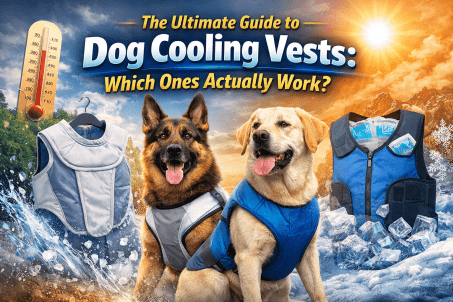
Yes, dog cooling vests work, but only in the right conditions. In a study of 13 military working dogs, an evaporative cooling vest lowered core body temperature by about 0.6°C right after a 20-minute run and by about 0.8°C fifteen minutes later. That’s a real but modest drop. Evaporative (soak-and-wear) vests work best in hot, dry air. In humid weather, gel or ice-pack vests are the better choice. No vest replaces shade, water, and rest, and a vest is never a treatment for heatstroke.
Table of Contents
- Do Dog Cooling Vests Actually Work? What the Research Says
- How Dog Cooling Vests Work: Three Types Compared
- The Humidity Rule: Which Type Fits Your Climate
- The 4 Best Dog Cooling Vests Worth Buying
- How to Choose the Right Cooling Vest (Buyer’s Checklist)
- How to Use a Cooling Vest Correctly, Step by Step
- Mistakes That Make Your Dog Hotter, Not Cooler
- Where a Vest Fits in a Full Heat-Safety Plan
- Heatstroke Emergency: What to Do (and Why the Vest Comes Off)
- A Simple Handler’s Test: Does Your Vest Work on Your Dog?
- Care, Cleaning, and Cost Per Season
- Why You Can Trust This Guide
- FAQs About Dog Cooling Vests
- The Bottom Line
Introduction
Here’s a problem every working dog handler knows. The job doesn’t stop because it’s hot. Patrol shifts, detection searches, and training sessions all happen in the sun. Your dog can’t sweat through its skin like you can, so it cools itself mostly by panting. That’s a weak system when the air is 35°C (95°F) and your dog is working hard.
So cooling vests look like an easy fix. Soak one, strap it on, and your dog stays cool. Right?
Not quite. Dozens of “best dog cooling vest” lists exist, and most of them rank products by star ratings and Amazon reviews. Almost none tell you how much a vest actually cools a dog, when it stops working, or what to do when it fails.
This guide fixes that. You’ll learn what real research on military working dogs found, which vest type suits your climate, how to use a vest properly, and which four vests are worth your money. Whether you handle a police K9 or just walk a Labrador in summer, you’ll be able to buy smarter and keep your dog safer.
Do Dog Cooling Vests Actually Work? What the Research Says
Let’s start with evidence, not marketing.
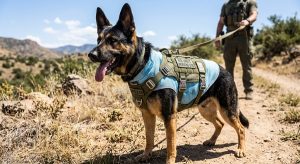
The best study I’ve found on this topic used real K9s. Researchers in Valencia, Spain tested cooling vests on military working dogs from a Military Police unit. The group was 13 adult dogs aged 2 to 6, about 69% German Shepherds and 31% Belgian Malinois. Every dog ran 20 minutes at roughly 10 km/h in August heat, with air temperatures between about 28°C and 31°C and humidity around 46 to 53%. Each dog ran three times: with no vest, with a phase-change (gel pack) vest, and with an evaporative vest.
Here’s what happened to their core (rectal) temperatures:
| Condition | Right after the run | 15 minutes later |
|---|---|---|
| No vest | 41.2°C (106.2°F) | 40.6°C (105.1°F) |
| Gel pack (phase-change) vest | 40.8°C (105.5°F) | 40.1°C (104.2°F) |
| Evaporative vest | 40.6°C (105.1°F) | 39.8°C (103.7°F) |
(Figures from Benito, Lozano & Miró, Animals, 2022.)
What this tells us
The evaporative vest cut core temperature by about 0.62°C right after the run, and by 0.77°C fifteen minutes later. Both differences were statistically significant. The gel pack vest also helped during recovery, about 0.49°C lower at the 15-minute mark.
Is that a big drop? Honestly, no. It’s under 1.5°F. But look at it this way. Vets treat core temperatures above about 41°C (105.8°F) as the danger zone. The dogs without a vest finished the run right at that line. A drop of even half a degree gives your dog more room before trouble starts. The authors made the same point: the goal of a vest is to keep the body near a stable temperature, not to cause a sharp drop.
What the study did not find
This matters, and most blogs skip it:
- Heart rate and blood pressure showed no overall difference between vest and no-vest conditions. The vest helped core temperature, not everything.
- The sample was small (13 dogs), and the authors admit it. The results are encouraging, not final proof.
- The test ran in moderate heat and moderate humidity. It says little about very humid or extremely hot conditions.
- Cooling vests stay a prevention and support tool. The authors state that vests aren’t meant to treat heatstroke or drop temperature fast, because water immersion works better for that.
My take as a handler: a vest gives you a margin of safety, not a force field. Treat it like a seatbelt, not a bulletproof shield.
How Dog Cooling Vests Work: Three Types Compared
All cooling vests fall into three groups. Knowing which one you’re buying is half the battle.
1. Evaporative (soak-and-wear) vests
You soak the vest in water, wring it out, and put it on your dog. As the water evaporates, it pulls heat away. It’s the same reason you feel cold stepping out of a lake. Ruffwear’s popular model uses a three-layer design, and is built to be re-soaked when it dries out.
Best for: hot, dry climates, hiking, search work, and long outings where you can re-wet the vest.
One gear tester points out an important catch: these vests need to touch your dog’s skin to work, and very absorbent ones can leave a dog hot and wet when conditions are wrong.
2. Gel pack or phase-change (PCM) vests
These hold frozen or chilled packs in pockets. In the study above, the gel pack vest weighed about 1,270 g (2.8 lb) with its packs, compared with roughly 380 g (0.8 lb) dry and 780 g (1.7 lb) wet for the evaporative vest. It needed at least 12 minutes in a freezer or 15 minutes in a fridge to charge, but the maker claims up to 4 hours of cooling.
Best for: humid weather, short high-intensity jobs, and handlers who have a freezer nearby.
Downside: ice packs add weight and don’t flex, which can restrict movement. Vets also warn against pressing ice packs hard against a dog’s body, because extreme cold can affect circulation.
3. Hybrid and cooling-mat style coats
Some coats combine moisture-wicking fabric with a cooling layer, or use chemical cooling fabrics. They’re lighter and easier to wear, but cool less aggressively. They suit pets on walks more than working dogs on duty.
Quick comparison
| Feature | Evaporative | Gel / PCM | Hybrid coat |
|---|---|---|---|
| Works best in | Dry heat | Humid heat | Mild heat |
| Weight | Light (heavier when wet) | Heavy | Light |
| Setup time | 2–5 minutes | 12–15+ minutes (freezer) | Minimal |
| Needs re-wetting | Yes | No (re-chill instead) | Sometimes |
| Best for | Hiking, field work | Short, intense work | Casual walks |
The Humidity Rule: Which Type Fits Your Climate
This is the part most guides get wrong, and it’s the biggest gap I see in the top results.
Evaporation only cools when the air can absorb more moisture. Ruffwear explains that at around 70% relative humidity, evaporation still happens but cools far less, and at 100% humidity it stops entirely. A real-world trail review backs this up: the tester noted a smaller cooling difference on a warm, humid day, likely because humid air slowed evaporation.
So here’s a practical rule of thumb. It’s our field guidance built on those facts, not a lab-proven cutoff:
| Relative humidity | What to expect | Best choice |
|---|---|---|
| Under 50% | Evaporative vests shine | Evaporative vest |
| 50–70% | Still useful, but re-wet more often | Evaporative, plus shade and water |
| Over 70% | Evaporation slows sharply | Gel/PCM vest, or skip the vest and rely on shade, water, and rest |
Check your local weather app for “humidity” before work. If you live in a hot, humid region (coastal West Africa, Southeast Asia, the US Gulf Coast, Florida), plan for gel packs or schedule work for cooler hours.
The 4 Best Dog Cooling Vests Worth Buying
I picked these based on three things: the evidence on evaporative cooling, consistent praise across independent 2026 roundups (Dogster, Vetstreet, Treeline), and how well they fit working-dog needs. Check current sizing and prices on each page, since both change often.
1. Ruffwear Swamp Cooler: Best for Working and Active Dogs
Check Ruffwear Swamp Cooler on Amazon
This is the vest used in the military dog study above, which is a big reason it tops this list. Treeline’s testing named it Best Overall. It has side-release buckles and a leash portal so you can use it over a harness, plus light-coloured fabric that reflects sunlight.
- Pros: Strong coverage, tested on real K9s, harness-friendly
- Cons: It has a fixed pullover neck opening that some dogs find awkward, and you must re-soak it as it dries. It also gets heavy when wet.
- Best for: German Shepherds, Malinois, Labs, and any dog doing real work in dry heat
2. GF Pet Elastofit Ice Vest: Best for Long, Low-Effort Outings
Check GF Pet Elastofit Ice Vest on Amazon
Dogster ranks it Best Overall and PureWow lists it as its top evaporative pick. It’s light, stretchy, and simple: wet it, wring it, wear it. Be careful with “cools for 3+ hours” claims. That’s a best-case number. In real heat, plan on re-checking it every 20 to 30 minutes.
- Pros: Lightweight, easy to put on, no freezer needed
- Cons: Less coverage and less rugged than a working-dog vest
- Best for: Pet dogs, walks, light training
3. Canada Pooch Cooling Vest: Best for Small and Mid-Size Dogs
Check Canada Pooch Cooling Vest on Amazon
Dogster calls it the best value pick, though it notes the vest doesn’t work well with a harness. Treeline named the Canada Pooch Cooling 2.0 its best small-dog vest. If you have a small or medium dog, this is easy to like.
- Pros: Affordable, good range of sizes, simple to use
- Cons: Awkward with some harnesses, not built for hard work
- Best for: Small dogs, city walks, light summer outings
4. KYEESE Dog Cooling Vest: Best Budget Option
Check KYEESE Dog Cooling Vest on Amazon
It appears in a 2026 tested-and-ranked roundup of the best dog cooling vests. It’s a solid starter if you want to see whether your dog accepts a vest before you spend more. Check the sizing chart carefully. A loose vest won’t cool well.
- Pros: Low price, breathable, adjustable
- Cons: Less proven durability than premium brands
- Best for: Budget buyers and first-time vest users
Also worth a look
- Kurgo Core Cooling Vest: Vetstreet picked it as its best reflective option for walks near traffic or at dusk.
- SGODA Dog Cooling Vest: Vetstreet named it best for large dogs.
- Horay World Cooling Vest (ice pack style): Vetstreet’s pick for a vest with ice packs, which suits humid weather but adds bulk.
How to Choose the Right Cooling Vest (Buyer’s Checklist)
Don’t buy on looks. Run through these seven points first.
- Match the type to your humidity. Use the table above. This matters more than the brand.
- Measure your dog properly. Measure the chest girth (widest part behind the front legs) and the back length. If you’re between sizes, call the seller. A loose vest slips and rubs. A tight one blocks movement.
- Check harness compatibility. Working dogs wear harnesses. Look for a leash portal or a design that sits under or over your harness without pinching. This is the most common complaint in reviews.
- Look at coverage. More torso coverage means more cooling. The study authors suggested the gel pack vest may have underperformed partly because it didn’t wrap the whole trunk.
- Weigh the weight. Get a vest your dog can run, turn, and jump in. Remember that wet vests weigh roughly double.
- Consider coat type. Evaporative vests must touch the skin to work, so very thick double coats reduce the effect. Short-coated dogs usually get the best results. If your dog has a heavy coat, a vest still helps, but expect less.
- Think about breed risk. Flat-faced dogs like bulldogs, pugs, and boxers pant less effectively, so a vet interviewed by PureWow said they may benefit most. Flat-faced dogs still need to stay in shade and air conditioning first.
How to Use a Cooling Vest Correctly, Step by Step
Even the best vest fails when you use it wrong. Here’s the routine I’d teach any new handler.
- Introduce it at home first. Let your dog sniff it, wear it for five minutes indoors, then reward. Never debut a vest on a hot work day.
- Soak in cool tap water. Use cool water, not ice water. Ice water can make skin blood vessels tighten, which slows heat loss.
- Wring it out well. You want it damp, not dripping. A soaked vest in still air just makes a wet, warm dog.
- Fit it snugly. You should fit two fingers under the straps. The vest should touch the chest, sides, and back without twisting.
- Add airflow. Evaporation needs moving air. Work in a breeze, or at least keep the dog moving.
- Re-wet when dry. Touch the vest every 20 to 30 minutes. If it feels dry, re-soak it. A dry vest is just a jacket, and a dry jacket traps heat.
- Use it before and after work, too. The study found the biggest benefit 15 minutes after exercise. Keep the vest on during the cool-down, with shade and water.
- Watch your dog. If your dog’s panting keeps getting heavier, stop work, remove the vest, and cool the dog with water and air.
Mistakes That Make Your Dog Hotter, Not Cooler
I see these again and again:
- Using a wet vest in very humid air with no breeze. It can feel cooler on the surface while trapping heat underneath.
- Letting it dry out and keeping it on. A dry vest is insulation.
- Buying the wrong size. Gaps kill the cooling effect.
- Skipping shade and water because “he has a vest.” The vest supports the basics. It doesn’t replace them.
- Using a vest with a muzzle during hard work in heat. Vets flag working dogs wearing muzzles as being at higher risk of heatstroke, because a muzzle limits panting. If your job needs a muzzle, use a basket muzzle that allows full panting and shorten work periods.
- Putting a vest on a dog that’s already in trouble. That’s a job for water and a vet. More on this below.
- Storing a damp vest. It grows mildew and bacteria that can irritate skin.
Where a Vest Fits in a Full Heat-Safety Plan
A vest is one layer in a stack. The best handlers I know use all of these together:
- Time the work. Train at dawn or dusk. Move hard work out of the midday sun.
- Acclimatize slowly. Dogs need around one to two weeks of gradually increased heat exposure before a hard workload. Don’t send a dog straight from air conditioning into an all-day hot job.
- Plan water. Offer small drinks often, not one huge drink after work.
- Build in rest. Short, frequent rest breaks in shade beat one long break.
- Watch the dog, not the clock. Early warning signs include heavier panting that won’t settle, a wide, flat tongue, sticky saliva, slowing down, and lagging behind.
- Know the dog. Overweight, older, brachycephalic, dark-coated, and unfit dogs overheat faster.
- Keep the workload honest. Our guide on how often to exercise a working dog covers building the right balance of effort and recovery.
Proper fueling matters too. If you’re feeding a high-output K9, read our Purina Pro Plan Sport 30/20 review to see whether a performance diet suits your dog.
And for the rest of your kit, see our roundup of tactical K9 gear every working dog should have, including harness setups that pair well with a cooling vest.
Heatstroke Emergency: What to Do (and Why the Vest Comes Off)
Let’s clear up an unclear piece of advice from the old version of this article. A cooling vest does not treat heatstroke.
Warning signs: collapse, confusion, heavy drooling, vomiting, bright red or pale gums, stumbling, or seizures.
Do this right away:
- Stop all activity and move the dog to shade or air conditioning.
- Remove the vest. A warm, damp vest slows heat loss when the dog is already overheated.
- Cool with water. Vets advise running cool water over the dog, for example with a hose, and say ice packs are not recommended because they can affect circulation. Focus on the belly, armpits, inner thighs, and paws.
- Add airflow with a fan or a breeze.
- Call a vet and travel while you cool. The first 30 minutes are critical for the outcome.
- Stop active cooling around 39.5°C (103°F) if you can take a rectal temperature. Vets recommend stopping at about that point, so you don’t overshoot into hypothermia.
Why water and not the vest? A randomized study in working dogs found partial water immersion cooled core temperature more effectively than passive cooling or applying alcohol to the paws. Treat any suspected heatstroke as a real emergency, even if your dog seems to recover.
(This is general education, not veterinary advice. Always follow your vet’s instructions.)
A Simple Handler’s Test: Does Your Vest Work on Your Dog?
Reviews are one thing. Your dog’s body is another. If you handle working dogs, here’s a safer, simpler version of the test we use to compare gear.
What you need: a digital rectal thermometer (only if you’ve been trained to use it), a thermometer and humidity reader, a stopwatch, shade, and fresh water.
- Pick two similar days with similar temperature and humidity.
- Take a resting baseline after 15 to 20 minutes of calm shade time.
- Run the same work for 10 to 15 minutes on both days, one with the vest and one without. Keep pace and workload the same.
- Measure right after work, and again at 5, 10, and 15 minutes.
- Compare. Look at peak temperature, how fast it falls, and how the dog behaves. Does he settle quickly? Does the vest rub or restrict movement?
- Safety rule: stop the test immediately if your dog’s temperature reaches 40°C (104°F) or he shows distress. Begin cooling right away.
This is a small, informal check. It can’t replace a controlled study, but it will tell you whether a vest suits your dog and your climate.
Care, Cleaning, and Cost Per Season
Cleaning:
- Rinse the vest in clean water after every use.
- Wash it with mild, fragrance-free soap as the label directs. Skip fabric softener, which can clog absorbent layers.
- Air-dry it fully in the shade before storing.
- Check seams, buckles, and straps for wear before each season.
Cost: Vest prices change often, but they fall into rough tiers: budget (basic evaporative coats), mid-range (well-known brands with reinforced stitching), and premium (heavy-duty or gel pack systems). A well-made evaporative vest can last several seasons with proper care. If you work a dog most days in hot weather, spending a bit more usually pays off, since stitching and straps are the first things to fail.
Why You Can Trust This Guide
Experience: This guide was written by Cpl. Rofiat Muritala, a Nigerian Army military working dog instructor and handler with more than 14 years at the Nigerian Army Dog Centre. Her background covers obedience, K9 patrol, and explosive detection, in real hot-weather conditions. [Add one real example of heat management on duty here.]
Expertise: Where this article states numbers, they come from a peer-reviewed study on military working dogs in the journal Animals, plus veterinary heatstroke guidance and independent gear tests. We note where evidence is thin.
Authoritativeness: ARFS K9 Team publishes field-based guidance for handlers, trainers, and owners worldwide.
Trust: We link to our sources below, we flag affiliate links clearly, and we tell you where vests fall short. Not a vet? Neither are we on this page. For medical decisions, talk to your veterinarian.
Main sources:
- Benito M., Lozano D., Miró F. (2022). Clinical Evaluation of Exercise-Induced Physiological Changes in Military Working Dogs Resulting from the Use or Non-Use of Cooling Vests during Training in Moderately Hot Environments. Animals, 12(18), 2347. https://doi.org/10.3390/ani12182347
- A Randomized Cross-Over Study Comparing Cooling Methods for Exercise-Induced Hyperthermia in Working Dogs in Training. Animals, 2023. https://www.mdpi.com/2076-2615/13/23/3673
- Ruffwear, “Evaporative Cooling 101.” https://ruffwear.com/pages/evaporative-cooling-101
- Dogster, Vetstreet, PureWow, and Treeline 2026 product roundups (used for product comparisons only)
FAQs About Dog Cooling Vests
1. Do dog cooling vests really work?
Yes, when used in the right conditions. In a study of military working dogs, an evaporative vest lowered core temperature by about 0.6°C after exercise and 0.8°C during recovery. The effect is modest, so a vest should support shade, water, and rest, not replace them.
2. Do cooling vests work in humid weather?
Less well. Evaporative vests rely on dry air to carry moisture away. Cooling drops significantly at about 70% humidity and stops completely at 100%. In humid climates, choose a gel/PCM vest, work in cooler hours, and focus on shade and water.
3. Can a working dog wear a cooling vest with a harness?
Yes, if the vest is designed for it. Look for a leash portal and side-release buckles, like on the Ruffwear Swamp Cooler. Test the setup during a short drill before relying on it on duty. Some budget vests don’t sit well under a harness.
4. How long does a cooling vest stay effective?
It depends on the type and the weather. Evaporative vests cool until they dry out, often an hour or so in hot, dry air, and less in strong sun. Re-wet them every 20 to 30 minutes. The gel pack vest in the study was designed to cool for up to 4 hours once charged. Treat all manufacturer times as best-case numbers.
5. Should I put a cooling vest on a dog with heatstroke?
No. Remove it. Move the dog to shade, wet the body with cool water, add airflow, and get to a vet quickly. Researchers note that vests aren’t meant to treat heatstroke, and that water immersion cools faster.
The Bottom Line
Dog cooling vests work, but they’re a helper, not a hero. The best evidence we have shows an evaporative vest can trim your dog’s core temperature by roughly half a degree to just under a degree, and that can matter when your dog is working near the danger line.
Here’s your action plan:
- Check humidity first. Under 50% favors evaporative vests. Over 70%, go with gel packs or lean on shade and rest.
- Choose fit and harness compatibility over brand names. Measure your dog twice.
- Introduce the vest at home before you rely on it in the field.
- Keep it damp, not dry or soaking. Re-wet every 20 to 30 minutes.
- Never use a vest as heatstroke treatment. Take it off, use cool water and air, and call your vet.
- Pair it with the basics: cooler work hours, slow acclimatization, steady water, and regular rest.
If you want the full mindset behind safe, consistent handling, my book Beyond the Bark: Inside a Pro Handler’s Playbook for Raising the Ideal Dog walks through how professional handlers build reliable, resilient dogs in real conditions.
Want more handler-tested advice every week? Subscribe to our weekly articles roundup newsletter and get new K9 training, gear, and health guides in your inbox.

Her work centres on obedience, detection, protection and operational readiness. She favours proven methods built on repetition, consistency and real-world conditioning, so that both dogs and handlers are prepared for high-pressure tasks.
Rofiat represented the Nigerian Army Dog Centre at the Nigerian Army Day Celebration (NADCEL) 2026, where she led demonstrations in obedience, explosive detection, agility and tactical movement. Through articles, training content and documentaries, she shares field-based insight into how structured training, clear communication and trust between handler and dog affect performance and reliability.
She is the author of Beyond the Bark: Inside a Pro Handler's Playbook for Raising the Ideal Dog, a practical guide that helps dog owners and handlers apply professional training principles in everyday situations.
- K9 Advantix Dosage Chart & Safety Guide for Dogs - October 19, 2026
- How to Set Up & Use Bousnic Dog Training Collar - October 18, 2026
- Westminster Dog Show 2026: Winners & Full Results - October 17, 2026