Jack Russell Dog Breed: Temperament & Care
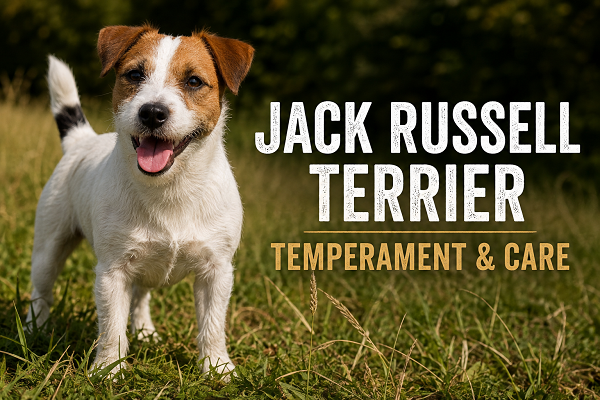
Jack Russell Terriers are small (10–15 inch, 11–17 lb), high-energy working terriers with a fearless, intelligent, and independent temperament. They need at least 1–2 hours of vigorous daily exercise, early and consistent training, and owners who understand their strong prey drive. With good care, they typically live 13–18 years and remain one of the healthiest small breeds around, provided you stay ahead of a handful of breed-specific issues like patellar luxation and lens luxation.
Table of Contents
- Introduction
- A Quick History: From Fox Hunting to Family Homes
- Physical Characteristics: What to Expect
- Jack Russell Terrier Temperament Explained
- Living With a Jack Russell: Kids, Other Pets, and Small Spaces
- Exercise and Mental Stimulation Needs
- Training Your Jack Russell: What Actually Works
- Grooming and Coat Care
- Health, Lifespan, and Common Conditions
- Feeding and Nutrition Basics
- Is a Jack Russell Terrier Right for You?
- FAQs
- Final Thoughts
Introduction
If you’ve ever met a Jack Russell mid-zoomie, tearing across a yard like it personally offended them, you already know this isn’t a dog that does anything halfway. I’ve worked with a lot of breeds over the years, from massive Belgian Malinois to steady old Labradors, but there’s something uniquely intense about a 15-pound terrier that genuinely believes it can take on anything. That’s not an exaggeration for effect. It’s just who they are.
This guide walks you through everything you need to know before bringing one home, or everything you probably wish someone had told you before you already did. We’ll cover where the breed came from, what makes their temperament tick, how much exercise and training they actually need (spoiler: more than you think), grooming, health issues to watch for, and the honest pros and cons of living with one. By the end, you’ll know whether a Jack Russell fits your life, and if it does, how to set both of you up for success.
A Quick History: From Fox Hunting to Family Homes
The Jack Russell Terrier owes its name and existence to Reverend John “Jack” Russell, a parson and avid fox hunter in 19th-century England. Russell wanted a terrier that could keep pace with hounds on a hunt, then squeeze into a fox’s den and bolt it out without killing it underground. That’s a very specific job description, and it shaped everything about this breed: the compact but athletic build, the relentless drive, and a temperament that simply does not know how to quit.
Here’s where it gets interesting for anyone confused about names. In 1997, the American Kennel Club recognized a version of this dog under the name Parson Russell Terrier, built to a stricter conformation standard for the show ring. The original Jack Russell Terrier Club of America pushed back hard against full AKC recognition, worried that breeding for appearance would erode the working drive and function that made the breed what it is. That split still exists today. The Jack Russell Terrier Club of America keeps the working-line tradition alive, while the Parson Russell Terrier follows AKC show standards. The United Kennel Club recognized the Jack Russell Terrier as its own breed in 2016.
Practically speaking, if you’re buying a puppy today, you’re almost certainly getting a Jack Russell in the traditional sense: a broader standard, a wider range of builds, and a dog still bred first and foremost for working drive, not looks.
Physical Characteristics: What to Expect
Jack Russells are small but sturdy, built more like a compact athlete than a delicate lapdog. Here’s the breed standard rundown:
- Height: 10–15 inches at the shoulder
- Weight: 11–17 pounds, though many working-line dogs sit closer to 13–17 lbs
- Lifespan: 13–18 years, with many living well into their late teens
- Coat types: Smooth, rough (broken), or a combination of both
- Coloring: Predominantly white, with black, tan, or tricolor patches
- Build: Balanced, rectangular body with a deep chest (narrow enough to fit down a fox den, which tells you a lot about how compact these dogs really are)
One detail that surprises new owners: because the JRTCA breed standard prioritizes working ability over a fixed look, you’ll see real variation from one Jack Russell to the next. Ears can be button, drop, or a mix. Legs can be slightly longer or shorter depending on the line. If you’re buying from a breeder, ask about the parents’ working history, not just their appearance; it tells you far more about the puppy’s likely temperament and energy level.
Jack Russell Terrier Temperament Explained
This is the section that matters most, so let’s not sugarcoat it. Jack Russells are tenacious, courageous, endlessly curious, and about as subtle as a car alarm. They were bred to chase something that could fight back underground, and that fearlessness didn’t get left behind when the breed moved into suburban living rooms.
Core temperament traits
- Fearless and confident. A Jack Russell doesn’t seem to register the concept of “too big to challenge.” I’ve seen 14-pound JRTs stand their ground against dogs five times their size without blinking.
- High prey drive. This isn’t a quirk you can train away entirely. It’s baked into the breed’s original job. Squirrels, cats, rabbits, even the neighbor’s chickens, all register as “worth chasing” to a Jack Russell’s brain.
- Highly intelligent. These dogs learn fast, which is a double-edged sword. They pick up commands quickly and they pick up bad habits just as fast if you’re inconsistent.
- Independent-minded. Unlike breeds bred to constantly check in with a handler, terriers were bred to make their own decisions underground, away from human guidance. That independence shows up as stubbornness if you’re not prepared for it.
- Vocal and alert. Jack Russells make excellent watchdogs precisely because they notice everything and aren’t shy about announcing it.
- Playful and entertaining. For all their intensity, they’re also genuinely funny, affectionate dogs that bond hard with their people.
Why temperament testing still matters
You might reasonably ask: if breed temperament doesn’t fully predict behavior, why bother learning about it? Because it’s still your best starting point. A Jack Russell’s actual day-to-day personality depends heavily on socialization, training consistency, and how much outlet you give that drive. Two Jack Russells raised differently can look like completely different dogs by age two. But the underlying wiring, the intensity, the prey drive, the intelligence, is there in nearly all of them, and it’s worth planning around from day one.
Living With a Jack Russell: Kids, Other Pets, and Small Spaces
Kids
Jack Russells generally do well with children over the age of four, and the American Kennel Club specifically doesn’t recommend the breed for homes with kids younger than that. It’s not that JRTs are aggressive toward small children by nature; it’s more that their high energy and quick reactions don’t mix well with toddlers who move unpredictably and don’t yet understand dog boundaries. With older kids who can play appropriately and respect the dog’s space, Jack Russells often become tireless playmates.
Other pets
This is the honest, slightly uncomfortable truth: a Jack Russell’s prey drive means cats, rabbits, and small pets are genuinely at risk, especially with dogs that weren’t raised alongside them from puppyhood. Some Jack Russells can learn to coexist peacefully with a cat they grew up with, but introducing an adult JRT to a new small pet is a gamble I wouldn’t recommend without careful, gradual, supervised introductions. With other dogs, they generally do fine, particularly if socialized early, though same-sex aggression can crop up in unaltered dogs.
Apartments and small spaces
Contrary to what their small size might suggest, Jack Russells are not a great match for apartment living unless you’re committed to serious daily exercise. Their energy output has nothing to do with their body size. A bored, under-exercised Jack Russell in a small space is a genuine recipe for destructive digging, excessive barking, and escape attempts. Yards need to be secured well below ground level too; these dogs dig with real purpose and have a well-earned reputation as escape artists.
Exercise and Mental Stimulation Needs
Jack Russells need at least 1–2 hours of vigorous physical activity every day, and that number isn’t padding for effect. A quick walk around the block simply does not touch the sides for a breed built for hours of underground hunting and pack-based fieldwork. If you’ve read our guide on how often you should exercise a working dog, you’ll recognize the same principle applies here: physical tiredness alone isn’t the goal. Mental engagement matters just as much.
What actually tires a Jack Russell out
- Off-leash recall games in a securely fenced area (running and chasing, not just walking)
- Agility training or informal obstacle courses — JRTs frequently excel and genuinely enjoy structured competition
- Earthdog trials and Barn Hunt, sports designed specifically around a terrier’s natural digging and hunting instincts
- Flirt pole or fetch sessions that mimic the chase-and-catch sequence they’re wired for
- Puzzle feeders and scent games for the mental side of the equation
A tool I recommend to almost every Jack Russell owner I work with is a treat puzzle toy like the Outward Hound by Nina Ottosson Dog Smart Puzzle. Fifteen minutes of problem-solving with one of these genuinely does burn mental energy comparable to a much longer walk, which matters a lot on rainy days or when your schedule doesn’t allow for a full hour outside.
If you skip the mental piece and only focus on physical exercise, you’ll likely still end up with a bored, frustrated dog. Jack Russells were bred to think and problem-solve independently underground, not just run in circles. Combining both is what actually produces a calm, well-adjusted terrier at home.
Training Your Jack Russell: What Actually Works
Here’s the thing about training a Jack Russell: their intelligence makes them fast learners, but their independence means they’ll happily decide training isn’t worth their time if you let boredom or inconsistency creep in.
Start early and stay consistent
Begin basic obedience and socialization the moment you bring your puppy home, ideally by 8 weeks old. Our crate training guide is a good place to start, since crate training lays the foundation for the structure and predictability a JRT puppy needs before anything else clicks into place. I’ve found that owners who skip crate training with a terrier puppy often end up fighting separation anxiety and destructive chewing later, problems that are far easier to prevent than fix.
Keep sessions short and high-value
Jack Russells have limited patience for repetition. Five to ten minute training sessions, several times a day, work far better than one long session. Use high-value treats and end on a win, always.
Understand the difference between obedience and instinct
This is something every terrier owner eventually has to grapple with: no amount of training fully erases a Jack Russell’s hunting instinct. What training does is give you enough control and reliability that the instinct doesn’t run the household. Our piece on obedience versus instinct covers this dynamic in more depth, and it applies just as much to a 14-pound terrier as it does to a working police K9. A reliable recall around distractions, taught with patience and consistency, is genuinely one of the most valuable skills you can build with this breed, precisely because their prey drive means an off-leash JRT that spots a squirrel may not hear you at all otherwise.
Channel the drive, don’t fight it
Rather than trying to suppress a Jack Russell’s digging, chasing, and hunting instincts, the more effective (and honestly, more humane) approach is to give them a legal outlet. Digging boxes filled with sand, flirt pole games, earthdog trials, and scent work all let the dog be exactly what it was bred to be, just in a way that doesn’t destroy your garden.
Grooming and Coat Care
Good news for busy owners: Jack Russells are genuinely low-maintenance in the grooming department compared to a lot of small breeds. All three coat types, smooth, rough, and broken, are relatively easy to manage.
- Brushing: Once or twice a week is enough for most coat types to remove loose hair and distribute natural oils. Rough-coated JRTs benefit from occasional hand-stripping to maintain coat texture, though many pet owners simply clip instead.
- Bathing: Every 6–8 weeks, or as needed. Over-bathing can dry out their skin and strip natural oils.
- Nail trims: Every 3–4 weeks. Active dogs that run on hard surfaces regularly may wear nails down naturally, but check monthly regardless.
- Ear checks: Weekly, since folded ears trap moisture and debris more easily than upright ones.
- Dental care: Brushing several times a week goes a long way, since dental disease is one of the more common health issues in small breeds generally.
If you want the full step-by-step routine, our guide on essential dog grooming tips for a healthy puppy walks through the process breed-by-breed, and it’s a solid companion to what’s outlined here. Jack Russells also show up on our list of low-maintenance dog breeds with basic grooming needs, which tells you something: for all their behavioral intensity, keeping their coat looking good is genuinely one of the easier parts of ownership.
Health, Lifespan, and Common Conditions
Jack Russells are, on the whole, a hardy and long-lived breed, often reaching 13 to 18 years with good care. That said, there are a handful of conditions worth knowing about so you can catch problems early rather than after they’ve become serious.
Patellar luxation
This is the most common orthopedic issue in the breed, affecting an estimated 15–20% of Jack Russells at some point in their lives. It happens when the kneecap slips out of its normal groove, and it’s graded on a scale from I (mild, self-correcting) to IV (permanent dislocation, usually requiring surgery). Because Jack Russells are constantly running, jumping, and pivoting at full speed, this condition can worsen over time without intervention. Watch for a skipping gait or occasional hind-leg lameness.
Eye conditions
Jack Russells are predisposed to several eye issues, most notably primary lens luxation (PLL), a hereditary condition where the ligaments holding the eye’s lens in place break down, causing the lens to dislocate. Left untreated, this can lead to painful secondary glaucoma and vision loss. Roughly 10–12% of the breed also faces risk for cataracts and progressive retinal atrophy. If your dog is squinting, pawing at an eye, or has visible redness or cloudiness, get to a vet promptly; eye emergencies in this breed move fast.
Deafness
Congenital deafness shows up more frequently in predominantly white-coated Jack Russells, particularly those with blue eyes. Breeders should BAER test puppies, and it’s a fair question to ask before you buy.
Dental disease
Small breeds in general are prone to tartar buildup and gum disease, with estimates suggesting around 20% of Jack Russells develop noticeable dental issues without regular care. Regular brushing and professional cleanings go a long way toward preventing this.
Skin allergies
Roughly 10% of Jack Russells deal with atopic dermatitis or other skin allergies, showing up as excessive scratching, redness, or recurring ear infections.
Supporting joint health proactively
Because patellar issues are so common in this breed, many vets and experienced handlers recommend starting joint support early rather than waiting for symptoms to appear, particularly in dogs that are highly active or showing early signs of a skipping gait. A daily glucosamine and chondroitin chew, like the Zesty Paws Hip and Joint Supplement, is a simple, low-effort way to support cartilage and joint function over the long run, though it’s worth discussing dosage with your vet rather than guessing based on the label alone.
If you ever notice sudden vomiting, diarrhea, or a change in stool color in a Jack Russell puppy, don’t wait it out. Our guide on puppy vomiting and diarrhea walks through exactly which symptoms warrant an immediate vet visit versus which can be monitored at home for a day, and it applies just as much to a terrier puppy as any other breed.
Feeding and Nutrition Basics
Jack Russells burn through energy fast, which means feeding needs to match their activity level, not just their small size on a chart. As puppies, most JRTs do well on 3–4 small meals a day until around six months, then transitioning to two meals daily as adults. High-quality food formulated for small, active breeds is generally the best fit, since it accounts for their faster metabolism and higher caloric needs relative to body weight.
Watch portion sizes closely though. Despite the constant motion, Jack Russells can and do become overweight, especially if treats aren’t factored into daily calorie totals. Extra weight puts additional strain on a breed already prone to patellar luxation, so keeping them lean isn’t just about appearance; it’s genuine preventive orthopedic care.
Is a Jack Russell Terrier Right for You?
Let’s be straightforward about who thrives with this breed and who probably shouldn’t take one on.
A Jack Russell is likely a great fit if you:
- Have an active lifestyle and genuinely enjoy daily outdoor time
- Want a dog for agility, earthdog trials, or other dog sports
- Have a securely fenced yard (below-ground level too)
- Are prepared for consistent, ongoing training rather than a one-and-done puppy class
- Don’t have small pets like cats, rabbits, or birds, or are willing to manage introductions very carefully
- Have kids over the age of four, or no kids at all
A Jack Russell probably isn’t the right match if you:
- Want a low-energy companion dog
- Live in a small apartment without reliable daily exercise options
- Have very young children
- Already have cats, rabbits, or other small pets and aren’t prepared to manage that risk carefully
- Prefer a dog that’s naturally eager to please over one that thinks for itself
None of this makes the breed “bad.” It just means Jack Russells reward a very specific kind of owner, and they can make life genuinely miserable for the wrong one. I’ve met plenty of people who tried a Jack Russell because of how they look in videos online, without understanding the exercise and training commitment underneath that cute exterior, and it rarely ends well for the dog.
Frequently Asked Questions
Are Jack Russell Terriers good for first-time dog owners?
They can work for first-time owners who are genuinely committed to daily exercise and consistent training, but they’re not the easiest starter breed. Their intelligence and independence mean inconsistent handling leads to problem behaviors fast. First-timers who do well with JRTs are usually people willing to invest real time in training from week one.
How much exercise does a Jack Russell Terrier need per day?
Most Jack Russells need at least 1–2 hours of vigorous physical activity daily, combined with mental stimulation like puzzle toys or training games. Under-exercised Jack Russells commonly develop destructive habits like excessive digging, barking, or chewing.
Do Jack Russell Terriers shed a lot?
They shed moderately year-round with heavier seasonal shedding in spring and fall, but overall grooming needs are low compared to many small breeds. Weekly brushing is generally enough to manage loose hair for smooth and broken coats.
Can Jack Russell Terriers live with cats?
It depends heavily on the individual dog and how early they’re introduced. Some JRTs raised alongside a cat from puppyhood coexist peacefully, but their strong prey drive means introducing an adult Jack Russell to a new cat carries real risk and should be done gradually and under close supervision.
What health problems are Jack Russell Terriers prone to?
The most common issues are patellar luxation (affecting an estimated 15–20% of the breed), primary lens luxation and other eye conditions, congenital deafness (more common in predominantly white dogs), dental disease, and skin allergies. Regular vet checkups and early intervention keep most of these manageable.
Final Thoughts
Jack Russell Terriers aren’t a breed you can coast with. They demand real exercise, consistent training, and an owner who respects that underneath the small, scruffy package is a dog built to hunt, dig, and think for itself. But for the right person, that intensity is exactly the appeal. Few breeds bring this much personality, loyalty, and genuine fun into a household.
If you take one thing away from this guide, let it be this: match their energy, don’t fight their instincts, and invest in training from the very first week. Do that, and you’ll likely end up with one of the most loyal, entertaining, and downright memorable dogs you’ll ever own.
This article is for general informational purposes and does not replace advice from a licensed veterinarian or certified professional dog trainer. Always consult a vet for health concerns specific to your dog.

Her work centres on obedience, detection, protection and operational readiness. She favours proven methods built on repetition, consistency and real-world conditioning, so that both dogs and handlers are prepared for high-pressure tasks.
Rofiat represented the Nigerian Army Dog Centre at the Nigerian Army Day Celebration (NADCEL) 2026, where she led demonstrations in obedience, explosive detection, agility and tactical movement. Through articles, training content and documentaries, she shares field-based insight into how structured training, clear communication and trust between handler and dog affect performance and reliability.
She is the author of Beyond the Bark: Inside a Pro Handler's Playbook for Raising the Ideal Dog, a practical guide that helps dog owners and handlers apply professional training principles in everyday situations.
- Australian Cattle Dog vs Blue Heeler: Any Difference? - October 1, 2026
- Bousnic Dog Training Collar Review: Is It Safe? - September 30, 2026
- Gravy Train Dog Food Review: Ingredients & Recalls - September 30, 2026