Dog Breed Selector: Find Your Perfect Dog Match
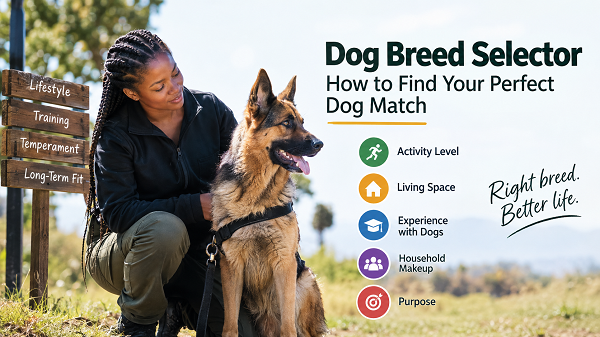
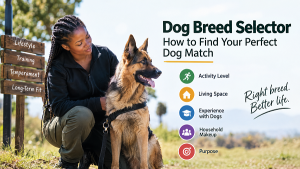
The best way to find your perfect dog breed match is to score your lifestyle against five fixed factors, activity level, living space, experience with dogs, household makeup, and purpose (companion, family guard, or working dog), then check candidate breeds against real breed-club temperament data, not just looks. A five-minute online quiz can point you in a direction, but it can’t tell you whether a Belgian Malinois will destroy your apartment or whether a “hypoallergenic” Poodle mix still needs two hours of exercise a day. That’s where most breed selector tools fall short, and it’s exactly what this guide fixes.
Table of Contents
- Why Most Dog Breed Selector Quizzes Get It Wrong
- The 6 Real Factors Trainers Use to Match You With a Breed
- Dog Breed Groups Explained (And Why It Matters More Than Looks)
- Matching Breeds to Common Lifestyles: Real Scenarios
- Working and Protection Breeds: What Generic Quizzes Never Mention
- The Real Cost of Owning a Dog, By Category
- Breed-Specific Legislation and Insurance: The Hidden Factor
- 7 Mistakes People Make When Choosing a Breed
- A Trainer’s DIY Breed-Match Scorecard
- FAQs
- Conclusion: Your Next Step
Why Most Dog Breed Selector Quizzes Get It Wrong
Go ahead, take one of those five-minute online quizzes. Answer a few questions about your energy level and home size, and like magic, you’ll get a “perfect match.” A Cavalier King Charles Spaniel. A Labradoodle. Maybe a Beagle.
Here’s the thing though: I’ve been on the other end of the phone when someone calls three months after bringing home their “perfect match” and it’s chewing through drywall, guarding the couch from the kids, or too much dog for a first-time owner to handle. The quiz didn’t lie exactly, it just asked the wrong questions.
Most consumer breed selectors are built by pet food or retail brands. They’re designed to be fun, fast, and shareable, not necessarily accurate. They lean heavily on breed stereotypes from decades-old kennel club write-ups, and they almost never touch on:
- Drive level, how much a dog needs a job, not just exercise
- Genetic line differences, a show-line German Shepherd and a working-line German Shepherd from European working stock are almost different animals
- Protection or guarding instinct, which matters enormously if personal or property security is even a small part of why you want a dog
- Real cost of training, especially for breeds that need structured, professional work
- Legal restrictions in your city, state, or country
A genuinely useful dog breed selector treats you like an adult who can handle real information, not just a color quiz with a cute headline. So let’s do this properly.
The 6 Real Factors Trainers Use to Match You With a Breed
When a client calls asking “what breed should I get,” here’s what I actually ask before I say a single breed name out loud.
1. Activity Level (Yours, Not the Dog’s)
Be honest. Do you run 5 miles a day, or does “active” mean a 20-minute walk after work? A Border Collie or Vizsla bred for endurance work will become anxious, destructive, or reactive without serious daily output, we’re talking 60–90 minutes of real exercise, not a stroll around the block. On the flip side, a Bulldog or Basset Hound can’t keep up with a marathon-training household and shouldn’t be forced to try. If you’re weighing a working breed specifically, our breakdown of how often you should exercise a working dog lays out real daily time commitments by breed type.
2. Living Space
Apartment living doesn’t automatically rule out large breeds, a Greyhound is famously a “45 mph couch potato” but it does rule out high-energy, vocal, or space-hungry breeds unless you’re committed to multiple long outings daily.
3. Experience Level
First-time owner? Some breeds are genuinely more forgiving of training mistakes (Golden Retrievers, Labradors, Poodles). Others, Akitas, Chow Chows, Belgian Malinois, Cane Corsos, are bred with independence, guarding instinct, or working drive that punishes inconsistent handling. I’ve seen experienced handlers struggle with a poorly-bred Malinois; it’s not a “starter dog” breed, full stop.
4. Household Makeup
Young kids, elderly relatives, other pets, frequent visitors, all of this changes the equation. A dog with strong guarding or territorial instincts needs early, structured socialization if your home has a lot of foot traffic (think delivery drivers, extended family, kids’ friends).
5. Grooming and Health Tolerance
Double-coated breeds (German Shepherds, Huskies, Golden Retrievers) shed heavily twice a year and need weekly brushing minimum. If allergies are a real concern in your home, note that no dog is 100% hypoallergenic but Poodles, Portuguese Water Dogs, and Bichon Frises produce less dander-laden shedding.
6. Purpose
This is the factor almost every consumer quiz skips entirely: why do you actually want this dog? A jogging companion, a family pet, a therapy or service prospect, or a genuine personal protection and security dog are four completely different breeding and training paths. Treating them the same is where most mismatches start.
Dog Breed Groups Explained (And Why It Matters More Than Looks)
The American Kennel Club (AKC) and the Fédération Cynologique Internationale (FCI) group breeds by original purpose, and this tells you far more than coat color or size ever will:
- Sporting Group (Labradors, Golden Retrievers, Spaniels) — bred to work closely with hunters; generally trainable, people-oriented, high energy
- Herding Group (Border Collies, Australian Shepherds, German Shepherds) — bred to problem-solve independently and control movement; smart, needs mental work or they’ll invent their own “job” (often your furniture)
- Working Group (Rottweilers, Boxers, Doberman Pinschers, Great Danes) — bred for guarding, pulling, and protection tasks; often loyal and protective by nature
- Terrier Group (Jack Russells, Bull Terriers) — bred to hunt vermin; feisty, tenacious, not always great with small pets
- Hound Group (Beagles, Greyhounds, Bloodhounds) — bred to track or chase by scent or sight; independent-minded
- Toy Group (Chihuahuas, Pugs) — bred purely as companions; low exercise needs but not always low-maintenance in temperament
- Non-Sporting and Companion breeds — a mixed bag, from Poodles to Bulldogs
Trainer’s tip: if personal protection or serious guard work is part of your goal, you’re almost always looking within the Working Group or specific Herding-group lines (GSD, Malinois), not because other groups can’t be protective, but because these lines were purpose-bred for controlled aggression, territorial instinct, and trainability under pressure.
Matching Breeds to Common Lifestyles: Real Scenarios
Here’s how this plays out with actual households I’ve worked with (details changed for privacy):
The apartment-dwelling young professional who travels often → A low-to-moderate energy, independent breed like a French Bulldog, Shih Tzu, or Greyhound tends to fit better than a high-drive working breed that will develop separation anxiety. If low grooming demands matter too, our guide to 10 best low-maintenance dog breeds with basic grooming needs is a good next stop.
The active family with kids under 10 → Labrador Retrievers and Golden Retrievers consistently top family recommendations for good reason, steady temperament, high bite inhibition, and generations of breeding for tolerance. Beagles and Boxers are strong runners-up.
The first-time owner who wants a dog that’s also a visible deterrent → This is where people often go wrong and jump straight to a Rottweiler or Cane Corso. A better starting point is often a well-bred, well-socialized German Shepherd or Doberman from a reputable breeder, paired with professional obedience and protection foundation training, the dog’s presence alone deters most opportunists, and proper training builds reliability instead of liability.
The rural homeowner needing property and livestock protection → Livestock Guardian breeds (Anatolian Shepherd, Great Pyrenees) or working-line GSDs suit acreage far better than an apartment-bred companion breed ever will.
The retired couple wanting calm companionship → Cavalier King Charles Spaniels, Havanese, or older rescue dogs of almost any breed (their energy has already mellowed) are frequently the better emotional and physical fit than a puppy of any breed.
Working and Protection Breeds: What Generic Quizzes Never Mention
This is the section every mainstream pet-brand quiz skips, and it’s where real trainer knowledge earns its keep.
Drive Isn’t the Same as Aggression
A dog with high “drive”, prey drive, defense drive, or fight drive, isn’t automatically dangerous. Drive is fuel. Training and genetics determine where that fuel goes. A Belgian Malinois with strong drive and zero structured outlet becomes a destructive, anxious mess. The same dog with proper training becomes a police or military working dog capable of controlled, reliable, high-stakes work. The breed didn’t change, the handling did.
Temperament Testing Matters More Than Pedigree Papers
Organizations like the American Temperament Test Society (ATTS) run standardized temperament evaluations across breeds, testing stability, shyness, and aggression under controlled stimuli. Reputable breeders of protection-suitable lines, German Shepherds, Belgian Malinois, Dutch Shepherds, Rottweilers, Doberman Pinschers, Cane Corsos, will usually have working titles (Schutzhund/IGP, KNPV, or Mondioring) on parent dogs. If a breeder can’t tell you anything about the working titles or temperament testing behind a litter, that’s a red flag, regardless of how good the puppy photos look.
The Five Breeds Most Often Chosen for Personal Protection Work and What Sets Them Apart
- German Shepherd Dog — versatile, highly trainable, strong bond with handler; the benchmark breed for police and military K9 work worldwide
- Belgian Malinois — higher drive and energy than a GSD, favored by elite military and police units (including U.S. special operations K9 teams), but genuinely too intense for the average household
- Dutch Shepherd — similar working intensity to the Malinois, less common outside Europe and specialist K9 circles
- Rottweiler — naturally confident and territorial, calmer energy than a Malinois, good fit for experienced owners wanting a household guardian
- Doberman Pinscher — historically bred specifically for personal protection in the 1890s by a German tax collector, Karl Friedrich Louis Dobermann, who wanted a loyal, intimidating companion for his rounds — a genuinely purpose-built protection breed from day one
None of these breeds should go straight from breeder to “guard my house” without professional training. A good personal or family protection program typically runs through obedience foundations first, then controlled bite work and scenario training, this isn’t a weekend project, and it’s not something to DIY from YouTube videos with a genuinely high-drive dog. If a Rottweiler is on your shortlist specifically, see our Rottweiler dog trainer tips for fixing guard dog agility for what that structured training actually looks like in practice.
A Note on “Aggressive Breed” Myths
Breed alone doesn’t predict bite risk as reliably as most headlines suggest. Multiple studies, including research published by the American Veterinary Medical Association (AVMA), point to individual dog history, socialization, owner management, and how a dog was raised as stronger predictors of bite incidents than breed identity alone. That doesn’t mean breed tendencies don’t exist (they clearly do), it means a well-bred, well-socialized, properly trained “aggressive breed” dog is a completely different animal from a poorly managed one of any breed.
The Real Cost of Owning a Dog, By Category
Cost is the single most-skipped factor in breed selector content, and it’s often the difference between a lifelong match and a dog surrendered to a shelter at 18 months.
| Category | Typical Puppy Cost | First-Year Cost (food, vet, gear) | Annual Ongoing Cost |
|---|---|---|---|
| Small companion breed (Chihuahua, Shih Tzu) | $500–$1,500 | $1,500–$2,500 | $700–$1,200 |
| Mid-size family breed (Labrador, Beagle) | $800–$2,000 | $2,000–$3,500 | $1,000–$1,800 |
| Working/protection breed (GSD, Rottweiler, Doberman) | $1,500–$4,000+ from working lines | $2,500–$4,500 | $1,200–$2,500 |
| Professional protection training add-on | – | $3,000–$12,000+ depending on program length and level | Refresher sessions vary |
Working and protection breeds carry an extra line item most quizzes never mention: structured training cost. A serious personal protection program with a qualified trainer isn’t a $200 weekend course, multi-month programs with board-and-train components regularly run into the thousands. Budget for this before you fall in love with a puppy, not after. Browse our full Training & Handling category for breed-specific programs and realistic timelines.
Breed-Specific Legislation and Insurance: The Hidden Factor
Here’s something almost no breed selector quiz mentions: where you live can legally restrict what breed you’re allowed to own.
- Breed-Specific Legislation (BSL) exists in various forms across parts of the US, UK, and Europe, often targeting Pit Bull-type dogs, Rottweilers, and sometimes Doberman Pinschers or Cane Corsos.
- The UK’s Dangerous Dogs Act bans ownership of specific types outright, including the XL Bully as of recent legislation changes.
- Homeowners’ insurance and rental agreements frequently exclude or surcharge for “restricted breed” lists, often the exact working and protection breeds covered above.
Before you commit to a breed, check local ordinances and call your insurance provider. I’ve seen families fall in love with a puppy only to find out their landlord’s pet policy or their home insurer’s breed exclusion list rules it out entirely, an entirely avoidable heartbreak with five minutes of research upfront.
7 Mistakes People Make When Choosing a Breed
- Choosing on looks alone. A striking coat or a viral video doesn’t tell you about energy level or trainability.
- Underestimating grooming. Double-coated breeds shed constantly, not just seasonally in warmer climates.
- Assuming size predicts energy. Small breeds like Jack Russell Terriers can out-energy a Great Dane easily.
- Getting a working/protection breed “for looks” or status. Without proper structure, these dogs redirect their drive into problem behaviors and that’s on the owner, not the dog.
- Skipping breeder research. No health testing, no working titles, no temperament references, these are red flags regardless of price.
- Ignoring your own experience level honestly. “I’ll figure it out” doesn’t work well with an independent-minded, high-drive breed.
- Not budgeting for training. Buying the dog is the cheap part. Raising a reliable, well-mannered adult dog, especially a working breed, is where the real investment happens. Foundational habits like crate training matter for every breed, not just working lines, and starting them early saves months of correction later.
A Trainer’s DIY Breed-Match Scorecard
Since we believe in giving you something more useful than a 90-second online quiz, here’s a simple scoring framework you can run through on paper right now. Rate yourself 1 (low) to 5 (high) on each:
- Daily exercise time available (1 = under 20 min, 5 = 90+ min)
- Dog ownership/training experience (1 = first-timer, 5 = extensive/professional)
- Home space (1 = small apartment, 5 = house with yard/acreage)
- Tolerance for shedding/grooming (1 = low tolerance, 5 = no issue)
- Need for security/guarding presence (1 = none, 5 = primary reason for the dog)
- Household activity/visitor frequency (1 = quiet, low-traffic, 5 = constant visitors, big family)
How to read your score:
- Mostly 1–2s: Look at low-to-moderate energy companion breeds (Cavalier King Charles Spaniel, Shih Tzu, Greyhound, senior rescue dogs)
- Mixed 2–4s, low security need: Sporting or family breeds (Labrador, Golden Retriever, Beagle, Standard Poodle)
- High exercise + high experience, low security need: Herding breeds (Border Collie, Australian Shepherd)
- High security need + high experience + high exercise capacity: Working/protection breeds (GSD, Doberman, Rottweiler), paired with professional structured training, non-negotiable
- High security need but lower experience score: Don’t skip the breed, get the training instead. A well-bred GSD or Doberman with a solid professional obedience and protection program can absolutely work for a motivated first-time owner willing to invest in guidance.
Not sure where to start once you’ve narrowed things down? Our Best Dog Trainer Guide: K9 Obedience Standards (2026) walks through what to actually look for in a qualified trainer, wherever you’re based.
If you want to go deeper into building real-world reliability once you’ve picked your breed, especially for protection or working-line dogs, our guide Beyond the Bark walks through the training progression professional K9 handlers actually use, from foundation obedience through controlled scenario work.
FAQs
1. What is the best dog breed selector for finding my perfect match?
The best approach combines an honest lifestyle assessment (activity level, space, experience, household, purpose) with real breed-club data and, where possible, a conversation with a trainer or reputable breeder, not just an online quiz alone.
2. How accurate are online dog breed quizzes?
They’re a decent starting point for narrowing broad categories (size, energy, coat type) but they rarely account for genetic line differences, drive level, or legal/insurance restrictions, all of which can make or break a real-world match.
3. What is the easiest dog breed for a first-time owner?
Labrador Retrievers, Golden Retrievers, and Poodles are consistently recommended for first-time owners thanks to their trainability and forgiving temperaments. Independent or high-drive working breeds like Belgian Malinois or Akitas are best left to experienced handlers.
4. What’s the best dog breed for protection and security?
German Shepherds, Doberman Pinschers, and Rottweilers are the most common choices for personal and family protection, thanks to a combination of trainability, size, and natural guarding instinct, but none of them are “plug and play.” Professional training is essential to channel that instinct reliably.
5. Does breed really predict how a dog will behave?
Breed shapes tendencies, energy level, guarding instinct, trainability but individual temperament, breeding quality, socialization, and training have just as much (often more) influence on how a dog actually behaves day to day.
Conclusion: Your Next Step
Finding your perfect dog match isn’t about picking the cutest face on a quiz results page, it’s about matching an honest read of your lifestyle, experience, and purpose against what a breed was actually built to do. Sporting and companion breeds reward affection and moderate structure. Herding breeds reward mental engagement. Working and protection breeds reward serious, professional training and punish shortcuts.
If security or a genuine working partnership is part of why you’re considering a dog, don’t stop at a breed name. Talk to a reputable breeder about working titles and temperament testing, check your local laws and insurance policies, and budget realistically for professional training from day one.
Actionable next step: Run through the scorecard above honestly today, shortlist two or three breeds that match your real score (not your dream score), and reach out to breed-specific rescue groups or reputable breeders in those categories before you commit. And if a working or protection breed lands on your shortlist, line up a qualified trainer before the puppy comes home, not after the first bad habit sets in.
Have questions about matching a working or protection breed to your specific household? Get in touch with the ARFS K9 Team for a consultation.

Her work centers on applied training across obedience, detection, protection, and operational readiness, with a strong focus on Military Working Dogs (MWDs) and security K9 programs. Rather than relying on theory alone, Rofiat emphasizes proven training methods built on repetition, consistency, and real-world conditioning principles that prepare both dogs and handlers for high-pressure tasks.
Through articles, training content, and documentaries, she shares experience-based insights from the field, highlighting how structured training, clear communication, and trust between handler and dog directly impact performance and reliability.
Drawing from years of frontline experience, she is also the author of “Beyond the Bark: Inside a Pro Handler’s Playbook for Raising the Ideal Dog,” a practical guide designed to help dog owners and handlers apply professional training principles in everyday situations.
She remains committed to responsible K9 development, continuous skill refinement, and practical education for handlers, trainers, and dog professionals.
- Dog Breed Selector: Find Your Perfect Dog Match - September 23, 2026
- How to Choose a Dog Therapist in Nigeria - September 23, 2026
- How Many Teeth Do Dogs Have? Puppy vs Adult Chart - September 22, 2026