Dog Potty Bell Training: Stop False Alarms in 3 Steps
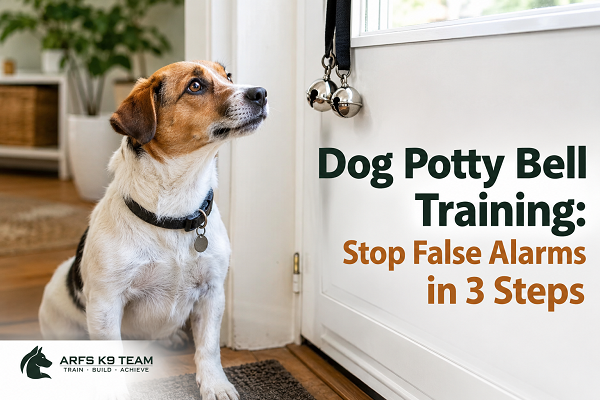
Most potty bell “false alarms” aren’t a training failure, they’re a training gap. Dogs ring the bell because ringing the bell has always worked, whether they needed to go or not. You stop false alarms by (1) only pairing the bell with trips you’re confident will end in elimination, (2) making every ring a strictly business, no-play trip outside, and (3) running a short “silence test” period each day to confirm your dog is signaling a genuine need, not just requesting attention. Most dogs sort this out within two to four weeks of consistent handling.
Table of Contents
- Why Dogs Fake the Bell Ring in the First Place
- What You’ll Need
- The 3-Step Method to Stop False Alarms
- A Real Case: Retraining a 5-Month-Old False-Alarm Ringer
- How Long Does This Actually Take?
- Bells vs. Buttons vs. Wireless Doorbells
- Troubleshooting Common False-Alarm Patterns
- When a “False Alarm” Is Actually a Health Problem
- FAQs
- Conclusion
Introduction
If you’ve ever sprinted to the door because your puppy rang the bell, only to watch her sniff the grass, glance at a squirrel, and trot back inside without doing a thing, you already know how frustrating this gets. I’ve trained working dogs whose entire job depends on a reliable signal, and I promise you, the fix for a fake potty alert and the fix for a fake detection alert come from the exact same place in dog training theory. Let’s get into it.
Why Dogs Fake the Bell Ring in the First Place
Here’s the thing nobody tells you when you hang that first bell on the door: you’re not just teaching a signal, you’re teaching a behavior chain. Ring → door opens → dog goes outside → good stuff happens (fresh air, sniffing, maybe a squirrel, maybe you). The problem is that “good stuff happens” is rewarding all by itself, completely separate from whether your dog’s bladder was ever involved.
I see this constantly in working dog training, just wearing a different uniform. A detection dog that gets rewarded every time it sits near a scent, without enough variation in training, will start sitting near things that just smell interesting rather than the actual target odor. Trainers call this a false alert, and it happens for the same reason your puppy rings the bell to check on the mailman: the behavior has been reinforced by something other than the thing it’s supposed to signal.
So when a dog rings the bell just to get outside, that’s not stubbornness or a “smart but sneaky” streak. It’s a completely predictable result of how the behavior was built. The good news: because it’s predictable, it’s fixable, with the same operant conditioning tools trainers use to keep a working dog’s alert honest.
What You’ll Need
You don’t need much for this, which is part of why it’s such a popular method:
- A set of dog training bells — hanging bells (nudged with a nose or paw) or a button-style bell mounted at nose height near your main potty-trip door
- High-value treats — small, soft, and genuinely exciting to your dog (not the same kibble they eat every meal)
- A consistent potty-trip door — the same door, every time, at least during the training phase
- A notebook or phone note — trust me, tracking ring times against actual elimination for the first two weeks makes troubleshooting ten times faster later
- Patience for roughly 5–15 minutes per session — that’s about the attention span most puppies can give you before they check out
If you’re also working on crate training alongside potty bells, which most owners are doing at the same time, our step-by-step crate training guide pairs well with this method since both rely on the same “calm behavior earns the reward” foundation.
The 3-Step Method to Stop False Alarms
Most potty bell guides online teach you how to get the first ring. Almost none of them teach you how to keep that ring honest once your dog realizes it’s a magic door-opening lever. That’s the gap this method closes.
Step 1: Build the Association Only on Trips You’re Confident Will Produce a Potty Break
This is the step most owners skip, and it’s the single biggest reason false alarms start early. For the first one to two weeks, only introduce the bell during outings you’re genuinely confident will end in your dog actually eliminating:
- First thing in the morning
- Right after waking from a nap
- 10–20 minutes after a meal
- After a play session winds down
Keep the bell in your hand or mounted near the door, but don’t present it before every outing, just the ones with a high probability of success. Ring it yourself (or guide your dog’s nose or paw to it) right before you open the door, every single time, so the sequence “bell sound → door opens” gets rehearsed dozens of times before your dog ever tries it independently.
Most puppies start experimenting with the bell on their own somewhere between four days and two weeks into this phase, usually by bumping it with a nose or pawing at it out of curiosity. When that happens, treat it like a jackpot: open the door immediately and head straight out.
Step 2: Enforce the “Business Only” Rule After Every Ring
This is where nearly every online guide gets vague, and it’s exactly where false alarms take root. Once your dog is ringing on their own, the rule has to be absolute: a ring means a straight-out, straight-back potty trip. No detours, no ball, no greeting the neighbor’s dog.
Walk your dog directly to the potty spot and stand quietly for about five minutes. If they go, praise calmly, treat, and head back inside; save the enthusiastic play for a separate outing that wasn’t triggered by the bell. If they don’t go within five minutes, walk them back inside without scolding, but also without a consolation trip to the yard. This part matters more than people expect: if ringing the bell sometimes gets a fun backyard romp and sometimes just gets a bathroom break, you’ve built a slot machine, and dogs are shockingly good at gambling. Bell rings need to have exactly one predictable outcome.
Step 3: Run a Daily “Silence Test” to Proof Genuine Need
Here’s the piece that’s almost entirely missing from other potty bell guides, and it’s the actual fix for false alarms, not just a way to avoid causing them. Once your dog is reliably ringing (usually around week two to three), start deliberately not responding with the same urgency to a ring that comes right after a trip that just happened, or one that comes with no build-up at all (no sniffing, circling, or restlessness beforehand).
In practice, this looks like a short delay, 30 to 60 seconds, before you get up, while you watch your dog’s body language. A dog with a genuine need will usually stay near the door, pace, or ring again. A dog testing the bell for attention will often wander off, lie down, or start playing with a toy within that window. This “silence test” is the closest home equivalent to what we do with a working dog’s alert: we don’t reward every alert equally; we confirm the source before paying out, so the dog learns the behavior only pays when the underlying condition is real.
Do this consistently for about a week and most false-alarm ringing drops off sharply, because the behavior stops being reliably rewarded when it’s not genuine.
A Real Case: Retraining a 5-Month-Old False-Alarm Ringer
A family I consulted with had a five-month-old mixed breed who’d become what I half-jokingly call a “professional door-opener.” She’d learned the bell in under a week, which the owners were thrilled about, until they realized she was ringing it eight to ten times a day, mostly just to sniff around the yard or check if the neighbor’s cat was out. Classic case of the behavior chain rewarding something other than the bladder.
We didn’t scrap the bell. We rebuilt the reinforcement pattern using the three steps above, with one addition: the owners started logging every ring against whether she actually eliminated. Within four days, the log made the pattern obvious, she rang most often about 20 minutes after they sat down to eat dinner, almost never right after waking up. That told us the ringing was tied to “I want out of this room,” not “I need to go.” Once they added the silence test specifically around dinnertime, her false-alarm ringing dropped from roughly eight times a day to one or two within about ten days, and those remaining rings were consistently followed by an actual potty break.
How Long Does This Actually Take?
There’s no universal stopwatch here, but the pattern is consistent enough to give you real expectations instead of vague reassurance:
- Days 4–14: Most puppies attempt their first independent ring somewhere in this window if you’ve been consistent with Step 1.
- Weeks 2–4: This is typically when false alarms peak, right after the dog realizes the bell reliably opens the door, and before the “business only” rule and silence test have had time to work.
- Weeks 3–6: With consistent enforcement of Steps 2 and 3, most owners report a sharp drop in false-alarm ringing.
- 3–6 months: This lines up with general housetraining timelines, since bladder control itself is still developing at the same time you’re building the bell habit. A dog can understand the bell perfectly and still have the occasional accident simply because their bladder control hasn’t caught up yet, especially for puppies under 12 weeks old.
Younger puppies, toy breeds with smaller bladders, and rescue dogs with an unclear housetraining history typically take longer on both ends: the behavior and the biology. That’s normal, not a sign the method isn’t working.
Bells vs. Buttons vs. Wireless Doorbells
This is a comparison most articles skip entirely, but it directly affects your false-alarm rate, because different bell types create different failure modes.
Traditional hanging bells (the classic sleigh-bell-on-a-strap style) are the cheapest option and work well for most households, but in a larger home they’re easy to miss if you’re not near the door, which teaches some dogs to bark or scratch as a backup signal instead. A reliable, loud option here is the BLUETREE Dog Doorbells set, which has become one of the best-selling potty bell products on the market thanks to its extra-large, extra-loud bells that carry through multiple rooms.
Button-style bells sit flat on the floor and are pressed with a paw instead of nudged. These tend to work better for dogs with mobility limitations, very small breeds, or households with multiple dogs, since one dog bumping past a hanging bell accidentally is a common source of false alarms that has nothing to do with potty needs at all.
Wireless/smart doorbells, like the Mighty Paw Smart Bell 2.0, solve the “I didn’t hear it” problem in bigger homes by pairing a door-mounted button with a receiver you carry or place in another room. This won’t fix behavioral false alarms on its own, but it does eliminate a specific false-negative problem: dogs who stop ringing altogether because ringing stopped working when nobody heard it in time.
Troubleshooting Common False-Alarm Patterns
- The bell means “I’m bored,” not “I need to go.” Almost always traced back to Step 2 being inconsistent, meaning some rings led to fun outside time and others led to a quick bathroom break. Tighten the rule for two weeks and most dogs recalibrate.
- The dog rings the second you get home, or the second guests leave. This is frequently an excitement or attention-seeking ring rather than a bladder one. The silence test in Step 3 is the direct fix; the “wait and watch” window will usually expose it within a few days.
- A multi-dog household where one dog copies another’s false-alarm habit. Separate the dogs during the retraining window if possible, since dogs are excellent at learning “ring the bell” as a social behavior long before they connect it to their own physical need.
- The dog seems scared of the bell and won’t approach it. Slow down. Let your dog investigate at their own pace with the bell silent first, gradually introducing a little sound before expecting any interaction, rather than forcing exposure.
- The house is too big to hear the bell from most rooms. This is a hardware problem, not a training problem. A louder bell set or a wireless system (see above) solves it faster than any behavioral tweak will.
When a “False Alarm” Is Actually a Health Problem
Every so often, what looks like excessive or false-alarm ringing is actually a dog trying to tell you something is wrong, not just testing the system. Watch for these patterns and treat them as a signal to call your vet rather than a training problem:
- A sudden, sharp increase in ringing frequency with little or no actual output when you get outside
- Straining, whining, or visible discomfort during elimination attempts
- Ringing that’s paired with vomiting, lethargy, or refusal to eat, in which case our guide on puppy vomiting and diarrhea: vet or home care walks through exactly when a same-day vet visit is warranted
- Repeated unproductive trips outside combined with a distended abdomen or refusal to eat, which can point to something more serious like the warning signs covered in our urgent puppy obstruction symptoms guide.
If your dog’s ringing pattern changes suddenly and doesn’t respond to the training adjustments above, that shift itself is useful information, and it’s worth ruling out a medical cause before assuming it’s purely behavioral.
FAQs
Why does my dog ring the bell and then not go potty?
Almost always because the bell has been rewarded with something other than a bathroom break in the past, whether that’s playtime, attention, or just getting outside. Tightening the “business only” rule after every ring is the most direct fix.
How long does it take for a dog to stop false-alarm ringing?
Most owners see a sharp drop within two to four weeks of consistently applying the business-only rule and the silence test, though full reliability tends to track alongside general housetraining timelines of three to six months.
Should I ignore my dog when they ring the bell?
Never ignore the ring itself, since that risks teaching your dog the signal doesn’t work at all. Instead, respond every time, but control what happens after: a straight-out, straight-back trip with no extra reward unless elimination actually occurs.
Do potty training bells work for adult dogs, not just puppies?
Yes. Adult dogs often learn the bell faster than puppies because they already have better bladder control and impulse control, though they can develop the same false-alarm patterns if the training steps above aren’t applied consistently.
What if my dog never rings the bell at all?
Go back to Step 1 and make sure you’re the one ringing it, every time, right before the door opens, on every confident-success outing, for at least another week or two before assuming the method isn’t working. Some dogs simply need more repetitions before self-initiation clicks.
Conclusion
False alarms aren’t a sign your potty bell training failed, they’re a sign the reinforcement history got a little muddy, and that’s completely fixable. Build the bell-to-door association only on trips you’re confident will succeed, make every ring a strictly business outing, and run a short daily silence test to confirm the signal is genuine before you reward it. Most dogs sort this out within two to four weeks, and the underlying skill, teaching a dog to hold out for an honest signal instead of gaming the system, is the same principle we use to keep working dogs’ alerts reliable in the field.
If you’re building out your dog’s foundational skills alongside potty training, our guides on stopping puppy biting fast and our broader K9 obedience training guide cover the other early-puppyhood skills that tend to come up around the same age. And if you want the fuller picture of how conditioned behavior shaping works across obedience, detection, and everyday household training, my e-book Beyond the Bark: A Pro Handler’s Approach to Shaping Canine Behavior goes deeper into the exact principles behind this method.
This article contains affiliate links. As an Amazon Associate, ARFS K9 Team may earn from qualifying purchases at no extra cost to you.

Her work centres on obedience, detection, protection and operational readiness. She favours proven methods built on repetition, consistency and real-world conditioning, so that both dogs and handlers are prepared for high-pressure tasks.
Rofiat represented the Nigerian Army Dog Centre at the Nigerian Army Day Celebration (NADCEL) 2026, where she led demonstrations in obedience, explosive detection, agility and tactical movement. Through articles, training content and documentaries, she shares field-based insight into how structured training, clear communication and trust between handler and dog affect performance and reliability.
She is the author of Beyond the Bark: Inside a Pro Handler's Playbook for Raising the Ideal Dog, a practical guide that helps dog owners and handlers apply professional training principles in everyday situations.
- Bousnic Dog Training Collar Review: Is It Safe? - September 30, 2026
- Gravy Train Dog Food Review: Ingredients & Recalls - September 30, 2026
- How to Spot Fake AKC Registered Dogs: 5 Warning Signs - September 29, 2026