7 Quiet Toy Dog Breeds That Don’t Bark Nonstop
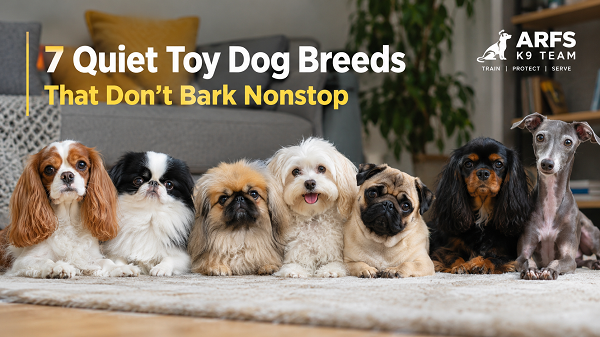
The Cavalier King Charles Spaniel, Japanese Chin, Pekingese, Havanese, Pug, English Toy Spaniel, and Italian Greyhound are widely considered the quietest members of the AKC Toy Group. They were bred for centuries as calm indoor companions rather than watchdogs, which is exactly why they don’t feel the need to sound off at every little thing.
Table of Contents
- What Actually Makes a Toy Breed “Quiet”?
- The 7 Quiet Toy Dog Breeds
- Toy Breeds That Get Wrongly Called “Barkless”
- How Much Does It Cost to Train a Quiet Toy Breed to Stay That Way?
- How to Keep Any Toy Breed From Becoming a Barker
- Trainer’s Take: Why This List Is Different
- FAQs
- Conclusion
Introduction
That said, here’s what most “quiet dog” roundups get wrong: they lump toy breeds in with sighthounds, mountain dogs, and hounds like the Basenji, Greyhound, and Bernese Mountain Dog. Those are great, calm dogs, but none of them are actually toy breeds. If you’re specifically shopping in the toy category (because you want something under 20 pounds that fits your lap, your apartment, or your travel bag), you need a list built just for that group. That’s what you’re getting here, along with real breed standards, training timelines, and the honest trade-offs nobody mentions.
What Actually Makes a Toy Breed “Quiet”?
Here’s the thing nobody tells first-time toy breed owners: no dog is silent. Even a genuinely low-bark breed will vocalize if it’s scared, in pain, or trying to warn you about something. “Quiet” doesn’t mean mute. It means the dog isn’t wired to bark as its default response to boredom, excitement, or a squirrel crossing the yard.
A few factors decide this more than breed alone:
- Original job. Breeds developed purely as royal lap companions (not watchdogs, herders, or hunters) simply never needed a loud alarm bark to earn their keep.
- Energy level. Lower-energy toy breeds don’t build up the frustration that often turns into demand-barking.
- Sensitivity to routine. Toy breeds that bond tightly to one household routine tend to settle faster and bark less out of anxiety.
- Early socialization. This one matters more than breed genetics in my experience. A well-socialized “yappy” breed can be calmer than a poorly socialized “quiet” one.
I like to rate breeds on what I call a simple 1-to-5 Bark Index, where 1 means the dog rarely vocalizes and 5 means it will narrate your entire day. Every breed below scores a 1 or 2 on that scale, based on breed club descriptions, veterinary behaviorist commentary, and what I’ve personally seen handling and observing these breeds over the years.
The 7 Quiet Toy Dog Breeds
1. Cavalier King Charles Spaniel
Bark Index: 2/5
The Cavalier is probably the most recognizable “quiet toy breed” on this list, and for good reason. Bred in 17th-century England as a companion to royal courts (its name literally comes from King Charles II, who reportedly kept several in his chambers at all times), this breed’s entire genetic history is built around being a calm, people-focused lap dog rather than a guard or alarm dog.
Quick stats: 12-13 inches tall, 13-18 lbs, 9-14 year lifespan.
Cavaliers will let you know when the doorbell rings, but most owners describe the bark as a soft, brief alert rather than sustained noise. The trade-off? This breed is prone to separation-related anxiety if left alone too long, which is one of the few situations that can turn a Cavalier vocal. Mitral valve disease is also a known health concern in the breed, so regular cardiac checkups matter more here than in most toy breeds.
2. Japanese Chin
Bark Index: 2/5
Japanese Chins were bred for centuries in the imperial court, gifted between Japanese nobility and, later, European royalty as a living status symbol. Their entire purpose was to sit quietly on a cushion and look elegant, and that history shows in their temperament today.
Quick stats: 8-11 inches tall, 4-11 lbs, 10-12 year lifespan.
What surprises new owners is how cat-like this breed acts. Japanese Chins will climb onto furniture to get a better view, groom themselves, and observe rather than react. They’re genuinely quieter than similarly sized breeds like the Chihuahua or Pomeranian, which is a big part of why breed clubs list them as a top pick for noise-sensitive apartment living.
3. Pekingese
Bark Index: 1/5
If there’s one historical anecdote that captures this breed’s temperament, it’s this: Pekingese dogs lived in the Forbidden City as sacred companions to Chinese emperors, and palace records describe them as deliberately bred to move and behave with quiet dignity befitting the imperial court. Loud, excitable behavior simply wasn’t tolerated in a dog meant to sit beside the throne.
Quick stats: 6-9 inches tall, up to 14 lbs, 12-14 year lifespan.
Pekingese are famously independent and a little stubborn, which actually works in your favor here. They’re not needy in a way that produces attention-barking. The catch is their flat face (brachycephalic structure), which means heat sensitivity and breathing considerations you’ll want to plan around, especially in warmer climates.
4. Havanese
Bark Index: 2/5
The national dog of Cuba, the Havanese descends from Bichon-type companion dogs brought over by European sailors and traders in the 1500s, then refined by Cuban aristocratic families as an indoor companion breed. Today it’s one of the most popular toy breeds in the US and UK, largely because it manages to be playful without being noisy.
Quick stats: 8.5-11.5 inches tall, 7-13 lbs, 14-16 year lifespan (one of the longest-lived toy breeds).
Havanese are intelligent and easy to train, which means barking habits are usually easy to redirect if they show up. The main challenge with this breed isn’t noise, it’s coat maintenance. That long, silky double coat needs brushing several times a week or it mats fast.
5. Pug
Bark Index: 2/5
Pugs have a long history as palace companions in China, later becoming the official mascot of the Dutch royal House of Orange after a Pug reportedly alerted William the Silent to an assassination attempt in the 1500s (ironic, given how quiet they usually are day-to-day). Most of what you’ll hear from a Pug isn’t barking anyway, it’s snorting, snoring, and grunting, thanks to their short muzzle.
Quick stats: 10-13 inches tall, 14-18 lbs, 13-15 year lifespan.
Pugs are social, easygoing, and generally more interested in food and naps than sounding an alarm. Like the Pekingese, their flat-faced structure means you’ll want to watch for breathing strain, especially during exercise or heat.
6. English Toy Spaniel (King Charles Spaniel)
Bark Index: 2/5
Not to be confused with its cousin the Cavalier, the English Toy Spaniel (called the King Charles Spaniel outside the US) was historically nicknamed the “Comforter Spaniel” because its entire job in Tudor and Stuart England was to sit in a lady’s lap and provide warmth and calm company. It’s one of the rarer toy breeds today, but it’s still one of the quietest.
Quick stats: 9-11 inches tall, 8-14 lbs, 10-12 year lifespan.
This breed is more reserved with strangers than the Cavalier and tends to bond very tightly with one or two people. That reserved nature translates into a dog that observes quietly rather than reacting vocally to new people or situations, once it’s properly socialized as a puppy.
7. Italian Greyhound
Bark Index: 2/5
The Italian Greyhound has been a favorite of European nobility for over 2,000 years, with devoted owners including Catherine the Great of Russia and Frederick the Great of Prussia. As a miniature sighthound built for companionship rather than hunting big game, it inherited the sighthound family’s general lack of interest in barking for the sake of barking.
Quick stats: 13-15 inches tall, 7-14 lbs, 14-15 year lifespan.
Don’t let the delicate look fool you. Italian Greyhounds are fast and love to run, so they’re not a purely sedentary lap dog like some others on this list. They’re also famously thin-skinned (literally), prone to leg fractures from jumping off furniture, so this is a breed that does best in a careful, controlled home environment, ideally with other small, calm dogs rather than boisterous larger ones.
Toy Breeds That Get Wrongly Called “Barkless”
A quick myth-check, because this trips up a lot of first-time buyers: Chihuahuas, Pomeranians, and Yorkshire Terriers are toy breeds, but they are not typically low-bark dogs. All three breeds tend to be highly alert and reactive to sound and movement, which usually translates into more frequent vocalizing, not less. If someone tells you “toy breeds are just naturally quiet,” that’s simply not accurate across the whole group. It comes down to the individual breed’s original job and temperament, which is exactly why this list sticks to the seven breeds above rather than generalizing about toy dogs as a category.
How Much Does It Cost to Train a Quiet Toy Breed to Stay That Way?
Even the calmest breed can pick up a barking habit without early structure. Here’s a realistic budget breakdown based on current group and private training rates in the US and UK:
- Puppy socialization classes: $100-$250 for a 6-8 week course
- Private in-home training (bark/behavior focused): $75-$150 per session, typically 3-6 sessions to correct an established habit
- Board-and-train programs: $1,500-$4,000 for 2-4 weeks, generally only worth it for owners with limited time
- DIY training with consistent daily practice: Free, but expect it to take 4-8 weeks of daily 10-15 minute sessions to see a real change in an anxious barker
Most toy breed owners I’ve worked with only need the first two options. These breeds are naturally food-motivated and eager to please, which makes them some of the most trainable dogs out there when the training starts early.
How to Keep Any Toy Breed From Becoming a Barker
- Start socialization by 14-16 weeks. This window matters more than breed genetics. A well-socialized puppy of any breed is far less likely to develop reactive barking.
- Don’t reward the bark, even by accident. Picking up a barking dog to “calm it down” often reinforces the exact behavior you’re trying to stop.
- Give the dog a job, even a small one. Puzzle feeders, short training sessions, or a daily “sniff walk” burn mental energy that would otherwise turn into restlessness.
- Watch for separation anxiety early. Several breeds on this list, especially the Cavalier and English Toy Spaniel, bond intensely with their people and can develop anxiety-driven barking if left alone too abruptly. Build up alone-time gradually from puppyhood.
- Manage the environment. Blocking a clear view of the street from a favorite window seat can cut down on reactive barking more than any command ever will.
If you want a deeper breakdown of how different companion and working breeds are actually classified, our guide to the seven official dog breed groups explains exactly where the Toy Group fits and how it differs from breeds built for a job. It’s also worth understanding what actually separates a working dog from a companion dog, since every breed on this list falls firmly on the companion side of that line, and that’s exactly why they’re built to stay quiet rather than sound an alarm. And if you’re weighing a calm toy breed against a calm larger breed, our Borzoi vs Greyhound comparison is a useful look at how sighthound temperament (which the Italian Greyhound shares) plays out at a bigger scale.
Trainer’s Take: Why This List Is Different
I’ll be upfront about something most “quiet dog” articles skip entirely: they mix breed groups together without explaining why that matters. A Basenji, a Bernese Mountain Dog, and a Cavalier King Charles Spaniel are all “quiet,” but they’re built for completely different lives, sizes, and households. I put this list together specifically inside the AKC Toy Group because that’s the actual decision most readers are making: a small, lap-sized companion dog, not a 70-pound working breed that happens to bark less than average.
At ARFS K9 Team, our background is in working dog handling, obedience, and behavior shaping across breeds used in security, detection, and family protection roles. That same behavioral framework, understanding what a breed was originally bred to do, applies just as much to picking a calm toy companion as it does to selecting a K9. If you want a more structured, step-by-step approach to shaping calm behavior in any breed, our founder’s guide, Beyond the Bark: Inside a Pro Handler’s Playbook for Raising the Ideal Dog, walks through the exact foundational techniques we use with working dogs that translate directly to companion breeds too. You can also browse our full Health & Nutrition guides for age-specific puppy care once you’ve picked your breed.
FAQs
1. Is there a toy dog breed that never barks at all?
No. Every dog breed, including the quietest ones on this list, will bark occasionally to alert, express excitement, or respond to pain or fear. The breeds here simply don’t default to barking the way more reactive breeds do.
2. Which quiet toy breed is best for apartment living?
The Japanese Chin and Pekingese are usually the top picks for apartments, since both were literally bred for indoor, low-stimulation living and tend to be less reactive to hallway noise and neighbors than most small breeds.
3. Are quiet toy breeds good for first-time dog owners?
Yes, most of them. The Cavalier King Charles Spaniel, Havanese, and Pug are especially beginner-friendly thanks to their trainability and eagerness to please, though flat-faced breeds like the Pug and Pekingese need owners who understand brachycephalic health care.
4. Do quiet toy breeds still make good watchdogs?
Not really, and that’s the trade-off. These breeds were bred for companionship, not alerting or guarding, so most will give a soft bark at the door at most. If you want both a small size and a strong alert instinct, a breed like the Miniature Schnauzer (not featured here) is a better fit.
5. Can training make a naturally vocal toy breed quieter?
Yes, significantly. Early socialization, consistent “quiet” cue training, and avoiding accidental reinforcement (like picking the dog up mid-bark) can meaningfully reduce barking in any breed, even ones not known for being naturally quiet.
Conclusion
If peace and quiet matter to you as much as having a small, affectionate dog by your side, the Cavalier King Charles Spaniel, Japanese Chin, Pekingese, Havanese, Pug, English Toy Spaniel, and Italian Greyhound are your strongest bets within the Toy Group specifically. Each one comes from centuries of breeding for calm companionship rather than alert work, and that history still shows up in their day-to-day temperament.
Just remember: breed tendency is a starting point, not a guarantee. Early socialization, consistent training, and a household that doesn’t accidentally reward barking will do more for a quiet home than breed selection alone. Pick the breed whose health profile and energy level actually fits your lifestyle, start training on day one, and you’ll have a genuinely calm companion, not just a quiet-looking one on paper.

Her work centres on obedience, detection, protection and operational readiness. She favours proven methods built on repetition, consistency and real-world conditioning, so that both dogs and handlers are prepared for high-pressure tasks.
Rofiat represented the Nigerian Army Dog Centre at the Nigerian Army Day Celebration (NADCEL) 2026, where she led demonstrations in obedience, explosive detection, agility and tactical movement. Through articles, training content and documentaries, she shares field-based insight into how structured training, clear communication and trust between handler and dog affect performance and reliability.
She is the author of Beyond the Bark: Inside a Pro Handler's Playbook for Raising the Ideal Dog, a practical guide that helps dog owners and handlers apply professional training principles in everyday situations.
- Bousnic Dog Training Collar Review: Is It Safe? - September 30, 2026
- Gravy Train Dog Food Review: Ingredients & Recalls - September 30, 2026
- How to Spot Fake AKC Registered Dogs: 5 Warning Signs - September 29, 2026