Akita Dog: Japan’s National Treasure & Fiercely Loyal Protector
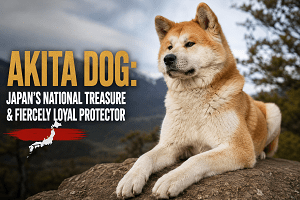
If you’ve ever worked with a Malinois or handled a German Shepherd in protection work, you know what it takes for a dog to be a true guardian. But when you’re looking at Japan’s national dog, the Akita brings something different, a combination of dignified loyalty, natural guarding instincts, and a bond so deep it’s become legendary worldwide. Whether you’re considering an Akita as a family protector or you’re just curious about this 300-year-old breed, you’ll want to know the real facts about their temperament, training needs, and what makes them stand out from other protection dogs.
The Akita isn’t just a beautiful spitz-type dog with that fox-like face and curled tail. Bred originally to hunt bears and deer in Japan’s mountainous northern regions, this breed evolved into a symbol of protection, prosperity, and unwavering devotion. Today, we’ll dive deep into what makes the Akita one of the most fiercely loyal protectors on the planet, from their historical role as Japan’s “natural monument” to their modern-day reputation that has some insurers banning them entirely.
Table of Contents
What Makes the Akita Japan’s National Treasure?
Akita Breed History: From Bear Hunter to National Symbol
Akita Temperament: The Fiercely Loyal Protector
Are Akitas Good Guard Dogs? Natural Protection Instincts
Akita Physical Characteristics: Size, Weight, and Structure
Japanese Akita vs. American Akita: Key Differences
Akita Training: Timeline, Challenges, and Success Rates
Akita Exercise Requirements: How Much Activity Do They Need?
Akita Cost: What to Expect When Buying a Puppy
Why Some Insurers Consider Akitas Dangerous
Akita Bonding: Do They Connect with Only One Person?
Akitas and Other Dogs: Understanding Their Social Challenges
The Hachikō Story: Akita Loyalty That Captivated the World
Conclusion: Is the Akita Right for You?
Frequently Asked Questions (FAQs)
What Makes the Akita Japan’s National Treasure?
When a country officially declares a dog breed its “national dog,” that’s serious business. In 1931, Japan made the Akita its official “national dog” (nippon inu), and in 1934, they created the first official Japanese breed standard after declaring it a “Natural Monument of Japan”. This wasn’t just ceremonial, it was protection of a breed that had survived centuries of Japanese history.
The Akita represents everything Japan values in a guardian: dignity, courage, loyalty, and an uncanny ability to differentiate between friends and threats. Unlike breeds developed purely for show or companionship, the Akita was a true working dog, originally developed for demanding tasks such as bear hunting, large-game tracking, and guarding. Understanding what defines a working dog helps explain why Akitas still retain many of these powerful instincts today.
Akita Breed History: From Bear Hunter to National Symbol
The 300-Year Journey
The documented history of the Akita begins in the 17th century in Akita Province on northern Honshu island. A powerful knight, hiding from the emperor’s disfavor, bred these dogs for mountain hunting. The ancestors of today’s Akita were called Matagi dogs, hunting dogs specifically trained for bear hunting, deer hunting, and pulling heavy loads.
These weren’t small dogs. The original Akita descended from ancient spitz-type dogs that arrived in Japan around 15,000 BCE to 300 BCE, mixed with northern spitz breeds from Asia. By the early 20th century, Japanese breeders also crossed Akitas with larger breeds including English Mastiffs, Great Danes, and the Tosa Inu to create fighting dogs in Odate, Akita Prefecture.
Key Historical Milestones
The breed faced near-extinction during World War II, but Morie Sawataishi saved the Japanese breed through dedicated preservation work. Today, the Akita remains one of Japan’s oldest native dog breeds and a symbol of the country’s canine heritage.(akc)
Akita Temperament: The Fiercely Loyal Protector
Complex Personality, Deep Loyalty
When you’re choosing a guard dog for your family, temperament matters more than anything. The Akita’s personality is very complex. While temperaments vary, most would agree that the Akita is:
Very intelligent – They learn quickly but choose when to obey. This independent mindset is a classic example of instinctive intelligence, where a dog relies heavily on its natural drives and inherited traits rather than simply seeking handler approval. Owners who understand the difference between obedience and instinct generally have far greater success training strong-willed breeds like the Akita.
Extremely loyal – The loyalty displayed is phenomenal
Possessive of family – Not likely to shower affection on strangers
Alert and watchful – Expresses suspicion with a low rumble, not barking
High prey drive – Well-developed and natural
The aggressive tendencies are almost exclusively towards other dogs of the same sex. Typically, Akitas are not aggressive towards people, but they do have a very well-developed guarding and protective instinct.
What This Means for You
You don’t need to train an Akita to be a guard dog, it comes naturally. Your Akita lives his life as if his only purpose is to protect you and spend time with you. The typical pet Akita will follow you from room to room, yet has the uncanny ability not to be under foot. They quickly learn to differentiate between strangers and friends.
Are Akitas Good Guard Dogs? Natural Protection Instincts
The Short Answer: Yes, But Not What You Might Expect
Are Akitas good guard dogs? Yes, absolutely but they’re more personal protection dogs than property guardians. These dogs WILL die to protect YOU. They’re territorial and alert, but they’re not excessive barkers. Instead, they express suspicion with a low rumble and quickly learn the difference between strangers and friends.
Guard Dog Qualities Breakdown
Akitas are excellent watchdogs and guard dogs. They’re not excessive barkers, but they will alert the family if anyone is entering their territory. Once people cross that threshold, the Akita’s protective nature activates immediately.
Real-World Guard Dog Performance
When a family Akita bonds with their family, that bond remains very strong throughout their life. They’re loyal protectors of their family and home and long to care for the family with an instinctive need to protect and guard. This means they’re very alert dogs and will let owners know immediately when something’s wrong.
The key difference between an Akita and breeds like the German Shepherd or Belgian Malinois in professional K9 work is that Akitas aren’t typically used in organized security units. Military and police working dogs undergo extensive obedience, environmental conditioning, and specialized operational training that most Akitas were never bred to perform.
Akita Physical Characteristics: Size, Weight, and Structure
Breed Standards: What to Expect
The Akita is a large, powerful spitz-type dog with impressive muscle and structure. Here are the official statistics from AKC and FCI standards:
American-type Akitas tend larger: males typically measure 26-28 inches (66–71 cm) and weigh 100–130 lb (45–59 kg), while females measure 24-26 inches (61–66 cm) and weigh 70–100 lb (32–45 kg).[en.wikipedia]
Key Physical Features
Head: Broad skull with moderate stop, producing a triangular appearance
Eyes: Small, triangle-shaped, dark brown
Ears: Thick, erect, slightly forward-tilted
Tail: Large, carried curled over back
Coat: Double coat with thick undercoat, shorter outer coat
Colors: Red, brindle, white, pinto, black and tan
The American Akita is bigger, growing up to 28 inches tall and weighing up to 130 pounds, while the Japanese Akita (Akita Inu) is often 3-4 inches shorter and around 20 pounds lighter.
Japanese Akita vs. American Akita: Key Differences
They’re Not the Same Dog
Many people think “Akita” means one breed, but there are two distinct varieties with different standards, temperaments, and sizes.
The temperament of an American Akita is measured more heavily than a Japanese Akita. Aggressiveness or extreme shyness are disqualifying traits for an American Akita, but they’re only considered faults for an Akita Inu.
Which Should You Choose?
If you want a more reserved, independent guard dog with stronger Japanese hunting heritage, choose the Japanese Akita. If you prefer a slightly larger dog with a friendlier, more balanced temperament for family life, the American Akita might be better.
Akita Training: Timeline, Challenges, and Success Rates
Training Reality: It Takes Time
Training an Akita can take several months, as they may need time to master basic commands like “sit,” “stay,” and “lie down”. This isn’t like training a Golden Retriever that obeys immediately. Akitas are intelligent but independent, they’ll obey when they respect your leadership.
For owners raising a strong-willed breed like the Akita, understanding canine psychology, leadership, socialization, and communication is often just as important as teaching commands. These principles are explored in greater depth in Beyond the Bark: Inside a Pro Handler’s Playbook for Raising the Ideal Dog, a practical guide designed to help owners build a balanced, reliable, and confident canine companion.
Training Timeline Breakdown
Total time to reliable obedience: 6–12 months with consistent training
Why Akita Training is Challenging
Independent thinking: They don’t obey just to please you
Strong prey drive: Requires firm control during outdoor training
Dog aggression: Socialization must start early (3–12 months)
Dominance: Requires experienced handler, not first-time owner. However, experienced handlers understand that success with an Akita doesn’t come from trying to “dominate” the dog. Consistent leadership, clear boundaries, and disciplined training produce far better results than force-based methods.
Training your dog to walk in crowded places and socializing your Akita between 3 months–1 year with other dogs is critical. Without this early socialization, their natural aggression toward other dogs becomes worse.
Success Rate Tips
✓ Start training at 3 months, never wait
✓ Be consistent, one command, one outcome
✓ Build respect, not just obedience
✓ Socialize early, especially with other dogs
✓ Use positive reinforcement, punishment backfires with Akitas
Akita Exercise Requirements: How Much Activity Do They Need?
How much exercise does an Akita need?
An adult Akita needs at least 30–45 minutes of exercise twice per day (60–90 minutes total). Veterinary guidelines say Akitas need at least one hour of moderate exercise each day, this can be walking, playing fetch, or agility exercises.
Exercise Breakdown by Age
Why Exercise Matters for Akitas
Without proper exercise, Akitas become bored, destructive, and develop behavioral problems. Their high prey drive and guarding instincts need physical outlets. Daily walks, fetch games, and agility training keep them mentally and physically satisfied.
Akita Cost: What to Expect When Buying a Puppy
How much does an Akita cost?
An Akita puppy from a registered breeder costs $600–$1,900, with an average price of $1,000 for puppies under six months. Premium bloodline Akitas can cost $3,000–$4,500.[k9web]
Akita Price Breakdown
Ongoing Annual Costs
Food: $600–$900/year (large breed, high-quality)
Veterinary: $500–$1,000/year (routine + emergencies)
Training: $300–$600/year (obedience classes)
Insurance: $400–$800/year (may be unavailable, see below)
Grooming: $200–$400/year (double coat maintenance)
Total annual cost: $2,000–$3,700
Why Some Insurers Consider Akitas Dangerous
Why are Akitas considered dangerous by some insurers?
Akitas have a history of being territorial, which translates to breed restrictions and coverage denials. Many insurers place them on banned breed lists due to concerns over aggression.
Insurance Companies That Ban Akitas
The breeds counted as “high risk” by insurance companies include German Shepherds, Akitas, Pit Bulls, Doberman Pinschers, Chow Chows, and Rottweilers.
Why the Restriction?
Territorial nature: Strong guarding instinct can escalate
Dog aggression: 58.89% show aggression toward other dogs
Size and power: Large, muscular dogs (up to 130 lb)
Limited bite history data: Less documented than German Shepherds
This puts them as a bigger risk to insurance companies and housing complexes. If you’re buying an Akita, check homeowners insurance availability first, some companies won’t cover you at all.
Akita Bonding: Do They Connect with Only One Person?
Do Akitas bond with only one person?
Yes. Akitas are known for reserved behavior and deep loyalty to one person. They often show affection quietly rather than openly and value trust and consistency above all. Once bonded, their devotion is long-lasting.
The One-Person Bond Reality
Research indicates that Akitas show stronger loyalty to their primary caregiver than to other family members. They form strong bonds and are protective of their chosen person, though they may be distant with outsiders.
What this means for families:
Your Akita will primarily protect you if you’re the main caregiver
Other family members may get less affection initially
The bond strengthens over years, not weeks
Changes in primary caregiver can cause stress
Akitas form deep bonds with their family and are known to stick by your side through thick and thin. This isn’t weakness, it’s focused devotion. If you’re the one feeding, training, and walking your Akita daily, you’ll be their person.
Akitas and Other Dogs: Understanding Their Social Challenges
Are Akitas good with other dogs?
No, not typically. Akitas are not tolerant of other dogs, especially those of the same sex. Research shows 58.89% of Akitas display aggressive behavior toward other dogs/animals, one of the highest rates among ancient dog breeds.[pmc.ncbi.nlm.nih]
Dog Aggression Statistics
In the vast majority of cases, the primary targets of aggression in both breeds were other dogs (57% for American Akitas, 74.6% for Akita Inus).[ph.ptz.icm.edu]
What This Means for Multi-Dog Homes
❌ Same-sex dogs: Very high conflict risk
⚠️ Different-sex dogs: Possible, but requires early socialization
✅ Single-dog home: Best environment for Akita
✅ With cats/small pets: High prey drive makes this risky
Akitas are not fans of other dogs, particularly of the same sex. That territorial instinct runs deep. If you already have dogs, especially same-sex dogs, an Akita may not be compatible.
The Hachikō Story: Akita Loyalty That Captivated the World
No story better illustrates Akita loyalty than Hachikō, the Akita who waited 10 years for his deceased owner at Shibuya Station.
The Timeline of Devotion
Despite being relocated multiple times after Professor Ueno’s death, Hachi never abandoned his mission. For nearly ten years, through all seasons and weather conditions, Hachikō maintained his vigil at Shibuya Station, never understanding that his beloved master would never return.[indianexpress]
Why This Story Matters
Hachikō isn’t just a heartwarming tale, it’s proof of what the Akita breed is capable of. This extraordinary tale of dedication thrust the Akita into the national spotlight, where his faith to his master became an example of devotion for Japanese children. Today, Hachikō remains Japan’s most moving symbol of loyalty.
The movie Hachi: A Dog’s Tale brought this story worldwide, but the real Hachikō’s story is even more powerful. This is the loyalty you get with an Akita, unwavering, focused, and lasting a lifetime.
Conclusion: Is the Akita Right for You?
The Akita is Japan’s national treasure for one reason: unmatched loyalty combined with natural guarding instincts. If you’ve worked with other protection breeds, you’ll appreciate what the Akita brings, dignity, intelligence, and a bond so deep it becomes legendary.
✅ Perfect for You If:
You want a natural family protector (no training needed)
You’re an experienced dog handler (not first-time owner)
You live in a single-dog home (they don’t like other dogs)
You can commit 60–90 minutes daily exercise
You’re prepared for 6–12 months training timeline
You understand insurance may not cover Akita ownership
You should also be prepared to invest in obedience-based protection training. Even though Akitas possess natural guarding instincts, teaching reliable control commands is essential if you want a protector that is an asset rather than a liability.
❌ Not for You If:
You’re a first-time dog owner
You have multiple dogs (especially same-sex)
You need a dog that barks to alert (Akitas are quiet)
You want a low-maintenance dog
Your homeowners insurance bans Akita breeds
You can’t provide consistent daily leadership
Final Advice
If you choose an Akita, start training at 3 months, socialize heavily with other dogs before 12 months, and be the primary caregiver to build that legendary bond. Expect to pay $1,000–$2,000 for a quality puppy, and plan for $2,000–$3,700 annual costs. Most importantly, understand that this dog will protect you with unwavering devotion, but they’ll also expect you to be the leader they respect.
The Akita isn’t just a dog. It’s Japan’s living history, a fiercely loyal protector, and a companion whose loyalty can last a lifetime. If you’re ready for that commitment, you’ll have a guardian like no other.
Frequently Asked Questions (FAQs)
1. Are Akitas good guard dogs?
Yes, Akitas are excellent natural guard dogs. They don’t need training to protect, their guarding instinct comes naturally. They’re watchful of people on your property, express suspicion with a low rumble (not barking), and quickly differentiate between strangers and friends. However, they’re more personal protection dogs than property guardians, they’ll die to protect YOU, not just guard your property.
2. Why are Akitas considered dangerous by some insurers?
Akitas are considered dangerous by insurers because of their territorial nature and high dog-aggression rates (58.89% show aggression toward other dogs). Major insurers like Erie Insurance and Travelers explicitly ban Akita ownership. The combination of their large size (up to 130 lb), strong guarding instincts, and documented aggression toward other dogs makes them “high risk” for insurance companies.
3. Do Akitas bond with only one person?
Yes, Akitas typically bond deeply with one person, usually their primary caregiver. They’re known for reserved behavior and deep loyalty to one person, showing affection quietly rather than openly. Once bonded, their devotion is long-lasting. This means if you’re feeding, training, and walking your Akita daily, you’ll become their person, and they’ll protect you with unwavering loyalty.
4. How much exercise does an Akita need?
An adult Akita needs at least 60–90 minutes of exercise daily (30–45 minutes twice per day). Veterinary guidelines specify at least one hour of moderate exercise each day, walking, playing fetch, or agility exercises. Puppies need 5 minutes of exercise per month of age (so a 4-month puppy needs ~20 minutes daily).
5. Are Akitas good with other dogs?
No, Akitas are typically not good with other dogs. Research shows 58.89% of Akitas display aggression toward other dogs/animals, one of the highest rates among ancient breeds. They’re especially intolerant of same-sex dogs. The best environment for an Akita is a single-dog home. If you already have dogs, especially same-sex dogs, an Akita may not be compatible.

Her work centres on obedience, detection, protection and operational readiness. She favours proven methods built on repetition, consistency and real-world conditioning, so that both dogs and handlers are prepared for high-pressure tasks.
Rofiat represented the Nigerian Army Dog Centre at the Nigerian Army Day Celebration (NADCEL) 2026, where she led demonstrations in obedience, explosive detection, agility and tactical movement. Through articles, training content and documentaries, she shares field-based insight into how structured training, clear communication and trust between handler and dog affect performance and reliability.
She is the author of Beyond the Bark: Inside a Pro Handler's Playbook for Raising the Ideal Dog, a practical guide that helps dog owners and handlers apply professional training principles in everyday situations.
- Bousnic Dog Training Collar Review: Is It Safe? - September 30, 2026
- Gravy Train Dog Food Review: Ingredients & Recalls - September 30, 2026
- How to Spot Fake AKC Registered Dogs: 5 Warning Signs - September 29, 2026