Border Collie Training: Tips for a Well-Behaved Dog
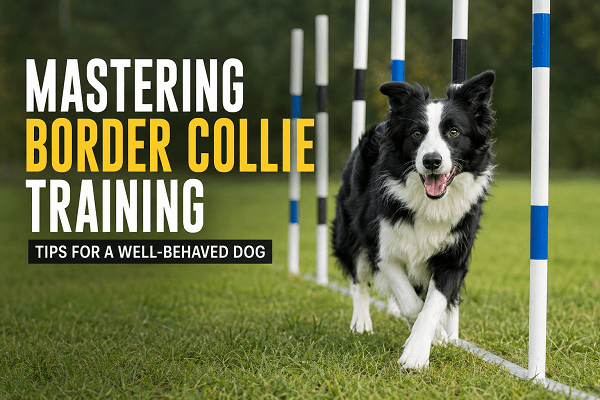
How do you train a Border Collie? Start training the day your dog comes home, keep sessions short (5 to 15 minutes), reward good choices with food or play, and give the dog a daily job that uses both body and brain. Border Collies learn commands fast, so the real work is managing their herding instinct, teaching them to switch off, and staying consistent. Most dogs have solid basic obedience in 4 to 8 weeks. Reliable off-leash manners usually take 6 to 18 months.
Table of Contents
- Why Border Collie Training Is Different
- Border Collie Training Timeline by Age
- A Daily Routine That Actually Works
- The 6 Core Commands (In the Right Order)
- How to Manage the Herding Instinct
- Mental Exercise: Give Your Border Collie a Job
- Teach the Off-Switch (The Step Most Guides Skip)
- Warning Signs: Shadow Chasing, Fixation and Noise Fear
- 7 Border Collie Training Mistakes to Avoid
- A Handler’s Notes: What Working Dog Training Teaches Us
- When to Call a Professional
- FAQs
- Conclusion
Introduction
You brought home the smartest dog on the planet. So why is it chewing the sofa, nipping your kids’ heels and staring at the ceiling fan?
Here’s the truth about Border Collie training: intelligence doesn’t make this breed easy. It makes it fast. A Border Collie learns what you teach on purpose, and also everything you teach by accident. If you don’t give that brain a job, it will invent one.
In this guide, you’ll learn how to train a Border Collie from puppyhood to adulthood. You’ll get a month-by-month timeline, a sample daily schedule, step-by-step recall and “settle” training, fixes for nipping and chasing, and the warning signs that mean it’s time to see a professional. Most guides on page one of Google give you a list of generic tips. This one gives you a plan.
Why Border Collie Training Is Different
Border Collies came from the farms along the Scotland and England border, where shepherds needed dogs that could work a flock at a distance. The breed’s founding sire, a dog called Old Hemp (1893 to 1901), is still credited as the father of the modern Border Collie. The American Kennel Club added the breed to its Herding Group in 1995.
That history explains almost everything you see at home.
The brain is built for learning
In his book The Intelligence of Dogs, psychologist Stanley Coren surveyed 208 obedience judges across North America. They ranked the Border Collie number one for working and obedience intelligence. Top-tier dogs learn a new command in fewer than 5 repetitions and obey the first command 95% of the time or better. An average working dog needs 25 to 40 repetitions.
One caution: this ranking measures how well dogs follow human commands, not intelligence in every sense. Still, the numbers match what handlers see in the field.
Then there’s Chaser. This Border Collie, owned by retired psychology professor John Pilley, learned the names of 1,022 objects over about three years of daily training. In testing, she picked the right toys at least 18 times out of 20 across 838 trials. An earlier Border Collie named Rico knew around 200 words.
What’s the lesson for you? Chaser’s owner said the training method mattered more than the breed. He worked with her for four to five hours a day, taught one or two new names daily and reviewed old ones every month. Your dog can learn a lot. But it needs structure, repetition and a patient handler.
The same brain causes the problems
Border Collies were bred to stare, stalk, circle and chase. Herders call that stare “the eye.” It’s useful on a hillside. In your living room, it looks like staring at the vacuum cleaner, circling toddlers or chasing bicycles.
The good news? You don’t need to erase these instincts. You need to channel them. Think of your Border Collie like a high-performance engine. You can’t turn it off, but you can learn to steer it.
Breed snapshot (so you know what you’re dealing with):
| Trait | Typical Border Collie |
|---|---|
| Height | 18 to 22 inches (46 to 56 cm) |
| Weight | About 27 to 45 pounds (12 to 20 kg) |
| Lifespan | Around 12 to 15 years |
| Daily exercise | At least 2 hours of combined physical and mental work |
| Common inherited health checks | Hip dysplasia, Collie eye anomaly, deafness (check the parents’ health tests) |
Why health matters for training: a dog with poor hearing needs hand signals, and a dog with eye problems needs a different recall plan. Ask your breeder or rescue about hip and eye screening, and let your vet check hearing early.
Border Collie Training Timeline by Age
Most articles tell you to “start early.” Few tell you what to do at each stage. Here’s the roadmap I use.
| Age | Main Goal | What to Teach | Session Length |
|---|---|---|---|
| 8 to 12 weeks | Confidence and bonding | Name, handling, crate, toilet routine, meeting new people and surfaces | 3 to 5 minutes |
| 3 to 6 months | Foundation skills | Sit, down, recall, “wait”, leash walking, trading toys | 5 to 10 minutes |
| 6 to 18 months | Adolescence: impulse control | Distance work, “leave it”, settling, distractions, off-switch | 10 to 15 minutes |
| 18 months and older | Proofing and purpose | Off-leash reliability, sport, jobs, trick chains | 15 to 20 minutes, more than once a day |
The socialization window
Puppies learn fastest about the world in their first 14 to 16 weeks. After that, new things start to feel scary instead of interesting. Border Collies are sensitive dogs, so a thin socialization period often shows up later as fear of traffic, strangers or loud noises.
During this window, introduce your puppy to:
- Different people (hats, uniforms, beards, children, people using walking sticks)
- Traffic sounds from a safe distance, then closer
- Slippery floors, stairs and car rides
- Calm, vaccinated adult dogs
Keep every experience short and positive. If your puppy shows fear, add distance and give treats. Don’t force it. Sound exposure matters most here, because noise sensitivity is a known issue in this breed.
The teenage phase nobody warns you about
Around six to eight months, many Border Collies seem to forget everything. Recall gets worse. Chasing gets stronger. Don’t panic. Go back a step, shorten your sessions and raise your rewards. Your dog isn’t being stubborn. The brain is simply rewiring.
If you’re bringing home an older rescue instead, give the dog time to settle before judging its personality. Many rescue dogs need about three months to fully adjust, so don’t trust the dog you see in week one.
A Daily Routine That Actually Works
A Border Collie without a routine makes its own. Here’s a sample day for an adult dog. Adjust the times to fit your schedule, but keep the order.
- Morning (30 to 45 minutes): Structured walk or run. Practice leash manners and a few “sit” and “wait” cues at kerbs.
- Breakfast (10 minutes): Skip the bowl. Use a puzzle feeder or scatter the food on the grass so your dog searches with its nose.
- Midday (15 minutes): One short training session. Pick one skill only.
- Rest period (1 to 2 hours): Crate or mat. Dogs need real downtime to avoid becoming hyperactive.
- Afternoon (30 to 45 minutes): Fetch, flirt pole or agility drills, with clear start and stop cues.
- Evening (15 minutes): Calm scent game or trick practice, then a settle on the mat.
That’s roughly two hours of activity, and about a third of it uses the brain more than the legs.
Pro tip: Train before meals, not after. A slightly hungry dog works harder for food rewards, and you can use part of the daily meal as treats so you don’t overfeed.
The 6 Core Commands (In the Right Order)
Border Collies pick up commands in a handful of repetitions. That’s a gift and a trap. They’ll learn the sloppy version just as fast as the clean one, so be precise from day one.
Teach these in this order:
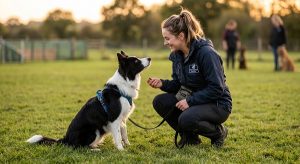
- Name response and eye contact. Say the name, mark with “yes” when your dog looks at you, then reward. This is the base for everything else.
- Sit and down. Use a treat lure for a few repeats, then fade it into a hand signal.
- Wait (at doors, gates and car doors). This prevents bolting and builds patience.
- Leave it. This redirects fixation and protects your dog from chasing hazards.
- Recall (“come”). The most important one, and the one that takes longest.
- “That’ll do.” Borrowed from sheepdog trials, this means “the job is finished, relax.” We’ll cover it later.
How to teach a strong recall (step by step)
Because Border Collies are triggered by movement, a squirrel, bicycle or running child can beat a weak recall in half a second. Build it slowly.
- Indoors: Say the recall word once in a happy voice. When your dog arrives, give a jackpot reward (3 to 5 small treats, one after another).
- Garden: Repeat with mild distractions. Hold the dog’s collar gently before releasing the treat, so your dog learns that coming back means contact with you.
- Long line: Use a 15 to 30 foot line in a park. Call once. If your dog ignores you, don’t repeat the word. Guide the dog in with the line and reward anyway.
- Add distractions slowly. Move on only when your dog responds at least 9 out of 10 times at the current level.
- Mix the rewards. Sometimes food, sometimes a ball, sometimes a game of chase-me-in-the-other-direction.
Handler rule: Never call your dog to do something unpleasant, like nail clipping or leaving the park, without sometimes rewarding the same call with fun. Otherwise “come” starts to mean “the fun is over.”
Bonus: whistle recall. Border Collies respond very well to whistle cues because sheepdog handlers have used them for generations. Pick one distinctive sound, pair it with food for two weeks, and use it only for recall.
Pulling on the lead can wreck your outdoor training. If that’s a battle for you, fix leash manners first, before you start long-line recall work.
How to Manage the Herding Instinct
This is the section most owners came for. Nipping, circling, staring and chasing aren’t “bad behaviour.” They’re working behaviour with no work to do.
Punishment doesn’t fix it. Sensitive dogs often get anxious when punished, and anxious Border Collies fixate harder. Redirect instead.
Common herding behaviours and what to do
| Behaviour | Why it happens | What to do |
|---|---|---|
| Nipping heels | Instinct to “move” a moving target | Stop moving, say “oops”, hand your dog a toy to carry, reward calm walking |
| Circling or staring at kids | Eye and stalk reflex | Teach children to stand still, then call the dog to a mat and reward |
| Chasing cars, bikes, joggers | Visual trigger plus fear in many dogs | Work at a distance, use “look at me”, reward calm watching |
| Herding other dogs | Control instinct | Short, supervised play; interrupt and reset when the stare begins |
| Barking at movement | Alert and control behaviour | Reward quiet, cover windows during training |
Skip the old advice to “show them who’s boss.” Certified trainers who write about the breed advise working with natural behaviour instead of trying to suppress it. Suppression tends to delay the behaviour, and it often returns in a worse form.
Safe outlets for the herding drive
- Flirt pole: A rope and lure on a pole. Teach “take it” and “drop it” so the game has rules.
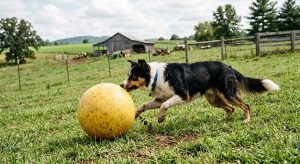
- Herding ball: A large, tough ball your dog can push around the garden.
- Treibball: A sport where your dog herds big exercise balls into a goal. Many Border Collies learn it quickly.
- Agility or obstacle work: If you want a ready-made routine, try the DIY dog agility course layout at home.
If you want to understand why channelling beats suppressing, read obedience vs instinct: the two types of dog intelligence.
Mental Exercise: Give Your Border Collie a Job
Here’s something I tell every Border Collie owner: you can run this dog for two hours and still have a wild dog at night. Legs get tired. Brains don’t, unless you use them.
Ideas that work
- Name game (the Chaser method): Pick three toys. Name each one, say the name clearly while your dog watches, then ask for it by name. Add a new toy every few days. Keep sessions short, and review old names often. You won’t reach 1,022, but 10 to 20 is easy.
- Scent work: Hide treats under cups, in boxes or around the room. Teach “find it.” Using the nose calms many dogs.
- Scatter feeding and puzzle feeders: Meals become mini work sessions.
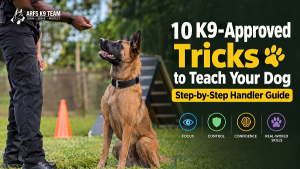
- Trick chains: Teach spin, weave, back-up and bow, then link them. Get ideas from 10 K9-approved tricks to teach your dog.
- Household chores: Pick up toys, close a cupboard, fetch the post. Border Collies love being useful.
Don’t create a fitness addict
More isn’t always better. If you throw the ball for an hour every day, your dog gets fitter and needs even more. The Kennel Club’s breed profile also warns owners not to overdo ball games. Mix up fetch with scent games, training and rest days.
A well-run week might look like this:
- 2 days of sport or agility
- 2 days of long walks with training stops
- 2 days of scent work and trick practice
- 1 day of rest, sniffing and play
Teach the Off-Switch (The Step Most Guides Skip)
Most page-one articles tell you to exercise your Border Collie more. Almost none explain how to teach a dog to switch off. That’s why so many owners end up with athletes who can’t settle.
Step-by-step mat training:
- Put a mat or bed on the floor.
- Wait for your dog to step on it by accident, then mark and reward.
- Repeat until your dog offers the mat on purpose.
- Reward lying down, then rewarding calm stays for longer gaps (5 seconds, 10, 30, then 2 minutes).
- Add a cue word such as “settle”.
- Practise while you watch TV, eat dinner or have visitors.
“That’ll do” for the off-switch: End every game with the same phrase and a calm reward. Your dog learns that the work finishes when you say so.
Also build rest into the day. Puppies need 18 to 20 hours of sleep and rest a day. An overtired Border Collie looks hyper, not sleepy. If your dog goes wild at 7 p.m., try a crate rest at 6 p.m. with a chew toy.
Warning Signs: Shadow Chasing, Fixation and Noise Fear
This is where I want you to pay attention. A few Border Collie quirks are normal. Some are not.
Shadow and light chasing
Many Border Collies chase shadows or light flashes occasionally. A veterinary article describes staring at shadows as a typical compulsive behaviour in Border Collies, and notes that about half of dogs with compulsive behaviours show signs before one year of age. These behaviours often get worse when dogs live with stress or boredom.
A UK rescue charity shared the case of a three-year-old Border Collie called Margot, whose shadow chasing began when she didn’t get enough exercise. Vets first ruled out medical problems. Then her team used scent work, trick training and scatter feeding to teach her to use her nose instead of her eyes. They also used medication alongside training.
What to do:
- Block triggers where you can (curtains, rugs over shiny floors, no laser pointers, ever).
- Interrupt early and redirect to a touch or look cue before the behaviour peaks.
- Add scent work and calm routines.
- See your vet if the behaviour is frequent, gets worse, wakes the dog at night or draws blood. A veterinary behaviourist can check for medical and compulsive causes. Don’t wait.
Noise sensitivity
Border Collies hear very well. Fireworks, thunder and motorbikes can scare them badly. Many car-chasers actually started out afraid of cars. Use gradual sound exposure from puppyhood, give your dog a quiet den during loud events, and stay calm. If your dog already shows fear, work at a distance where it stays relaxed, go slowly, and ask a qualified behaviour professional to guide you.
7 Border Collie Training Mistakes to Avoid
- Too much ball, too little thinking. Constant fetch builds an adrenaline junkie.
- Harsh corrections. Sensitive dogs shut down or become anxious.
- Inconsistent family rules. If one person allows the sofa and another doesn’t, your dog learns to test you.
- Skipping socialization. The early window is short.
- Long sessions. Over 15 minutes, a young dog starts to drift. Quit while it’s fun.
- Repeating cues. Saying “sit, sit, SIT” teaches your dog to wait for the third one.
- Ignoring rest. Training an exhausted dog creates hyperactivity and mistakes.
A Handler’s Notes: What Working Dog Training Teaches Us
I’m Cpl. Rofiat Muritala, a Nigerian Army military working dog instructor and handler with more than 14 years at the Nigerian Army Dog Centre. My work covers obedience, detection and operational readiness, and I led obedience, explosive detection, agility and tactical movement demonstrations at the Nigerian Army Day Celebration (NADCEL) 2026.
Military and police dog programs share a few rules with good Border Collie training:
- Build in small steps. Handlers teach a skill in a quiet place, then add distance, distraction and duration, one at a time.
- Reward the choice you want. A dog that chooses the right behaviour will repeat it under pressure.
- Keep commands clean. One cue, one meaning, one response.
- Prepare the handler too. Most failures come from poor timing, mixed signals and inconsistent routines, not from a “bad dog”.
Border Collies aren’t police dogs, but they thrive on the same clarity. If you’d like a deeper breakdown of professional handler methods you can use at home, my book Beyond the Bark: Inside a Pro Handler’s Playbook for Raising the Ideal Dog is available on Amazon.
When to Call a Professional
Most basic Border Collie training works fine at home. Bring in help early if you see:
- Nipping that breaks the skin
- Growling over food, toys or space
- Fear or reactivity that gets worse despite steady work
- Compulsive staring, spinning or shadow chasing
- Sudden behaviour changes (these can signal pain or illness, so see your vet first)
Look for a trainer who uses reward-based methods and has experience with herding breeds. Ask how they handle fixation, since a good answer shows real experience.
FAQs
How long does it take to train a Border Collie?
Basic obedience (sit, down, wait, name response) usually takes 4 to 8 weeks of daily practice. Reliable recall, calm behaviour around distractions and impulse control often take 6 to 18 months. Training never fully ends, because Border Collies need ongoing mental work.
Are Border Collies easy to train?
They learn quickly, but they aren’t always easy. Their speed means bad habits stick fast, and their energy means a poor routine causes problems. For experienced, active owners, they’re a joy. For first-time owners, they’re doable with a plan and good support.
Why does my Border Collie nip at my heels?
Heel nipping is herding instinct aimed at a moving target. Stop moving, give your dog a toy, and reward calm walking. Add outlets like a flirt pole or herding ball, and teach children to stand still when the dog gets excited.
How much exercise does a Border Collie need every day?
Plan for at least two hours of activity, but mix physical exercise with scent games, training and puzzles. Working-line dogs may need more. Include rest days to avoid building an obsessive dog.
Can a Border Collie live in an apartment or small home?
Yes, if you meet its needs outside. A Border Collie in a small space can do well with daily walks, mental work and a calm mat routine. A Border Collie in a large garden with no job will still get into trouble. Activity and structure matter more than square footage.
Conclusion
Training a Border Collie comes down to five habits: start early, keep sessions short, redirect the herding instinct instead of punishing it, give your dog a daily job and teach it to switch off. Watch for warning signs like shadow chasing and noise fear, and call your vet or a behaviour specialist if the behaviour gets stronger.
Here’s your action plan for this week:
- Write down a daily routine and stick to it for 7 days.
- Pick one command (start with recall or settle) and train it for 5 minutes twice a day.
- Replace one meal with a puzzle feeder or scent game.
- Add one calm rest period to your dog’s day.
Got a Border Collie story or question? Share it with us. And if you want weekly K9 training tips in your inbox, subscribe to our newsletter.
Sources and Further Reading
- Stanley Coren, The Intelligence of Dogs (1994/1995)
- Pilley and Reid, “Border collie comprehends object names as verbal referents,” Behavioural Processes
- PDSA and The Kennel Club breed information (health screening and lifespan)
- American Kennel Club Border Collie breed profile
- Veterinary behaviour articles on compulsive and repetitive behaviours in dogs
- Woodgreen Pets Charity case study on shadow chasing

Her work centres on obedience, detection, protection and operational readiness. She favours proven methods built on repetition, consistency and real-world conditioning, so that both dogs and handlers are prepared for high-pressure tasks.
Rofiat represented the Nigerian Army Dog Centre at the Nigerian Army Day Celebration (NADCEL) 2026, where she led demonstrations in obedience, explosive detection, agility and tactical movement. Through articles, training content and documentaries, she shares field-based insight into how structured training, clear communication and trust between handler and dog affect performance and reliability.
She is the author of Beyond the Bark: Inside a Pro Handler's Playbook for Raising the Ideal Dog, a practical guide that helps dog owners and handlers apply professional training principles in everyday situations.
- 10 Red Flags to Avoid When Hiring Local Dog Groomers - October 24, 2026
- Can You Handle a Cane Corso Puppy? 7 Hard Truths - October 23, 2026
- How to Train a Stubborn Pug: A K9 Trainer’s Real Guide - October 22, 2026