Puppy Vomiting & Diarrhea: Vet or Home Care? Guide
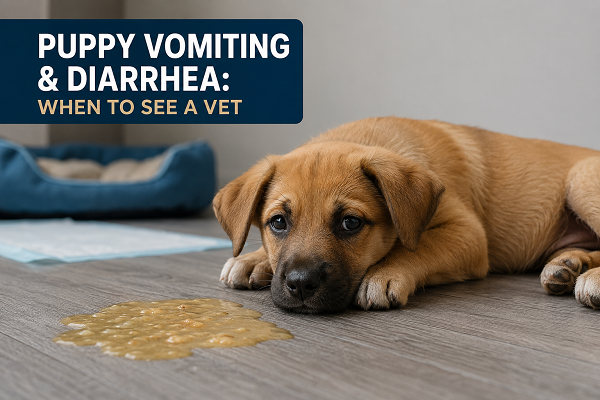
Call your vet immediately if your puppy vomits more than twice in a few hours, has bloody or black diarrhea, refuses water, is unvaccinated, or fails the 5-second skin-tent test described below. A single vomit or one soft stool in a puppy who’s still playing, drinking, and acting normal can usually be watched at home for 12–24 hours. When you’re not sure, the skin-tent and gum tests below take under 60 seconds and give you a real answer instead of a guess.
Table of Contents
- Why a Puppy’s Gut Trouble Is Different From an Adult Dog’s
- The 60-Second Dehydration Test (Do This First)
- What’s Actually Causing the Vomiting or Diarrhea
- Parvovirus: The Diagnosis You Can’t Afford to Miss
- Home Care vs. Emergency: The Comparison Table
- Toxins That Cause Vomiting and Diarrhea, and How Fast They Act
- What a Vet Visit Costs, by Scenario
- What to Say When You Call the Vet
- Safe Home Care for Genuinely Mild Cases
- Preventing the Next Episode
- A Note From the Trainer’s Chair
- FAQs
- Conclusion
Why a Puppy’s Gut Trouble Is Different From an Adult Dog’s
If you’ve ever mopped up puppy vomit at 2 a.m. and stood there wondering whether this is a “wait it out” situation or a “grab the car keys” one, you’re not overreacting. I’ve handled working-line puppies for over fourteen years, and the gut is usually the first place a young dog’s body raises a flag. Sometimes it’s nothing more than a garbage-can snack. Sometimes it’s the opening act of something that can kill a puppy within two days.
Here’s why the clock runs faster for puppies than for grown dogs:
- Smaller fluid reserves. A 10-pound puppy carries far less water weight than a 60-pound adult. What passes for “a rough afternoon” in a grown Labrador can tip a 12-week-old into real trouble in under 12 hours.
- An immune system still under construction. Maternal antibodies protect newborn pups for a few weeks, but that protection fades somewhere between 6 and 20 weeks of age, the exact stretch when the core vaccine series is still being completed. That gap is precisely why puppies catch things adult dogs shrug off.
- Zero judgment about what goes in their mouths. Vets call it “dietary indiscretion.” I call it a puppy eating a sock, half a crayon, and something dead in the yard, all before lunch.
- Fast-dividing gut cells. The nastiest puppy viruses specifically target rapidly dividing cells, and the lining of a puppy’s intestine is exactly that kind of tissue.
None of this means every wobble is a crisis. It does mean your window for “let’s just watch him” is shorter than it would be for your neighbor’s five-year-old retriever, which is exactly why the next section matters more than anything else on this page.
The 60-Second Dehydration Test (Do This First)
Most puppy-illness articles tell you to “watch for dehydration” without ever explaining how to actually check for it. Here’s the two-part test vets use themselves, and it takes less time than reading this paragraph.
1. The skin-tent test Gently pinch and lift the loose skin between your puppy’s shoulder blades into a little “tent” shape, then let go.
- Snaps back instantly → hydration is fine for now.
- Takes 1–2 seconds to flatten → mild to moderate dehydration. Start fluids and watch closely.
- Stays tented, or flattens very slowly → this is a same-day vet call, not a wait-and-see.
A caveat worth knowing: overweight puppies can give a falsely reassuring result because fatty tissue springs back fast on its own, while very thin or loose-skinned puppies can tent slightly even when they’re fine. Test your puppy once while he’s healthy so you know his personal “normal.”
2. The gum (capillary refill) test Lift your puppy’s lip and press a fingertip firmly against the gum above a canine tooth until it turns white, then let go and count.
- Pink returns in under 2 seconds, and gums feel wet → normal.
- Refill takes longer than 2 seconds, or gums feel tacky/dry → dehydration is setting in. Call your vet.
- Gums are pale, white, gray, or blue-tinged → this is an emergency. Go now.
Run both tests together, one can mislead on its own, but together they’re a genuinely reliable read on what’s happening inside your puppy, not just what you can see on the outside.
What’s Actually Causing the Vomiting or Diarrhea
Most puppy GI episodes fall into a handful of buckets, roughly ordered from “annoying but manageable” to “call now, no question”:
1. Dietary indiscretion (“garbage gut”). Spoiled food, fatty scraps, a chewed-up toy, mulch from the flower bed. This is, by a wide margin, the single most common trigger for a one-off vomiting episode or loose stool in an otherwise healthy puppy.
2. Abrupt diet changes. New kibble, a new treat brand, or jumping straight from puppy food to adult food can throw off the gut’s bacterial balance. Any food switch should be spread over about 7 days, mixing in a little more of the new food each day.
3. Intestinal parasites. Roundworms, hookworms, whipworms, tapeworms, plus the protozoal parasites giardia and coccidia, are extremely common in young puppies, especially those from shelters, backyard breeders, or rescues. Veterinary parasite councils recommend testing puppies at least four times in the first year, since you usually can’t see the parasite in the stool with the naked eye, it takes a fecal exam under a microscope.
4. Stress. Leaving mom and littermates, a new home, a car ride, a first vet visit, puppyhood is genuinely stressful, and stress alone can trigger loose stool or vomiting.
5. Bacterial overgrowth. E. coli and Clostridial bacteria live in a healthy gut normally, but stress, diet changes, or a viral infection can let them multiply out of control. Some of these strains are zoonotic, so wash your hands thoroughly after cleanup.
6. Viral infections. Parvovirus and canine coronavirus are the two viral causes worth worrying about, particularly in unvaccinated or partially vaccinated puppies. Parvo gets its own section next because the stakes are that high.
7. Foreign body obstruction. A swallowed sock, toy piece, or bone fragment can partially or fully block the intestine. This is a surgical emergency, not a monitor-at-home situation, and it often shows up as repeated, unproductive vomiting. If your puppy is a known chewer, our breakdown of urgent puppy obstruction symptoms covers the specific signs that separate a blockage from ordinary stomach upset.
Parvovirus: The Diagnosis You Can’t Afford to Miss
I want to spend real time here because every puppy owner should be able to recognize this on sight.
Canine parvovirus (CPV) attacks the fastest-dividing cells in a puppy’s body, mainly the intestinal lining and bone marrow. It spreads through contaminated feces, and the virus is brutally hardy: it can survive in soil and on surfaces for months, and shrugs off most household disinfectants except diluted bleach. Your puppy doesn’t need to meet a sick dog to catch it. A contaminated sidewalk, a dog park, or the sole of someone’s shoe is enough.
Timing that matters:
- Puppies are most vulnerable between roughly 6 weeks and 6 months old, with unvaccinated or partially vaccinated pups at the highest risk.
- Symptoms: vomiting, bloody diarrhea, lethargy, loss of appetite, fever, usually show up 3 to 7 days after exposure.
- The first 24–72 hours after symptoms start carry the highest risk of death. This is not a “let’s see how tomorrow looks” illness.
- Parvo isn’t evenly distributed across the calendar. A retrospective look at over a decade of shelter data found a distinct parvo season peaking in May and June, with the lowest case counts in August, September, December, and January, worth knowing if you’re weighing how cautious to be about dog parks and puppy classes at different times of year.
The survival numbers, and why they matter for your decision:
- Untreated: roughly 90% of puppies die, often within 48–72 hours of symptoms becoming obvious.
- Treated in a hospital setting (IV fluids, anti-nausea medication, antibiotics, close monitoring): survival climbs to somewhere around 80–90%, with some recent studies reporting rates in the 85–95% range when treatment starts early.
- A retrospective study of more than 5,000 treated dogs at a single shelter over 11.5 years found an overall survival rate of 86.6%, with the probability of survival climbing to nearly 97% once a puppy made it through the first five days of treatment. That’s the number that should drive your decision-making: the earlier treatment starts, the better the odds get, and the first five days are where most fatalities happen.
- A newer option worth asking your vet about is a canine parvovirus monoclonal antibody (CPMA) treatment, which works by binding directly to the virus. It’s shown promise in reducing mortality when given early, though it’s typically used alongside, not instead of, standard supportive care.
- If full hospitalization isn’t financially realistic for your family, ask about outpatient treatment. A 2020s study at a subsidized community clinic found a 74% survival rate using a simplified outpatient protocol, a once-daily clinic visit for treatment plus at-home monitoring overnight, a rate comparable to more intensive inpatient care, at a fraction of the cost. This isn’t appropriate for every case (dogs with pale gums or needing multiple days of fluids under the skin had worse outcomes), but it means “I can’t afford the ER” doesn’t have to mean “I can’t treat this at all.” Ask directly whether your clinic offers it or can refer you somewhere that does.
Bottom line: if your puppy is unvaccinated (or mid-series) and develops repeated vomiting plus diarrhea, especially bloody diarrhea, treat it as an emergency and call a vet or emergency clinic immediately. Staying current on the DHPP series is still the single most effective thing you can do here; our guide on core puppy vaccines and the shot schedule lays out exactly when each dose is due.
Home Care vs. Emergency: The Comparison Table
| Sign | Likely Mild — Monitor 12–24 Hours | Likely Emergency — Call/Go Now |
|---|---|---|
| Vomiting frequency | 1–2 episodes, then stops | 3+ times in a few hours, or repeated unproductive retching |
| Stool | Slightly soft, no blood | Watery, bloody, or black and tarry |
| Skin-tent test | Snaps back instantly | Takes 1+ seconds, or stays tented |
| Gum refill (CRT) | Under 2 seconds, gums moist | Over 2 seconds, or gums pale/tacky |
| Energy level | Normal, playful, alert | Lethargic, weak, won’t get up |
| Appetite/thirst | Still eating and drinking | Refusing water, can’t keep water down |
| Abdomen | Soft, no pain on touch | Bloated, hard, or painful when touched |
| Vaccination status | Fully vaccinated adult dog | Unvaccinated or partially vaccinated puppy |
| Known ingestion | None suspected | Known or suspected toxin, foreign object, or medication |
| Duration | Resolving within a day | Lasting more than 24 hours or worsening |
One column-two symptom outweighs several column-one symptoms. This isn’t a points system where you need three red flags before acting, one is often enough.
Toxins That Cause Vomiting and Diarrhea, and How Fast They Act
Generic articles tell you to “keep toxins away from your puppy” without telling you what to actually watch for once exposure has already happened. Here’s the timeline on the ones that show up most often in vet ERs:
- Chocolate (especially baking or dark chocolate): Vomiting and diarrhea typically start within 6–12 hours; tremors, an elevated heart rate, and seizures can follow in more severe cases. Call your vet or an animal poison control line immediately with the type and amount eaten.
- Xylitol (sugar-free gum, some peanut butters, baked goods): Onset can be alarmingly fast, often within 30–60 minutes and can cause a dangerous drop in blood sugar before GI symptoms even appear. This one doesn’t wait for “let’s see how he does.”
- Grapes and raisins: Vomiting usually starts within a few hours; the bigger danger is kidney injury that can show up 24–72 hours later, so a vet visit is warranted even if the vomiting looks mild.
- Rodent bait (anticoagulant types): Symptoms can be delayed 2–5 days, which is exactly what makes it dangerous, a puppy can look fine for days before internal bleeding starts.
- NSAIDs or other human medication (ibuprofen, acetaminophen): Vomiting, diarrhea, and lethargy can start within a few hours, with organ damage developing over the following day or two.
If you know or even strongly suspect your puppy got into any of these, don’t wait for symptoms to confirm it. Call your vet or a 24/7 animal poison control line right away and have the packaging or an estimate of the amount ready.
What a Vet Visit Costs, by Scenario
Cost is a real reason some owners delay care, and delay is exactly what lowers survival odds. Here’s a rough sense of what you’re looking at, in US dollars, so you’re not blindsided:
| Scenario | Typical Cost Range |
|---|---|
| Primary care sick visit (exam + basic fecal test) | $50–$150 |
| Urgent care / same-day visit with bloodwork | $150–$400 |
| Emergency vet visit (exam, in-house parvo/bloodwork, IV fluids started) | $300–$800 |
| Full parvo hospitalization (5–7 days, IV fluids, meds, monitoring) | $1,000–$2,600, sometimes higher |
| Outpatient parvo protocol (daily clinic visits + at-home care) | $700–$1,500 in many cases, lower than full hospitalization |
| Foreign body surgery | $1,500–$5,000+ |
If cost is a genuine barrier, say so out loud when you call. Many clinics have payment plans, CareCredit-style financing, or can point you toward a lower-cost outpatient protocol, but they can only help if they know money is part of the decision.
What to Say When You Call the Vet
Panic makes people forget details that actually change how a vet triages your call. Have these ready before you dial:
- Puppy’s age and vaccination status ,including exactly which shots and when, if you know.
- When symptoms started, and how many vomiting or diarrhea episodes so far.
- What the stool and vomit look like watery, bloody, black, or contains anything recognizable (a photo helps enormously and most clinics are fine with you texting or emailing one).
- Whether your puppy is drinking, and whether water stays down.
- Anything he might have eaten in the last 24–48 hours that he shouldn’t have.
- Results of your skin-tent and gum tests, if you’ve run them.
Giving the front desk this in one go, rather than in a back-and-forth, usually gets you triaged faster and helps them tell you honestly whether this can wait for a morning appointment or needs to be seen right now.
Safe Home Care for Genuinely Mild Cases
If your puppy has had one vomiting episode or a single loose stool, is still playful and drinking normally, and passes both dehydration checks above, most vets are comfortable with a short monitoring window. A few things that actually help:
- Don’t withhold food for long. Older advice about fasting a sick dog has mostly fallen out of favor for puppies, young pups can’t afford to go without calories for long. A short rest of the stomach (a few hours, not a full day) followed by small, frequent bland meals is the more current approach. Always check timing with your vet for a very young puppy.
- Offer a bland diet in small amounts. Boiled, skinless chicken breast with plain white rice is the classic go-to. Some owners keep an easily digestible support food on hand for exactly this situation, something like Purina Pro Plan Veterinary Diets EN Gastroenteric wet dog food is formulated to be gentle on an upset gut and can be a useful bridge food while things settle, though it’s still worth a quick call to your vet before starting anything new during an active flare-up.
- Keep water available, and encourage small sips rather than big gulps. A vet-formulated electrolyte solution, such as Vet Classics Pet-A-Lyte oral electrolyte solution, can support hydration between meals if your puppy is drinking but has had a few loose stools. This is not a substitute for IV fluids in a genuinely dehydrated puppy, it’s a bridge for mild cases only.
- Consider a vet-approved probiotic once the acute phase has settled, to help the gut flora recover. Purina Pro Plan FortiFlora probiotic powder is one of the most commonly recommended options by vets for dogs with occasional diarrhea and sprinkles easily over food.
- Reintroduce regular food gradually over several days once stools are back to normal, rather than switching straight back on day one.
- Track what you see. Photos of stool consistency, plus a rough count of episodes, genuinely speed up your vet call if you end up needing one.
If mild symptoms haven’t cleared within 24 hours, or if anything changes for the worse, that’s your cue to call rather than keep waiting.
Preventing the Next Episode
A lot of puppy GI trouble is genuinely preventable:
- Stay current on vaccinations. The core DHPP series (distemper, hepatitis, parvovirus, parainfluenza) typically starts around 6–8 weeks and continues every 3–4 weeks until 16 weeks of age. Skipping or delaying boosters extends the vulnerable window unnecessarily, see our full puppy vaccine schedule guide for the exact timeline.
- Follow a regular deworming schedule. Puppies are commonly dewormed starting around 2–3 weeks of age and repeated every 2–3 weeks until 12 weeks, then on a schedule your vet recommends after that. Our guide on maintaining good health in working dogs covers vaccination and deworming timing in more depth.
- Transition foods slowly, over about a week, any time you change brands or formulas.
- Puppy-proof your space. Keep trash, cooked bones, fatty scraps, toxic plants, and small chewable objects out of reach. Most “garbage gut” cases are entirely preventable with a bit of housekeeping.
- Clean up feces promptly in the yard and avoid high-traffic dog areas until your puppy’s vaccine series is complete, since parvo and parasites both spread through contaminated ground, this matters even more during the May–June parvo season noted above.
- Keep your crate and confinement routine calm and structured. A stressed, overtired puppy is more prone to stress-related stomach upset; our crate training guide walks through building that kind of routine from day one.
- Learn to tell the difference between “black stool from beets” and something serious. If you’ve ever noticed dark or black stool and weren’t sure what it meant, our black puppy stool guide breaks down which colors are diet-related and which mean call the vet now.
A Note From the Trainer’s Chair
I’ve raised and handled working-line puppies destined for demanding jobs, and the single biggest lesson I can pass on is this: a puppy’s gut tells on itself fast. A healthy pup who’s still playing and drinking is almost never in real danger from one messy stool. A puppy who’s gone quiet, won’t touch water, or is producing bloody stool is telling you something urgent and telling you now, not tomorrow. I’ve watched owners lose precious hours second-guessing a puppy who was already crashing. The skin-tent and gum tests above exist so you don’t have to guess. Run them, trust what they tell you, and act on the answer instead of the hope that it’ll pass on its own.
FAQs
1. How long can I wait before taking my puppy to the vet for vomiting or diarrhea?
If your puppy is alert, eating, drinking, and passes both the skin-tent and gum tests, most vets are comfortable with 12–24 hours of monitoring. Beyond that window, or if any red-flag symptom shows up (blood, lethargy, refusing water), call rather than wait longer.
2. Can teething cause vomiting or diarrhea in puppies?
Teething itself doesn’t typically cause vomiting, but the extra drooling and object-chewing that comes with it can lead to swallowed items or mild stomach upset. If symptoms go beyond mild, don’t assume teething explains it.
3. Is it safe to give my puppy human medication for an upset stomach?
No. Don’t give human anti-nausea or anti-diarrheal medications without direct veterinary guidance. Several common over-the-counter human drugs are unsafe for dogs, and masking symptoms can delay recognition of something serious, like parvo or an obstruction.
4. My puppy is vaccinated, can they still get parvo?
It’s uncommon but possible, especially if the vaccine series isn’t complete yet (full protection generally isn’t reached until around 16 weeks) or if the puppy was exposed to a heavy viral load. A completed, on-schedule vaccine series dramatically lowers the risk.
5. What’s the difference between vomiting and regurgitation in puppies?
Vomiting involves active abdominal effort and usually brings up partially digested food or bile, often preceded by nausea signs like lip-licking or drooling. Regurgitation is passive, undigested food comes back up shortly after eating, often tube-shaped, with no retching. Mention which one you’re actually seeing when you call your vet, since it changes the likely diagnosis.
Conclusion
Most puppy vomiting and diarrhea is manageable. Dietary indiscretion, a fast diet switch, or mild stress account for a huge share of cases, and these usually resolve within a day with rest, a bland diet, and close monitoring. But puppies dehydrate fast, and a small number of causes, parvovirus chief among them, turn dangerous within hours, not days. Run the skin-tent and gum tests before you decide anything else. Keep vaccinations and deworming on schedule. And when the tests, the stool, or your gut all point the same direction, trust it and call your vet, acting a few hours earlier is often the single biggest factor in a good outcome.
This article reflects hands-on working-dog handling experience combined with current veterinary guidance, and is written for general education. It’s not a substitute for examination by a licensed veterinarian, always contact your vet directly if you’re concerned about your puppy’s health.

Her work centres on obedience, detection, protection and operational readiness. She favours proven methods built on repetition, consistency and real-world conditioning, so that both dogs and handlers are prepared for high-pressure tasks.
Rofiat represented the Nigerian Army Dog Centre at the Nigerian Army Day Celebration (NADCEL) 2026, where she led demonstrations in obedience, explosive detection, agility and tactical movement. Through articles, training content and documentaries, she shares field-based insight into how structured training, clear communication and trust between handler and dog affect performance and reliability.
She is the author of Beyond the Bark: Inside a Pro Handler's Playbook for Raising the Ideal Dog, a practical guide that helps dog owners and handlers apply professional training principles in everyday situations.
- Can You Handle a Cane Corso Puppy? 7 Hard Truths - October 23, 2026
- How to Train a Stubborn Pug: A K9 Trainer’s Real Guide - October 22, 2026
- Dog Hotel Prep: 7 Must-Haves Before Boarding - October 21, 2026