Goldendoodle Puppy Food Schedule: How Much to Feed
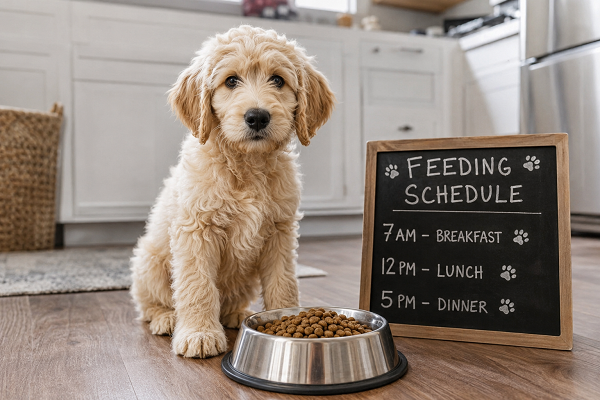
Most Goldendoodle puppies need 3 to 4 small meals a day between 8 weeks and 6 months old, then 2 meals a day from 6 months on. Daily food amounts range from about ¾ cup for a Mini Goldendoodle puppy up to 3–4 cups for a Standard Goldendoodle puppy, split across those meals, but the exact number depends on your puppy’s current weight, expected adult size, and the calorie density of the food you’re using.
Table of Contents
- Introduction
- Why Goldendoodle Puppies Need a Different Feeding Plan Than Adults
- Goldendoodle Puppy Feeding Schedule by Age
- How Much to Feed: A Weight and Size-Based Breakdown
- Mini vs. Medium vs. Standard Goldendoodle: Feeding Differences
- The Calorie Math Behind “How Much to Feed” (RER/DER Explained Simply)
- What to Feed: Choosing the Right Puppy Food
- Common Feeding Mistakes That Cause Health Problems
- Sample Daily Feeding Schedules
- Trainer’s Notes: Real-World Feeding Tips
- FAQs
- Conclusion
Introduction
If you just brought home a Goldendoodle puppy, I’d bet money you’ve already stood in front of the pantry at 9 p.m. wondering, “Wait… did I already feed her tonight?” You’re not alone. Feeding a growing puppy the right amount, at the right times, is one of those things that sounds simple until you’re actually doing it, juggling a growth chart, a bag of kibble with confusing guidelines, and a puppy who acts like she’s never been fed in her life.
I know that’s a wide range. That’s because a Mini Goldendoodle topping out at 25 pounds and a Standard Goldendoodle heading toward 70+ pounds are, nutritionally speaking, almost different animals. In this guide, I’ll walk you through exactly how to figure out your puppy’s number, not a generic one-size-fits-all chart, plus the feeding mistakes that trip up even experienced dog owners.
Why Goldendoodle Puppies Need a Different Feeding Plan Than Adults
Here’s the thing about puppies: they’re not just small dogs. A growing Goldendoodle puppy is building bone, muscle, and organ tissue at a pace they’ll never repeat again in their life. That means their calorie and nutrient needs, pound for pound, are roughly double what an adult dog of the same size needs.
This is also where things get tricky for Goldendoodles specifically. Because the breed comes in three very different size categories, Mini, Medium (sometimes called Petite or Medium), and Standard, a “Goldendoodle puppy” could plausibly grow into anywhere from a 15-pound lapdog to an 80-pound athletic companion. And if your pup is trending toward Standard size, they may fall into the “large breed” category that veterinary nutritionists watch closely, because rapid growth in bigger dogs is linked to joint problems later in life.
So before we get to charts and cup measurements, keep this rule in your back pocket: feed for the size your puppy is becoming, not just the size they are today.
Goldendoodle Puppy Feeding Schedule by Age
This is the part most owners actually search for, how many times a day should I be feeding, and when? Here’s the age-based breakdown most veterinary nutritionists and reputable breeders recommend:
8 to 12 Weeks Old
- Meals per day: 4
- Spacing: Roughly every 4-5 hours (e.g., 7 a.m., 11 a.m., 3 p.m., 7 p.m.)
- Why: Tiny stomachs, high energy needs, and a real risk of hypoglycemia (low blood sugar) in toy and mini-sized puppies if meals are skipped or spaced too far apart.
3 to 6 Months Old
- Meals per day: 3
- Spacing: Morning, early afternoon, evening
- Why: Your puppy’s stomach capacity has grown, and they can comfortably go longer between meals without a blood sugar crash.
6 to 12 Months Old
- Meals per day: 2
- Spacing: Morning and evening, roughly 10-12 hours apart
- Why: Growth rate is slowing (especially noticeable in Minis, who often reach 90% of adult size by 8-9 months), and twice-daily feeding better matches their adult digestive rhythm.
12 Months and Older (Standard Goldendoodles: 15-18 Months)
- Meals per day: 2
- Why: Standard Goldendoodles are considered large breed and can keep growing, filling out muscle and frame, until 15-18 months. Don’t switch to adult food too early for a Standard-sized pup, check the “why” in the size section below.
One more scheduling tip that doesn’t get talked about enough: feed at consistent times, not just a consistent number of meals. Puppies who eat on a predictable schedule also tend to potty on a predictable schedule, which makes house training noticeably easier. I’ve had clients cut weeks off their house-training timeline just by tightening up meal times to within a 15-minute window each day.
How Much to Feed: A Weight and Size-Based Breakdown
Here’s a general daily total (split across the meals above) based on current puppy weight. These are starting points, always cross-check against your specific food’s calorie content, which I’ll explain in the next section.
| Puppy’s Current Weight | Approx. Daily Food (standard 350-400 kcal/cup kibble) |
|---|---|
| 5-10 lbs | ¾ – 1 ½ cups |
| 10-20 lbs | 1 ½ – 2 ½ cups |
| 20-30 lbs | 2 ½ – 3 cups |
| 30-50 lbs | 3 – 4 cups |
| 50-70 lbs | 4 – 5 cups |
A commonly cited rule of thumb among Goldendoodle breeders is roughly 1 cup of food per 15 pounds of body weight per day, split into multiple meals, a decent gut check, though your dog’s individual metabolism, activity level, and the specific food’s calorie density will shift that number up or down.
Keep in mind: these numbers will change every couple of weeks during the growth phase. What your 10-week-old puppy eats today won’t be enough by week 14. Most quality puppy food bags include a growth chart on the label matched to expected adult weight, that’s genuinely a better starting point than any generic online chart, including this one, because it’s matched to that food’s specific calorie density.
Mini vs. Medium vs. Standard Goldendoodle: Feeding Differences
This is where a lot of generic feeding guides fall short, they treat “Goldendoodle” as one size. It isn’t.
Mini Goldendoodle (typically 15-30 lbs adult weight)
Mini Goldendoodles (usually a Poodle parent from the Miniature or Toy line) mature faster and reach close to their adult weight by around 8-9 months. Overfeeding a Mini is a bigger practical risk than underfeeding, since it’s easy to eyeball a “puppy-sized” portion that’s actually too much for a dog who’ll only ever weigh 20 pounds. Regular puppy food (not large-breed formula) is appropriate here.
Medium Goldendoodle (typically 30-45 lbs adult weight)
This middle group needs a slightly longer runway, usually reaching adult size around 10-12 months. Either a standard puppy formula or a moderate-calorie large-breed formula can work; this is a good one to run past your vet at your puppy’s next check-up.
Standard Goldendoodle (typically 50-90 lbs adult weight)
This is the group where feeding choices matter most. Because Standard Goldendoodles often cross the 70-pound AAFCO threshold for “large breed,” they should be on a large-breed puppy formula from the start. These formulas cap calcium at 1.8% on a dry matter basis and keep fat and calorie density more moderate, both are meant to slow the growth rate slightly, which multiple veterinary studies link to a lower risk of hip dysplasia and other developmental joint problems in large dogs. Standard Goldendoodles also take the longest to physically mature, often not filling out completely until 15-18 months, so don’t rush the switch to adult food just because your 10-month-old pup looks “grown.”
Real example: A breeder I consulted with in Ontario tracks litters from a Standard Goldendoodle line where puppies averaged 8 pounds at 8 weeks and 55-65 pounds by 12 months, nearly an 8x weight increase in ten months. That’s precisely the kind of growth curve where calcium control and portion discipline actually matter, not just as a “nice to have.”
The Calorie Math Behind “How Much to Feed” (RER/DER Explained Simply)
Cup measurements are a fine starting point, but if you want to actually nail your puppy’s portions, this is the formula vets use, and it’s less intimidating than it looks.
Step 1: Calculate Resting Energy Requirement (RER) RER = 70 × (body weight in kg)^0.75
Step 2: Multiply by a growth factor Growing puppies generally need 2 to 3 times their RER, tapering down as they approach adult size.
Worked example: A 10-pound puppy (about 4.5 kg) has an RER of roughly 218 calories. During peak growth (under 4 months old), that puppy may need 2.5-3x RER, around 545-654 calories a day. If your kibble runs 380 calories per cup, that’s roughly 1.4-1.7 cups daily, split across 4 meals.
I’ll be honest with you: most owners aren’t going to do this math every week, and you don’t have to. But doing it once when your puppy is around 10-12 weeks, and again around 5-6 months, gives you a genuine sanity check against the bag’s feeding chart, which, let’s be real, is sometimes written more conservatively (to sell more food) or more generously than your specific dog actually needs.
What to Feed: Choosing the Right Puppy Food
Look for a food with an AAFCO statement confirming it’s formulated for “growth” or “all life stages, including growth of large-size dogs” if you have a Medium or Standard Goldendoodle. That specific wording on the label matters, a food only cleared for “growth” without the large-breed language may not have the calcium ceiling your bigger pup needs.
A few practical shopping guidelines:
- Protein: Look for 22-32% (as fed), with a named animal protein (chicken, salmon, lamb) as the first ingredient.
- Fat: Around 12-18% for Minis and Mediums; slightly lower (10-14%) for large-breed Standard formulas to help manage growth rate.
- DHA: An omega-3 fatty acid found in fish oil, important for brain and eye development in the first several months.
- Calcium: 1.2-1.8% on a dry matter basis for large breed formulas specifically, check the guaranteed analysis panel, not just marketing copy on the front of the bag.
Wet food, freeze-dried toppers, or a small amount of plain cooked chicken and pumpkin can be useful for picky eaters or transitions, but they shouldn’t make up the bulk of a growing puppy’s diet unless a vet or veterinary nutritionist has specifically balanced the ratios for you.
Cost reality check: A 25-30 lb bag of quality large-breed puppy food typically runs $55-$75 in the US and lasts a Standard Goldendoodle puppy roughly 3-5 weeks during peak growth, so budgeting $50-$80 a month for food in the first year isn’t unusual once you factor in the increasing portions as they grow.
Common Feeding Mistakes That Cause Health Problems
I’ve seen these come up again and again with new Goldendoodle owners, so let’s name them directly:
- Free-feeding (leaving food out all day). It sounds convenient, but it removes your ability to track appetite changes (often the first sign something’s wrong) and makes house training harder since there’s no predictable “in” to match the predictable “out.”
- Switching foods too fast. A sudden diet change can trigger loose stool or vomiting. Transition over 7-10 days, gradually increasing the new food’s ratio.
- Feeding a regular puppy formula to a Standard-sized pup. As covered above, this skips the calcium ceiling that helps protect growing joints in larger dogs.
- Treats making up more than 10% of daily calories. Training treats add up fast, especially during the puppy stage when you’re rewarding constantly. Factor them into the day’s total, or use a portion of the puppy’s actual kibble ration as treats.
- Ignoring body condition in favor of the chart. Charts are estimates. If you can’t feel your puppy’s ribs with light pressure, or their waist has disappeared from above, it’s time to trim portions regardless of what the bag says.
- Feeding right before or after strenuous exercise. This is more of a large-breed, deep-chested dog concern (relevant to Standard Goldendoodles), tied to bloat risk. Give at least 30-45 minutes buffer on either side of vigorous play or exercise.
Sample Daily Feeding Schedules
Mini Goldendoodle, 10 weeks old, ~6 lbs:
- 7:00 a.m. — ⅓ cup
- 11:00 a.m. — ⅓ cup
- 3:00 p.m. — ⅓ cup
- 7:00 p.m. — ⅓ cup
Standard Goldendoodle, 4 months old, ~28 lbs:
- 7:00 a.m. — 1 cup
- 1:00 p.m. — 1 cup
- 7:00 p.m. — 1 cup
Standard Goldendoodle, 9 months old, ~55 lbs:
- 7:00 a.m. — 2 cups
- 6:00 p.m. — 2 cups
Adjust up or down in 10% increments every 1-2 weeks based on body condition, and always weigh your puppy monthly (a kitchen scale for small pups, a vet scale visit for bigger ones) to track the trend line, not just a single number.
Trainer’s Notes: Real-World Feeding Tips
Insights from the ARFS K9 Training Team
Even though our team’s day-to-day work is with working and security dogs, the fundamentals of puppy nutrition don’t change based on the dog’s future job. A well-fed, well-scheduled puppy is a calmer, more trainable puppy, full stop. We’ve found that inconsistent feeding times are one of the most overlooked causes of restlessness and food-guarding behavior in young dogs, doodles included. If you’re also working on other early foundations like crate training your puppy or building a grooming routine, lock in the feeding schedule first, it anchors everything else.
We also recommend using a portion of your puppy’s daily kibble ration as training rewards rather than adding separate treats on top. If you want vetted options that won’t blow your puppy’s calorie budget, our list of healthy training treats is a solid place to start. And if you want a deeper dive into supplements that support joint and coat health as your Goldendoodle grows, genuinely relevant for the larger Standard-sized doodles, check our guide on nutrition supplements for working dogs, much of which applies to any active, growing large-breed dog.
If you’re weighing whether a Goldendoodle’s grooming and care needs fit your lifestyle before committing to a puppy, it’s also worth browsing our roundup of low-maintenance dog breeds for comparison, Goldendoodles are lovable, but their coat and feeding needs are more involved than some people expect going in.
FAQs
1. How many cups of food should a Goldendoodle puppy eat per day?
It depends on size and age, but a rough guide is 1 cup per 15 pounds of body weight daily, split into 3-4 meals for puppies under 6 months. A Mini Goldendoodle puppy might eat ¾-1 ½ cups daily, while a Standard Goldendoodle puppy can need 3-4 cups by 6 months old.
2. When should I switch my Goldendoodle from puppy food to adult food?
Mini Goldendoodles can usually switch around 9-10 months. Standard Goldendoodles, being large breed, should generally stay on puppy or large-breed growth formula until 15-18 months, since they’re still developing bone and muscle mass during that window.
3. Is it bad to free-feed a Goldendoodle puppy?
Generally, yes. Free-feeding makes it hard to spot appetite changes early, contributes to overeating in food-motivated dogs (which Goldendoodles often are), and works against house-training consistency. Scheduled meals are almost always the better choice for puppies.
4. Do Standard Goldendoodle puppies need large-breed puppy food?
If your Standard Goldendoodle is projected to reach 70+ pounds as an adult, yes, large-breed puppy formulas control calcium and calorie density in a way that supports slower, joint-healthy growth, which regular puppy food doesn’t specifically manage.
5. How do I know if I’m feeding my Goldendoodle puppy too much or too little?
Check body condition weekly: you should be able to feel (not see) the ribs with light pressure, and there should be a visible waist when viewed from above. Rapid weight gain, a disappearing waist, or visible ribs and a prominent spine are both signs to adjust portions and, if it doesn’t resolve, check in with your vet.
Conclusion
Feeding a Goldendoodle puppy well isn’t about finding one magic number, it’s about matching meals to your puppy’s age, current weight, and the adult size they’re growing into, then adjusting as they change (which, trust me, they will, often every couple of weeks). Start with 4 meals a day at 8-12 weeks, work down to 2 meals by 6-12 months, and always weigh feeding charts against what you actually see and feel on your dog: their ribs, their waist, their energy levels.
If there’s one habit worth building early, it’s this: weigh your puppy monthly, recheck their portions against their current weight, and don’t be afraid to text your vet a quick “does this look right?” photo. Goldendoodle puppyhood moves fast, and a few minutes of attention now pays off in a healthier, better-proportioned adult dog later.

Her work centres on obedience, detection, protection and operational readiness. She favours proven methods built on repetition, consistency and real-world conditioning, so that both dogs and handlers are prepared for high-pressure tasks.
Rofiat represented the Nigerian Army Dog Centre at the Nigerian Army Day Celebration (NADCEL) 2026, where she led demonstrations in obedience, explosive detection, agility and tactical movement. Through articles, training content and documentaries, she shares field-based insight into how structured training, clear communication and trust between handler and dog affect performance and reliability.
She is the author of Beyond the Bark: Inside a Pro Handler's Playbook for Raising the Ideal Dog, a practical guide that helps dog owners and handlers apply professional training principles in everyday situations.
- Australian Cattle Dog vs Blue Heeler: Any Difference? - October 1, 2026
- Bousnic Dog Training Collar Review: Is It Safe? - September 30, 2026
- Gravy Train Dog Food Review: Ingredients & Recalls - September 30, 2026