Black Puppy Stool: Emergency or Diet? Vet Guide
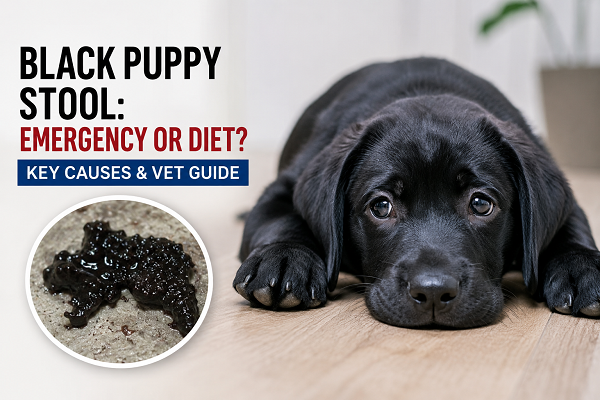
Black, tarry, or sticky puppy stool (called melena) usually means digested blood is coming from higher up in the gut and should be checked by a vet the same day, especially alongside vomiting, pale gums, or low energy. If the stool is simply dark brown, well-formed, and your puppy is eating and playing normally, it’s more likely a harmless diet cause (iron, liver treats, or a dark chew) that you can watch for 12–24 hours. If you’re not 100% sure which one you’re looking at, treat it as the first option and call your vet.
Table of Contents
- Introduction: Why This Symptom Trips Up Even Experienced Owners
- What Black Puppy Stool Actually Is
- The 90-Second Home Triage
- Diet-Related Black Stool (The Harmless Kind)
- Medical Causes of True Melena
- The One Blood Number Your Vet Is Actually Watching
- Melena vs. Hematochezia: Two Different Emergencies
- At-Home Checks That Actually Help Your Vet
- What Happens at the Vet Visit
- What It Costs: US, UK, and Beyond
- A Working K9 Program’s Approach to Stool Monitoring
- Prevention: A Plan You’ll Actually Stick To
- FAQs
- Conclusion
Introduction: Why This Symptom Trips Up Even Experienced Owners
Here’s the thing about puppy poop, nobody warns you how much time you’ll spend staring at it. Then one morning you scoop it up and it looks… wrong. Dark. Almost black. Maybe shiny, maybe sticky to the bag.
Your brain jumps straight to worst case, and honestly, that instinct isn’t wrong to have. Black stool in a puppy sits in a genuinely confusing gray zone. It can be nothing more than yesterday’s liver treats working their way through. Or it can be the first visible sign of internal bleeding that needs treatment within hours, not days.
The problem with most articles on this topic is they either panic you into an unnecessary 2 a.m. emergency vet bill, or they’re so vague (“monitor your puppy and consult a vet if concerned”) that you’re left no better informed than when you started. This guide takes a different approach. You’ll get the specific texture, smell, and behavior checks that separate diet-related darkening from true melena, a breakdown of every medical cause in rough order of how often it actually shows up in young dogs, the one lab value your vet will check that most guides never mention, and realistic cost ranges so you’re not blindsided at the front desk.
I’ve walked owners through this exact scenario more times than I can count, both in general puppy consultations and while evaluating litters headed into working dog programs. The pattern that saves puppies isn’t dramatic. It’s knowing what to look for before you’re standing over the yard with a flashlight, panicking.
What Black Puppy Stool Actually Is
Let’s start with the medical term, because it actually explains everything: melena.
Melena is stool that’s been darkened by digested blood, and the color comes from a specific chemical process. When blood enters the digestive tract high up, meaning the stomach or the upper part of the small intestine, stomach acid and digestive enzymes go to work on it during transit. The iron in the blood oxidizes as it moves through the gut, and by the time it exits, it’s turned into that unmistakable black, tar-like, almost shiny stool. It also tends to smell distinctly foul, owners who’ve encountered it often describe the odor as something they can still recognize years later.
That’s a completely different situation from stool that’s dark simply because of something your puppy ate. Dietary darkening doesn’t involve any bleeding at all, it’s just pigment passing through.
So don’t ask yourself “is this black?” That question alone won’t get you anywhere useful. Ask instead: is it black and sticky and foul-smelling, or is it just a shade darker than your puppy’s usual poop while everything else about your puppy is normal? That second question is where the real diagnosis lives, and it’s the single biggest thing separating a harmless Tuesday from a genuine emergency.
One detail worth knowing: melena doesn’t always show up immediately after a bleed starts. A fast, active bleed (say, from a perforated ulcer) can produce black stool within 2 to 4 hours. A slow, chronic bleed, the kind you get from a moderate hookworm burden, might only produce intermittent dark stool over several days or weeks. That’s exactly why a single black stool, even one that resolves on its own, is still worth mentioning to your vet at the next visit.
The 90-Second Home Triage
Before you do anything else, run through this. It genuinely takes under two minutes and it’s the difference between an informed decision and a guess.
Go to the vet or an emergency clinic today if any of these are true:
- The stool is black, sticky, shiny, or has a strong, distinctly foul or metallic smell
- Your puppy has vomited, especially more than once or with any blood in it
- Gums are pale, white, or grey instead of a healthy bubblegum pink
- Your puppy is weak, wobbly, unusually quiet, or not interested in food
- Your puppy is under 4 months old or hasn’t finished their vaccine series (parvovirus risk)
- You know, or even just suspect, they got into medication, a toxin, or swallowed something they shouldn’t have
- The dark stool is also loose, watery, or explosive
A short 12–24 hour watch-and-wait may be reasonable, but only if every one of these is true:
- The stool is formed and dark brown rather than truly black, not sticky or tarry
- Your puppy is eating, drinking, playing, and acting completely like themselves
- There’s an obvious dietary explanation (a new liver treat, an iron supplement, a dark chew)
- No vomiting, no lethargy, gums look normal pink
A quick gut check if you’re still unsure: puppies are small. A puppy under 10 pounds has a fraction of the blood volume of an adult dog, so blood loss that an adult dog would shrug off can meaningfully affect a puppy. That’s the real reason vets push urgency on this symptom in young dogs specifically. It’s not caution for caution’s sake, it’s basic physiology.
Diet-Related Black Stool (The Harmless Kind)
Not every dark stool means trouble. These are the common, non-emergency reasons puppy poop turns darker:
- Iron supplements. Frequently given to puppies recovering from anemia or a recent illness, iron oxidizes in the gut just like blood does, and it darkens stool the same way.
- Liver-rich meals or treats. Organ meat is naturally loaded with blood and iron. If you’ve recently switched to a liver-based training treat or a raw diet with organ meat, this is very likely your answer.
- Bismuth subsalicylate products (the active ingredient in some human anti-diarrhea medications). These are known to turn stool black as a normal side effect. Worth flagging separately: these products aren’t automatically safe for puppies at any dose, so don’t give human medication without checking with your vet first.
- Activated charcoal, sometimes given after a toxin exposure, blackens stool as an expected, harmless result of the treatment itself.
- Dark commercial chews or dental treats, some of which use charcoal or dark dyes that pass through and darken stool temporarily.
The giveaway here is texture and behavior, not just color. Harmless dark stool is formed, not sticky or glossy, and your puppy is bouncing around like nothing happened. If you can point to a specific dietary change in the last day or two and everything else checks out, you’re probably in this category. Still, keep watching for the next 24 hours just to be sure.
Medical Causes of True Melena
This is the section that matters most, because melena is a symptom, not a diagnosis. It tells you blood is coming from somewhere in the upper GI tract, not why. Here’s what’s actually behind it, starting with the most common cause in young puppies.
Hookworms
Hookworms are, by a wide margin, the most under-recognized cause of black stool in young puppies, and they’re more common than most new owners realize. National prevalence studies in the US put hookworm infection somewhere between 2.5% and 10% of dogs depending on region and living conditions, and that number climbs sharply in shelter and rescue populations, with some regional studies showing rates as high as 12–30%. Puppies are hit hardest because hookworm larvae pass directly from an infected mother through nursing, meaning a puppy can be infected within its first two weeks of life, long before it’s ever set a paw outside.
Here’s what makes them nasty: hookworms attach to the intestinal wall, feed directly on blood, and release an anticoagulant that keeps the feeding site bleeding even after the worm moves on to a new spot. In a heavy infestation, that constant, low-grade blood loss produces the classic dark, tarry stool alongside pale gums, poor weight gain, and low energy. Left untreated, it can progress to a genuinely life-threatening anemia, not just an upset stomach.
This is exactly why the Companion Animal Parasite Council (CAPC) recommends testing puppies for intestinal parasites at least four times in their first year of life, and why most vets set a deworming schedule starting at 2 weeks old, repeated every 2 weeks until 12 weeks, then monthly to 6 months.
Canine Parvovirus
If your puppy is unvaccinated, or midway through their vaccine series, and you’re seeing black or dark, foul-smelling diarrhea combined with vomiting and lethargy, parvovirus has to be at the top of your list. The virus attacks the lining of the small intestine, and as the disease progresses, diarrhea often shifts from watery and yellowish toward dark or black as internal bleeding worsens.
The numbers explain why speed matters so much here. Parvovirus is nearly always fatal without treatment. With prompt, aggressive veterinary care, hospitalization, IV fluids, anti-nausea medication, antibiotics for secondary infection, most published estimates put survival between 85% and 95%. Even lower-cost outpatient protocols, using subcutaneous fluids and injectable medications on a return-visit basis rather than full hospitalization, have shown meaningfully good outcomes when full inpatient care isn’t financially possible. The first 3 to 5 days of treatment are consistently described as the make-or-break window in clinical case studies.
The test itself is fast and cheap relative to everything else on this list, a same-day fecal ELISA that most general practice vets run in-house in around 10 minutes. If there’s any real chance your puppy is unvaccinated and showing this symptom pattern, get that test done today. For a deeper breakdown of the full puppy vaccination schedule and why timing matters so much, our core vaccine and schedule guide covers exactly when each shot should happen and why gaps in the series leave puppies exposed.
Gastric Ulcers and NSAID Exposure
This one catches well-meaning owners off guard more than any other cause on this list. Giving a puppy human pain medication like ibuprofen or aspirin, even a dose that seems tiny and “puppy-sized”, can cause stomach ulceration and real GI bleeding. Long-term or high-dose NSAID exposure is one of the most commonly documented causes of melena in dogs of any age in veterinary literature. If there’s any chance your puppy got into a pill bottle or a dropped tablet, treat it as a real risk, not a minor scare.
Swallowed Blood From Elsewhere
Sometimes the bleeding isn’t in the gut at all. A bleeding gum from teething, a minor nosebleed, a scrape from rough play, or blood from licking a wound somewhere else on the body can all be swallowed and later show up as darker stool. This is usually the least dangerous item on this list, but it still deserves a vet check to confirm the actual source rather than assuming.
Foreign Bodies and Toxins
Puppies chew everything, that’s not news to anyone who’s lived with one for more than a week. Swallowed objects like bone fragments, toy pieces, or fabric can irritate or even perforate the gut lining, both of which can bleed internally. Certain toxins, including some rodenticides that interfere with normal blood clotting, can also cause melena as an early warning sign, often before any other symptom shows up. If you suspect toxin exposure of any kind, don’t wait for stool changes to confirm it, contact an animal poison control line and your vet immediately. And if you’re seeing signs that point toward a blockage rather than bleeding, straining, repeated vomiting, a bloated or painful belly, our guide on urgent puppy obstruction symptoms walks through exactly what that looks like and how it’s different from this.
Hemorrhagic Gastroenteritis (HGE)
HGE shows up suddenly, usually with severe, jelly-like bloody diarrhea and vomiting. It more classically presents with bright red rather than black stool, but digested blood from higher in the tract can darken it too. Regardless of the exact shade, HGE is treated as an emergency across the board, affected dogs, puppies especially, can become dangerously dehydrated within hours.
The One Blood Number Your Vet Is Actually Watching
Here’s something most articles on this topic skip entirely, and it’s genuinely useful to understand before you’re sitting in the exam room.
When your vet runs bloodwork on a puppy with melena, one number matters more than almost anything else: PCV, or packed cell volume (also called hematocrit). It’s essentially a measurement of what percentage of your puppy’s blood is made up of red blood cells, the cells that carry oxygen.
A healthy puppy typically runs a PCV somewhere in the 35–50% range. As that number drops, so does your puppy’s ability to deliver oxygen to their own tissues, and that’s what actually makes blood loss dangerous, not the volume lost on its own. Veterinary emergency literature generally treats a PCV that’s dropped to around 20% as a point where transfusion becomes a serious consideration, and dogs with rapidly falling PCV are transfused earlier and more aggressively than dogs with a slow, chronic drop, because the body hasn’t had time to compensate.
Why does this matter to you as an owner? Because it explains something that confuses a lot of people: a puppy can look relatively okay in the first hour or two after a sudden, significant bleed. Fluid shifts inside the body take time, so PCV doesn’t always crash immediately even after real blood loss has occurred. That’s part of why vets sometimes recheck PCV a few hours after the first test rather than treating one normal-ish number as reassurance. It’s also exactly why “they seem fine right now” isn’t a reliable enough reason to wait on a true melena case.
Melena vs. Hematochezia: Two Different Emergencies
Vets split blood-in-stool into two categories, and knowing which one you’re looking at helps everyone move faster.
| Feature | Melena (black stool) | Hematochezia (red stool) |
|---|---|---|
| Color | Black, tarry | Bright red streaks or clots |
| Source | Upper GI tract (stomach, small intestine) | Lower GI tract (colon, rectum) |
| Texture | Sticky, shiny | Usually formed, with visible red blood |
| Odor | Strong, metallic, distinctly foul | Less distinctly different from normal |
| Common causes | Ulcers, hookworms, parvo, toxins, NSAID exposure | Colitis, straining, anal gland irritation, some parasites |
Both need a vet visit. Melena generally gets treated with more urgency because it can point to a larger bleed happening higher up and further out of sight, which is harder to assess without diagnostics.
At-Home Checks That Actually Help Your Vet
While you’re getting ready to head in or call, these four checks take about a minute total and give your vet real, usable information.
- The gum-color test. Lift your puppy’s lip and press a finger gently on the gum, then let go. Healthy gums are pink and should return to that pink color within about 2 seconds (this is called capillary refill time). Pale, white, or grey gums that are slow to refill point toward significant blood loss and mean you should move fast.
- The skin-tent test. Gently pinch the loose skin at the back of your puppy’s neck and let go. It should snap back immediately. Skin that stays “tented” for a second or two suggests dehydration, which compounds risk quickly in a small puppy.
- Note the timeline. When did you first notice it? Anything unusual eaten in the last 24–48 hours? Write it down, your vet will ask, and vague answers (“sometime yesterday, maybe?”) slow down the diagnostic process.
- Photograph the stool and, if you can manage it, bag a small sample before cleaning up. It genuinely helps your vet judge severity from the first phone call and decide how quickly you need to come in.
None of this replaces an actual vet visit. Think of it as arriving prepared instead of arriving with only “it looked weird” to go on.
What Happens at the Vet Visit
Your vet starts with a physical exam: gum color, hydration status, heart rate, and checking for abdominal pain or bloating. From there, depending on what they find, expect some combination of:
- Fecal parasite testing, usually same-day
- Parvo antigen test (in-house ELISA, roughly 10-minute turnaround)
- Bloodwork, checking PCV, white blood cell count, and organ function
- Abdominal X-rays or ultrasound if a foreign body, mass, or internal bleeding source is suspected
- A full history review covering diet, recent medications, and vaccination status
Treatment depends entirely on what’s causing it. A hookworm infestation typically means a straightforward deworming course plus an iron-supportive diet. Parvovirus, on the other hand, is a completely different scale of treatment, often several days of hospitalization with round-the-clock monitoring.
What It Costs: US, UK, and Beyond
Cost is the part nobody wants to talk about until they’re standing at the front desk, so let’s actually talk about it.
| Cause | Typical Cost (US) | Typical Cost (UK) |
|---|---|---|
| Hookworm treatment + supportive care | Roughly $75–$200 | Roughly £40–£120 |
| Fecal test + basic bloodwork | Roughly $80–$200 | Roughly £50–£150 |
| Parvovirus, outpatient protocol | Roughly $300–$1,000 | Hundreds of pounds |
| Parvovirus, full hospitalization | Roughly $1,500–$5,000+ | Can run into the low thousands of pounds |
These are ballpark figures, actual pricing varies a lot by clinic, region, and severity, and specialty or 24-hour emergency hospitals typically charge more than a general practice. If cost is a genuine concern, say so out loud to your vet early. Many practices offer outpatient parvo protocols, subcutaneous fluids and injectable medication on a return-visit basis, that cost meaningfully less than full inpatient hospitalization while still giving reasonably good outcomes for less severe cases. It’s also worth asking about payment plans or charity veterinary support in your area before assuming treatment is out of reach entirely.
A Working K9 Program’s Approach to Stool Monitoring
In working dog programs, litters go through daily condition checks starting from birth, and stool is part of that routine every single day, not just when something looks off. It’s one of the fastest, cheapest health indicators available, and it costs nothing but a few seconds of actual attention.
I’ve walked young dogs through evaluations headed for detection and protection work, and the pattern that consistently saves puppies isn’t dramatic. It’s boring consistency. Weigh the puppy weekly. Look at the stool daily. Know what “normal” looks like for that specific puppy, so any change actually registers instead of getting brushed off as “probably nothing.” The puppies that come through a serious GI event and bounce back fully are almost always the ones whose handler caught the change on day one, not day three.
It’s not written specifically for medical emergencies, but a solid daily routine is exactly what makes you notice a problem on hour one instead of day two. For more on symptom patterns that often show up alongside GI issues like this one, our guide on puppy vomiting and diarrhea is worth a read too.
Prevention: A Plan You’ll Actually Stick To
You can’t prevent every possible cause of black stool, but a handful of consistent habits cut your risk meaningfully.
- Stick to the deworming schedule. Start at 2 weeks old, repeat every 2 weeks until 12 weeks, then monthly to 6 months, then follow your vet’s ongoing schedule from there. This single habit addresses the most common parasite-driven cause of melena in young puppies.
- Finish the full vaccine series before unsupervised outdoor exposure. The standard 3-shot core series, typically around 6, 9, and 12–16 weeks, is the single biggest lever you have against the deadliest cause on this entire list.
- Lock away human medications, including the “harmless” ones. Ibuprofen, aspirin, and even certain vitamins can cause real GI damage in a small puppy at doses that seem trivial.
- Introduce new foods gradually. Sudden diet changes stress the GI tract and make it genuinely harder to tell what’s actually causing a stool change if one shows up.
- Puppy-proof more aggressively than feels necessary. Most foreign-body and toxin cases happen because something was within reach, not because a determined puppy went hunting for trouble.
- Keep a simple daily log. Even a one-line note (“normal stool, good appetite, playful”) makes it far easier to spot the exact day something changes. For more prevention-focused reading across common puppy health issues, our full Health & Nutrition section is a good next stop.
FAQs
1. Can teething cause black stool in puppies?
Indirectly, yes. Teething can cause minor gum bleeding, and if your puppy swallows that blood, it can darken the stool slightly. This is usually mild, formed, and not sticky or foul-smelling. If the stool looks truly tarry or your puppy seems unwell in any other way, don’t assume it’s “just teething”, get it checked.
2. How fast does melena show up after a bleed starts?
It can appear within 2 to 4 hours after a fast, active bleed like a perforated ulcer. Slower, chronic bleeding, like a moderate hookworm burden, might produce intermittent dark stool over days or even weeks, which is exactly why even one episode deserves a mention to your vet.
3. Is black puppy poop always an emergency?
No. If it’s dark brown rather than truly black, formed rather than sticky, and your puppy is eating, drinking, and playing normally, it may simply be diet-related. True melena, black, tarry, shiny, foul-smelling stool, should always prompt a same-day vet call.
4. What does parvo poop actually look like?
Early parvo diarrhea often starts out yellowish or grey before progressing to dark brown or black as intestinal bleeding worsens, usually with a distinctly foul odor and accompanied by vomiting and lethargy. Any unvaccinated puppy showing this combination needs urgent parvo testing the same day.
5. Can I treat black puppy stool at home without a vet visit?
Only in the narrow case where the stool is dark but not tarry, your puppy is behaving completely normally, and there’s a clear dietary explanation you can point to. True melena, or black stool paired with any other symptom like vomiting, lethargy, or pale gums, needs professional diagnosis. This isn’t a symptom to self-treat, the underlying causes range from completely harmless to genuinely life-threatening, and there’s no reliable way to tell which one you’re dealing with from home alone.
Conclusion
Black puppy stool sits in an uncomfortable spot, common enough that it’s often nothing, serious enough that “probably nothing” isn’t a safe assumption to run with unchecked. The fastest way to sort harmless from urgent isn’t staring at the color alone, it’s checking texture, smell, and how your puppy is actually behaving. Sticky, tarry, foul-smelling stool paired with vomiting, pale gums, or lethargy is melena until proven otherwise, and it earns a same-day vet visit, no exceptions. Dark but formed stool in a puppy who’s eating, playing, and acting completely like themselves is more likely a diet quirk worth a day of watching.
Either way, don’t sit on it too long. Puppies decline faster than adult dogs do, and the cost of an unnecessary vet visit is always smaller than the cost of catching a real emergency two days too late. Stay current on deworming and vaccines, keep medications and small objects out of reach, and get in the genuine habit of looking at what comes out the other end. It’s one of the simplest health checks you’ll ever perform, and done consistently, it can catch a real problem before it turns into a crisis.
This article is for informational purposes and doesn’t replace a professional veterinary diagnosis. If your puppy is showing any of the emergency signs described above, contact your vet or nearest emergency animal hospital right away.

Her work centres on obedience, detection, protection and operational readiness. She favours proven methods built on repetition, consistency and real-world conditioning, so that both dogs and handlers are prepared for high-pressure tasks.
Rofiat represented the Nigerian Army Dog Centre at the Nigerian Army Day Celebration (NADCEL) 2026, where she led demonstrations in obedience, explosive detection, agility and tactical movement. Through articles, training content and documentaries, she shares field-based insight into how structured training, clear communication and trust between handler and dog affect performance and reliability.
She is the author of Beyond the Bark: Inside a Pro Handler's Playbook for Raising the Ideal Dog, a practical guide that helps dog owners and handlers apply professional training principles in everyday situations.
- Is K9 Advantix Safe for Dogs? A Handler’s Honest Review - October 2, 2026
- Australian Cattle Dog vs Blue Heeler: Any Difference? - October 1, 2026
- Bousnic Dog Training Collar Review: Is It Safe? - September 30, 2026