Dog Hotel Prep: 7 Must-Haves Before Boarding
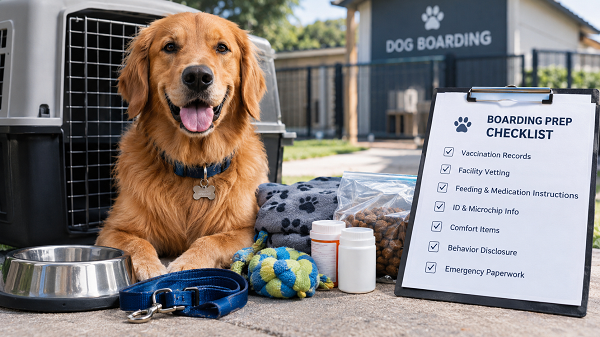
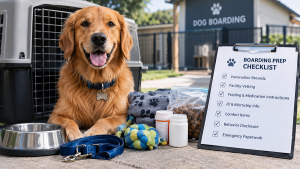
Before boarding your dog at a hotel or kennel, you need seven things sorted: up-to-date vaccination records, a vetted facility with a temperament check, clear feeding and medication instructions, current ID and microchip info, one or two comfort items from home, an honest behavior disclosure, and complete emergency paperwork. Get these right two to three weeks out, and most dogs settle into boarding within the first 24 to 48 hours.
Table of Contents
- Introduction
- Why Dog Hotel Prep Actually Matters
- Must-Have #1: Current Vaccination and Health Records
- Must-Have #2: A Properly Vetted Facility
- Must-Have #3: Written Feeding and Medication Instructions
- Must-Have #4: Verified ID and Microchip Information
- Must-Have #5: One or Two Comfort Items (Not a Suitcase)
- Must-Have #6: An Honest Behavior and Temperament Disclosure
- Must-Have #7: Complete Emergency Paperwork and a Local Contact
- Bonus: The Trial Stay Nobody Talks About
- Trainer’s Note: Who’s Behind This Advice
- Frequently Asked Questions
- Conclusion
Introduction
Ever dropped your dog off at a boarding facility, driven halfway home, and suddenly panicked because you forgot to mention she’s scared of thunder? You’re not alone. Most dog owners treat boarding prep like packing for a hotel stay of their own, toss in some food, a leash, maybe a toy, and hope for the best.
That approach causes more stress than it prevents. Dogs left at unfamiliar facilities without proper prep are more likely to refuse food, show signs of anxiety, or come home with a stomach upset that has nothing to do with the kennel’s care and everything to do with a sudden diet change or a missed piece of medical history.
I’ve handled working dogs for years, everything from obedience and agility to security and detection roles, and one thing stays true across every dog I’ve worked with: preparation removes 90% of the stress from any new environment. Boarding is no different. This guide walks you through the seven must-haves every dog owner needs before boarding, plus a few things most other checklists online completely skip, like how to actually vet a facility beyond “does it look clean,” what canine influenza vaccination policies mean for you, and why a one-night trial run can save your dog’s entire week.
By the end, you’ll have a clear, no-fluff prep list you can start using today, whether you’re boarding for a weekend trip or a two-week vacation.
Why Dog Hotel Prep Actually Matters
Here’s the thing most people don’t realize: dogs don’t experience boarding the way we experience a hotel stay. We know we’re coming back for our dog. We know the trip has an end date. Your dog knows none of that. All they register is a change in environment, routine, smell, and the sudden absence of their person.
A 2023 survey by the American Pet Products Association found that over 65% of U.S. dog owners use boarding kennels or pet hotels at least once a year, and separation-related stress behaviors (excessive panting, pacing, loss of appetite) are among the top three concerns boarding staff report seeing in the first 24 hours of a stay. The good news? Facilities that receive detailed prep information from owners, feeding schedules, behavior quirks, medical history, report noticeably faster settling times, often within a day, compared to dogs dropped off with minimal information.
So this isn’t just about convenience for the staff. Good prep directly affects how quickly your dog relaxes, eats normally, and avoids the kind of stress that can trigger digestive issues or, in rare cases, kennel cough flare-ups in dogs with weaker immune responses.
Must-Have #1: Current Vaccination and Health Records
This is non-negotiable, and it’s the one thing that will get you turned away at the door if it’s missing.
What most facilities require
- Rabies vaccination (required by law in most US states, the UK, and across the EU)
- DHPP (distemper, hepatitis, parainfluenza, parvovirus) combination vaccine
- Bordetella (kennel cough), usually required within the last 6-12 months
- Canine influenza (dog flu), increasingly requested, though not yet universal
That last one catches a lot of owners off guard. Canine influenza isn’t a “core” vaccine the way rabies is, but more boarding facilities are quietly adding it to their entry requirements, especially in regions that have seen recent outbreaks. It’s a two-dose series given three to four weeks apart, so if your facility requires it and your dog hasn’t had it, you can’t just get it done the week before your trip. Call ahead and ask directly: “Do you require the canine influenza vaccine, and if so, how far in advance does my dog need it?”
Trainer tip
Keep a digital copy of your dog’s vaccination record on your phone (a photo works fine) in addition to the paper copy. I’ve seen more than one drop-off delayed because the paper certificate was left at the vet’s office by accident.
Timeline: Get this sorted 3-4 weeks before boarding, not the week of, especially if your dog needs the canine influenza series or a Bordetella booster.
Must-Have #2: A Properly Vetted Facility
This is the section most “boarding checklists” gloss over. They tell you to “choose a good facility” without telling you what that actually looks like from the inside.
What to actually check during a tour
- Staff-to-dog ratio. Ask directly. A well-run facility should be able to tell you a number, not a vague “we have plenty of staff.”
- Group size in play areas. Dogs grouped by size and temperament, not just thrown together, dramatically reduces the risk of fights or bullying.
- Overnight supervision. Some facilities have 24/7 staff on-site; others lock up and check in periodically. Neither is automatically wrong, but you should know which one you’re paying for.
- Cleaning protocol. Ask how often kennels are disinfected and what product they use. Bleach-based cleaners, properly diluted, are the industry standard for killing parvovirus and kennel cough pathogens.
- A temperament evaluation before booking. Reputable facilities test how your dog interacts with staff and other dogs before confirming a reservation. If a facility skips this step entirely, that’s a red flag, not a convenience.
Look for accreditation
In the US, look for facilities affiliated with the Pet Care Services Association (PCSA). In the UK, check for UFAS (Universal Feline and Canine Boarding Establishments Directive) licensing under local council regulations, which became stricter after the Animal Welfare (Licensing of Activities Involving Animals) Regulations 2018. These aren’t just paperwork stamps, they typically mean the facility has passed inspections on space, ventilation, and emergency protocols.
Must-Have #3: Written Feeding and Medication Instructions
Verbal instructions get lost in a busy check-in line. Written ones don’t.
What to prepare
- Pre-portioned meals in labeled ziplock bags or containers, one per feeding, for the entire stay plus 2 extra days in case of travel delays.
- A one-page feeding sheet listing brand, portion size, number of meals per day, and any food allergies.
- Medications in original pharmacy containers with dosage and timing clearly stated (never repackage pills into unlabeled bags, staff can’t verify what they are).
- A note on treats, what’s allowed, what to avoid, and any known food sensitivities.
Why consistency matters more than you’d think
Sudden diet changes are one of the most common causes of boarding-related digestive upset. It’s not usually the facility’s food that’s the problem, it’s the abrupt switch. If your dog is on a raw or refrigerated diet, confirm the facility actually has cold storage before you book, not after you arrive with a cooler bag and nowhere to put it.
Must-Have #4: Verified ID and Microchip Information
This one takes five minutes and gets skipped constantly.
- Collar with ID tag, including your name, phone number, and a local emergency contact. Adding “reward if found” isn’t dramatic, it genuinely motivates faster returns if a dog ever slips out during a fire drill or facility transfer.
- Microchip verification. Call your microchip registry (or check the online portal) and confirm your current phone number and address are on file. I’ve handled cases where a dog’s chip was registered to an address the owner moved out of three years earlier.
- A recent photo of your dog saved on your phone, useful for identification in the rare event of an emergency evacuation or a mix-up with a similar-looking dog.
Must-Have #5: One or Two Comfort Items (Not a Suitcase)
Here’s where a lot of owners overdo it, and where I disagree with checklists that tell you to “pack toys, blankets, and bedding for a full week.”
Most professional facilities actually limit personal items for a good reason: lost-item disputes, cross-contamination between dogs, and choking hazards when items get shredded overnight without supervision.
What to bring instead
- One item that smells like home, an old t-shirt you’ve worn, or a small blanket that’s been on your dog’s bed.
- One familiar toy, ideally something durable, not a squeaky toy with small parts that could be swallowed.
- Skip the rest. Facilities provide bedding, bowls, and enrichment toys as part of the stay. A full suitcase of belongings usually just gets lost in the shuffle or sits unused in a cubby.
Must-Have #6: An Honest Behavior and Temperament Disclosure
This is the must-have owners are most tempted to soft-pedal, and it’s the one that matters most for staff safety and your dog’s comfort.
Be specific and honest about:
- Does your dog guard food or toys?
- Are they reactive toward other dogs, especially larger ones?
- Do they have noise phobias (thunderstorms, fireworks)?
- Have they ever bitten, snapped, or shown aggression under stress?
- Do they need slow introductions to new people?
None of this makes your dog “difficult” or unbookable. It gives the care team what they need to set up safer play groups, quieter kennel placement, or extra settling time. I’ve worked with plenty of working and protection dogs who are fantastic with their handler and genuinely unpredictable with strangers, disclosing that upfront is what keeps everyone, including the dog, safe.
Must-Have #7: Complete Emergency Paperwork and a Local Contact
The paperwork stage is boring, but it’s the one that protects your dog if something goes wrong while you’re unreachable.
What to have signed and ready
- Signed boarding contract or intake form
- Emergency veterinary authorization, naming who can approve treatment if you can’t be reached
- A local emergency contact who is reachable and actually available during your travel dates, not just listed as a formality
- Your travel itinerary, including flight numbers if relevant, so staff know roughly when you’ll be reachable again
The AVMA specifically recommends owners have vaccination proof, medical history, and emergency authorization organized before any boarding or travel arrangement, not scrambled together at drop-off.
Bonus: The Trial Stay Nobody Talks About
If this is your dog’s first time boarding, or it’s been over a year since their last stay, book a one-night trial run before a longer trip. It sounds like an extra errand, but it’s the single highest-value thing you can do.
A trial stay lets you see:
- Whether your dog eats normally in the new environment
- How they react to the group play setup
- Whether the facility’s communication (photo updates, check-in calls) meets your expectations
Facilities that offer trial stays, and many good ones do, report that dogs who’ve had one prior short stay adjust noticeably faster on their next, longer booking. It’s the boarding equivalent of a fire drill: cheap insurance against a bad surprise.
Trainer’s Note: Who’s Behind This Advice
This guide is put together based on hands-on K9 handling and training experience, not recycled blog advice. Working dogs go through frequent environment changes, from training grounds to demonstration events to unfamiliar facilities, and the same core principles that keep a working K9 calm in a new environment (routine consistency, clear handoff information, controlled introductions) apply directly to a pet dog’s boarding stay.
If you want to go deeper on related fundamentals before your next trip, these guides are worth a look:
- How to Crate Train a Puppy: K9 Trainer Tips for Faster Results — a calm, confident crate response makes kennel stays far less stressful.
- How Often Should You Exercise a Working Dog? — a well-exercised dog settles into boarding faster than an under-stimulated one.
- Essential Dog Grooming Tips for a Healthy Puppy — nails, ears, and coat checks are worth doing before, not during, a stay.
If you’re building out a broader routine for your dog beyond boarding season, our e-book Beyond the Bark covers the training fundamentals that make transitions like boarding, travel, and new environments far less stressful for both of you.
Frequently Asked Questions
1. How far in advance should I start prepping my dog for boarding?
Start 2-4 weeks out, especially if vaccines like canine influenza (a two-dose series) are required. Basic paperwork and packing can be handled in the final week.
2. Is it normal for my dog not to eat during the first day of boarding?
Yes, mild appetite loss in the first 24 hours is common due to stress and new surroundings. If it continues past day two, most facilities will contact you, and you should ask what their policy is on reporting extended appetite loss.
3. Should I board my dog if they’ve never been away from me before?
Yes, but ease into it with a one-night trial stay first rather than a two-week trip right out of the gate. It gives both you and the facility a low-stakes preview.
4. Do all boarding facilities require the same vaccines?
No. Rabies, DHPP, and Bordetella are close to universal requirements, but canine influenza requirements vary by facility and region. Always confirm directly with the specific hotel you’re booking.
5. How much does dog boarding typically cost?
In the US, expect roughly $25-$85 per night depending on region and amenities. In the UK, prices generally range from £20-£45 per night. Premium “pet hotel” style facilities with private suites or webcam access run higher in both markets.
Conclusion
Getting your dog ready for a boarding stay isn’t about packing more, it’s about preparing better. Nail down these seven must-haves, current vaccination records, a properly vetted facility, written feeding and medication instructions, verified ID, a couple of comfort items, an honest behavior disclosure, and complete emergency paperwork, and you’ll set your dog up for a stay that’s calm instead of chaotic.
If it’s your dog’s first time boarding, don’t skip the trial stay. It’s the cheapest insurance you’ll ever buy for your peace of mind and your dog’s comfort.
Want more practical, no-fluff K9 training and care guides like this one delivered straight to your inbox? Subscribe to our weekly newsletter for tips pulled from real handling experience, not recycled advice.

Her work centres on obedience, detection, protection and operational readiness. She favours proven methods built on repetition, consistency and real-world conditioning, so that both dogs and handlers are prepared for high-pressure tasks.
Rofiat represented the Nigerian Army Dog Centre at the Nigerian Army Day Celebration (NADCEL) 2026, where she led demonstrations in obedience, explosive detection, agility and tactical movement. Through articles, training content and documentaries, she shares field-based insight into how structured training, clear communication and trust between handler and dog affect performance and reliability.
She is the author of Beyond the Bark: Inside a Pro Handler's Playbook for Raising the Ideal Dog, a practical guide that helps dog owners and handlers apply professional training principles in everyday situations.
- Dog Hotel Prep: 7 Must-Haves Before Boarding - October 21, 2026
- How to Enter the COBA National Dog Championship - October 20, 2026
- K9 Advantix Dosage Chart & Safety Guide for Dogs - October 19, 2026