5 Best Hypoallergenic Dog Shampoos (Handler Review)
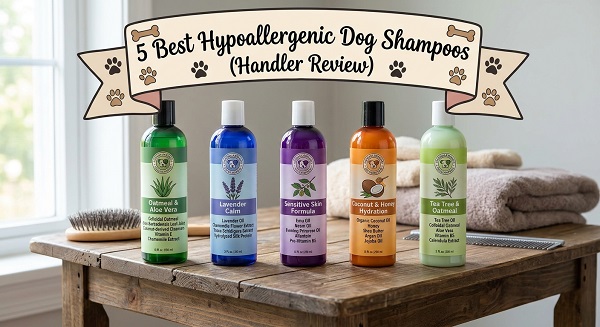
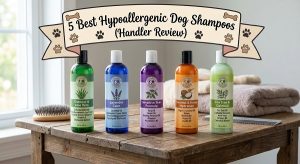
What’s the best hypoallergenic dog shampoo? For most dogs with sensitive skin, a soap-free, fragrance-free, pH-balanced formula is the safest choice. Our top pick is Earthbath Hypo-Allergenic Shampoo. Vet’s Best Hypo-Allergenic is a good everyday option, TropiClean Hypoallergenic Puppy is best for young dogs, 4-Legger Organic Unscented is best for certified-organic fans, and Hepper Colloidal Oatmeal is best for dry, itchy skin. “Hypoallergenic” has no legal definition, so always check the ingredient list and patch test first.
Table of Contents
- What “Hypoallergenic” Really Means
- How We Judged These Shampoos
- Quick Comparison Table
- The 5 Best Hypoallergenic Dog Shampoos
- How to Choose the Right One for Your Dog
- Ingredients to Look For (and Avoid)
- How to Bathe an Allergic Dog, Step by Step
- Handler Tips: Working Dogs, Flea Treatments and Boarding
- When Shampoo Isn’t Enough
- Why You Can Trust This Review
- FAQs
- The Bottom Line
Introduction
Your dog scratches at 2 a.m. The skin looks red. You grab the nearest bottle labeled “gentle” and the itching gets worse. Sound familiar?
I hear this story all the time from new owners and working-dog handlers alike. The bottle said “hypoallergenic,” so why did the skin flare up?
Here’s the problem. The word sounds scientific, but it isn’t. Picking a hypoallergenic dog shampoo takes more than trusting the front label. In this guide, you’ll learn what the term really means, how to read an ingredient list, and which five shampoos are worth your money. You’ll also get a bathing routine that gives the shampoo its best chance to work.
What “Hypoallergenic” Really Means
There’s No Legal Definition
Let’s clear this up first. In pet care, hypoallergenic has no legal or regulatory definition, unlike labels such as “organic” or “USDA certified.” The US tried to fix this once. The FDA tried to set a standard in the 1970s, but cosmetic companies Almay and Clinique challenged it and won in appeals court. Nobody has seriously tried since.
So what are brands promising? Manufacturers usually mean the product leaves out ingredients that commonly cause reactions in sensitive dogs. That’s helpful, but it isn’t a guarantee. Researchers who studied 187 children’s personal care products found that most contained at least one known skin allergen, even when marketed as hypoallergenic. That study covered human products, but the labeling problem is the same.
My rule: treat “hypoallergenic” as a starting point, not proof. Read the ingredients every time.
Dog Skin Has Its Own pH
Never use your own shampoo on your dog. Human and dog skin sit at different pH levels. Sources give different ranges. One puts canine skin at roughly 5.5 to 7.2, more alkaline than human skin at about 4 to 6. A veterinary practice article places it higher, around 7.5 to 8. Either way, the gap is real. A shampoo built for human skin can strip a dog’s protective barrier and leave the coat dry and flaky.
How We Judged These Shampoos
I didn’t rank by marketing claims. Each pick had to pass this checklist:
- Short, clear ingredient list. Fewer ingredients mean fewer chances of a reaction.
- Soap-free and fragrance-free (or very mild). Perfumes are a top irritant.
- Made for dogs. That means a canine-appropriate pH.
- Safe for the right age. Puppy rules matter.
- Rinses out easily. Leftover residue irritates skin.
- Plays well with flea and tick treatments. Many handlers use spot-ons.
- Honest labeling. No miracle claims.
I also read manufacturer labels and compared them against veterinary guidance on bathing. Prices change by country and store, so check current prices before you buy.
Quick Comparison Table
| Shampoo | Best For | Key Ingredients | Fragrance |
|---|---|---|---|
| Earthbath Hypo-Allergenic | Best overall | Coconut-based cleansers, aloe vera | Fragrance-free |
| Vet’s Best Hypo-Allergenic | Everyday value | Aloe vera, allantoin, panthenol, vitamin E | Mild |
| TropiClean Hypoallergenic Puppy | Puppies | Mild, naturally derived cleansers | Light/mild |
| 4-Legger Organic Unscented | Certified-organic fans | USDA-certified organic formula | Unscented |
| Hepper Colloidal Oatmeal | Dry, itchy skin | Colloidal oatmeal | Mild |
The 5 Best Hypoallergenic Dog Shampoos
1. Earthbath Hypo-Allergenic Shampoo: Best Overall
If I had to pick one bottle for a dog I knew nothing about, this is it. The formula is short: purified water, mild coconut-based cleansers, aloe vera, xanthan gum, and olive oil squalene as a natural preservative. That’s it. The brand says it’s free from soap, parabens, sulfates, dyes, and fragrance.
What I like:
- The short ingredient list is easy to check against your dog’s known triggers.
- It’s safe for puppies and kittens over six weeks of age and won’t interfere with topical flea treatments.
- It’s concentrated. The brand says it can be diluted 10:1, so one bottle goes a long way.
What to watch:
- “Fragrance-free” doesn’t mean odorless. Buyers report a light natural scent from the ingredients.
- It’s a gentle cleanser, not a medicated treatment. It won’t fix an infection.
- One retailer lists the 16 oz bottle at $24.99, so it isn’t the cheapest option.
Best for: dogs with unknown or multiple sensitivities, and owners who want the simplest label.
2. Vet’s Best Hypo-Allergenic Shampoo: Best for Everyday Use
This is the one I’d call the workhorse. It’s a plant-based shampoo made in the USA to soothe itchy skin and moisturize dry coats. The retailer listing names aloe vera, allantoin, panthenol (vitamin B5), and vitamin E as the skin-care ingredients.
Directions are simple. The label says to lather and massage into the coat for about five minutes, then rinse thoroughly. The brand also says it won’t affect topical flea and tick products. The brand’s marketing says it can be used as often as needed without drying the skin, but I’d still follow your vet’s bathing schedule instead of bathing constantly.
What to watch: it isn’t fragrance-free, so a dog that reacts to scents may do better with Earthbath. One Canadian retailer lists it at CAD 20.99, so it’s usually the friendlier price.
Best for: regular maintenance baths on dogs with mild sensitivity.
3. TropiClean Hypoallergenic Puppy Shampoo: Best for Puppies
Puppy skin is thinner and more sensitive than adult skin, so puppy-specific formulas make sense. Veterinary-written guides pick it as best for the youngest allergy sufferers. The brand says it’s built to clean effectively without overwhelming developing skin, using mild, naturally derived cleansers.
If you’re raising a puppy right now, keep the first baths short and calm. A bad first bath can create a dog that fights the tub for years. I cover early grooming habits in our essential dog grooming tips for a healthy puppy guide. And if potty accidents are driving your bath count up, our e-book Beyond the Bark: Inside a Pro Handler’s Playbook for Raising the Ideal Dog walks you through a structured 7-day house-training plan.
What to watch: check the age on the label of the exact bottle you buy, and ask your vet about bathing very young puppies.
Best for: puppies and dogs just starting grooming.
4. 4-Legger Organic Unscented Shampoo: Best Certified-Organic Option
Some owners want a shampoo with a recognized certification behind the claim. 4-Legger sells a USDA certified organic, hypoallergenic, unscented dog shampoo for sensitive skin, made in the USA. Unlike “hypoallergenic,” “USDA certified organic” is a real standard.
Keep one thing in mind. Organic doesn’t automatically mean non-allergenic. Plant ingredients can still trigger reactions in some dogs, so patch test this one like any other.
Best for: owners who want certified-organic ingredients and no added scent.
5. Hepper Colloidal Oatmeal Shampoo: Best for Dry, Itchy Skin
Colloidal oatmeal is oatmeal ground very fine so it spreads evenly. Vets and groomers have used it for years to calm dry skin. A veterinary-reviewed roundup names it the top shampoo for dogs with allergies or sensitive skin.
What to watch: if your dog has repeated yeast problems, ask your vet before using oatmeal products regularly. This is a “check first” ingredient, not a “never” one.
Best for: dogs with dry, flaky, mildly itchy skin and no known oat sensitivity.
How to Choose the Right One for Your Dog
Match the shampoo to the dog, not the other way around:
- Unknown triggers: start with Earthbath. The short ingredient list helps you narrow down culprits.
- Puppy under 12 weeks: TropiClean Puppy, after checking age limits with your vet.
- Dry, flaky coat: Hepper Colloidal Oatmeal.
- Budget-conscious maintenance: Vet’s Best.
- Prefer certified ingredients: 4-Legger Organic.
- Known scent sensitivity: pick fragrance-free, and skip anything with essential oils.
Ingredients to Look For (and Avoid)
Look for:
- Aloe vera, which soothes skin
- Colloidal oatmeal, for dry skin
- Panthenol (vitamin B5) and vitamin E, for skin support
- Mild coconut-derived cleansers
- A short list overall
Be careful with:
- Added fragrance or essential oils
- Dyes
- Harsh sulfates
- Parabens
- Anything made for humans
Remember, plant-based doesn’t mean safe for every dog. Some dogs react to botanical ingredients. A short list makes it easier to figure out which one it is.
How to Bathe an Allergic Dog, Step by Step
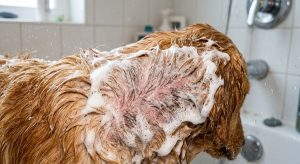
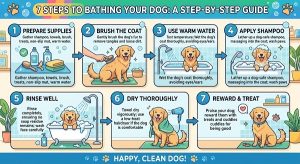
The best shampoo in the world fails with poor technique. Veterinary sources stress this point: poor rinsing, rushed contact time, or too much friction can leave skin angrier than before the bath.
- Patch test first. Apply a small amount to one spot, wait 24 hours, and check for redness or itching.
- Brush out loose hair and mats. Mats trap shampoo and moisture against the skin.
- Wet the coat fully with lukewarm water, down to the skin.
- Work the shampoo in gently. Massage; don’t scrub.
- Set a timer for contact time. Veterinary guidance varies. Medicated shampoo instructions call for about 10 minutes, and a dermatology talk suggested 5 to 10 minutes. Don’t overdo it either. Very long contact can cause “dishpan hands,” where skin becomes soggy and macerated. For gentle maintenance shampoos, follow the label.
- Rinse longer than you think. Leftover shampoo on the skin is a common problem, and rinsing all areas takes several minutes.
- Dry thoroughly. Towel dry and keep your dog warm until fully dry.
How often? There’s no single answer. A veterinary dermatologist suggested 1 to 2 baths a week during treatment and 2 to 4 a month for maintenance. Australian veterinary guidance notes that weekly bathing with a mild, non-irritating shampoo can help remove surface allergens. Your vet knows your dog’s skin, so follow their schedule.
Don’t panic about redness. Some pink skin right after a bath is normal. It’s usually increased blood flow, not a reaction. If the skin keeps getting worse after baths, though, call your vet.
One more thing nobody mentions: some dogs hate baths. A veterinary dermatology speaker pointed out that vets often don’t ask whether the dog is afraid of bathing before prescribing frequent baths. If your dog panics, build tub comfort with treats and short, happy sessions first.
Handler Tips: Working Dogs, Flea Treatments and Boarding
This is where handlers have different needs from pet owners.
Field dirt and sweat. Working dogs collect mud, dust, and sweat that sit on the skin. A rinse with plain lukewarm water after work often does more than a full shampoo. Save the shampoo for when the coat is truly dirty.
Flea and tick products. Many handlers use spot-on treatments. Check each shampoo’s label for compatibility, and follow the timing rules on your flea product. Our K9 Advantix dosage and safety guide covers dosing by weight and safe use.
Boarding and travel. Strange shampoos at kennels are a classic cause of flare-ups. Pack your dog’s own bottle and give written instructions. Our dog hotel prep checklist shows what else to bring.
Hot, humid climates. In tropical places like Lagos, damp coats breed skin trouble fast. Dry the coat completely, especially skin folds, ears, and armpits.
When Shampoo Isn’t Enough
Here’s the honest truth. A hypoallergenic shampoo manages symptoms. It doesn’t cure allergies.
Call your vet if you see:
- Constant scratching, licking, or chewing paws
- Open sores, scabs, or hair loss
- A greasy, smelly coat or dark, thickened skin (a sign of possible yeast or bacterial infection)
- Ear infections that keep coming back
- Skin that gets worse after baths
Dust mites are a surprisingly common trigger. One veterinary source notes that house dust mites, among the most common causes of canine skin allergies, are attracted to the skin by static electricity from synthetic fabrics. So washing bedding often matters as much as the shampoo.
Medicated shampoos, such as those with chlorhexidine, can treat infections, but only on your vet’s advice. Veterinary dermatology guidance notes that combinations like 2% chlorhexidine with 2% miconazole have solid clinical support for yeast and bacterial skin disease. A gentle shampoo won’t do that job.
Why You Can Trust This Review
At ARFS K9 Team, we work with dogs every day, from family companions to military working dogs. Our team has demonstrated military working dog obedience, agility, and detection work at public events, including the Nigerian Army Day Celebration (NADCEL) 2026. Coat and skin care is part of keeping a working dog fit for duty.
I’ll share a small lesson from our own blog: with our first puppy, Bruno, a stressful emergency bath after he rolled in mud mixed with engine oil taught us how much good grooming habits matter early on.
This review is built from label and ingredient analysis, manufacturer information, and published veterinary guidance. I’m a dog trainer and handler, not a veterinarian. For skin disease, always work with your vet.
FAQs
1. What makes a dog shampoo hypoallergenic?
There’s no legal definition. In practice, it usually means the shampoo leaves out common irritants like heavy fragrance, dyes, and harsh detergents. Read the full ingredient list instead of relying on the label.
2. Can I use human hypoallergenic shampoo on my dog?
No. Human and dog skin sit at different pH levels, and human shampoos can strip a dog’s skin barrier. Use a product made for dogs.
3. How often should I bathe a dog with allergies?
It depends on the dog and the vet’s plan. Veterinary dermatology guidance suggests weekly baths during treatment, then less often for maintenance. Ask your vet for a schedule that fits your dog.
4. Is oatmeal shampoo safe for sensitive dogs?
Usually yes. Colloidal oatmeal soothes dry skin. But if your dog has recurring yeast problems or an oat sensitivity, check with your vet first.
5. Can a hypoallergenic shampoo cure my dog’s allergies?
No. It helps remove allergens from the coat and calms the skin. Food allergies, flea allergies, and environmental allergies all need proper diagnosis and treatment from your vet.
The Bottom Line
The best hypoallergenic dog shampoo is the one that fits your dog’s skin, age, and lifestyle. Start with a soap-free, fragrance-free formula like Earthbath. Use Vet’s Best for everyday value, TropiClean for puppies, 4-Legger for certified organic, and Hepper when dry skin is the issue.
Remember the real keys to success:
- Treat “hypoallergenic” as a hint, not a promise.
- Patch test every new bottle.
- Give the shampoo proper contact time, then rinse longer than you think.
- Follow your vet’s bathing schedule.
- See your vet if itching, sores, or odor persist.
Want more handler-tested advice delivered weekly? Subscribe to our weekly articles roundup newsletter and never miss a guide.

Her work centres on obedience, detection, protection and operational readiness. She favours proven methods built on repetition, consistency and real-world conditioning, so that both dogs and handlers are prepared for high-pressure tasks.
Rofiat represented the Nigerian Army Dog Centre at the Nigerian Army Day Celebration (NADCEL) 2026, where she led demonstrations in obedience, explosive detection, agility and tactical movement. Through articles, training content and documentaries, she shares field-based insight into how structured training, clear communication and trust between handler and dog affect performance and reliability.
She is the author of Beyond the Bark: Inside a Pro Handler's Playbook for Raising the Ideal Dog, a practical guide that helps dog owners and handlers apply professional training principles in everyday situations.
- 5 Best Hypoallergenic Dog Shampoos (Handler Review) - November 26, 2026
- Chow Chow Puppy Training: Challenges & Care Guide - November 25, 2026
- E-Collar EZ-900 Easy Educator Review (2026): Worth It? - November 24, 2026