How K9 Tracking Works in Real Police Operations
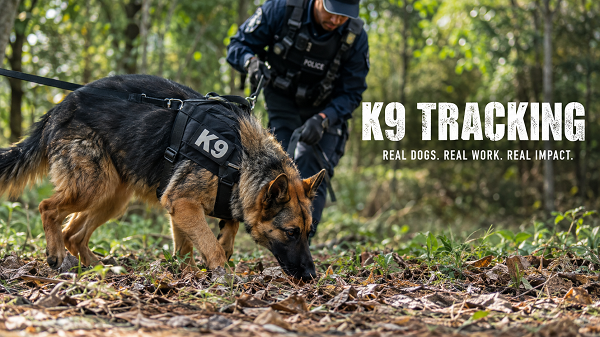
K9 tracking works because every person sheds skin cells, sweat and bacteria as they move, and a trained police dog can follow that scent from a starting point to the person who left it. The handler secures the scene, gives the dog a scent article if one exists, then follows the dog on a long line and reads its body language until it finds the person, evidence, or the end of the trail. It works best when the trail is fresh and the scene is clean, and it fails fast when the scent is contaminated, old, or washed away.
Table of Contents
- What Police K9 Tracking Really Is (Tracking vs Trailing vs Air Scent)
- The Science Behind the Nose
- How a Real K9 Tracking Call Unfolds, Step by Step
- A Real Case: K9 Jagger and the Hidden Passenger
- How Handlers Read the Dog on a Track
- Why Tracks Fail (and What Weather Really Does)
- How Well Does K9 Tracking Actually Work?
- How Tracking Dogs Are Trained: Two Schools
- Beyond Suspects: Missing Persons and Evidence
- Rules, Welfare and Limits
- What You Can Do to Help a K9 Team
- Trainer Note: Why You Can Trust This Guide
- Frequently Asked Questions
- Final Thoughts
Introduction: Why Most People Get K9 Tracking Wrong
Picture a burglar who runs from a car, hops a fence and vanishes into a dark neighborhood. To the officers standing at the curb, the trail is gone. Nothing on the pavement. No footprints. No witness.
To a trained police K9, that trail may still be there.
So how does K9 tracking work in real police operations? Not the way movies show it. A dog doesn’t sniff a shirt and sprint off like a missile. A real track is a slow, planned operation with a handler, a perimeter, a scent source, and a lot of judgment. And honestly, it fails more often than most articles admit.
In this guide, I’ll walk you through what actually happens, minute by minute. You’ll learn the difference between tracking, trailing and air scenting (people mix them up all the time). You’ll see real numbers from police and RCMP data, a real case, and what the research says about how accurate police dog tracking really is. Whether you’re a curious dog lover, a future handler, or someone who owns a working breed, you’ll finish this article knowing what’s real and what’s hype.
What Police K9 Tracking Really Is (Tracking vs Trailing vs Air Scent)
Here’s the first thing that trips people up. “Tracking” is often used as a catch-all word. Handlers use it more narrowly.
Police magazines and handler groups describe three main ways a dog can follow a person by scent:
| Method | What the dog follows | Typical posture | Needs a scent article? |
|---|---|---|---|
| Tracking | The path the person actually walked, including crushed plants and disturbed soil | Nose low, close to the footsteps | Not always |
| Trailing | One person’s scent, wherever it settles on the ground or drifts in the air | Nose low to mid-height, more freedom to move | Usually yes |
| Air scenting | Scent carried on the wind, from a person who may be standing still | Head up, working a scent cone | No |
Trailing dogs, according to handler writers, have more independence. They can cut corners and follow scent that has drifted away from the exact footsteps. A police magazine feature put it this way: trailing dogs follow the freshest scent and lean on crushed vegetation, while tracking dogs such as bloodhounds stay with a specific odor, even when other people have crossed the path.
Air-scent dogs are different again. They ignore the ground and catch scent on the breeze, which makes them great for covering a large area fast, such as a field or a building search. They don’t need a starting point or a trail.
In real operations, handlers mix these styles. A dog might start low on the ground, switch to air scenting on concrete where the ground scent is weak, and drop back to the ground when it finds the trail again. One experienced handler on a police-dog forum said that after a few “hot” tracks, his dogs shifted mostly to air scenting on hard surfaces, even though they’d been trained on footsteps.
So when someone asks “can police dogs track?”, the better question is: which style, on what surface, and how old is the scent?
The Science Behind the Nose
You don’t need a biology degree to understand this part. Here’s the short version.
People leave a trail without trying. An average person sheds roughly 40,000 dead skin cells every minute. Handlers and scientists call the tiny flakes “rafts.” Each one carries sweat, skin oils and bacteria. Bacteria feed on those flakes and give off a smell, and that smell is a big part of what a dog follows. Your body heat also lifts rafts upward, so some scent hangs in the air while some drops to the ground, onto your footprints and onto everything you touch.
A dog’s nose is built for this. Dogs can have up to about 300 million scent receptors, compared with roughly 6 million in people. A big part of a dog’s brain handles smell. Dogs also sniff in rapid bursts and can work each nostril separately, which helps them tell which direction a smell is strongest.
Crushed plants count too. The trail isn’t only human odor. Stepping on grass or soil creates its own smell, and many dogs use it as a second “road sign.” That’s one reason tracking works better in grass than on concrete.
If you want a deeper look at how handlers teach a dog to turn this natural ability into a working skill, our guide on how military working dogs are trained covers selection, drive testing and role training from start to finish.
How a Real K9 Tracking Call Unfolds, Step by Step
This is the part most articles skip. Here’s what usually happens on a real call, in order.
Step 1: The call comes in and a perimeter goes up
A suspect runs from a traffic stop, bails from a crashed car, or flees a break-in. Patrol officers set up a perimeter around the last place the person was seen. At the same time, they call for the K9 team.
This first step matters more than anything else. A veteran Milwaukee police K9 handler quoted in Police Magazine stressed a large perimeter and strict crime scene discipline. His warning was blunt: officers stomp around the area, then wonder why the dog won’t start, when the only thing the dog smells is all the cops.
Step 2: The handler gets a briefing
When the handler arrives, they ask a few quick questions:
- Where was the person last seen (the last known point)?
- How long ago?
- Which direction did they run?
- Is the suspect armed or violent?
- Has anyone walked through the area?
- Is there anything the person touched or dropped?
Those answers decide whether this is a good track, a poor track, or one that needs a different tool, like an area search or a drone.
Step 3: Securing a scent article
A scent article is an item that carries the target person’s odor. Good examples include a dropped hat, a glove, a jacket, or a car seat where the person was sitting.
Here’s the trick that separates a clean track from a messy one: don’t contaminate it. UK search-dog groups bag their scent articles in sealed containers and treat them like crime scene evidence, because even a quick touch from someone else can send the dog after the wrong person.
What if there’s nothing to grab? Some departments create one. The Madison, Wisconsin police K9 unit explained in a public blotter that officers can place sterile gauze on objects a person touched, then present the gauze to the dog.
Step 4: Starting the track
The handler brings the dog to the last known point. The dog usually wears a tracking harness and a long line, often around 20 feet. A long line lets the dog move ahead and work, while the handler stays in control and avoids snagging on brush. (Thirty-foot lines tend to tangle in trees and thick undergrowth, according to handler experience shared in training circles.)
Some search teams use a simple signal: the line goes on the collar for “find the scent,” then moves to the harness once the dog is working. It tells the dog what the job is, and it lets the handler restart the dog anywhere on the trail.
Step 5: Working the line
Once the dog has the scent, the track starts. This is where handlers do more than hold a leash. They:
- Read the dog’s behavior (more on this in the next section)
- Watch the wind and terrain
- Keep their backup officer close and quiet
- Stay calm so the dog isn’t distracted by tension on the line
- Mark the route on a map or app for later evidence collection
The pace depends on the style. Some teams track at a slow walk. Others, especially trailing and drive-based teams, move at a jog or a run. We’ll get to why that difference matters later.
Step 6: Handling corners and track loss
Corners are where tracks are won or lost. A fast dog can overshoot a turn because it can still smell the trail past the corner. Trained dogs show a “track loss” signal, often a head snap, a lifted nose, or circling. When that happens, a good handler stays quiet, lets the dog work, or backs up to the last point where the dog clearly had scent.
One trainer who studied the Royal Canadian Mounted Police approach describes teaching dogs to show track loss within about 20 feet of a turn. That detail is his teaching method, not a universal rule, but it shows how much detail goes into a “simple” corner.
Step 7: The indication or the end of the track
A track ends in one of three ways:
- The dog finds the person and shows a trained response, such as barking, sitting, or a controlled hold.
- The dog finds evidence (a tossed phone, a weapon, clothing) and indicates it.
- The scent ends, and the team can’t continue.
In many agencies, the dog doesn’t bite just because it found someone. Safe teams use verbal warnings first. The Madison K9 Jagger case below is a good example.
Step 8: Recovery and debrief
After the find, the handler recovers the dog, rewards it, and then often backtracks along the route to check for evidence the dog passed. Then comes paperwork. Good teams log every track: time since the person left, weather, terrain, wind and result. Over months, that record shows what the dog can and can’t do.
A Real Case: K9 Jagger and the Hidden Passenger
Here’s a clean example from a public police blotter in Madison, Wisconsin.
Officers tried to stop a car for a traffic violation late one July night. It was slow to pull over. When it stopped, the front-seat passenger bolted. Officers built a perimeter around the area where the person ran, and K9 Jagger and Officer Eric Disch were called in.
There was no dropped item to scent. So Officer Disch used sterile gauze on the passenger seat where the person had been sitting. Jagger smelled the gauze and began tracking right away. Based on his behavior, the officer gave a loud announcement that police were nearby with a K9. The suspect, who had been hiding along a fence line in grass six to seven feet tall, stood up and was arrested without a fight. The person had a felony warrant and two other charges pending.
Notice what made this track work:
- The perimeter kept the area clean and the suspect contained.
- The scent source was fresh and came from a spot only the target had touched.
- The dog’s behavior told the handler where to give a warning.
- A spoken warning ended the call without a bite.
That’s real K9 tracking: teamwork, discipline and a bit of patience. It’s not a chase.
How Handlers Read the Dog on a Track
A handler isn’t along for the ride. The dog shows what it’s doing through small body changes. Here’s what experienced handlers watch for.
| What you see | What it usually means |
|---|---|
| Nose low, steady pace | Dog has scent and is following it |
| Head up, nostrils flared | Dog is air scenting, catching scent on the wind |
| Hard pull on the line | Strong, fresh scent, or the dog is close |
| Sudden slowdown or circling | Possible corner, crossing trail, or track loss |
| Head snap | The dog has cut across the scent (often a clear indicator at a turn) |
| Tail height changes | Shifts in confidence, effort or arousal (read this alongside other signs, not alone) |
| Stopping to urinate or sniff off-trail | Could be normal, or could signal fatigue or avoidance |
| Closed, stiff body near the end | Dog may sense the person is very close |
A word of caution: no single sign tells the whole story. A tail wag doesn’t always mean “I’m close.” Handlers learn their own dog over hundreds of tracks. In my experience, the teams that trust their dog’s change of behavior, instead of guessing, are the ones who stay on the right trail.
Why Tracks Fail (and What Weather Really Does)
Let me say something most “police dog” blog posts skip: tracks fail. A lot. Here are the usual reasons.
1. The scene was contaminated
Other officers walking through the area, bystanders touching the car, even K9 handlers walking the dog through the wrong spot can ruin a track. This is the number one problem handlers talk about.
2. Too much time passed
Fresher is easier. Scent weakens as it ages. How fast depends on temperature, humidity, wind and surface. Some teams report successful tracks hours old. Others say anything beyond a few hours becomes unreliable in busy areas. There’s no single number that fits every situation, and later we’ll look at why scientists argue about it.
3. Hard surfaces and crowds
Scent clings better to grass and soil than to asphalt, tile or a crowded sidewalk. On hard surfaces, scent can pool, drift or disappear. Busy streets add hundreds of other human scents, plus exhaust, food and animals.
4. Weather changes
Weather doesn’t have one simple effect. This table gives the general picture:
| Condition | What it often does to a scent trail |
|---|---|
| Light rain, high humidity | Can help hold scent close to the ground and keep skin rafts active |
| Heavy downpour | Can wash scent away and break the trail |
| Cold and dry air | Slows bacterial activity, so scent can be weaker |
| Extreme heat | Scent rises and disperses quickly, and the dog tires faster |
| Strong wind | Pushes scent off the line, so the trail can sit well downwind of the footsteps |
That’s why I don’t like the common claim that “rain and wind can’t stop a good police dog.” Weather can’t always stop a trained dog, but it can and does stop tracks.
5. Handler error
Pulling a dog off a good line, talking too much, rushing a turn, or “helping” the dog in the wrong direction all cost tracks. Many trainers say the biggest variable in tracking isn’t the dog. It’s the person at the other end of the line.
6. Fatigue and heat
Tracking is hard physical work. A dog working at pace, in warm weather, can overheat fast. One well-known trainer wrote that a dog trained for slow footstep work saw its body temperature climb to 106°F on a warm day after about 1,400 paces. That’s a medical risk, not just a performance issue. Responsible teams carry water, watch for heat stress, and call off tracks when the dog is struggling.
How Well Does K9 Tracking Actually Work?
This is the part competitor articles tend to dodge. They give you a confident sentence like “K9 tracking is highly effective” and stop there. Let’s look at the numbers and the arguments.
What field data shows
- Montgomery County, Maryland (1993-1998): A study in the Journal of Criminal Justice examined a large suburban police canine unit. It responded to 28,430 incidents, deployed a dog in 53 percent of them, and averaged about 2,505 deployments a year. Canine tracks led to roughly 568 apprehensions, compared with about 345 from building searches and 266 from other deployments. So tracking was the single biggest source of apprehensions in that unit.
- Alberta RCMP: In a year reported by the RCMP Gazette, 18 police dog teams across Alberta answered about 2,800 calls and captured more than 900 suspects. Teams tracked people in roughly 700 cases. These are rural-heavy deployments, which tend to favor dogs.
- Banks County, Georgia: A bloodhound team reported 20 tracks in 18 months, with a 94 percent success rate and just one unsuccessful track. Those tracks covered both missing people and suspects.
- Berrien County, Michigan: In a local news story, a K9 handler said the tracking success rate for K9 officers is around 10 percent, and called his own dog “above average” after a 3.5 mile track through a marsh in a snowstorm.
Same task, wildly different numbers. Why?
My honest read: “success” isn’t defined the same way. A missing-person track where the person wants to be found, in a rural area, with a fresh scent article, is a very different job from a suspect who ran across three streets and jumped in a car. Teams that count only the tracks they can complete cleanly will report high numbers. Agencies that count every call-out, including bad starts and contaminated scenes, will report low ones.
One trainer’s strong claim (and why it matters)
Ed Frawley, a former police K9 handler and well-known trainer, argues that most North American police dogs are trained in footstep tracking, which he says produces a “find ratio” on real suspects below 5 percent. He credits the RCMP’s drive-based method with finds closer to 50 percent, and above 90 percent in rural areas. Those are one expert’s claims, not peer-reviewed results, so treat them as a debate, not a fact sheet. But they highlight something real: how a dog is trained changes how it performs on the street.
What the research says
Here’s where it gets uncomfortable, and I think you should hear it straight.
A 2023 Undark investigation looked at the scientific evidence for dogs following human trails and found it surprisingly thin. Some points from that reporting:
- A well-cited 2005 experiment suggested dogs could work out a person’s direction of travel from just a few footsteps, but it used a short 100-meter trail on carpet squares, not real streets.
- An earlier experiment by the same researchers, using 22 police dogs in Northern Ireland, found that nearly two-thirds didn’t follow the trail’s direction any better than chance.
- A Germany-based study from 2017 reported dogs following volunteers up to 82 percent of the time, but critics raised serious design problems. The journal later published an “expression of concern.”
- An environmental chemist who reviewed the research found very little evidence that dogs can trail a person by scent alone, especially after about 24 hours, and has offered a 1,000-euro prize to any team that can follow a day-old trail for about a mile. As of that reporting, no one had claimed it.
What does that mean for you? Two things can both be true. Police dogs find real people in real operations every day, as the Alberta and Madison examples show. And the science on how long and how reliably dogs can do it, especially on stale trails, isn’t settled. Anyone who promises you a guaranteed result is selling something.
As a handler, I’d put it like this: the dog is a powerful tool, not a lie detector or a crystal ball. It tells you where to look. It doesn’t prove who did what.
How Tracking Dogs Are Trained: Two Schools
Tracking skill doesn’t come from the breed alone. It comes from selection and a long training path.
Selection comes first
Police agencies favor German Shepherds and Belgian Malinois for patrol-plus-tracking work, and bloodhounds for pure scent trailing. The RCMP breeds its own purebred German Shepherds at its training center in Innisfail, Alberta, and teams typically start working the road at about two years old after extensive training. An older RCMP fact sheet noted that a dog entering the program had only a 17 percent chance of succeeding, which shows how strict the standards are.
Footstep tracking
This style is common in sport work like IPO and in many police courses. The track layer drops food along a track that’s often 400 to 800 yards. The dog tracks at a slow walk, close to the footsteps. It’s precise, but slow, and critics say it’s not ideal for chasing a person who is moving away quickly.
Tracking through drive
This is the style Ed Frawley credits to the RCMP. The dog follows its natural instinct to run down a human scent, and the handler follows on a line. The reward at the end is a person and a toy or a short bite, not food on the trail. Dogs are expected to overshoot corners and then be taught to signal track loss soon after, so the handler can help them find the turn. Handlers have to be fit, because the dog is moving fast.
Common training steps in either school
- Foundation scent games with food, toys or simple hide-and-seek
- Straight tracks that are short and fresh
- Aging the track a little at a time (10 minutes, then 20, then 45)
- Adding corners and then crossing trails
- Changing surfaces from grass to dirt to pavement
- Adding distractions, such as other people, animals and traffic
- Unknown tracks, where the handler doesn’t know the route
- Night and bad-weather work
- Article indication, so the dog marks dropped items
- Regular certification and record keeping
Skipping steps is where teams get in trouble. The RCMP, for example, is known for putting dogs through dozens of tracks in clean country settings before adding city distractions.
If you’re thinking about what gear a handler actually carries for this work (harness, line, water, first aid), our breakdown of essential K9 training equipment walks through it.
Beyond Suspects: Missing Persons and Evidence
Many people think police tracking is only about catching criminals. In practice, a huge share of calls involve missing people, and that changes the whole job.
Missing persons. A child who wandered off, an older adult with dementia, or someone in distress doesn’t hide or run from the dog. The scent article is easier to get (a pillowcase, a worn shirt), and the dog’s reward is simply finding the person. Many search teams, including civilian groups that work alongside police, use long lines and a two-position system, collar for “find the scent,” harness for “work the trail.”
Evidence recovery. On a suspect track, dogs often pass items the person dropped. Trained dogs indicate firearms, phones, tools or clothing, and handlers may backtrack after a find to check. That evidence can be what ties a person to the scene.
Perimeter containment. Even when a track is hard, a K9 team can show where the person didn’t go, helping officers narrow a search area.
If you’re curious how a family dog can learn the basics of this kind of scent work, our guide on training your dog to find a missing family member by scent shows a safe, simple starting plan.
Rules, Welfare and Limits
Police K9 tracking comes with responsibilities, and good agencies take them seriously.
- Warnings first. Most policies call for a loud announcement before a dog is sent in or released from a track.
- Control matters. A dog that can’t be recalled or “outed” is a liability.
- Evidence caution. Because the research on trailing is still debated, many experts say a K9 track should lead officers to evidence, not replace it. Handlers should write down conditions and results, and prosecutors should treat dog work as one piece of the case.
- Dog welfare. Teams need rest days, water, shade, vet checks and safe training surfaces. Overworked dogs lose their nose and their stamina.
- Handler fitness. Fast tracks need fit handlers. A tired handler makes poor decisions.
That’s the “unsexy” side of K9 work, and it’s the side that keeps both dog and public safe.
What You Can Do to Help a K9 Team
Here’s a section you won’t see in most articles, and it’s the one that can actually change an outcome. If you ever call for help because someone ran from your property, or someone has gone missing, you can help the dog’s chances.
- Stay out of the area. Don’t walk the route the person took. Keep family, neighbors and pets away.
- Don’t touch what they touched. If you can, leave the item where it is and tell officers.
- Bag a scent article carefully. For a missing person, use a clean paper or cloth bag and avoid handling the item with bare hands if you can. Police will tell you what to do.
- Tell officers exactly where and when you last saw the person. The last known point is the starting line.
- Call early. For a missing person, don’t wait. Fresh scent is better.
Small steps, big difference.
Trainer Note: Why You Can Trust This Guide
Written by: Cpl. Rofiat Muritala, Military Working Dog instructor and handler at the Nigerian Army Dog Centre, with more than 14 years of experience.
Experience: Dog selection, foundational training, behavior shaping and performance evaluation in real operational environments.
Qualifications: Advanced obedience, K9 patrol and advanced explosive detection certification courses.
Public demonstrations: Represented the Nigerian Army Dog Centre at the Nigerian Army Day Celebration (NADCEL) 2026, leading demonstrations in obedience, explosive detection, agility and tactical movement.
Author of: Beyond the Bark: Inside a Pro Handler’s Playbook for Raising the Ideal Dog.
How this guide was researched: The statistics and cases come from police and RCMP publications, a peer-reviewed criminal justice study, police magazine reporting, handler training sources and investigative science journalism. They’re listed at the end so you can check them. Where sources disagree, I’ve said so.
Frequently Asked Questions
1. How does K9 tracking work?
A K9 team starts at the last known point, where the handler gives the dog a scent article or lets it work the freshest human scent. The dog follows the odor trail on a long line while the handler reads its body language. The track ends when the dog finds the person, finds evidence, or loses the scent.
2. How far back can a police dog track a scent?
It depends on weather, surface, wind, crowds and the dog’s training. Many teams work tracks from minutes to a few hours old. Some report much older tracks, but scientists disagree about how reliable dogs are after about 24 hours, so treat claims of very old trails with caution.
3. What’s the difference between tracking and trailing?
Tracking means following the exact path a person walked, nose close to the footsteps. Trailing means following one person’s scent wherever it settles or drifts, so the dog can work farther from the footsteps and usually uses a scent article. Handlers often use both in the same operation.
4. Can rain or wind destroy a scent trail?
Yes, sometimes. Light rain and humidity can help scent hold, but a heavy downpour can wash it away, and strong wind can push scent far from the original path. Trained dogs adapt by switching between ground and air scenting, but weather still causes failed tracks.
5. What breeds are best for police tracking work?
German Shepherds and Belgian Malinois are common choices because they combine scenting ability, drive, speed and courage. Bloodhounds are famous for trailing specific people over long distances. The right dog depends on the job: suspect tracking, missing persons, or a mix.
Final Thoughts
So, how does K9 tracking work in real police operations? Step by step, and with a lot more teamwork than the movies show. The team secures the scene, protects the scent, starts at a clear last known point, and follows a dog that’s reading a trail most of us can’t even imagine. The dog’s body language guides the handler, and the handler’s discipline protects the dog’s work.
Here’s what to remember:
- Tracking, trailing and air scenting are different skills, and real teams switch between them.
- A clean scene and a fresh scent article matter more than almost anything else.
- Weather, time, surface and crowds all change the odds, so no handler can promise a find.
- Success rates reported by agencies range from about 10 percent to above 90 percent, because “success” means different things in different places.
- The science on long, old trails is still debated, so a dog’s track should guide an investigation, not replace evidence.
- Fit handlers, rested dogs and careful records keep teams safe and reliable.
If you own a high-drive working breed, you can start building the same skills at home. Begin with short, fresh, straight scent trails and a reward your dog loves, and build up slowly. For a practical playbook on applying professional handler methods to everyday dog training, check out my book, Beyond the Bark: Inside a Pro Handler’s Playbook for Raising the Ideal Dog.
Want more guides like this? Subscribe to our weekly articles roundup newsletter at arfsk9team.com.ng/newsletter and get new K9 training, breed and gear tips in your inbox every week.
Sources
- Police Magazine, “Working With Dogs” (trailing vs tracking; perimeter discipline)
- Police1 / Police K-9 Magazine, “Trailing versus tracking: The keys to success”
- Journal of Criminal Justice (2003), study of canine apprehensions in Montgomery County, Maryland (NCJ 199665)
- RCMP Gazette, “Police dog services enhancing property crime response” (Alberta figures)
- RCMP and BC RCMP Police Dog Service pages (Innisfail training centre; breeding program; age at deployment)
- RCMP Police Dog Services fact sheet (older; success-rate figure is dated)
- City of Madison Police Department K9 Blotter, “K9 Jagger locates fleeing suspect”
- NSARDA (UK), “Trailing search dogs”
- New York State DCJS, “Types of Search Dogs”
- Undark, “Police Say Dogs Help Solve Crimes. Little Evidence Supports That.” (2023)
- Leerburg, “Tracking Thru Drive” and tracking Q&A (Ed Frawley; one expert’s opinions, not peer reviewed)
- 13WMAZ / 11Alive, Banks County Sheriff’s Office K-9 Becka report
- ABC57, Berrien County K-9 tracking report
- Alaska Science Forum and handler glossaries on skin rafts and scent behavior

Her work centres on obedience, detection, protection and operational readiness. She favours proven methods built on repetition, consistency and real-world conditioning, so that both dogs and handlers are prepared for high-pressure tasks.
Rofiat represented the Nigerian Army Dog Centre at the Nigerian Army Day Celebration (NADCEL) 2026, where she led demonstrations in obedience, explosive detection, agility and tactical movement. Through articles, training content and documentaries, she shares field-based insight into how structured training, clear communication and trust between handler and dog affect performance and reliability.
She is the author of Beyond the Bark: Inside a Pro Handler's Playbook for Raising the Ideal Dog, a practical guide that helps dog owners and handlers apply professional training principles in everyday situations.
- Dog Hotel Prep: 7 Must-Haves Before Boarding - October 21, 2026
- How to Enter the COBA National Dog Championship - October 20, 2026
- K9 Advantix Dosage Chart & Safety Guide for Dogs - October 19, 2026