How Military Working Dogs Are Trained: Real Techniques
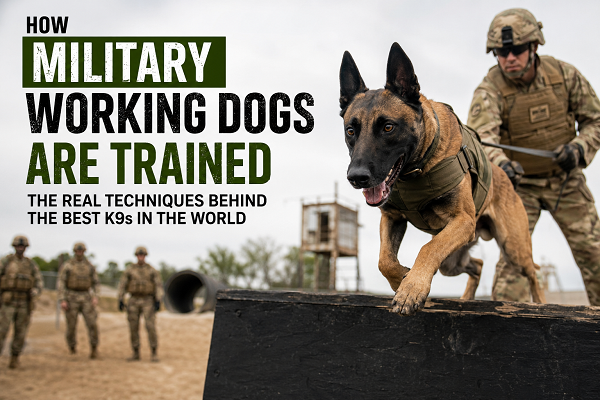
Most military working dogs finish a 120-day course at the 341st Training Squadron in San Antonio, where they qualify as dual-purpose dogs that patrol and detect either explosives or drugs. Before that, they spend months in foster homes and early training, and afterward they spend months learning to work with a handler. The early program runs on positive rewards, like a ball or Kong toy. Roughly half of candidates wash out. Agency officials have put the cost of procuring and training one dog at roughly $65,000 to $85,000.
Table of Contents
- The Military Dog Training Pipeline at a Glance
- Selection and the Puppy Years: Where Most Dogs Drop Out
- Inside the 120-Day Course: The Real Techniques
- Handler Training and the Team Bond
- Training Never Ends (and Neither Does the Welfare Debate)
- Real Dogs, Real Numbers
- Where Military Dog Training Goes Wrong
- How to Borrow These Techniques at Home
- Trainer Note: Who Wrote This
- FAQs
- Final Thoughts
Introduction
Ever searched for how military working dogs are trained and ended up with three paragraphs about “discipline” and “loyalty”? Me too, and it’s frustrating. Those articles skip the parts you actually want: how long it takes, what a dog does on day one, how many fail, and what it costs.
So let’s fix that. This guide walks the whole path, from a Belgian Malinois puppy in a foster home to a certified dog on a base. You’ll see the timeline, the real washout numbers, the step-by-step logic of detection training, and a recent study that changed how some trainers think about clickers. You’ll also get a four-week plan to borrow the best ideas for your own dog.
You don’t need a war dog to benefit. You do need to know what the professionals actually do.
1. The Military Dog Training Pipeline at a Glance
Here’s the bird’s-eye view for the US program. The UK, Nigeria and other countries differ in details, but the logic is the same.
| Stage | Roughly when | What happens |
|---|---|---|
| Early stimulation | Birth to 6–8 weeks | Caregivers expose puppies to new sights, sounds and objects and note personalities |
| Foster family | ~6–8 weeks to ~7 months | Socialization, house manners, monthly check-ins with trainers |
| Adolescent training | ~7 to 12 months | Basic obedience, bite work, odor recognition, environment exposure |
| Evaluation | ~12 months | The “consignment test” decides who enters the course |
| Military Working Dog course | ~120 days | Obedience, detection, patrol, controlled aggression |
| Team training | First months at the base | Dog and handler learn each other, then upgrade training |
The Pentagon’s own description says puppies leave foster families after about six months for an intensive on-base phase, and the “consignment test” at around age one is the same test any outside dog must pass to be bought. A veterinary study of discharge data describes the same flow: foster care from about 6 weeks to 7 months, a return to the squadron for more evaluation, then procurement decisions at 12 months.
Notice something? The “120-day course” you read about everywhere is only the middle of the story. Some older articles say training takes “4 to 6 months,” and that’s not wrong. Handlers at one Air Force base describe training as lasting four to six months. It depends on whether you count the handler-team work after graduation. One retired dog’s service record even shows 184 training days at Lackland. Different counting, same pipeline.
2. Selection and the Puppy Years: Where Most Dogs Drop Out
Here’s the part that surprises people most: military programs don’t create drive. They find it.
The washout numbers
An Air Force officer at Laughlin said that maybe half of dogs make it through training and certification. That’s not a new problem. Of the 19,000 dogs the US military procured between 1942 and 1945, about 45 percent failed basic training. So after 80 years of better science, the failure rate hasn’t collapsed. The job is just that hard to fit a dog to.
Failing isn’t a tragedy for the dog, either. One Lackland officer explained that a dog can wash out simply because it needs more training time than the program can give it, and these dogs get adopted into homes.
Who gets picked
About 13% of US military dogs come from the in-house Puppy Program, which raises only Belgian Malinois, with 50 to 90 puppies born each year. The rest come from elite breeders around the world. That breeding program started in 1998, and its founders modeled it on how guide dogs and similar service dogs are raised.
Caregivers watch for specific traits even before puppies are weaned. They look for curiosity, sociability, eagerness to play with objects, and a lack of extreme aggression or fear of noise.
Here’s my plain-English checklist of what evaluators look for:
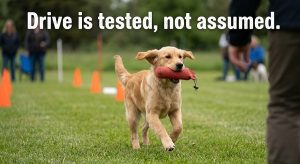
- Object drive. The dog will work all day for a ball or tug. Food alone isn’t enough.
- Nerve strength. It startles, then recovers fast instead of shutting down.
- Environmental confidence. New floors, loud noises and crowds don’t rattle it.
- Persistence. It keeps searching when the scent gets tricky.
- Sound body. Hips, elbows and heart can handle years of hard work.
3. Inside the 120-Day Course: The Real Techniques
Now we get to the training itself. I’ll break it into the three phases most programs follow, then the methods underneath them.
Phase 1: Foundation obedience
The commands are simple: sit, down, stay, heel, come. The standard is what’s different. A response has to be instant, identical and reliable everywhere, not “pretty good in the yard.”
How do they teach it? Mostly with play. Handlers at Kirtland explained that making dogs tough is a gentle process built around play, and the dogs see the work as a game. That’s a big deal. The dog works because the work is the fun part.
Phase 2: Environmental conditioning
A dog that’s perfect in a quiet kennel is useless if it freezes at a gunshot. So programs expose dogs to controlled chaos: gunfire, crowds, vehicles, helicopters, slippery or unstable surfaces, dark spaces. Dogs have to work under gunfire and in crowds without becoming aggressive. The Pentagon even highlights a Coast Guard handler getting his partner used to the wind, noise and motion of being hoisted into a helicopter.
The goal isn’t a fearless dog. No such dog exists. The goal is a fast recovery. Startle, reset, back to work in seconds.
Handlers learn to separate two things that look similar:
- Startle and recover: trainable, and usually a good sign.
- Shut down and freeze: often a sign the dog doesn’t suit high-stress work.
Phase 3: Specialization
Most graduates qualify as dual-purpose dogs: patrol plus explosives detection, or patrol plus drug detection. Handlers keep the two odor jobs separate on purpose. If a dog alerts, the handler needs to know exactly what it found.
Detection. Here’s the logic behind it, using a real, published protocol from Auburn University’s detection dog program. The steps show how trainers build a search dog from nothing:
- Teach the alert first. The dog learns a clear behavior, usually a sit. Researchers note that the sit is popular because it’s a passive response that disturbs the environment less and keeps dog and handler safer than barking or scratching.
- Introduce the odor in a box. The dog learns that sniffing the hole means something good happens.
- Add more boxes. Now it must search a line-up.
- Add decoys. Empty jars, gloves and oil teach the dog to tell the target from everything else.
- Go off leash. The handler stands back so the dog works the odor, not the person.
Why that last step matters: a dog can easily learn to read its handler’s body language instead of the smell. Good programs design training to prevent that. If you’re curious how reliable the finished product is, I covered the numbers in how accurate military dogs are at detecting explosives.
Patrol and bite work. Dogs learn to bite on command, hold, and let go instantly. The goal is control, not aggression. A dog you can’t switch off is a liability.
Tracking. The dog follows one human scent line across mixed ground and ignores everything else.
The technique that’s changing detection training: markers
Here’s a recent finding worth knowing. A 2025 study from Auburn’s Canine Performance Sciences program trained 28 candidate detection Labradors, half with a clicker as a “marker” and half with a reward alone. The clicker group finished training in fewer trials, showed a more precise alert, and kept alerting more reliably when the reward was withheld.
The numbers tell the story. At the hardest training step, marker-trained dogs averaged about 36 trials. The reward-only dogs needed about 68. Why the gap? Throwing a ball takes time, and in those seconds a dog can learn the wrong thing, like looking back at the trainer. A click marks the exact moment instead.
There’s a safety angle too. With explosives, you can’t toss a ball onto the source. A marker lets you reward the dog from a distance.
A fair caution: both groups detected the odor accurately in the final test. The clicker mainly improved how dogs alert and how fast they learned. It’s not magic, and the authors say more research is needed with other breeds and trainers.
What about corrections and harsh methods?
Modern military programs lean on rewards. Handlers describe the initial program as built on positive rewards, such as a ball or Kong. That doesn’t mean there’s no control or consequence anywhere. It means the foundation is a dog that wants the work.
4. Handler Training and the Team Bond
Think the dog is the only one in training? Nope. Every dog needs a human who can read it.
When dogs arrive at their bases from San Antonio, they get a couple of weeks to build rapport with their handlers before routine training begins. After that, the pair trains constantly.
How the UK does it
The UK trains handlers through the Defence Animal Training Regiment in Melton Mowbray. The Army’s trade course for dog handlers lasts seven weeks and includes an induction week, protection handler training, field skills, veterinary first aid and a key skills test. Handlers also start an 18-month animal care apprenticeship, and the base has trained animals there since 1905. Each year, the regiment delivers role-specific training for around 1,400 military working animals and 400 handlers.
The veterinary first aid part is the one I’d highlight. The instructors want handlers to act without hesitation if a dog is hurt in combat. A handler isn’t just a trainer. They’re also the dog’s medic.
Why the bond is a performance factor
A well-bonded dog reads its handler the way a good teammate reads a partner. When the handler changes suddenly, performance can dip, even with a “perfectly trained” dog. That’s why programs try to keep pairs together.
Want the full playbook on how professional handlers build that trust and control without fear-based methods? My e-book, Beyond the Bark: Inside a Pro Handler’s Playbook for Raising the Ideal Dog, walks through exactly that, in plain language for everyday owners.
5. Training Never Ends (and Neither Does the Welfare Debate)
Graduation isn’t the finish line. Dogs train every week to keep their skills sharp. That’s true for detection, obedience and environmental work alike.
The part most articles skip: welfare
You can’t talk honestly about military dog training without mentioning the care side. In 2026, the Pentagon’s inspector general reported on the military working dog program’s management of canine welfare. The report found that four dogs died between 2021 and 2023 because of inadequate care and unsuitable kennel conditions. At the 341st Training Squadron, 230 dogs were evaluated in August 2024, and they were walked about 10 minutes, four times a week or less, far below the recommended five hours of daily exercise and enrichment.
The inspector general recommended that the Air Force reduce the number of non-training dogs at the 341st until enough caretakers are available for five hours a day of activity and enrichment, and upgrade kennel facilities to current standards.
Why does this belong in a training article? Because it shows something every handler knows. A working dog’s behavior is only as good as its daily life. A bored, under-exercised dog is a harder dog to train, and that applies to your Malinois at home too.
6. Real Dogs, Real Numbers
Stats are good. Stories stick. Three dogs show the pipeline in action.
Gabe: the pound puppy. Not every military dog comes from an elite breeder. Gabe was a shelter dog who was trained and deployed to Iraq with his handler in 2006, logging 26 finds across 170 combat patrols.
Lucca: the IED finder. The Marine Corps dog led nearly 400 patrols and found about 40 improvised explosive devices without a single Marine injured while following her. She lost a leg in 2012 and later became the first US military working dog to receive the Dickin Medal.
Cairo and Conan. Cairo, a Belgian Malinois with a Navy SEAL team, took part in the 2011 raid on Osama bin Laden’s compound. His handler wrote about him in No Ordinary Dog. Conan, another Malinois, supported the 2019 operation against ISIS leader Abu Bakr al-Baghdadi. Both went through the same basic pipeline you just read. Neither was born ready.
7. Where Military Dog Training Goes Wrong
Even elite programs make mistakes. Here are the ones I see most:
- Inconsistent commands. A cue that means one thing Monday and another Friday erodes reliability.
- Skipping environmental work. A dog that’s never faced chaos is untested, not proven.
- Rushing specialization. Bite or detection work on shaky obedience creates holes under pressure.
- Poor reward timing. The Auburn study shows how a few seconds of delay can teach the wrong behavior.
- Reading stress as disobedience. Avoidance and over-arousal are information. Punishing them tends to make dogs less reliable.
- Ignoring handler dependence. If the dog only works when you’re close, you’ve trained a habit, not a skill.
- Neglecting daily care. Exercise, rest and enrichment aren’t extras.
8. How to Borrow These Techniques at Home
You don’t need explosives or a bite sleeve. In fact, please don’t try bite work or protection training without a qualified professional. Here’s what is safe and genuinely useful, as a four-week plan.
Week 1: Build the reward system. Pick one marker word or a clicker. Pair it with a treat or toy about 15–20 times in short sessions. Then reward every sit and down right after the marker.
Week 2: Add distance and duration. Ask for a stay, then step back, then add a few seconds. Reward calm, not excitement. Keep sessions to 5 minutes.
Week 3: Add distractions slowly. Practice in the garden, then on the street, then near a park. If your dog can’t respond, you moved too fast. Step back one level.
Week 4: Add a scent game. Hide a treat or toy under one of three cups or boxes. Let your dog sniff and choose. Mark when it sits or lies down at the right one. Then add a fourth box, then move the boxes around. That’s the same logic as the detection protocol above, scaled down for fun.
Throughout, watch for stress signs like lip-licking, yawning and turning away. A dog that’s overwhelmed needs an easier step, not more pressure.
Want to take control-first skills further with a family dog? My guide on basic protection commands for the family pet explains how to build control without raw aggression. And if you’re wondering how these programs differ from police dog work, read how military working dogs differ from police K9s.
9. Trainer Note: Who Wrote This
This guide is written by Cpl. Rofiat Muritala, a Nigerian Army military working dog instructor and handler with more than 14 years of experience at the Nigerian Army Dog Centre. She holds certifications in advanced obedience, K9 patrol and advanced explosive detection, and represented the Dog Centre at the Nigerian Army Day Celebration (NADCEL) 2026.
The facts here come from official US and UK military sources, a 2025 peer-reviewed study in Frontiers in Veterinary Science, and a 2026 Pentagon inspector general report. Where sources disagree on timelines or costs, I’ve shown the range. Programs vary by country, branch and specialty.
10. FAQs
How are military working dogs trained?
They follow a staged pipeline: selection and foster care, adolescent training, an evaluation at around 12 months, then a roughly 120-day course in obedience, detection and patrol. After graduation, handler and dog train as a team. Rewards like balls and toys drive most of the early learning.
How long does it take to train a military working dog?
The core course is about 120 days. Counting the puppy years before it and the team training after it, the full journey takes well over a year.
How much does it cost to train a military dog?
Older estimates cited $20,000 to $40,000. A 2017 squadron study put it near $42,000 per dog sent to an operational unit. More recent figures attributed to agency officials in a GAO report are about $65,000 to $85,000 for procuring and training one dog. Costs vary by dog and specialty.
Why do so many military dogs fail training?
Because the bar is high. Dogs need drive, nerve strength, environmental confidence and physical soundness all at once. Around half of puppies aren’t selected. Most washouts are still good dogs that just don’t fit this particular job.
Can I train my dog like a military dog?
You can borrow the principles: reward-based learning, gradual distractions, clear timing and a strong handler bond. Skip bite work, protection training and detection of dangerous materials unless you’re working with a certified professional.
11. Final Thoughts
So here’s the real answer to how military working dogs are trained. They’re selected carefully, raised in a structured pipeline, conditioned to stay steady in chaos, trained mostly through rewards and play, and matched with a handler who learns to read them like a teammate.
The best takeaways are surprisingly simple. Pick the right dog for the job. Reward the exact moment you want. Add difficulty slowly. Treat stress as information. And look after the dog’s daily life, because training only works on top of good care.
Try the four-week plan with your own dog and see what changes.
Want more training breakdowns like this? Subscribe to our weekly articles roundup at arfsk9team.com.ng/newsletter and get practical K9 tips in your inbox.
Sources: war.gov “Four-Legged Fighters”; DVIDS 341st breeding program article; Misawa AB and Kirtland AFB features; UK Army DATR and Army Jobs pages; Forces News; Lazarowski et al. 2025, Frontiers in Veterinary Science; DoD OIG evaluation DODIG-2026-057; HowStuffWorks “Training and Deployment of War Dogs”; AETC Laughlin retirement story.

Her work centres on obedience, detection, protection and operational readiness. She favours proven methods built on repetition, consistency and real-world conditioning, so that both dogs and handlers are prepared for high-pressure tasks.
Rofiat represented the Nigerian Army Dog Centre at the Nigerian Army Day Celebration (NADCEL) 2026, where she led demonstrations in obedience, explosive detection, agility and tactical movement. Through articles, training content and documentaries, she shares field-based insight into how structured training, clear communication and trust between handler and dog affect performance and reliability.
She is the author of Beyond the Bark: Inside a Pro Handler's Playbook for Raising the Ideal Dog, a practical guide that helps dog owners and handlers apply professional training principles in everyday situations.
- Dog Hotel Prep: 7 Must-Haves Before Boarding - October 21, 2026
- How to Enter the COBA National Dog Championship - October 20, 2026
- K9 Advantix Dosage Chart & Safety Guide for Dogs - October 19, 2026