Mastering the 3-3-3 Rule for Dogs: A Guide for Pet Owners
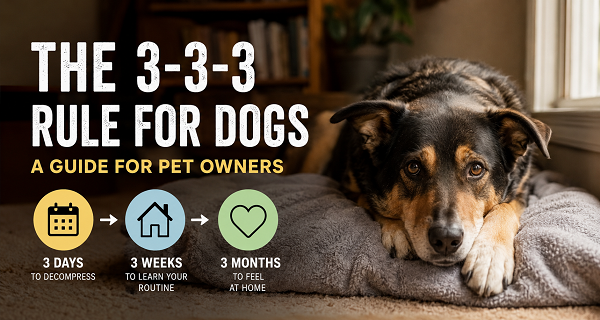
The 3-3-3 rule for dogs is a popular guideline suggesting a newly adopted dog needs 3 days to decompress, 3 weeks to learn your routine, and 3 months to feel fully at home. It’s a useful mental framework, but it’s not a scientific timeline, a 2023 Ohio State University study tracking real adopted dogs found that behavior can keep shifting for six months or longer, and some dogs settle in far sooner than the “rule” suggests. Treat 3-3-3 as a rough map, not a countdown clock.
If you’ve just brought a dog home and you’re staring at the calendar wondering why they’re “not there yet,” this article is for you.
Table of Contents
- Introduction: Why the 3-3-3 Rule Gets Misunderstood
- What Is the 3-3-3 Rule for Dogs?
- Where the 3-3-3 Rule Came From (And Why It’s Not Gospel)
- What the Actual Research Says
- Day 1–3: The Decompression Phase
- Week 1–3: The Routine-Learning Phase
- Month 1–3 (and Beyond): The Trust Phase
- Puppy vs. Rescue vs. Working Dog: Why Timelines Differ
- Signs Your Dog Is Adjusting Well
- 5 Mistakes That Slow Down Adjustment
- A Trainer’s Protocol for the First 90 Days
- When to Call a Professional
- Frequently Asked Questions
- Conclusion: What to Actually Do With This Information
Introduction: Why the 3-3-3 Rule Gets Misunderstood
I’ve handled working dogs for over 14 years, and I still remember the first Military Working Dog I brought home for a private security placement. The client called me on day four, worried, because the dog “wasn’t himself yet.” He’d read about the 3-3-3 rule for dogs somewhere online and expected a switch to flip.
Here’s the thing nobody tells you: the 3-3-3 rule isn’t a law of nature. It’s a rough, well-meaning guideline that shelters and rescues started using to help new owners set realistic expectations. It’s genuinely useful, I use a version of it myself when I place dogs but treating it like a fixed schedule causes more anxiety than it solves.
So in this guide, I’m not just going to repeat the “3 days, 3 weeks, 3 months” mantra you’ve probably already seen a dozen times. I’m going to walk you through what actually happens in a dog’s body and brain during each stage, what real research on adopted dogs found (spoiler: it contradicts parts of the popular version), and what to actually do at each point so you’re not just waiting around hoping things improve.
By the end, you’ll know exactly what’s normal, what’s a red flag, and what to do about both.
What Is the 3-3-3 Rule for Dogs?
The 3-3-3 rule for dogs breaks the adjustment period after adoption into three phases:
- 3 Days – The dog is overwhelmed and shutting down or hiding.
- 3 Weeks – The dog starts learning your routine and testing boundaries.
- 3 Months – The dog feels “at home” and shows its true personality.
It’s popular with shelters and rescue groups (I’ve seen versions of it used by ASPCA-affiliated shelters and rescues across the US and UK) because it gives nervous new owners a framework instead of a blank page. If your dog isn’t cuddly on day two, the rule tells you: that’s normal, don’t panic.
That part is genuinely good advice. Where people get tripped up is treating the numbers literally, expecting a dog to be “fully adjusted” at exactly the 90-day mark, or panicking when a dog is still nervous at week five.
Why 3-3-3 Matters (Even If It’s Not Exact)
Understanding some version of this timeline helps you:
- Set expectations so you don’t take slow bonding personally
- Avoid mistaking fear-based stillness for good behavior
- Recognize normal regression (yes, dogs often act “worse” around week 3–4, and that’s actually progress, not failure)
- Build routines gradually instead of overwhelming a stressed animal
- Know when something is genuinely concerning versus just… normal dog stuff
Where the 3-3-3 Rule Came From (And Why It’s Not Gospel)
Nobody can point to one peer-reviewed study that produced the exact “3-3-3” numbers. The phrase spread organically through US rescue and shelter communities over the past decade or so, likely as a simplified, memorable way to communicate what shelter staff already knew from experience: dogs decompress in stages.
A 2025 qualitative review published through Cambridge University Press looked into this directly. Researchers found that owner-facing adjustment estimates in shelter literature range wildly, some sources say 4 to 6 weeks, others say up to three months and none of these figures are backed by controlled scientific studies. The 3-3-3 framing just happened to be catchy enough to stick.
That doesn’t make it useless. It makes it a communication tool, not a diagnostic timeline. Big difference.
What the Actual Research Says
This is the part most articles on this topic skip entirely, and it’s the reason I wanted to rewrite this piece properly.
In 2023, researchers at Ohio State University’s Department of Veterinary Clinical Sciences, led by Dr. Kyle Bohland, ran one of the first real longitudinal studies on post-adoption dog behavior. They tracked 99 dogs adopted from five Columbus and Cleveland-area shelters, surveying owners at 7, 30, 90, and 180 days using the C-BARQ (Canine Behavioral Assessment & Research Questionnaire), a validated tool behaviorists actually use.
Here’s what they found, and why it should change how you think about the 3-3-3 rule:
- Adjustment isn’t finished at 90 days. Several behaviors, including stranger-directed aggression, chasing, training difficulty, excitability, and touch sensitivity, kept changing or increasing all the way out to 180 days. The “3 months and done” idea doesn’t hold up.
- Some behaviors improve, not worsen, over time. Separation-related anxiety tended to decrease as dogs settled into a routine, the opposite of what a lot of nervous new owners fear.
- Outcomes were still overwhelmingly positive. By day 180, 100% of owners said their dog had adjusted moderately or extremely well, and 93.7% rated their dog’s overall behavior as excellent or good.
- Returns were lower than average. Only 7.1% of dogs in the study were returned to the shelter, compared to a commonly cited national return rate of around 15%.
Separately, cortisol research (stress hormone studies, including work by van der Laan and colleagues in 2022) found that a dog’s stress hormone levels can keep shifting for up to six months after adoption, not three. And on the flip side, the San Diego Humane Society points to research showing it takes roughly 10 days for stress hormones to normalize after even a short two-week shelter stay, which is why the first days at home matter so much for a dog’s nervous system.
My take, after 14 years of doing this professionally: the real number isn’t 3-3-3. It’s closer to “a rough week to decompress, a month to learn the house rules, and anywhere from 3 to 6 months (sometimes longer for dogs with rough histories) to fully settle.” The 3-3-3 rule is a floor, not a ceiling. Use it to set your initial expectations, then throw the calendar away and watch the dog instead.
Day 1–3: The Decompression Phase
Whatever the exact number of days, the first stretch is about survival mode, not bonding. Your dog just lost every familiar smell, sound, and face they had, and they don’t know yet whether you’re safe.
What You’ll Likely See
- Hiding, avoiding eye contact, or freezing in place
- Refusing food or water (a healthy adult dog can safely skip 1–2 meals; if it goes past 48 hours, call your vet)
- Whining, pacing, or restlessness
- Accidents indoors, even in a dog that’s normally house-trained
- Zero interest in toys or play
None of that means you got a “bad” or “broken” dog. It means their nervous system is doing exactly what it’s supposed to do under stress.
What To Actually Do
1. Set up one quiet, dedicated space. A bed or crate, water, food, minimal foot traffic. This becomes their decompression zone, not a punishment spot.
2. Let them come to you. Sit nearby, don’t reach for them, don’t force cuddling. I tell every new handler the same thing: the dog approaching you on their own terms is worth ten times more than you scooping them into your lap.
3. Start a loose routine immediately, same feeding windows, same bathroom-break timing, same sleeping spot. Predictability calms a stressed nervous system faster than affection does at this stage.
4. Skip the visitors and the dog park for now. New people and new dogs are sensory overload your dog doesn’t need yet.
If you’re seeing behaviors that look more like genuine panic than simple shyness, shaking, drooling, refusal to move at all, or repetitive pacing that doesn’t stop, it’s worth reading through this breakdown of dog anxiety symptoms to figure out where the line is between “normal adjustment” and something that needs closer attention.
A crate, used correctly, can genuinely speed this phase along. It gives a stressed dog a den-like space to retreat to instead of feeling exposed in an open room. If you haven’t set one up yet, this guide on how to crate train a puppy walks through it step by step, and most of it applies to adult rescues too.
Week 1–3: The Routine-Learning Phase
Once the initial shock fades, dogs start paying attention. This is when they begin mapping your household, who feeds them, when walks happen, which door leads outside.
What You’ll Likely See
- More energy and curiosity about the house
- Testing boundaries: chewing something they shouldn’t, jumping, barking at the door
- Better appetite
- The first signs of play
- Occasional anxiety when left alone, especially in dogs with unknown history
Here’s the part that trips up a lot of new owners: behavior often gets a little worse before it gets better. Around week 3–4, dogs who trust you enough to relax will start showing real emotions, including frustration, boredom, and mild anxiety. That’s not regression. That’s a dog who no longer feels the need to hide.
Building Trust in This Window
- Reinforce the routine you started in phase one. Same meal times, same walk times, same bedtime.
- Introduce basic commands. Sit, stay, come, and their name. Keep sessions to 5–10 minutes; short and frequent beats long and rare.
- Socialize gradually. One new person or one calm dog at a time, not a group.
- Watch for triggers, not just symptoms. If your dog barks at every man in a hat, that’s information, not just “bad behavior.”
If your dog is chewing furniture, pulling on leash, or seems to ignore commands they clearly know, it’s rarely stubbornness, it’s usually a mismatch between what you’re asking and what actually motivates the dog in that moment. I wrote a full breakdown on this here: Your Dog Isn’t Stubborn, You’re Using the Wrong Reinforcement.
If you’re working with a puppy specifically during this window, feeding schedule and nutrition directly affect energy, focus, and even how quickly house-training clicks. Our guide on puppy nutrition from week 1 to month 12 covers exactly what to feed and when.
Month 1–3 (and Beyond): The Trust Phase
By around the 90-day mark, most dogs feel genuinely at home but as the OSU data showed, “genuinely at home” doesn’t mean “finished changing.” Personality, energy level, and social preferences become clearer here, and some behaviors (both good and challenging) will keep evolving out to the six-month mark, especially in dogs adopted with an unclear history.
What This Phase Looks Like
- Comfortable, relaxed body language most of the time
- Familiarity with your routine, they anticipate walks, meals, and bedtime
- A clearer personality: are they naturally calm, high-energy, independent, velcro-dog?
- More confident exploration, both indoors and out
What To Focus On
- Deepen training. Move past basic commands into recall reliability, leash manners, and impulse control.
- Establish long-term structure, not just short-term rules. Consistency here is what prevents behavior regression later.
- Keep building the relationship through calm, shared time, not just training reps.
If you found the 3-3-3 breakdown useful, you might also want a broader look at the adjustment period through a different lens, behavior, bonding, and structure specifically, in our companion piece on the 7-7-7 rule for dogs, which pairs well with this one.
Puppy vs. Rescue vs. Working Dog: Why Timelines Differ
The 3-3-3 rule is usually written with rescue dogs in mind, but timelines shift depending on what kind of dog you’re bringing home:
- Puppies (8–16 weeks) generally adjust faster on the “settling in” front because they haven’t formed strong prior attachments, but they need far more structure around house-training and bite inhibition during the same window.
- Adult rescues with unknown history often take the longest, particularly if they were strays, came from a hoarding situation, or had multiple past homes. I’ve personally worked with rescues who didn’t fully relax until the 5–6 month mark, which lines up with the cortisol research showing stress hormones can stay elevated that long.
- Working breeds placed for security or detection roles (Belgian Malinois, German Shepherds, Dutch Shepherds, Cane Corsos) often show a faster behavioral “settle” because of their drive and handler-focus, but that doesn’t mean they’re emotionally adjusted just as quickly, a dog can follow commands within days while still being internally stressed for weeks. This is something every K9 handler learns to read early: compliance is not the same as comfort.
Signs Your Dog Is Adjusting Well
Regardless of exact timing, these are consistent, reliable markers of healthy adjustment:
- Eating and drinking on a normal schedule
- Loose, relaxed body language (soft eyes, wagging at neutral height, no constant flinching)
- Willingness to initiate play
- Seeking you out for interaction, not just tolerating it
- Responding to known commands even with mild distraction
- Sleeping through the night without pacing or whining
- Fewer stress behaviors (panting, drooling, lip-licking) over time, not more
5 Mistakes That Slow Down Adjustment
I see these constantly, even from well-meaning owners:
- Overwhelming the dog with affection too fast. Forced hugging, constant handling, and excited greetings can feel like pressure to a stressed dog, not comfort.
- Skipping the routine because “it’s early days.” Dogs settle faster with predictability, not with a free-for-all schedule while you “let them adjust.”
- Punishing fear-based behavior. Growling, hiding, or accidents in week one aren’t defiance. Correcting them as if they are teaches the dog you’re unpredictable, which slows trust-building.
- Introducing too much too soon, new people, other pets, dog parks, groomers, all stacked into the first two weeks.
- Panicking when behavior “gets worse” around week 3–4. As covered above, this is often a sign of trust building, not a step backward.
A Trainer’s Protocol for the First 90 Days
This is roughly the structure I walk clients through when placing a dog, adjusted for family pets rather than working dogs:
- Days 1–3: Safe space, minimal handling, routine established, no visitors
- Days 4–7: Introduce name recognition and gentle leash walks around the property
- Weeks 2–3: Begin basic obedience (sit, stay, come) in 5-minute sessions, 2–3 times a day
- Weeks 3–4: Controlled introductions to one new person or dog at a time
- Month 2: Expand walking routes, start proofing commands with mild distractions
- Month 3: Reinforce long-term structure, address any lingering behavior issues directly rather than hoping they fade.
When to Call a Professional
Most dogs settle in with time and patience. Call a certified trainer or veterinary behaviorist if you notice:
- Aggression that persists or escalates past the first few weeks
- Severe anxiety that doesn’t improve with routine and time
- Destructive behavior that’s unmanageable or self-injurious
- No improvement at all after 2–3 months of consistent structure
- Any bite, even a minor one
There’s no shame in bringing in outside help, in fact, catching a problem at month two is far easier than untangling it at month twelve.
Frequently Asked Questions
1. Why is my dog acting worse after a few weeks, not better?
This is genuinely common and usually a good sign. As dogs start to feel safe, they stop suppressing normal behavior. What looks like regression is often your dog finally showing you who they really are.
2. What if my dog is still scared after 3 weeks?
Perfectly normal, especially for rescues with an unclear or difficult past. Research on cortisol levels shows stress hormones can take up to six months to fully normalize in some dogs. Keep the routine steady and avoid forcing interaction.
3. Can I start training on day one?
Yes, but keep it extremely light, name recognition and calm presence, not structured sessions. Save formal obedience work for once the initial decompression period has passed, usually after the first week.
4. Does the 3-3-3 rule apply to puppies, or just rescues?
It’s most commonly used for rescues and shelter dogs, but a modified version applies to puppies too, expect a faster emotional settle but a longer house-training and bite-inhibition timeline.
5. How do I handle separation anxiety during this period?
Start with very short absences (a few minutes) and build up gradually. Leave a familiar-smelling item and a safe chew toy, and avoid long, emotional goodbyes, calm departures and calm returns teach your dog that being alone isn’t a crisis.
Conclusion: What to Actually Do With This Information
The 3-3-3 rule for dogs is a decent starting framework, three days to decompress, three weeks to learn your routine, three months to feel genuinely at home. But the real research tells a more honest story: adjustment can keep shifting for six months or longer, especially for dogs with a rough history, and that’s completely normal.
Here’s the actionable version: don’t watch the calendar, watch the dog. Build routine early, resist the urge to force affection, expect a temporary “worse before better” dip around week three, and treat any concerning behavior at the two-to-three-month mark as a reason to get professional support rather than waiting it out.
Every dog moves at their own pace. Your job isn’t to hit a deadline, it’s to show up consistently enough that, whenever they’re ready, they know exactly where home is.
Rofiat Muritala is a veteran military K9 handler and certified dog trainer with over 14 years of hands-on experience in Military Working Dogs, security operations, and canine behavior. She represented the Nigerian Army Dog Centre at NADCEL 2026, leading obedience, detection, agility, and tactical demonstrations, and is the author of Beyond the Bark: Inside a Pro Handler’s Playbook for Raising the Ideal Dog.

Her work centres on obedience, detection, protection and operational readiness. She favours proven methods built on repetition, consistency and real-world conditioning, so that both dogs and handlers are prepared for high-pressure tasks.
Rofiat represented the Nigerian Army Dog Centre at the Nigerian Army Day Celebration (NADCEL) 2026, where she led demonstrations in obedience, explosive detection, agility and tactical movement. Through articles, training content and documentaries, she shares field-based insight into how structured training, clear communication and trust between handler and dog affect performance and reliability.
She is the author of Beyond the Bark: Inside a Pro Handler's Playbook for Raising the Ideal Dog, a practical guide that helps dog owners and handlers apply professional training principles in everyday situations.
- Bousnic Dog Training Collar Review: Is It Safe? - September 30, 2026
- Gravy Train Dog Food Review: Ingredients & Recalls - September 30, 2026
- How to Spot Fake AKC Registered Dogs: 5 Warning Signs - September 29, 2026