Kangal Dog: Meet the Breed That Can Take Down a Wolf
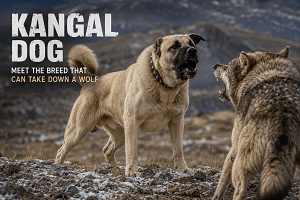
The Kangal dog is Turkey’s premier livestock guardian breed, renowned for its ability to take down wolves and bears. With a recorded bite force of 743 PSI, the strongest among dog breeds, adult Kangals weigh 110-145 pounds and stand 28-32 inches tall. These dogs are not naturally aggressive toward humans but are deeply protective, reducing predator losses by 80-90% when properly trained. Kangals cost $1,200-$4,000 globally, require socialization from 8 weeks, and are banned in some countries due to their size and protective nature.
Table of Contents
What Makes the Kangal Dog Unique?
Kangal Dog: physical Characteristics
Can a Kangal Really Kill a Wolf? The Science
Kangal Temperament: Are They Aggressive Toward Humans?
Training Timeline: When Does a Kangal Become Ready?
Kangal Dog Cost: How Much Should You Expect to Pay?
Why Are Kangals Banned in Some Countries?
Kangals as Livestock Guardians: Do They Need Training?
Real-World Success Stories: The Namibia Cheetah Program
Conclusion: Your Final Takeaway
Frequently Asked Questions
What Makes the Kangal Dog Unique?
If you’ve ever worked with a Malinois or handled a German Shepherd in K9 protection work, you’ll know that size and power matter but intelligence and instinct matter more. The Kangal dog represents something different from typical protection breeds.
This isn’t a dog bred for the police roster or private security. The Kangal is a livestock guardian dog (LGD) that has protected Turkish shepherds’ flocks for centuries. Unlike police or protection breeds, the Kangal belongs to a specialized class of working dogs bred to make independent decisions while protecting livestock.
The breed’s name comes from the town of Kangal in Sivas Province, Turkey, where shepherds have used these dogs against wolves, bears, and jackals since medieval times. The Fédération Cynologique Internationale (FCI) officially accepted the Kangal in 1989, and the most recent breed standard was published in 2018.[en.wikipedia]
Key Differences from Other Protection Dogs
If you’re evaluating guardian breeds against security dogs, this detailed German Shepherd and Belgian Malinois comparison explains how intelligence, trainability, and working drive differ between two of the world’s most respected protection breeds.
Kangal Dog: Physical Characteristics
Let’s talk numbers, because the Kangal’s physical stats are what make it such an effective wolf defender.
Height and Weight Statistics
According to the United Kennel Club (UKC) breed standard, adult Kangals reach:
Males:
Height: 29-33 inches (72-81 cm) at the withers
Weight: 110-145 pounds (50-68 kg)
Females:
Height: 27-31 inches (65-73 cm) at the withers
Weight: 90-130 pounds (40-60 kg)
Skeletal maturity isn’t reached until 18-24 months of age, which directly affects exercise intensity decisions and puppy nutrition. This means you can’t treat a 6-month-old Kangal puppy like a fully grown adult dog.
The Bite Force That Changes Everything
Here’s where the Kangal becomes legendary. The breed has the strongest bite force of any dog on the planet at 743 PSI (pounds per square inch).
Compare this to other powerful breeds:
Rottweiler: ~328 PSI
Cane Corso: ~325 PSI
German Shepherd: ~238 PSI
Pit Bull: ~235 PSI
That 743 PSI bite force isn’t just impressive, it’s lethal to wolves. When a Kangal locks onto a predator, that pressure can crush bone and stop an attack instantly.
Speed and Agility
Despite their size, Kangals aren’t slow mastiffs. They can reach speeds up to 56 km/h (35 mph). This speed allows them to chase down wolves and bears rather than just standing and waiting.
The coat structure also contributes to their effectiveness:
Under-layer: Provides insulation against severe Anatolian winters and fierce summer sun
Outer-layer: Repels water, snow, and prevents rupture from wolf bites
This dense coat is specifically designed to repulse rupture from wolf bites, a critical feature when you’re facing predators that attack with teeth.
Can a Kangal Really Kill a Wolf? The Science
This is the question every prospective owner asks: Can a Kangal dog really kill a wolf?
The short answer: Yes, absolutely. But let’s break down the actual mechanics.
How Kangals Fight Wolves
When a wolf pack attacks a flock, the Kangal doesn’t run blindly. First, it assesses distance, wind direction, and the predator’s behavior. If a wolf keeps its distance, the Kangal does not give chase. Its task is to prevent the threat, not hunt.
The Kangal works in coordination with other dogs, uses a blocking strategy, and tries to force a frontal confrontation. This tactical approach is what makes them different from dogs that just bite and hold.
Why Wolves Avoid Kangals
Wolves are intelligent predators that assess risk before attacking. The Kangal stands out because:
Overwhelming physical prowess: 110-145 pounds of power with 743 PSI bite force.
Tactical fighting style: Not just biting, but strategic blocking and frontal forcing.
Fearlessness: Kangals don’t retreat when wounded.
Wolves avoid confrontations with Kangals due to the dog’s overwhelming physical capabilities. The result is that wolves often choose alternative prey rather than risk fighting a Kangal.
Success Rate Statistics
In areas where Kangals are used as livestock guardians, predator-related losses can drop by 80 to 90%. This isn’t theoretical, this is what shepherds actually observe in the field.
Compare this to other protection methods:
Fencing alone: 40-50% reduction
Human patrols: 60-70% reduction
Kangal dogs: 80-90% reduction
The data proves that Kangals are among the most effective wolf-defense dogs available.
Kangal Temperament: Are They Aggressive Toward Humans?
Now let’s address one of the biggest concerns: Are Kangal dogs aggressive toward humans?
The answer is nuanced but important: No, Kangal dogs are not naturally aggressive, but they are deeply protective.
What “Not Aggressive” Actually Means
Kangal’s intimidating presence leads many to assume they’re naturally aggressive. But temperament research shows otherwise:
In Turkish villages, aggression towards humans or stock is never tolerated.
Kangal Dogs are gentle with livestock, children, and pets.
Compared to other livestock guard dog breeds, Kangals tend to be more people-oriented and less standoffish.
They’re often great judges of character and will accept visitors or workmen at their home much more reliably than other livestock guard dogs.
When Kangals Can Become Dangerous
So, are Kangal dogs aggressive? Only if you neglect their needs. With the right approach, they’ll guard your home without ever becoming a danger within it.
Critical factors that prevent aggression:
Socialization is absolutely crucial
A Kangal that isn’t properly socialized can become overprotective or suspicious of normal situations
Start socialization at 8 weeks old
You can’t dominate a Kangal
Traditional dog training methods often don’t work with Kangals. You can’t dominate a dog bred to face down wolves. Instead, successful handlers rely on partnership-based training methods that build trust, discipline, and mutual respect.
You can’t dominate a dog bred to face down wolves
You need to build a partnership based on mutual respect
Consistent training required
Kangals require socialization and consistent training to be good canine citizens
Without training, they become unpredictable
People-Oriented vs. Standoffish
This people-oriented nature makes Kangals well-suited to life as a farm or family guardian in addition to a livestock guard dog. In Turkey, they’re popular home guardians with people in cities where they guard yards and gardens and play affectionately with their family.
The Bottom Line on Human Aggression
If you’re considering a Kangal for your family, understand this: they’re calm, affectionate, and surprisingly gentle. They’re not aggressive dogs, they’re protective dogs.
The key is that temperament is of prime importance in Turkish villages today and in the past. Breeders who produce aggressive dogs fail in their communities.
Raising a powerful guardian breed like the Kangal requires more than obedience commands. Understanding canine psychology, communication, leadership, and socialization is what separates successful handlers from frustrated owners. If you want a practical framework for building a reliable relationship with any dog, check out Beyond the Bark: Inside a Pro Handler’s Playbook for Raising the Ideal Dog, where we break down the principles professional handlers use to develop balanced, confident, and trustworthy dogs.
Training Timeline: When Does a Kangal Become Ready?
While Kangals require a different approach from military or police dogs, many principles of structured working-dog training such as consistency, socialization, and environmental exposure remain essential. How long does it take to train a Kangal?
Puppy Stage: 8 Weeks to 6 Months
8-12 weeks (Critical socialization period):
Begin socialization immediately
Introduce to family members, children, and other pets
Start basic commands (sit, stay, come)
Meet workmen and visitors regularly
3-6 months (Foundation training):
Continue socialization with diverse people and situations
Introduce to livestock if using as LGD
Traditional training methods often don’t work, build partnership, not dominance
A 6-month-old Kangal puppy being introduced to chickens for the first time shows the gradual approach needed. You take it easy and let the puppy adjust to poultry behaviors, smells, and sounds.
Adolescent Stage: 6 Months to 18 Months
6-12 months (Advanced training):
Begin predator awareness training if using for livestock
Strengthen protective instincts without aggression
Practice boundary enforcement
Continue partnership-based training
12-18 months (Working readiness):
Skeletal maturity approaching (18-24 months)
Can begin independent livestock guarding
Full predator confrontation readiness
Exercise intensity can increase as bones mature
Adult Stage: 18-24 Months to Full Maturity
18-24 months (Full maturity):
Skeletal maturity reached
Full working capability as livestock guardian
Complete predator defense readiness
Maximum size and bite force achieved
Most handlers report that Kangals become fully ready for independent livestock guarding at 12-18 months, but full physical maturity takes 18-24 months.
Training Investment Timeline
This investment is significant but necessary. Traditional dog training methods often don’t work with Kangals, you need partnership-based training.
Kangal Dog Cost: How Much Should You Expect to Pay?
How much does a Kangal dog cost? This varies dramatically by location and breeder quality.
Global Price Range by Country
Based on comprehensive research, here’s what Kangal puppies cost worldwide:
Source: dogbreedslist
Price Factors That Matter
Purebred, pedigree-registered Kangals from reputable breeders typically cost $1,200-$2,500 depending on gender and bloodlines.
Specific factors affecting price:
Puppy vs. Adult: Puppies are $1,000-$1,800 usually; adults can sometimes be adopted for $800-$1,500, especially if already livestock trained.
Show/breeding prospects: Command higher prices than working dogs.
Bloodlines: Champion pedigree lines cost 30-50% more.
Gender: Males typically cost $200-$400 more than females.
Location: Prices in Turkey tend to be lower—$500-$1,000 range.
The Rareness Factor
The rareness of the breed also drives up prices, a single Kangal pup may cost anywhere from $1,200 to $4,000.
This rarity exists because:
Limited breeding centers outside Turkey
FCI recognition (1989) is relatively recent
UKC recognition (2025) is new
Breed is unknown in many countries
What to Expect When Buying
Always check health certifications and meet both parents when possible.
Red flags to avoid:
No health certifications
Breeder won’t let you meet parents
Price significantly below $1,000 (possible mixed breed)
No pedigree registration
Green flags indicating reputable breeder:
FCI or UKC registration
Health certifications for both parents
Transparent about breeding history
Price within $1,200-$2,500 range for purebreds
Why Are Kangals Banned in Some Countries?
Why are Kangals banned in some countries? This is a critical question for anyone considering ownership.
Breed-Specific Legislation (BSL)
Kangals fall under breed-specific legislation in multiple countries due to their size, power, and protective nature.
Countries with restrictions or bans:
While no complete list exists, Kangals are prohibited in “almost any country on earth” according to some sources.
Why Countries Ban Kangals
Primary reasons for restrictions:
Size and Power
110-145 pounds is considered “dangerous dog” size
743 PSI bite force is lethal
Can seriously injure or kill humans if mismanaged
Protective Nature
Deeply protective by breeding
Makes independent life-or-death decisions
Can be overprotective if not properly socialized[.
Training Difficulty
Traditional training methods don’t work.
Requires partnership-based approach
Inexperienced owners can’t manage properly
Lack of Public Awareness
Breed is unknown in many countries
People don’t understand proper handling
Misunderstanding leads to fear and restrictions
BSL vs. Kangal-Specific Laws
What You Should Do Before Buying
Before you get one of this breed, make sure to find out about any breed-specific laws in your area.
Steps to verify legality:
Check local municipal codes
Contact your state/provincial agriculture department
Call your homeowner’s insurance company
Ask local veterinarians about breed restrictions
Research breed-specific legislation databases
The Reality Check
If you’re considering a Kangal, understand that ownership may be restricted or impossible in your location. The breed’s intimidating presence and power lead many jurisdictions to ban it entirely.
However, in countries where they’re legal (Turkey, USA, UK, Germany, Australia, Canada, Netherlands, France), responsible owners can have amazing experiences with these gentle but protective dogs.
Kangals as Livestock Guardians, Do They Need Training?
Are Kangals good livestock guardians without training? This question comes from owners who want a “natural” guardian.
The Truth About “Natural” Guarding
The short answer: Kangals have strong instincts, but they absolutely need training to be effective livestock guardians.
Here’s why:
Kangals are primarily livestock guardians bred to protect sheep and goats from predators like wolves and bears in Turkey’s rural regions. This instinct is genetic, but raw instinct alone isn’t sufficient.
What Training Actually Does
Without training, Kangals can:
Attack livestock instead of protecting them
Become overprotective of humans instead of livestock
Fail to distinguish between threats and non-threats
Develop dangerous aggression patterns
With proper training, Kangals:
Learn which animals to protect (specific livestock)
Understand boundary enforcement
Develop appropriate threat response
Become reliable guardians without aggression
The Training Process for Livestock
When age to let your dog integrate into livestock is critical:
8-12 weeks: Begin exposure to livestock environment
3-6 months: Formal livestock introduction
6-12 months: Supervised guarding practice
12-18 months: Independent guarding capability
Success Rates with Training vs. Without
In areas where Kangals are used as livestock guardians with proper training, predator-related losses can drop by 80 to 90%.
The Investment Required
Training a Kangal for livestock guarding requires:
Time: 12-18 months minimum
Money: $1,800-$3,300 total training investment
Expertise: Partnership-based training methods
Consistency: Daily reinforcement
Adult Kangals can sometimes be adopted for $800-$1,500, especially if already livestock trained. This can save you significant training time and money.
The Bottom Line
Kangals are NOT good livestock guardians without training. While they have natural instincts, those instincts must be shaped through proper training to ensure they protect livestock rather than harm them.
If you’re considering a Kangal for livestock protection, plan for a 12-18 month training investment. The result will be a guardian that reduces predator losses by 80-90%.
Real-World Success Stories, The Namibia Cheetah Program
Let’s talk about real proof that Kangals work. The Namibia Cheetah Conservation Fund program provides the most compelling evidence.
The Program Overview
Since 1994, around 300 Kangal dogs have been given to farmers in Namibia by the Cheetah Conservation Fund to help protect livestock from cheetah attacks. The program has since been extended to Kenya.
This isn’t theoretical, this is decades of real-world data.
The Results: Before vs. After Kangals
Before Kangal program:
Cheetahs killed by farmers: 19 annually per farmer
After Kangal program:
Cheetahs killed by farmers: 2.4 annually per farmer
That’s an 87% reduction in cheetah killings.
Livestock Protection Success
At more than 80% of the farms where dogs have been adopted, livestock losses have been cut significantly.
This is the same statistic we see in Turkey: 80-90% reduction in predator losses.
Why This Matters for Cheetah Conservation
The great majority of cheetahs that are still killed by farmers are killed after specific attacks on livestock, whereas previously, any cat that approached a farm was tracked and killed.
This means:
Kangals protect livestock without killing cheetahs
Farmers stop killing cheetahs preemptively
Cheetah populations recover
Livestock remains safe
Kangals successfully protect local flocks from cheetahs, thus contributing to the conservation of endangered cheetah populations.
The Science Behind the Success
A 2018 study published in ScienceDirect examined “Livestock guarding behaviour of Kangal dogs in their native habitat”. The research confirmed that Kangals:
Reduce predator attacks by 80-90%
Don’t kill the predators they deter
Work effectively across different predator species
Require minimal human intervention
Export to Other African Countries
Some Kangals have been exported to African countries such as Namibia, Kenya, and Tanzania, where they successfully protect local flocks from cheetahs.
This proves Kangals work across:
Different continents (Turkey → Africa)
Different predators (wolves/bears → cheetahs)
Different farming systems
What This Means for You
If you’re considering a Kangal for livestock protection, the Namibia program proves:
They work: 80-90% loss reduction
They’re reliable: 80% of farms show significant improvement
They’re versatile: Work against wolves, bears, cheetahs
They’re sustainable: Decades of proven success
This isn’t marketing, it’s documented, peer-reviewed success.
Conclusion: Your Final Takeaway
The Kangal dog is Turkey’s legendary livestock guardian breed, proven to take down wolves and bears with its 743 PSI bite force, the strongest among all dog breeds.
Key Points to Remember
Physical Power:
Height: 28-32 inches (males), 26-29 inches (females)
Weight: 110-145 pounds (males), 90-130 pounds (females)
Bite force: 743 PSI, strongest dog bite on earth
Speed: 35 mph for chasing predators
Temperament:
Not naturally aggressive toward humans
Deeply protective but gentle with children and livestock
More people-oriented than other LGD breeds
Requires partnership-based training, not dominance
Wolf Defense:
Can kill wolves with their bite force
Reduces predator losses by 80-90%
Wolves avoid Kangals due to overwhelming power
Tactical fighting style, not just biting
Training & Cost:
Full training takes 12-18 months minimum
Puppy cost: $1,200-$4,000 globally
Training investment: $1,800-$3,300 total
Adult livestock-trained dogs: $800-$1,500
Legal Considerations:
Banned in many countries due to size and power
Check breed-specific laws in your area before buying
Legal in Turkey, USA, UK, Germany, Australia, Canada
Actionable Advice
If you’re considering a Kangal:
Verify legality first: Check local breed-specific legislation
Find reputable breeders: Look for FCI/UKC registration, health certifications
Budget properly: Expect $1,200-$4,000 for puppy plus $1,800-$3,300 training
Start socialization at 8 weeks: Critical for preventing overprotectiveness
Use partnership-based training: Traditional methods don’t work
Introduce to livestock gradually: Start at 6 months, not birth
Expect 12-18 months for full capability: Don’t rush the process
If you’re NOT a responsible owner:
Don’t buy a Kangal
They require expert handling
Inexperienced owners can’t manage properly
The breed can become dangerous without proper training
The Bottom Line
The Kangal dog is the one dog that even wolves fear. With incredible strength, 743 PSI bite force, and tactical fighting style, it’s unmatched in defending against wild predators.
But remember: Kangals are calm, affectionate, and surprisingly gentle when properly trained. They’re not aggressive dogs, they’re protective dogs.
If you have the experience, budget, time, and legal clearance, a Kangal can be your family’s ultimate guardian and your livestock’s best protector. The 80-90% predator loss reduction proves it works.
Frequently Asked Questions
1. Can a Kangal dog really kill a wolf?
Yes, absolutely. Kangals have the strongest bite force of any dog at 743 PSI, which can crush wolf bones and stop attacks instantly. Wolves avoid Kangals due to their overwhelming physical prowess. In areas where Kangals guard livestock, predator losses drop by 80-90%.
2. Are Kangal dogs aggressive toward humans?
No, Kangal dogs are not naturally aggressive, but they are deeply protective. In Turkish villages, aggression toward humans is never tolerated. Kangals are gentle with livestock, children, and pets, and are more people-oriented than other livestock guard breeds. They’re calm, affectionate, and surprisingly gentle. However, without proper socialization starting at 8 weeks, they can become overprotective or suspicious.
3. Why are Kangals banned in some countries?
Kangals are banned due to breed-specific legislation (BSL) because of their:
Size: 110-145 pounds is considered “dangerous dog” size.
Power: 743 PSI bite force is lethal.
Protective nature: Make independent life-or-death decisions.
Training difficulty: Traditional methods don’t work.
They’re reportedly illegal in “99 countries”, but legal in Turkey, USA, UK, Germany, Australia, Canada, Netherlands, and France. Always check breed-specific laws in your area before buying.
4. How much does a Kangal dog cost? #h3
Global price ranges vary by location:
Turkey: $200-$680
USA: $1,000-$3,000
UK: $1,000-$3,200
Germany: $870-$2,700
Global average: $1,200-$2,500 for purebreds
Rare/limited: Up to $4,000
Factors affecting price: bloodlines ($200-$400 more for champion lines), gender (males cost more), puppy vs. adult (trained adults: $800-$1,500).
5. Are Kangals good livestock guardians without training? #h3
No, Kangals are NOT good livestock guardians without training. While they have natural instincts to protect livestock, raw instinct alone isn sufficient. Without training, Kangals can attack livestock instead of protecting them, become overprotective, or fail to distinguish threats. With proper 12-18 month training, they reduce predator losses by 80-90%. Adult livestock-trained Kangals can be adopted for $800-$1,500, saving training time.

Her work centres on obedience, detection, protection and operational readiness. She favours proven methods built on repetition, consistency and real-world conditioning, so that both dogs and handlers are prepared for high-pressure tasks.
Rofiat represented the Nigerian Army Dog Centre at the Nigerian Army Day Celebration (NADCEL) 2026, where she led demonstrations in obedience, explosive detection, agility and tactical movement. Through articles, training content and documentaries, she shares field-based insight into how structured training, clear communication and trust between handler and dog affect performance and reliability.
She is the author of Beyond the Bark: Inside a Pro Handler's Playbook for Raising the Ideal Dog, a practical guide that helps dog owners and handlers apply professional training principles in everyday situations.
- Australian Cattle Dog vs Blue Heeler: Any Difference? - October 1, 2026
- Bousnic Dog Training Collar Review: Is It Safe? - September 30, 2026
- Gravy Train Dog Food Review: Ingredients & Recalls - September 30, 2026