Benadryl for Dogs: Safe Dosage by Weight + What It Treats
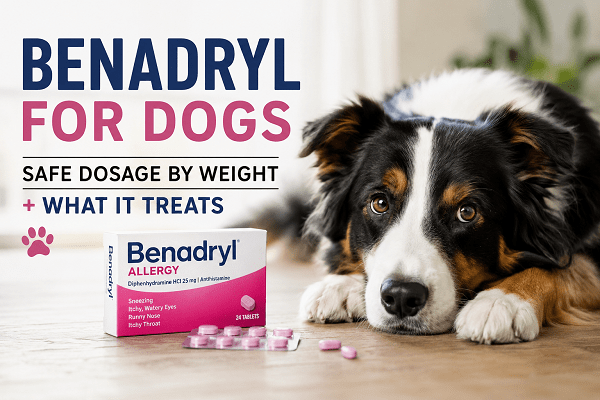
Benadryl can help dogs with mild allergy symptoms, insect bites, and certain motion-related issues, but the safe dose depends on your dog’s weight and the product you buy. The key is to use plain diphenhydramine only, avoid combination formulas, and know when Benadryl is not the right choice. This guide gives you a practical dosage-by-weight breakdown, safety warnings, side effects, and answers to the five most common questions dog owners ask.
Table of contents
Introduction
What Benadryl is
What Benadryl treats in dogs
Safe dosage by weight
Liquid vs tablet
Side effects and risks
When not to use it
FAQs
Conclusion
Introduction
If you have ever had a dog start scratching nonstop after a walk, swell up after an insect sting, or look miserable during allergy season, you already know how stressful it can be. Benadryl is one of the most commonly discussed over-the-counter options for dogs, but it only helps when it is used correctly and for the right problem. If your dog’s itching or pain suddenly leads to growling or snapping, it’s worth understanding the common reasons dogs bite before trying to handle them.
In this article, you will learn what Benadryl treats, how to calculate a safe Benadryl dosage by weight, which forms are safest, what side effects to watch for, and when you should skip it and call your vet instead.
What Benadryl is
Benadryl is the brand name most people use for diphenhydramine, an antihistamine. In dogs, veterinarians commonly use diphenhydramine for itchiness and some allergic reactions, with Merck Veterinary Manual listing a typical dose of 2 to 4 mg/kg every 8 to 12 hours as needed.
The important part is this: not every Benadryl product is safe for dogs. You want plain diphenhydramine only, because combination products may include decongestants or other ingredients that can be harmful to pets.
What Benadryl treats
Benadryl is most useful for mild allergic reactions and allergy-related discomfort. PetMD notes it is commonly used for things like insect bites, bee stings, itchiness, and sometimes motion sickness or anxiety, although other prescription options may work better for those uses.
Here are the situations where Benadryl is often considered:
Seasonal allergies and mild skin irritation.
Hives or itching after a bug bite or sting.
Mild allergic responses under veterinary guidance.
Short-term travel-related stress or motion sickness in some dogs, though it is not the strongest option for either issue.
Benadryl is not a cure for the cause of the problem. If your dog has chronic itching, recurrent ear infections, or year-round skin issues, your vet may recommend a more targeted plan rather than repeated Benadryl use.
Good nutrition and skin health also play a major role in reducing recurring allergy flare-ups. Read our guide on best nutrition and health tips for dogs to learn how diet supports healthy skin and immune function.
Safe Dosage by Weight
Most veterinary references land in a similar dose range: about 1 mg per pound of body weight or 2 to 4 mg per kg, given every 8 to 12 hours as needed. Merck lists diphenhydramine at 2 to 4 mg/kg for dogs, and other veterinary sources use the same general range.
Use the chart below as a practical starting point, but always confirm with your vet first, especially if your dog is small, senior, pregnant, on other meds, or has a health condition.
Benadryl dosage chart by weight
That table reflects the common 1 mg/lb rule used in veterinary guidance and consumer vet resources.
Example
If your dog weighs 30 lb, a typical dose is about 30 mg. If you only have 25 mg tablets, that usually means you are looking at a little over one tablet, but you should still verify the exact plan with your vet before giving it.
Timing
Benadryl is usually given every 8 to 12 hours if a vet has approved it for your dog. Some veterinary references also note that repeated dosing should stay within safe daily limits, so do not keep giving it all day long without guidance.
Liquid vs Tablet
For many dog owners, the best choice is not “liquid or tablet” in a vacuum; it is whichever form lets you dose accurately and safely. Tablet forms are often easier for medium and large dogs, while liquid can be helpful for tiny dogs where small dose adjustments matter.
Here is the practical rule:
Tablets are usually easier for dogs around 25 lb and up.
Children’s liquid can help with small dogs, but you must check every ingredient carefully.
Chewables can be convenient if they contain only diphenhydramine and no unsafe extras.
Be careful with liquid products because some human medications contain sweeteners, and xylitol is dangerous to dogs. ASPCA warns that xylitol can be toxic and is found in some medications and other products, so always read the label before using a liquid form.
How to choose the right Benadryl
When shopping, ignore the brand name and look at the active ingredient. The safest choice for most dogs is plain diphenhydramine HCl with no added decongestants, pain relievers, or other medications. Benadryl Ultratabs (25 mg diphenhydramine) is one example of this type of product, but always confirm the ingredient list before purchasing.
Side Effects and Risks
The most common side effect is sleepiness, which is why some dog owners use it in the first place. But dogs can also get the opposite effect and become restless or unusually excited instead of calm.
Possible side effects include:
Drowsiness.
Dry mouth.
Vomiting or diarrhea.
Agitation or paradoxical excitement.
Trouble urinating.
Fast heart rate or abnormal blood pressure in overdose situations.
PetMD reports that overdose signs can show up within the first hour and may include severe lethargy, salivation, vomiting, diarrhea, seizures, trouble breathing, and difficulty urinating. If that happens, it is an emergency.[petmd]
When Not to Use It
Benadryl is not automatically safe for every dog. Dogs with certain health conditions, including glaucoma, heart disease, enlarged prostate, hyperthyroidism, or blood pressure problems, may be at higher risk and should only use it under veterinary advice.
You should also avoid Benadryl if:
Your dog is already taking other medications that may interact.
The product is a combination formula with decongestants or extra active ingredients.
Your dog has severe breathing trouble, facial swelling, or signs of anaphylaxis.
Your puppy is very young and your vet has not approved the dose.
If your dog has a true allergic emergency, Benadryl is not a substitute for urgent veterinary care. Facial swelling, hives with breathing issues, collapse, or severe weakness need immediate attention.
Practical Safety Tips
A few habits can save you from the most common mistakes:
Read the active ingredients, not just the front label.
Use only plain diphenhydramine.
Measure carefully, especially with liquid.
Do not use it as a long-term fix without vet input.
Keep poison-control numbers handy in case of a mistake. PetMD notes that quick action matters in overdose cases.[petmd]
In my view, the biggest mistake owners make is assuming that “human Benadryl” means “safe in any form.” The product choice matters just as much as the dose.
Frequently Asked Questions
1. How much Benadryl can I give my dog?
A common veterinary starting point is about 1 mg per pound of body weight or 2 to 4 mg/kg, given every 8 to 12 hours as needed. Merck Veterinary Manual lists diphenhydramine at 2 to 4 mg/kg for dogs.
2. Is Benadryl safe for dogs daily?
Short-term use is often considered safe for many dogs, but daily use should be discussed with your vet. Chronic itching usually needs a better long-term plan than repeated Benadryl alone. For puppies, long-term health starts with proper nutrition. Our puppy feeding guide explains what to feed puppies from week 1 to month 12 to support healthy growth and immunity.
3. What Benadryl is safe, liquid or tablet?
Both can be safe if the product is plain diphenhydramine only. Tablets are usually simpler, while liquid can be useful for small dogs, but liquid products require extra label checking because some contain ingredients that are unsafe for dogs.
4. Can Benadryl make my dog sleepy?
Yes. Drowsiness is one of the most common effects, but some dogs have the opposite reaction and become restless or excitable instead.
5. What can I give my dog instead of Benadryl?
For long-term allergy control, vets often consider other antihistamines or targeted treatments such as cetirizine or fexofenadine, which Merck lists as veterinary options for dogs. Your vet may also recommend prescription allergy care depending on the cause.
Conclusion
Benadryl can be helpful for dogs with mild itching, insect bites, or certain allergy symptoms, but it works best when you use the right product and the right dose. The safest approach is to stick with plain diphenhydramine, dose by body weight, and avoid long-term use without veterinary advice.
If you remember one thing, make it this: Benadryl is a tool, not a blanket solution. Use it carefully, check the label every time, and treat breathing trouble, facial swelling, or overdose signs as an emergency.

Her work centres on obedience, detection, protection and operational readiness. She favours proven methods built on repetition, consistency and real-world conditioning, so that both dogs and handlers are prepared for high-pressure tasks.
Rofiat represented the Nigerian Army Dog Centre at the Nigerian Army Day Celebration (NADCEL) 2026, where she led demonstrations in obedience, explosive detection, agility and tactical movement. Through articles, training content and documentaries, she shares field-based insight into how structured training, clear communication and trust between handler and dog affect performance and reliability.
She is the author of Beyond the Bark: Inside a Pro Handler's Playbook for Raising the Ideal Dog, a practical guide that helps dog owners and handlers apply professional training principles in everyday situations.
- Dog Agility Course Layout: Easy DIY Setup - October 7, 2026
- Local Dog Breeds: Temperament, Health & Training Guide - October 6, 2026
- How Long Do Military Working Dogs Serve? Full Guide - October 5, 2026