Blood in Dog Poop: Causes, Emergency Signs & What to Do

Blood in dog poop means something in the digestive tract is irritated, infected or bleeding. Bright red blood usually comes from the lower gut (colon, rectum or anus) and is often mild. Black, tarry stool is digested blood from higher up and is more serious. Go to a vet now if your dog is a puppy, is vomiting, is weak, has pale gums, or passes a lot of blood or black stool. If a single small streak shows up and your dog is bright and eating, call your vet the same day and watch closely.
Table of Contents
- What Blood in Dog Poop Looks Like
- Is It Really Blood? Lookalikes That Fool Owners
- Common Causes of Blood in Dog Stool
- Emergency, Same-Day or Wait? A Simple Triage Guide
- Special Cases: Puppies, Small Breeds and Working Dogs
- What To Do Right Now (Step by Step)
- What NOT To Do
- How Vets Diagnose It (and What It Costs)
- Treatment and Recovery Timeline
- How To Prevent Bloody Stool
- FAQs
- Conclusion
Introduction
You scoop the poop and see red. Your stomach drops. I’ve been there, both as a handler and as an owner. Blood in dog poop is one of the most common reasons people call a vet, and it’s also one of the most confusing. It can come from a mild upset after raiding the bin. It can also signal a life-threatening problem like parvovirus or poisoning.
So here’s the problem: the same symptom can mean “watch and wait” or “drive to the emergency clinic now.” This guide helps you tell the difference. You’ll learn what the color of the blood tells you, which causes are common and which are dangerous, how fast you need to act, and what to do before you get to the vet.
One honest note up front: I’m not a veterinarian, and this article can’t diagnose your dog. What I can give you is the same practical, handler-level thinking I use in the kennel, backed by veterinary sources.
What Blood in Dog Poop Looks Like
Where the blood comes from changes how it looks. That’s your first clue.
| What you see | Medical term | Usually comes from | Common causes | How urgent? |
|---|---|---|---|---|
| Bright red streaks on formed stool | Hematochezia | Colon, rectum, anus | Colitis, diet upset, anal gland irritation, worms | Call vet same day |
| Red blood plus mucus, straining | Hematochezia | Large intestine | Colitis, stress, parasites | Call vet same day |
| Jelly-like, “raspberry jam” diarrhea | Bloody diarrhea | Whole gut | AHDS/HGE, parvovirus | Emergency |
| Black, sticky, tar-like stool with a strong smell | Melena | Stomach or small intestine | Ulcers, NSAIDs, rat poison, foreign body | Emergency / same-day |
| Large amounts of fresh blood | Hematochezia | Anywhere lower | Severe colitis, trauma, clotting problems | Emergency |
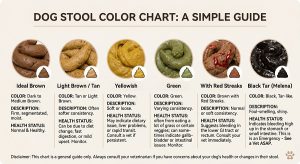
Think of it like this. Fresh blood hasn’t traveled far, so it stays red. Blood from the stomach or small intestine gets digested on the way out, so it turns dark and sticky. That’s why black stool worries vets more than a red streak.
Is It Really Blood? Lookalikes That Fool Owners
Before you panic, rule out the fakes. Several foods and medicines can change stool color. Beets, berries and foods or treats with red dye can make poop look red without any blood in it. Certain items can also darken stool without bleeding, including raw meat, activated charcoal, iron supplements, and Pepto-Bismol. Large amounts of liver can do the same. veg
Here’s a handler’s tip. Very dark brown stool can look black in poor light. Take it into daylight before you decide.
Real melena looks and smells different. It’s shiny, sticky and tar-like, with an unusually strong, metallic smell. If the stool is firm, dark brown and smells normal, check the diet first.
Don’t try a human at-home stool blood test either. Vets point out it won’t help, because dog food contains meat, and meat contains blood. A positive result tells you nothing.
When in doubt, treat it as real and call your vet.
Common Causes of Blood in Dog Stool
Most causes are treatable. A few are not, so here they are in order from common to serious.
1. Dietary indiscretion (eating the wrong thing)
Garbage, spoiled food, fatty scraps, bones and sudden food changes irritate the gut lining. You’ll often see loose stool with red streaks. Most dogs settle in a day or two, but watch for vomiting or a dog who stops drinking. Our guide on nutrition and health tips for working dogs explains why a steady, quality diet protects the gut.
2. Colitis (inflamed large intestine)
Colitis causes frequent, urgent trips outside, straining with little coming out, mucus and fresh red blood. Triggers include diet change, parasites, infection and stress. Boarding, travel or a house move can set it off in sensitive dogs.
3. Intestinal parasites
Hookworms, whipworms, roundworms, giardia and coccidia can all damage the gut lining. Whipworms usually cause red or pink stool from the lower bowel. Puppies and dogs that skip routine worming are at the highest risk. If you’re unsure about your schedule, read how often you should deworm your dog.
4. Anal gland or rectal problems
A small tear, infected anal gland or rectal irritation leaves fresh blood on the outside of the stool or on a wipe. Scooting, licking the rear end and straining are the clues.
5. Parvovirus
This is the one that scares every handler. Parvo attacks the gut and causes severe vomiting and bloody diarrhea, mostly in puppies and unvaccinated dogs. More on this in the puppy section below.
6. Acute hemorrhagic diarrhea syndrome (AHDS, formerly HGE)
AHDS is a sudden, severe illness that most competitor articles skip. It causes acute bloody diarrhea, often described as looking like raspberry jam, and small or toy breeds such as Yorkshire Terriers, Miniature Schnauzers, Miniature Poodles and Maltese are overrepresented. Vets often find a very high packed cell volume (PCV, the percentage of red cells in the blood), because the dog loses so much fluid into the gut. Mortality can be high if the dog goes untreated but is under 10% in hospitalized dogs. The lesson is simple: jam-like bloody diarrhea is an emergency, even if your dog still seems perky.
7. Bacterial infections
Salmonella, clostridial overgrowth and other bacteria can cause bloody diarrhea. Clostridium has been linked to AHDS. Raw diets and scavenging raise the risk.
8. Foreign bodies and trauma
Swallowed bones, sticks, toys and fabric can scrape or block the gut. Sharp pieces cause bleeding that may stop once the object passes. A blockage plus vomiting is an emergency.
9. Stomach ulcers and medicine side effects (the NSAID trap)
This is one of the most overlooked causes. NSAIDs such as ibuprofen and aspirin irritate the stomach lining. Vets also see the problem with prescription dog NSAIDs, and the risk rises when they’re combined with steroids. An ulcer can bleed and produce black stool. Never give your dog human painkillers.
10. Rat poison (rodenticide)
Many rodenticides stop blood from clotting. Rat bait can prevent normal clotting 48 to 72 hours after the dog eats it. That delay matters. Your dog may seem fine for two or three days, then show black stool, bruising, pale gums or weakness. If you know or suspect your dog ate bait, call a vet immediately. Don’t wait for signs.
11. Inflammatory bowel disease (chronic enteropathy)
If bloody stool keeps coming back, your vet may look at chronic inflammatory enteropathy. Diagnosis often involves diet trials, imaging and sometimes biopsies.
12. Tumors and clotting disorders
These are less common and more likely in older dogs. Polyps, growths in the colon or rectum, and conditions that stop blood clotting can all cause bleeding. Persistent or recurring blood in a senior dog always deserves a full workup.
Emergency, Same-Day or Wait? A Simple Triage Guide
This is where most articles leave you guessing. Use this as a rough guide, and call your vet or an emergency clinic if you’re ever unsure.
🔴 Go to an emergency vet now if your dog:
- Is a puppy or unvaccinated dog with bloody stool
- Passes black, tarry stool
- Passes jelly-like or large amounts of bloody diarrhea
- Is vomiting, especially if there’s blood in the vomit (see our guide to dog vomit colors and when to worry)
- Is weak, collapsing or very sleepy
- Has pale or white gums, fast breathing or a swollen, painful belly
- May have eaten rat poison, human painkillers or a sharp object
Why the rush? Blood loss can make a dog anemic very quickly. Small and young dogs have little reserve.
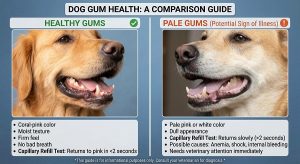
Quick gum check: Lift your dog’s lip. Healthy gums are usually pink and moist. Press a gum gently, then release. The color should come back within a second or two. White, grey or slow-to-recover gums are an emergency.
🟠 Call your vet the same day if:
- You see one small streak of red blood, but your dog is bright, eating and drinking
- You see blood plus mucus with straining
- Your dog has mild diarrhea with a little blood
- Your dog recently started a medicine and the stool color changed
🟡 Watch closely, but don’t wait long:
If your dog is truly normal, you can monitor for a short time while you wait for your vet’s advice. But if blood continues for more than 48 hours, even in a dog who seems well, get it checked. If it returns after clearing up, book a visit anyway. Recurring blood points to a deeper problem.
So what about the common worry, “My dog is pooping blood but acting normal”? Acting normal is a good sign, but it doesn’t rule out parasites, early colitis or a slow bleed. Call your vet and let them decide.
Special Cases: Puppies, Small Breeds and Working Dogs
Puppies and parvovirus
Bloody stool in a puppy is never a “wait and see” situation. Parvo is the big concern, and the numbers show why speed matters.
- Without treatment, parvo mortality can exceed 90%, while up to 85 to 90% of treated dogs can survive.
- An Austin, Texas shelter that treated 5,127 parvo dogs reported 86.6% survival, rising to 96.7% once a dog survived five days of treatment. That tells you the first few days are the most critical.
- Treatment in private practice can cost $1,000 to $2,000 in the US. Colorado State University estimated in-hospital costs at $1,500 to $3,000, against about $250 for a home protocol. Prices vary widely by country and clinic, and your vet decides what’s safe for your puppy.
Prevention beats treatment here. Puppies aren’t fully protected until 7 to 10 days after their last vaccine in the series. Until then, keep them away from dog parks, groomers and places where many dogs gather. Our puppy feeding guide can help you keep a young dog’s gut steady while you complete the vaccine series.
Small and toy breeds
Small dogs dehydrate fast and are overrepresented in AHDS. A Yorkie or Poodle with bloody diarrhea can crash in hours. Don’t “wait it out” overnight.
Working dogs and K9s (the angle nobody else covers)
Working dogs face extra gut risks: travel, boarding, changing water sources, scavenging in the field, hard exercise and training stress. All of these can trigger stress colitis or infections.
Here’s what I do as a handler:
- Log stool every day. In a kennel, we check each dog’s stool at morning clean-up. A change in color, shape or frequency gets noted and flagged. Spotting day-one changes saves days of recovery.
- Isolate first, ask questions later. If a dog shows bloody diarrhea, especially a young one, we separate it and disinfect before anything spreads. Parvo and other bugs move fast through shared runs, bowls and boots.
- Stop work. A dog with bloody stool doesn’t train, search or patrol until a vet clears it. Exercise worsens dehydration.
- Check the toolbox. Know exactly what your dog got in the last 72 hours: new food, treats, supplements, medicine, chew items or contact with baits. Handlers who keep a simple daily record answer the vet’s questions in seconds.
What To Do Right Now (Step by Step)
- Stay calm and look at the dog, not just the poop. Check energy, appetite, gum color and belly comfort.
- Note the details. Color (red or black), amount, texture, mucus, smell, and how many times it’s happened.
- Take a photo of the stool in good light. Vets find this very useful.
- Collect a fresh sample. Use a clean bag or lidded container and scoop the freshest, bloodiest portion. If you can’t leave right away, keep it cool. Try to bring it within a few hours.
- Offer fresh water. Don’t force it.
- Isolate from other dogs if your dog is a puppy, is vomiting or has bloody diarrhea.
- Call your vet. Describe the color, amount, other symptoms and anything your dog could have eaten.
What to tell the vet (have this ready):
- Your dog’s age, breed, weight and vaccine/worming dates
- When the blood first appeared and how often
- Any new food, treats, bones, medicines or supplements
- Any chance of rat poison, garbage, toxins or foreign objects
- Vomiting, appetite, drinking and energy changes
What NOT To Do
- Don’t give human medicines. Painkillers like ibuprofen and aspirin can cause ulcers and bleeding. Pepto-Bismol can turn stool black and hide the real picture.
- Don’t fast a puppy or small dog unless your vet tells you to.
- Don’t wait for the weekend. Bloody diarrhea gets worse fast.
- Don’t assume it’s “just stress.” Stress can cause colitis, but you only know after parasites, infection and other causes are ruled out.
- Don’t dismiss black stool because your dog seems fine. A dog with black tarry stool who acts normal still needs a same-day vet call.
How Vets Diagnose It (and What It Costs)
Your vet will start with a history and physical exam, then choose tests based on what they find.
- Fecal tests for worms, giardia and bacteria
- Parvovirus test in puppies
- Blood work to check hydration, red blood cell count, clotting and organ function
- PCV and total protein, which help diagnose AHDS
- X-rays or ultrasound to look for blockages, foreign bodies or masses
- Clotting tests if rat poison is possible
- Endoscopy or biopsy for chronic or repeat cases
A simple case (exam plus fecal test plus basic treatment) usually costs far less than a hospital stay. Hospitalization with IV fluids is where bills climb. Prices vary a lot between countries and clinics, so ask for an estimate before you agree to a plan, and ask what’s essential today versus what can wait.
Treatment and Recovery Timeline
Treatment depends on the cause. Here’s what recovery often looks like:
| Cause | Typical treatment | Typical timeline |
|---|---|---|
| Diet upset | Rest, bland vet-approved diet, water | A day or two |
| Parasites | Dewormer or antiparasitic medicine | Days to a couple of weeks, with follow-up fecal tests |
| Colitis | Diet change, gut-soothing care, treat the trigger | Days; recurrent cases take longer |
| AHDS/HGE | IV fluids, anti-nausea medicine, hospital care | Most dogs make a full recovery within a few days with prompt treatment |
| Parvovirus | Hospital supportive care | Austin shelter data showed a median treatment duration of about seven days |
| Ulcer/NSAID | Stop the drug, stomach protectants | Varies; follow-up needed |
| Rat poison | Vitamin K and monitoring, sometimes transfusion | Weeks of treatment and rechecks |
| Foreign body | Surgery or endoscopy | Depends on the procedure |
| IBD | Long-term diet and medicine plan | Ongoing management |
Interesting point from the research: one controlled study found that antibiotics didn’t change outcomes in AHDS dogs without signs of sepsis. Fluids are what matter most. This is a good reason to let your vet choose the treatment instead of pushing for antibiotics yourself.
After recovery, reintroduce normal food slowly over several days, and watch the next few stools carefully.
How To Prevent Bloody Stool
You can’t prevent everything, but good habits cut the risk a lot.
- Keep vaccines current. Finish the full puppy series and boosters.
- Deworm on schedule. Follow your vet’s plan.
- Change food slowly. Mix new and old food over 7 to 10 days.
- Lock up bins, bones and baits. Know what’s in your yard, your neighbor’s yard and your walking routes.
- Never give human painkillers. Ask your vet before any new medicine.
- Protect against stress. Keep routines steady around travel and boarding.
- Know your dog’s baseline. Daily observation catches problems early. My book, Beyond the Bark: Inside a Pro Handler’s Playbook for Raising the Ideal Dog, shows how to read your dog’s normal behavior the way a professional handler does, which makes small changes much easier to spot.
- Do regular vet checks, especially for seniors.
Frequently Asked Questions
1. Should I go to the vet if my dog poops blood once?
Yes, call your vet the same day, even for one episode. A single small streak in a bright, eating dog may be mild, but a vet should decide that, not guesswork. Go straight to the clinic for puppies, black stool, vomiting, weakness or large amounts of blood.
2. What does blood in dog poop mean?
It means the gut lining is irritated or bleeding. Bright red blood usually points to the colon, rectum or anus. Black, tarry stool points to the stomach or small intestine. Causes range from diet upset and worms to parvovirus, ulcers and poisoning.
3. Can I treat blood in my dog’s stool at home?
Only for waiting and monitoring while you get advice. Offer water, collect a sample and note the details. Don’t give human medicines or fast a puppy. Home care isn’t enough if your dog is weak, vomiting, not eating, or has black stool.
4. How long does blood in dog poop last?
A mild upset may clear in a day or two. If blood lasts more than 48 hours, keeps returning, or comes with other signs, your dog needs an exam. Ongoing blood often points to parasites, colitis or a chronic condition.
5. Why is my dog pooping blood but acting normal?
Many dogs with colitis, worms or mild irritation still play and eat. Acting normal is encouraging, but it doesn’t rule out a problem. Call your vet, and watch for lethargy, vomiting, pale gums or repeat bleeding.
Conclusion: What To Remember
Blood in dog poop can be mild or dangerous, and the color, amount and your dog’s behavior tell you which way to lean. Here’s the short version:
- Bright red is usually a lower-gut problem. Call your vet the same day.
- Black and tarry is digested blood. Treat it as urgent.
- Jelly-like, large-volume or bloody diarrhea needs emergency care.
- Puppies, small breeds and any dog that’s vomiting or weak should be seen right away.
- Check for lookalikes, but don’t gamble if you’re unsure.
- Take a photo and a fresh sample, and keep notes on food, meds and exposure.
- Prevent it: vaccinate, deworm, change food slowly and keep toxins locked away.
If you want more practical, handler-tested advice on your dog’s health and training, subscribe to our weekly articles roundup newsletter at arfsk9team.com.ng/newsletter. We send the best new guides straight to your inbox every week.
Disclaimer: This article is for education and isn’t a substitute for professional veterinary care. If your dog is unwell, contact your vet or an emergency clinic.
Sources and further reading: Merck/MSD Veterinary Manual – Acute Hemorrhagic Diarrhea Syndrome · AKC – Blood in Dog Poop · Hill’s Pet – Blood in Dog Stool · Austin shelter parvovirus study · AKC – Parvo treatment news

Her work centres on obedience, detection, protection and operational readiness. She favours proven methods built on repetition, consistency and real-world conditioning, so that both dogs and handlers are prepared for high-pressure tasks.
Rofiat represented the Nigerian Army Dog Centre at the Nigerian Army Day Celebration (NADCEL) 2026, where she led demonstrations in obedience, explosive detection, agility and tactical movement. Through articles, training content and documentaries, she shares field-based insight into how structured training, clear communication and trust between handler and dog affect performance and reliability.
She is the author of Beyond the Bark: Inside a Pro Handler's Playbook for Raising the Ideal Dog, a practical guide that helps dog owners and handlers apply professional training principles in everyday situations.
- Dog Agility Course Layout: Easy DIY Setup - October 7, 2026
- Local Dog Breeds: Temperament, Health & Training Guide - October 6, 2026
- How Long Do Military Working Dogs Serve? Full Guide - October 5, 2026