Dog Vomiting Colors: Causes, Care & When to Worry
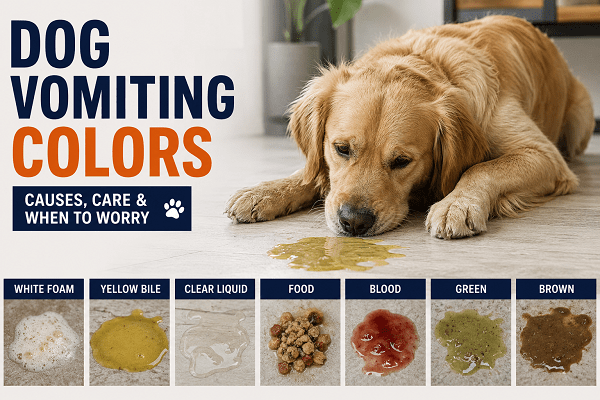
What do dog vomiting colors mean? Yellow and white foam usually point to an empty stomach and bile. Green often means grass or bile. Clear liquid means water or saliva. Red, pink, black or “coffee-ground” vomit means blood and needs a vet right away. Color is only one clue. How often your dog vomits, how they act, and whether they can keep water down matter even more.
The simple rule: One vomit and a bright, hungry dog can usually be watched at home. Repeated vomiting, blood, a swollen belly, retching with nothing coming up, weakness or pale gums means call a vet now.
Table of Contents
- Introduction
- Vomiting, Regurgitation or Retching: Know the Difference
- Dog Vomit Color Chart (Quick Reference)
- Dog Vomiting Colors Explained, One by One
- Read More Than Color: Texture, Smell and Timing
- Common Causes of Vomiting in Dogs
- Vomiting by Age: Puppies, Adults and Seniors
- Quick 5-Minute Check Before You Decide
- What to Do at Home (Step by Step)
- When Vomiting Is an Emergency
- What to Tell Your Vet
- Vomiting in Working and Active Dogs
- Prevention Tips
- FAQs
- Conclusion
Introduction
You walk into the kitchen and there it is: a puddle of vomit and a dog who looks sorry for themselves. Your first question is probably the same one every owner asks: is this serious?
Here’s the problem. Dog vomiting can mean anything from “ate grass too fast” to “swallowed a sock” or “poisoned.” The color of the vomit helps, but it can also fool you. A yellow puddle might be harmless. It might also be the first sign of something that needs a vet tonight.
In this guide, you’ll learn what each of the main dog vomiting colors means, what else to look for, what’s safe to do at home, and which warning signs mean you should stop waiting and go. I’ve also added the handler’s view: how we think about vomiting in dogs that train and work hard every day.
Quick note: I’m sharing general education here, not a diagnosis. Your vet is the only one who can examine your dog.
Vomiting, Regurgitation or Retching: Know the Difference
Before you look at color, work out what actually happened. These three look similar but mean different things.
- Vomiting is active. Your dog drools, licks their lips, looks nauseous, then heaves. Their belly muscles contract. The stomach contents come up, often with a sour smell.
- Regurgitation is passive. Food comes up with no warning, often in a tube shape, and smells like fresh food. It points more to the esophagus (food pipe) than the stomach.
- Retching is heaving with little or nothing coming up.
Why this matters: Repeated, unproductive retching, especially with a tight or swollen belly, is a classic sign of gastric dilatation-volvulus (GDV), also called bloat. That’s a life-threatening emergency. Don’t wait to see what color it is.
Dog Vomit Color Chart (Quick Reference)
| Color | Most Likely Meaning | Urgency |
|---|---|---|
| Clear liquid | Water, saliva, or stomach fluid | Low if once; watch if repeated |
| White foam | Empty stomach, acid, mild irritation | Low if once; higher if repeated or with retching |
| Yellow | Bile, often an empty stomach | Low to medium |
| Orange | Bile mixed with food or fluids | Low to medium |
| Green | Grass, or a lot of bile | Low to medium |
| Brown (kibble color) | Digested food | Low if once |
| Brown with a fecal smell | Possible blockage | Emergency |
| Pink or red | Fresh blood | Call vet today or now |
| Black or coffee-ground | Digested blood | Emergency |
| Blue-green or bright dye color | Possible rat poison or dyed items | Emergency |
| Contains worms | Parasites | Vet visit soon |
Use this as a starting point only. Now let’s go through each one.
Dog Vomiting Colors Explained, One by One
White Foam
White foam is air and saliva mixed with a little stomach fluid. It’s common when the stomach is empty, especially in the early morning.
Most of the time, a single episode isn’t a worry. But white foam with retching and a swollen belly can signal bloat. White foam can also come up with kennel cough, acid reflux, or early toxin exposure. If your dog is weak, restless or keeps trying to vomit, don’t treat it as “just foam.”
Yellow Vomit
Yellow usually means bile, a digestive fluid made by the liver. It shows up when the stomach’s been empty a long time.
Some dogs have what vets call bilious vomiting syndrome. They vomit yellow bile in the early hours, then feel fine and want breakfast. It’s common enough that vets see it often, and it’s usually managed by moving a meal later at night or adding a small bedtime snack.
Still, yellow vomit isn’t always harmless. If it happens more than once in 24 hours or comes with diarrhea, lethargy or no appetite, get it checked. Bile can also show up with pancreatitis, gut inflammation, parasites, or a blockage.
Orange Vomit
Orange is usually yellow bile mixed with food, or some dog food dyes. It’s treated like yellow vomit. Check what your dog ate in the last day, because colored treats and kibble can stain vomit.
Green Vomit
Green has a few causes:
- Grass. The most common and least worrying.
- Heavy bile. Dark green often means more bile than the yellow type.
- Something swallowed. Plants, toys or other items.
Here’s a tip I give owners: look for blades of grass in the puddle. If you can see them and your dog’s bright and normal, it’s usually minor. Dark green, slimy vomit with a sick dog is different. Call your vet.
Bright, blue-green or neon-colored vomit is a separate red flag. Some rat poisons are dyed this color. If your dog could have reached any rodent bait, treat it as an emergency and call a vet or poison hotline straight away.
Clear Liquid
Clear vomit is mostly water or saliva. It often happens when a dog gulps water after hard play, or when the stomach is irritated and empty.
The risk here is dehydration. If your dog throws up every time they drink, they’re losing fluid faster than they take it in. Puppies, toy breeds and seniors dry out quickly. You can learn the early signs in our guide on dehydration in dogs in hot climates.
Undigested Food
How long after eating did it come up?
- Within minutes, tube-shaped, with no heaving: probably regurgitation, often from eating too fast.
- An hour or more later, partly digested, with nausea: true vomiting. Think diet change, scavenging, stomach upset or infection.
- Food keeps coming back up: possible blockage, pancreatitis or other illness. See a vet.
Brown Vomit
Brown can be nothing more than kibble color. But look closer:
- Smells like feces? Take it seriously. It can mean a blockage in the intestines, or that your dog ate stool. A fecal smell with repeated vomiting is an emergency.
- Looks like coffee grounds? That’s digested blood. Treat it like black vomit.
Pink or Red Vomit
Pink or red means blood. Fresh red blood comes from the mouth, throat, esophagus or stomach. Pink can mean a small amount of blood mixed with fluid.
A tiny streak after violent retching can happen from throat irritation. But you can’t know that from your living room. Call your vet the same day, or right away if your dog is weak, painful or vomiting a lot. Blood in vomit has many causes, including ulcers, toxins, foreign objects, and clotting problems.
Related: if you also see blood in stool, read our guide on blood in a dog’s poop.
Black or Coffee-Ground Vomit
Black or grainy dark vomit usually means digested blood from higher up in the gut. It can also come from dirt or mud, or dark foods, so context matters. But with a sick dog, assume the worst and go.
Pale gums, weakness, a fast heartbeat or collapse alongside black vomit means emergency vet now.
Vomit With Worms, Foreign Objects or Strange Texture
Take a close look before you clean up. You might see:
- Spaghetti-like worms (roundworms). Needs a vet and a deworming plan.
- Pieces of toy, sock, bone, plastic or cloth. Even if it came up, more may still be inside. Call your vet.
- Thick, slimy mucus. Often stomach irritation.
- Yellow, frothy and foul-smelling. Possible gut infection or bile reflux.
Read More Than Color: Texture, Smell and Timing
Competitors love color charts. Vets care more about the full picture. Look at these four things too.
1. Frequency. One time is different from three times in a day. Multiple episodes in a few hours is a worry on its own, no matter what color it is.
2. Behavior. A dog who vomits and then asks for food and wants to play is in a very different place than a dog who hides, trembles or won’t move.
3. Smell. Sour is common. Fecal is a warning. Sweet or chemical smells can hint at toxins.
4. Timing. Vomit within minutes of eating, in the early morning, hours after exercise, or after a new treat each tell a different story. Keep a quick note on your phone.
Common Causes of Vomiting in Dogs
Many causes are short-lived and mild. Some are time-sensitive emergencies.
Mild and common:
- Eating too fast
- Eating grass, garbage or table scraps (dietary indiscretion)
- Sudden food change
- Motion sickness
- Stress and excitement
- Mild food intolerance
More serious:
- Pancreatitis, often after a fatty meal
- Intestinal blockage from toys, socks, corn cobs or bones
- Parvovirus, especially in unvaccinated puppies
- Parasites
- Toxins: chocolate, xylitol (a sweetener), grapes and raisins, human medicines, rat poison, some plants
- Kidney or liver disease
- Addison’s disease and other hormone problems
- Gastric dilatation-volvulus (bloat)
- Cancer
Diet matters more than most owners realize. Moving between foods too fast is a frequent trigger. Our nutrition and health guide for working dogs explains how to switch food safely.
Vomiting by Age: Puppies, Adults and Seniors
Age changes how fast you should act.
Puppies (under 6 months)
Puppies have tiny fluid reserves and can crash fast. Vomiting plus diarrhea, lethargy or no appetite in a young, unvaccinated puppy raises concern for parvovirus. Don’t wait it out. Call your vet the same day. Puppies also shouldn’t fast for long, because their blood sugar can drop.
Healthy adults
A single episode in a bright, normal adult is often safe to watch for 12 to 24 hours with careful monitoring. Repeated vomiting beyond that, or any red flag, means a vet visit.
Senior dogs
Older dogs are more likely to have kidney disease, liver disease, tumors or pancreatitis behind vomiting. Don’t write it off as “old age tummy.” Persistent vomiting in a senior deserves an exam and often bloodwork.
Deep-chested breeds
Great Danes, Saint Bernards, Weimaraners, Irish Setters, Dobermans, German Shepherds and similar breeds carry higher bloat risk. Cornell University’s canine health center notes that large, deep-chested dogs are most at risk, though any dog can be affected. One widely cited study found Great Danes had a lifetime risk close to 40%. Know the signs, and keep your vet’s emergency number saved.
Quick 5-Minute Check Before You Decide
Do this simple check before you pick a plan. It takes five minutes.
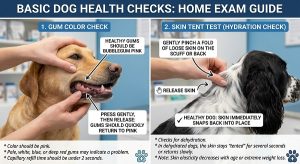
- Check the gums. Healthy gums are pink and moist. Pale, white, blue, gray or very red gums are a red flag.
- Press the gum, then release. Color should return in about 1 to 2 seconds. Slower means poor circulation.
- Feel the belly gently. Is it tight, swollen or painful? Does your dog flinch or groan?
- Check hydration. Lift the skin gently between the shoulders. It should snap back fast. If it stays tented, or the gums are sticky or dry, dehydration is likely.
- Do the water test. Offer a few small sips. If your dog keeps it down for 15 to 30 minutes, that’s a good sign. If it comes straight back up, call your vet.
What to Do at Home (Step by Step)
These steps apply only to a bright, alert adult dog with a single or mild episode. If any emergency sign shows up, skip this and call your vet.
- Pick up food, not water. Rest the stomach for about 6 to 12 hours in a healthy adult. Don’t fast puppies, toy breeds, diabetic dogs or seniors without your vet’s advice.
- Offer small sips of water. A few teaspoons to a tablespoon at a time, every 15 to 20 minutes. A full bowl can trigger more vomiting.
- Watch closely. Note how many times they vomit, the color, and how they act.
- Reintroduce food slowly. If vomiting has stopped, offer a small meal of plain boiled chicken (no skin, bones or seasoning) with plain white rice, roughly one part chicken to two parts rice. Or use a vet-recommended gastrointestinal diet.
- Feed small and often. Three to four tiny meals a day for 2 to 3 days.
- Switch back gradually. Mix the normal food in over 3 to 5 days.
Don’t do these:
- Don’t give human anti-nausea or pain pills. Ibuprofen, paracetamol and aspirin can be toxic to dogs.
- Don’t force your dog to vomit. It can cause more harm.
- Don’t keep feeding “to settle the stomach” while vomiting continues.
- Don’t ignore vomiting that lasts beyond 24 hours, even if your dog seems okay.
When Vomiting Is an Emergency
Go to a vet or emergency clinic right away if you see any of these:
- Repeated vomiting (more than 2 to 3 times in a few hours)
- Retching with nothing coming up, especially with a swollen belly
- Blood, black or coffee-ground vomit
- Vomit with a fecal smell
- Vomiting after swallowing a toy, sock, bone, corn cob or toxin
- Pale, white, gray or blue gums
- Weakness, collapse, or severe lethargy
- Painful belly, hunched posture or crying out
- Can’t keep water down
- Vomiting with bloody or watery diarrhea
- Puppies, seniors, or dogs with existing illness who vomit more than once
- Vomiting that lasts more than a day
Here’s what I tell every owner: you know your dog. If something feels off, trust that feeling. A vet visit that turns out unnecessary costs you some money. Waiting on a blockage or bloat can cost your dog’s life.
What to Tell Your Vet
You’ll get a faster diagnosis with clear details. Before you call, jot down:
- When it started and how many times your dog has vomited
- What it looked like: color, texture, smell, any blood, worms or objects
- What your dog ate in the last 24 to 48 hours, including treats, table scraps, chews and anything they might have scavenged
- Possible toxins: medicines, plants, cleaning products, rat bait
- Other symptoms: diarrhea, no appetite, drinking more or less, lethargy
- Medicines or flea and tick products your dog takes
- Vaccination and deworming dates
Pro tip: Take a clear photo of the vomit, or bring a sample in a sealed bag. It helps your vet more than a verbal description.
Vomiting in Working and Active Dogs
This is where K9 experience gives a different view. Working and sport dogs push their bodies harder, so stomach trouble shows up differently.
1. Timing meals around work. Hard exercise right after a big meal is a recognized bloat risk factor. As a rule of thumb, many handlers wait at least an hour or two after feeding before intense work, and wait for breathing to settle before a big meal afterward. Ask your vet for guidance for your dog’s breed and build.
2. Heat plus exertion. In hot climates, heat stress can cause vomiting, drooling and weakness. If your dog vomits during or after work in heat, stop training, cool them gradually, and call your vet. Heatstroke can be fatal.
3. Water management. Gulping a huge amount of water after hard work often brings it back up as clear liquid. Offer small amounts during breaks instead.
4. Stress and travel. Transport, new kennels and busy training environments can trigger stress vomiting. Build calm travel habits slowly, with short trips and rewards.
5. Scavenging. Dogs in the field pick up all sorts of things. Train a strong “leave it” and “drop it.” It’s not just obedience. It’s a health tool.
Handler’s note: this is the place to add one real case from your own experience at the Nigerian Army Dog Centre or in your training work, such as a dog that vomited after a long session and what you did. A true, specific story here will strengthen the E-E-A-T signal far more than general advice.
If you want practical guidance on raising a healthy, well-trained dog from day one, my e-book Beyond the Bark: Inside a Pro Handler’s Playbook for Raising the Ideal Dog covers the daily habits that make a difference.
Prevention Tips
You can’t stop every upset stomach, but these habits cut the risk.
- Feed a consistent diet and change foods slowly over 5 to 7 days
- Use slow feeders or puzzle bowls for fast eaters
- Split meals into two or three smaller portions instead of one large one
- Skip the rich table scraps, especially fatty foods
- Secure garbage, medicines and rat bait
- Keep chew toys sized correctly and throw away damaged ones
- Teach “leave it” and “drop it”
- Keep up vaccines and deworming
- Manage stress with routine, exercise and calm travel training
- Schedule a late-night snack if your dog vomits yellow bile in the morning
Frequently Asked Questions
1. Why is my dog throwing up white foam?
White foam usually comes from an empty stomach, acid irritation or mild nausea. A single episode in a normal dog isn’t usually serious. If your dog keeps retching, has a swollen belly, or seems weak, see a vet right away because it can signal bloat or another emergency.
2. Is yellow vomit dangerous in dogs?
Yellow vomit is usually bile and is often harmless when it happens once, especially in the early morning. If it happens repeatedly, or comes with lethargy, diarrhea or no appetite, have your vet check for bilious vomiting syndrome or an underlying illness.
3. My dog threw up once. Should I worry?
Not always. If your dog is bright, hungry, and keeps water down, you can monitor them at home. Call your vet if they vomit again, refuse food, or show other symptoms.
4. What should I do if my dog keeps vomiting?
Stop feeding and call your vet. Repeated vomiting causes dehydration and may point to infection, blockage, pancreatitis or poisoning. Puppies and senior dogs need to be seen quickly.
5. How many times can a dog vomit before seeing a vet?
Many vets advise a check if your dog vomits more than once or twice, vomits for more than 4 to 6 hours, or has any other symptom. Blood, retching with a swollen belly, or collapse means go immediately.
Conclusion
The color of dog vomit gives you useful clues, but it never tells the whole story. Yellow and white foam are often mild. Green is often grass or bile. Clear liquid risks dehydration. Red, pink, black, coffee-ground, blue-green, or fecal-smelling vomit should send you to a vet fast.
Here’s what to remember:
- Check your dog, not just the vomit. Behavior, gums, belly and water tolerance matter most.
- One mild episode in a bright adult can usually be watched. Repeated vomiting, blood, or retching with a swollen belly can’t.
- Puppies and seniors need faster action.
- Take a photo and note timing and diet for your vet.
- When in doubt, call. Early action costs less and saves lives.
Want more practical dog health guidance from a working handler? Subscribe to our weekly articles roundup newsletter and get new guides in your inbox.
Disclaimer: This article is for education only and doesn’t replace professional veterinary advice. If your dog is unwell, contact your vet.

Her work centres on obedience, detection, protection and operational readiness. She favours proven methods built on repetition, consistency and real-world conditioning, so that both dogs and handlers are prepared for high-pressure tasks.
Rofiat represented the Nigerian Army Dog Centre at the Nigerian Army Day Celebration (NADCEL) 2026, where she led demonstrations in obedience, explosive detection, agility and tactical movement. Through articles, training content and documentaries, she shares field-based insight into how structured training, clear communication and trust between handler and dog affect performance and reliability.
She is the author of Beyond the Bark: Inside a Pro Handler's Playbook for Raising the Ideal Dog, a practical guide that helps dog owners and handlers apply professional training principles in everyday situations.
- Dog Agility Course Layout: Easy DIY Setup - October 7, 2026
- Local Dog Breeds: Temperament, Health & Training Guide - October 6, 2026
- How Long Do Military Working Dogs Serve? Full Guide - October 5, 2026