5 Safe Natural Flea Protection Tips for Dogs (2026 Guide)

The safest natural flea protection for dogs is a layered routine: comb weekly with a fine flea comb, bathe with a mild dog shampoo, vacuum and hot-wash bedding to remove eggs and larvae, manage the yard (short grass, less shade and debris), and feed for healthy skin. These methods carry very low risk. But they work best for prevention and mild cases. For an active infestation, add a vet-approved preventive.
Table of Contents
- Introduction: Why “Natural” Needs a Reality Check
- Why Fleas Are Harder to Beat Than Most Owners Think
- Natural Flea Remedies Ranked: What the Evidence Says
- Tip 1: Comb Weekly (and Learn to Read Flea Dirt)
- Tip 2: Bathe Smart, Not Often
- Tip 3: Fight Fleas in Your Home
- Tip 4: Fix the Yard
- Tip 5: Feed for Tougher Skin
- “Natural” Remedies to Skip
- Special Cases: Puppies, Cats in the House, Working Dogs and Kennels
- Climate and Season: When Fleas Actually Strike
- Your 4-Week Natural Flea Protection Plan
- When Natural Isn’t Enough
- Handler’s Field Notes
- FAQs
- Conclusion
Introduction: Why “Natural” Needs a Reality Check
Here’s a conversation I have all the time. An owner tells me, “I only use natural flea protection for my dog.” Then I ask what that means. Sometimes it’s a smart routine of combing, cleaning and yard care. Other times it’s a homemade spray with five essential oils, and a dog drooling in the corner.
Natural flea protection for dogs can work. But “natural” doesn’t mean “safe,” and it doesn’t mean “effective.” Some natural methods are backed by solid parasitology. Others are popular mostly because they sound gentle.
In this guide you’ll learn:
- How the flea life cycle works, and why it ruins most quick fixes
- Which natural flea remedies for dogs have real evidence behind them (and which don’t)
- Five safe tips you can start this week
- The “natural” remedies that can hurt your dog, with the actual study behind the warning
- How to adjust for puppies, homes with cats, working dogs and kennels
- A simple 4-week plan, and clear signs it’s time to call your vet
I’ll be honest about the limits too. Most articles on this topic hand you a list of 10 or 30 home remedies and stop there. A list isn’t a plan, and it won’t fix a flea problem.

Why Fleas Are Harder to Beat Than Most Owners Think
See one flea on your dog and you’re seeing the tip of the iceberg. Vets and parasitologists commonly estimate that only about 5% of a flea population is adult fleas on your pet. The other 95% is eggs, larvae and pupae living in carpets, bedding, sofas and soil.
The numbers add up fast. A female flea starts laying eggs within about a day of her first blood meal. Sources vary on the exact rate, from roughly 25 to 50 eggs a day. The eggs aren’t sticky, so they drop off your dog wherever she walks, sleeps or scratches. That means your living room becomes the nursery.
Here’s what’s hiding in your home:
| Stage | Where it lives | What it does | Why it matters for natural control |
|---|---|---|---|
| Egg | Falls off your dog into bedding, carpet, soil | Hatches in days | Combing and washing remove eggs |
| Larva | Dark, humid spots: under furniture, in carpet fibres, shaded soil | Feeds on flea dirt (digested blood) and debris | Hates dryness and heat; vacuuming and shade removal hit it hard |
| Pupa | Inside a protective cocoon in carpet or soil | Waits for a host | The toughest stage; vibration and warmth trigger it to hatch |
| Adult | On your dog | Bites, breeds, lays eggs | Only about 5% of the problem |
The full cycle can take as little as two weeks in warm, humid conditions, but it can stretch to several months. Clinical references put the range at about two weeks to six months. Pupae can sit dormant, then hatch when they sense vibration or body heat. That’s why owners think the fleas are gone, then get hit by a fresh wave three weeks later.
The takeaway: any method that only targets adult fleas on your dog will fail on its own. A University of Georgia extension guide says it plainly: to control a flea infestation, you need to treat the pet, the home and the yard. That’s the logic behind every tip below.
Fleas aren’t just itchy, either. They can cause flea allergy dermatitis (a skin reaction to flea saliva that can make one bite miserable), carry tapeworm, and cause blood loss in puppies and small dogs with heavy infestations.
Natural Flea Remedies Ranked: What the Evidence Says
This is the part most competing articles skip. They list remedies as if they’re all equal. They aren’t. Here’s my honest read of the evidence, based on veterinary and extension sources.
| Natural method | How it works | Evidence quality | Safety for dogs | My verdict |
|---|---|---|---|---|
| Flea combing | Physically removes adults, eggs and flea dirt | Strong (mechanical) | Very safe | Do it weekly |
| Mild shampoo bath | Soap breaks the flea’s waxy coating so it drowns | Good, but short-lived | Safe in moderation | Use during flea season |
| Vacuuming + hot-washing bedding | Removes eggs, larvae, pupae; heat and dryness kill them | Strong | Very safe | The most underrated step |
| Soapy-water flea trap | Lamp attracts adults; soap stops them escaping | Limited (adults only) | Safe if dogs can’t drink it | Useful for monitoring |
| Beneficial nematodes (outdoors) | Microscopic worms that parasitise flea larvae in soil | Moderate; results vary with moisture and shade | Safe for pets and people | Worth trying in shaded, moist areas |
| Yard care (mow, clear debris, let in sun) | Removes the damp, shaded habitat larvae need | Moderate (habitat logic) | Very safe | Free and effective |
| Food-grade diatomaceous earth (home only) | Dries out insects that touch it | Weak to moderate; not proven on dogs | Don’t use on the dog; lung irritant | Limited use, with care |
| Omega-3 and good nutrition | Healthier skin barrier; milder reactions | Supports skin; does not repel fleas | Safe at proper doses | Supportive only |
| Apple cider vinegar | Claimed to repel via acidity | Weak; no solid proof | Can sting irritated skin | Nice-to-have at best |
| Coconut oil | Claimed to smother fleas | Weak; mostly anecdotal and from sellers | Generally safe, but can upset the gut | Don’t rely on it |
| Essential oils (tea tree, clove, etc.) | Some repel or kill in lab tests | Lab evidence, but real-world safety problems | Real toxicity risk | Skip for flea control |
| Garlic | Folk remedy | No good evidence | Toxic in larger amounts | Skip |
Notice the pattern. The methods with the best evidence are the boring, physical ones: combing, washing, vacuuming, habitat control. The flashy “magic spray” remedies sit at the bottom.
Tip 1: Comb Weekly (and Learn to Read Flea Dirt)
A fine-toothed flea comb is the cheapest tool in your kit, usually a few dollars. It also gives you information nothing else does.
How to comb properly:
- Do it when your dog is relaxed, like after a walk.
- Start at the neck and shoulders, then work to the base of the tail and the belly. Fleas love warm, sheltered spots.
- Keep a bowl of warm, soapy water beside you. Dip the comb after every pass. The soap drowns the fleas you catch.
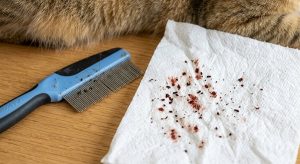
- Wipe the comb on a damp white paper towel.
Read the evidence on the towel. Flea dirt looks like small black specks. Press the towel and watch. If the specks smear reddish-brown, that’s digested blood, which means fleas are feeding on your dog even if you never spot a live one. A “flea-free” dog with reddish smears isn’t flea-free.
This is the first thing I teach new handlers. A weekly comb session works as a flea check, a skin check and a bonding session in one. You’ll catch ticks, hot spots and small wounds early. If your dog struggles to stay calm, build the habit slowly with treats. Our dog grooming guide covers how to make grooming a calm routine from puppyhood.
Tip 2: Bathe Smart, Not Often
A bath with a mild, dog-safe shampoo kills adult fleas on contact. It’s a mechanical effect: the soap strips the flea’s protective coating. That makes it low-risk, but it only removes what’s on the dog right now. Eggs in your house don’t care.
A smarter bathing routine:
- Use a pH-balanced dog shampoo. Dog skin has a different pH from ours, so human shampoo can leave it dry and irritated.
- Bathe every 2 to 4 weeks in flea season, not every few days. Over-bathing strips natural oils and can leave skin more irritated, which makes flea itch feel worse.
- Lather the neck first. Fleas flee toward the head when they sense water. Wash the neck and ears area first, then work down the body.
- Leave the lather on for the time on the bottle (usually several minutes) before rinsing.
- Dry fully. A damp undercoat is a friendly place for fleas and skin infections.
A diluted apple cider vinegar rinse is popular, and it’s usually safe if you dilute it well and avoid broken skin. But I treat it as optional. At least one pet-health publisher notes there’s no solid science showing it controls fleas. Don’t count on it.
One more point: dish soap in a one-off emergency bath is fine, but don’t make it routine. It dries the skin.
Tip 3: Fight Fleas in Your Home
If 95% of the problem lives in your house, this is where you win or lose.
The weekly home routine:
- Vacuum high-traffic spots daily during an outbreak, and at least twice a week otherwise. Cover carpets, rugs, sofa cushions, baseboards, under furniture and your dog’s favourite sleeping spots. Vibration can also trigger pupae to hatch, which sounds bad but helps you, because newly hatched fleas are easier to kill than cocooned ones.
- Empty the vacuum outside, straight away. Seal the bag or empty the canister into a bin outdoors. Fleas can crawl back out.
- Wash dog bedding weekly in hot water, then dry on high heat. Larvae are fragile and don’t survive dryness or high temperatures well.
- Wash your own throws, car blankets and crate covers too. Don’t forget the car and any travel crate your dog uses.
- Steam-clean carpets and upholstery if you can. Heat reaches places a vacuum can’t.
- Set a soapy-water flea trap. Fill a shallow dish with warm water and a squirt of dish soap, and put a night-light or small lamp a few inches above it. Fleas jump toward the warmth and light, land in the water, and can’t escape. Traps only catch adults, so use them to monitor your progress, not as your main weapon. Keep them where pets and kids can’t drink the water.
About diatomaceous earth (DE). You’ll see DE recommended everywhere. Here’s the careful version: food-grade DE is a fine powder made from fossilised algae. It can dry out insects that crawl through it. But the University of Georgia extension guide notes that DE contains silica, which can harm the lungs when inhaled. It also isn’t proven to work well on adult fleas. So:
- Never rub DE into your dog’s coat. Dogs can inhale it, and it can dry out skin.
- If you use it at all, apply a very thin layer to dry carpet or crevices, leave it for a day, then vacuum it up. Wear a dust mask and keep pets and children out of the room while you work.
- Use food-grade DE only. Pool-grade DE is chemically treated and is not safe.
Be realistic about timing, too. Because pupae can hatch for weeks, keep this routine going for at least 4 to 8 weeks after you last see a flea. Stopping at week two is the number one reason owners say “natural doesn’t work.”
Tip 4: Fix the Yard
Flea larvae are fragile. They need shade, moisture and organic debris. A sunny, dry, tidy yard is a poor nursery. A shaded, damp, leafy corner is a five-star one.
Yard habits that help:
- Mow regularly and bag or compost clippings away from where your dog rests.
- Rake leaf litter and clear piles of debris, especially under decks, shrubs and trees.
- Let sunlight in. Trim low branches over your dog’s favourite lying spots.
- Keep wildlife out. Squirrels, rabbits, foxes, stray cats and rodents can reintroduce fleas. Seal gaps under sheds and decks.
- Focus on hot spots, not the whole lawn. The UGA guide points out that larvae prefer shaded, humid, still-air areas, so blanket-spraying the whole yard is wasteful. Treat the places your dog lies down.
Beneficial nematodes. These are microscopic worms (the species Steinernema carpocapsae is the one usually sold for fleas) that infect and kill flea larvae in the soil. They’re safe for pets, people and plants, and there’s published research behind the idea. But results vary, and I’d call the evidence moderate, not magic:
- They need moist soil. Dry, baking ground kills them.
- They’re alive, so buy fresh stock, keep them cool, and apply them quickly, usually at dusk or on an overcast day.
- Water the area lightly before and after.
- Aim them at shaded, damp, high-traffic spots, such as under the porch or tree where your dog sleeps.
- Don’t expect them to fix an indoor problem.
Tip 5: Feed for Tougher Skin
Let’s be clear: food doesn’t repel fleas. Anyone who tells you garlic or brewer’s yeast will keep fleas off your dog is selling you folklore. But nutrition affects how your dog reacts to fleas, and that matters.
A dog with a healthy skin barrier handles bites, scratching and mild irritation better. And flea allergy dermatitis is one of the most common skin conditions vets see, so reducing skin inflammation helps.
What actually helps:
- A complete, balanced diet that matches your dog’s age, size and workload.
- Omega-3 fatty acids (fish oil or algae oil) support the skin barrier and may soften inflammatory reactions. Ask your vet for a dose by body weight. More isn’t better, and too much can cause loose stools.
- Fresh water, always. Dehydrated skin cracks more easily.
- Coat care. Regular brushing spreads natural oils and removes dead hair that traps flea eggs.
For working dogs that burn serious calories, skin and coat often show nutrition gaps first. Our working dog nutrition guide goes deeper on feeding for performance and coat health.
“Natural” Remedies to Skip
Some popular home remedies for fleas on dogs can cause real harm. Here’s what to avoid, and why.
Essential oils. This is the big one. Oils like tea tree, clove, cinnamon, eucalyptus and pennyroyal show flea-killing effects in lab settings, which is why they’re everywhere online. But lab results aren’t the same as safe use on a living dog.
In the US, plant-based flea products made from essential oils can fall into an EPA “minimum risk” category that exempts them from the usual registration. That means no required testing and no quality checks on concentration. A study from University of Illinois researchers looked at ASPCA Animal Poison Control Center records from 2006 to 2008 involving these products. Of the dogs and cats exposed, 89% of dogs and 92% of cats showed at least one adverse effect, even when owners followed the label. Dogs most often showed lethargy and vomiting, and most signs began within 24 hours.
A fair caveat: that was a small group (9 dogs and 39 cats), and it only counted pets whose owners called a poison line, so it can’t tell us how common problems are overall. But the main message holds. Natural flea products made with essential oils aren’t automatically gentle, and nobody is regulating how strong they are. I’d rather you skip them than gamble.
Garlic. It doesn’t control fleas, and in larger amounts it can damage a dog’s red blood cells. Skip it.
DE rubbed on the dog. Covered above: keep it off your dog.
Undiluted apple cider vinegar. It can sting and irritate. Always dilute, and never apply to raw or broken skin.
Homemade “flea collars” and DIY herbal dips. Dose and concentration are guesswork, and your dog can lick or chew them.
Anything marked “natural” with a vague label. If the ingredient list is hidden or the brand promises “instant” results, walk away.
Warning signs after any new product: drooling, tremors, vomiting, wobbling, unusual lethargy, breathing trouble or skin swelling. Wash the product off with mild dog shampoo and call your vet or local animal poison line right away. For mild allergy-type reactions, our Benadryl for dogs dosage guide explains what it can and can’t do, but please call your vet first for anything beyond mild itching.
Special Cases: Puppies, Cats in the House, Working Dogs and Kennels
The standard advice online assumes one healthy adult dog in one tidy home. Real life is messier.
Puppies and small dogs. They have less blood to lose and less body mass to process anything you put on them. Stick to combing, mild puppy-safe shampoo, and cleaning the home and yard. Don’t use essential oils, DE or homemade sprays. If a puppy has a heavy flea load, see a vet the same day, because anaemia can develop faster than owners expect. Always check the label age minimum on any product.
Homes with cats. Cats are more sensitive to many substances, including essential oils and permethrin (an ingredient in some dog flea products, which is toxic to cats). Never use a dog flea product on a cat, and keep treated dogs away from cats until the product dries. If cats share your home, treat all pets and the environment at the same time, or fleas will keep jumping between them.
Senior dogs and dogs with health conditions. Skin heals slower and organs process chemicals differently. Talk to your vet before adding any supplement or remedy.
Working dogs and kennels. This is where I see the most mistakes. In a kennel or K9 unit, one dog with fleas can seed the whole building. A few habits help:
- Run a comb check on every dog on the same day each week. Log the results.
- Wash and dry bedding on a fixed schedule. Don’t wait until you see a problem.
- Clean transport crates, vehicles and shared equipment after every deployment.
- Quarantine and treat new arrivals before they join the group.
- Record which dogs scratch. Early flags save weeks.
Ticks are a bigger operational risk than fleas for dogs that work in brush and long grass. Natural methods alone aren’t enough for tick control in high-risk terrain. Our guide to K9 Advantix II for working dogs explains one vet-approved option, including its cat-safety warning.
Climate and Season: When Fleas Actually Strike
Most articles say “flea season is summer.” That’s only true in some places.
- Warm, humid and tropical regions (West Africa, Southeast Asia, much of Latin America and the southern US): fleas can breed all year. Plan for year-round routines, with extra effort in the rainy season when humidity climbs.
- Temperate regions (UK, Western Europe, northern US, Canada): fleas peak in warm months, but central heating lets indoor populations survive winter. Many owners get a nasty surprise in autumn when the heating comes on and pupae hatch.
- Dry, hot climates: larvae struggle outdoors in direct sun and dryness, so most trouble happens in shaded spots, irrigated gardens and indoors.
The practical rule: keep your comb and cleaning routine going all year, and ramp up whenever it’s warm and humid.
Your 4-Week Natural Flea Protection Plan
Print this and stick it on the fridge.
| Week | Dog | Home | Yard |
|---|---|---|---|
| Week 1 | Comb on day 1 and day 4. Bathe once with mild dog shampoo. | Vacuum daily. Hot-wash all bedding. Set a flea trap. | Mow, rake, clear debris. Trim shade over resting spots. |
| Week 2 | Comb twice. Check for flea dirt on the towel. | Vacuum daily. Wash bedding again. Check trap. | Apply nematodes to shaded hot spots (if using). |
| Week 3 | Comb twice. Bathe if you still see fleas or flea dirt. | Vacuum every 2 days. Wash bedding. | Keep soil lightly moist where nematodes went. |
| Week 4 | Comb once a week from now on. | Vacuum twice a week. Wash bedding weekly. | Keep up mowing and debris clearing. |
Keep going for 4 to 8 weeks after your last flea sighting, because pupae hatch on their own timeline. If you still find fleas or reddish flea dirt by the end of week 3 to 4, that’s your cue to call the vet.
When Natural Isn’t Enough
I’ll be straight with you. Natural flea protection is great for prevention and mild cases. It often isn’t fast enough for a real infestation, and it’s rarely enough for a dog with flea allergy dermatitis.
Call your vet if:
- You see fleas on your dog after 3 to 4 weeks of consistent natural care
- Your dog has raw patches, hair loss, scabs or constant scratching
- You have a puppy, a small dog or a senior dog with a heavy flea load
- Gums look pale, or your dog seems weak or tired (possible blood loss)
- You find tapeworm segments (small rice-like bits) near the tail or in stool
- Fleas keep coming back no matter how hard you clean
Vets typically recommend prevention products that are tested and licensed, such as monthly oral or topical medicines. Many parasite-control bodies advise year-round use in places where fleas never fully die back. Different products suit different dogs, so ask your vet which one fits your dog’s age, weight, health, other pets at home and lifestyle. And be careful to follow the label exactly. In ASPCA poison-centre data, most reactions to correctly used flea and tick products were mild, while misuse caused the more serious cases, especially in cats.
Think of it as a two-layer system:
- Layer 1 (daily/weekly): combing, cleaning, yard care and good nutrition
- Layer 2 (as advised by your vet): a licensed flea preventive
The two work together. Using a vet-approved product doesn’t mean you failed at natural care. It means you protected your dog.
Handler’s Field Notes
After more than 14 years as a military working dog instructor and handler at the Nigerian Army Dog Centre, here’s what I see over and over:
- The comb catches problems before the dog shows them. A dog that isn’t scratching can still carry fleas. The towel test tells the truth.
- Consistency beats intensity. Handlers who clean once and stop fail. Handlers who log a weekly routine rarely have outbreaks.
- Warm, humid weather changes everything. In hot, wet seasons, bedding that isn’t washed on schedule becomes the first problem.
- Dogs that enjoy grooming are easier to protect. A calm dog lets you comb, bathe and check skin without stress. That’s a handling skill, and it’s trainable.
If you want a deeper handling and daily-care system, my e-book Beyond the Bark walks through the structure and consistency professional handlers use to keep dogs healthy and reliable.
FAQs
1. What is the best natural flea protection for dogs?
The best natural approach combines weekly flea combing, mild dog-safe bathing, vacuuming and hot-washing bedding, and yard care. These target fleas at every stage of the life cycle. No single natural remedy works alone, and during an active infestation you’ll likely need a vet-approved preventive too.
2. Do natural flea remedies for dogs really work?
Some do, mainly the physical ones: combing, washing, vacuuming and habitat control. Remedies like apple cider vinegar, coconut oil and garlic have little reliable evidence. Essential oils can kill fleas in lab tests but have caused adverse reactions in real dogs. Natural methods usually manage mild problems, but they’re slow against heavy infestations.
3. Are essential oils safe for dogs with fleas?
Generally no. Poison-centre records reviewed by University of Illinois researchers showed adverse effects in most exposed dogs and cats, even when owners followed the label. The group was small, but because these products have little regulation and variable strength, most vets advise avoiding essential oils for flea control.
4. How long does it take to get rid of fleas naturally?
Expect at least 4 to 8 weeks of consistent effort. Flea pupae can hatch weeks or even months after you start, so the problem can seem to return. Keep vacuuming, washing bedding and combing for a month or more after your last flea sighting, and call your vet if fleas persist after 3 to 4 weeks.
5. Can I use diatomaceous earth on my dog for fleas?
No. Don’t apply it to your dog’s coat. The fine powder can irritate the lungs if inhaled and isn’t proven to control fleas on pets. If you use food-grade DE at all, keep it to a very thin layer on dry carpet or cracks, leave it for a day, vacuum it up, and keep pets and children away while it’s down.
Conclusion
Natural flea protection for dogs works best when you stop hunting for one magic remedy and start running a routine. Here’s the short version:
- Remember the 95/5 rule. Most fleas live in your home and yard, not on your dog.
- Lead with the boring methods. Combing, washing, vacuuming and yard care have the best evidence and the lowest risk.
- Skip the risky “natural” fixes. Essential oils and garlic aren’t worth the gamble.
- Be patient and consistent. Keep going for 4 to 8 weeks after your last flea.
- Call your vet early if fleas persist, your dog has skin damage, or you’re dealing with a puppy or a multi-pet home.
Your action step for today: grab a flea comb and a white paper towel and check your dog tonight. What you see on that towel tells you exactly where to start.
Want more practical, handler-tested guides like this? Subscribe to our weekly articles roundup newsletter and get the best of ARFS K9 Team in your inbox every week.
Disclaimer: This article is for general education and isn’t a substitute for veterinary advice. Always consult your vet before starting any new flea treatment, especially for puppies, senior dogs, dogs with health conditions, or homes with cats.
Sources and Further Reading
- University of Georgia Extension (UGA IPM), Cat Flea guide: https://ipm.uga.edu/files/2021/05/Cat-Flea.pdf
- PubMed: Adverse reactions from essential oil-containing natural flea products exempted from EPA regulations in dogs and cats: https://pubmed.ncbi.nlm.nih.gov/22805458/
- dvm360 summary of the study above: https://www.dvm360.com/view/have-you-heard-essential-oil-flea-preventives-natural-does-not-equate-no-worries-script
- ASPCA Animal Poison Control Center, Should You Fear the Flea?: https://www.aspca.org/node/62440
- ASPCA / dvm360 on flea-and-tick product misuse: https://dvm360.com/view/aspca-inappropriate-application-spot-flea-products-poses-greatest-risk-cats
- GPnotebook, Flea: natural history: https://gpnotebook.com/en-GB/pages/dermatology/flea-bites/flea-natural-history
- Virbac, Flea Smarts: https://us.virbac.com/home/resources/blog/pagecontent/the-buzz-and-bark-from-virbac/flea-smarts-1.html
- The Pet Vet (UK), How to solve a flea problem in your home: https://www.thepetvet.co.uk/pet-advice/how-solve-flea-problem-your-home
- UConn Home & Garden Education Center, Beneficial Nematodes: https://homegarden.cahnr.uconn.edu/wp-content/uploads/sites/3479/2022/08/Beneficial-Nematodes-1.pdf

Her work centres on obedience, detection, protection and operational readiness. She favours proven methods built on repetition, consistency and real-world conditioning, so that both dogs and handlers are prepared for high-pressure tasks.
Rofiat represented the Nigerian Army Dog Centre at the Nigerian Army Day Celebration (NADCEL) 2026, where she led demonstrations in obedience, explosive detection, agility and tactical movement. Through articles, training content and documentaries, she shares field-based insight into how structured training, clear communication and trust between handler and dog affect performance and reliability.
She is the author of Beyond the Bark: Inside a Pro Handler's Playbook for Raising the Ideal Dog, a practical guide that helps dog owners and handlers apply professional training principles in everyday situations.
- Dog Hotel Prep: 7 Must-Haves Before Boarding - October 21, 2026
- How to Enter the COBA National Dog Championship - October 20, 2026
- K9 Advantix Dosage Chart & Safety Guide for Dogs - October 19, 2026