Natural Tick Protection for Dogs: What Works & What’s Safe
Natural tick protection for dogs works best as layers: daily hands-on tick checks, a short-lived, well-diluted repellent (cedarwood or rose geranium), and a tick-hostile yard or kennel. These cut how many ticks reach your dog. They don’t kill ticks that already latched on, and they don’t last as long as vet-approved preventives. If you live where ticks carry Lyme disease, ehrlichiosis or babesiosis, use natural methods as your add-on, not your only defense.
Table of Contents
- What Is the Best Natural Tick Protection for Dogs?
- Which Ticks Are You Dealing With? (A Global Guide)
- Do Natural Tick Remedies Work? The Honest Scorecard
- Essential Oils for Ticks on Dogs: Safe Dilutions and a Simple Recipe
- What Never to Put on Your Dog
- Yard, Kennel and Home: Cut Ticks Where They Live
- The Daily Tick Check That Actually Works
- How to Remove a Tick (and What to Watch For After)
- When Natural Isn’t Enough
- Your 30-Day Natural Tick Plan
- Handler’s Notes: Why You Can Trust This Guide
- FAQs
- Conclusion
Introduction
You come back from a walk, rub your dog’s ear, and feel a small, hard bump. It’s a tick, already swollen with blood. Your stomach drops. Now you’re wondering: what else is on him, and how do I stop this happening again?
That’s why so many owners search for natural tick protection for dogs. Some want fewer chemicals. Some have dogs with sensitive skin. Some just want an extra layer on top of what the vet gave them.
Here’s the problem. A lot of “natural” advice online is either wishful thinking or plain dangerous. Some popular blends include oils that poison dogs. In this guide, you’ll learn which home remedies have real evidence, exact dilutions, what to avoid, how to check your dog properly, and when you need vet-grade prevention.
What Is the Best Natural Tick Protection for Dogs?
The best natural tick protection for dogs is a layered routine: check your dog’s whole body after every outdoor trip, use a properly diluted tick repellent like cedarwood or rose geranium on a bandana or light coat mist, and keep grass short and brush cleared where your dog spends time. No single home remedy is enough on its own. The daily check is the one habit that protects dogs at every risk level, because a tick that’s removed early has little time to pass on disease.
Think of it like securing a compound. One fence isn’t security. A fence, lighting and a patrol together are. Ticks work the same way: you stack small barriers until the odds fall in your favor.
Which Ticks Are You Dealing With? (A Global Guide)
Most articles assume you live in the US Northeast. You might not. The tick species, and the diseases they carry, change by region.
| Region | Common ticks | Main risks for dogs |
|---|---|---|
| USA / Canada | Black-legged (deer) tick, American dog tick, lone star tick, brown dog tick | Lyme disease, anaplasmosis, ehrlichiosis, Rocky Mountain spotted fever |
| UK / Europe | Sheep tick (Ixodes ricinus), marsh tick (Dermacentor reticulatus), brown dog tick in the south | Lyme disease, babesiosis, ehrlichiosis |
| Africa, Asia, tropics | Brown dog tick (Rhipicephalus sanguineus), Haemaphysalis species | Ehrlichiosis, babesiosis (often severe) |
| Australia | Paralysis tick (Ixodes holocyclus) | Tick paralysis, a true emergency |
Two things to know:
- The brown dog tick can live and breed indoors. It’s found in warm regions worldwide. A single female can lay thousands of eggs, so a few ticks on your dog can turn into a house infestation.
- Babesiosis is spreading. The UK confirmed its first locally acquired cases in dogs near Harlow, Essex, in 2016, in an area where the marsh tick lives.
How fast can a tick pass on disease?
It depends on the germ. For Lyme, research generally points to around 36 to 48 hours of attachment before transmission becomes likely. Some other pathogens can move faster. So don’t treat “48 hours” as a safe window. Find and remove ticks as early as you can.
Do Natural Tick Remedies Work? The Honest Scorecard
Let’s be straight about the science. Lab studies show some plant oils repel ticks. But most tests used lab arenas, fabric or human skin, not real dogs running through wet grass. The AKC notes there’s limited research on essential oils for flea and tick control in dogs. Consumer Reports adds that “all-natural does not equal safe.”
So here’s how I’d score the common remedies:
| Remedy | Evidence | Safety for dogs | My verdict |
|---|---|---|---|
| Daily tick checks | Strong (early removal cuts transmission) | Very safe | Do this always |
| Short grass, cleared brush | Strong (reduces tick habitat) | Very safe | Do this always |
| Cedarwood oil, diluted | Moderate (lab and field repellency) | Fair if diluted | Useful, with care |
| Rose geranium oil, diluted | Moderate | Fair if diluted | Useful, with care |
| Apple cider vinegar | Anecdotal only | Safe diluted | Minor extra, don’t rely on it |
| Neem oil | Mixed | Use only dog-formulated products, avoid ingestion | Be careful |
| Lemongrass oil | Some repellency | Can upset stomach if licked | Skip on coat |
| Food-grade diatomaceous earth | Weak for ticks | Dust irritates lungs | Skip |
| Garlic | Not proven | Risk of red blood cell damage | Avoid |
| Tea tree, pennyroyal, wintergreen | n/a | Toxic | Never |
Notice how short the “strong evidence” list is. That’s the real insight: the most effective natural tools are free and boring.
Essential Oils for Ticks on Dogs: Safe Dilutions and a Simple Recipe
Essential oils are very concentrated. A dog’s nose is far more sensitive than yours, and dogs lick whatever you put on them. The ASPCA Animal Poison Control Center regularly handles calls about these products. So I’m using conservative numbers here.
The two oils I’d consider
- Cedarwood oil: the best-supported option for repelling ticks.
- Rose geranium oil (Pelargonium graveolens): has been compared with DEET in some studies.
I leave out lemongrass and lavender. Lemongrass can upset a dog’s stomach, and lavender has a weak repellent effect. Also note that some veterinary sources, including the AKC, advise avoiding essential oils on dogs completely. That’s a fair position. If your dog has liver disease, breathing trouble, seizures, or is a puppy under 10 weeks, pregnant, or nursing, skip this section and ask your vet.
Dilution cheat sheet
A rough rule: 20 drops equal about 1 ml.
| Strength | Drops per 4 oz (120 ml) spray | Use for |
|---|---|---|
| 0.5% | about 12 drops total (all oils combined) | Light coat mist, starting dose |
| 1% | about 24 drops total | Maximum for a coat mist |
| 2% | about 12 drops in 1 oz (30 ml) carrier oil | Fabric bandana only, not on skin |
Most “10 drops in 8 oz” recipes online come out around 0.1%. That’s so weak it’s mostly scented water.
Simple coat mist (0.5%)
- Fill a 4 oz glass spray bottle with 3 oz distilled water and 1 oz alcohol-free witch hazel.
- Add 6 drops cedarwood and 6 drops rose geranium.
- Shake hard before every spray. Oil and water separate fast.
- Mist lightly on the back, flanks and chest. Keep it away from the face, eyes, ears, genitals and any broken skin.
- Let it dry before your dog goes out. Stop if your dog licks the area or seems bothered.
Patch test first. Put a small spot on the shoulder and watch for 24 hours for redness, scratching or drooling.
Bandana method (my preferred option)
Because dogs lick sprayed fur, I like treating fabric instead. Mix 6 drops cedarwood and 6 drops rose geranium into 1 oz of fractionated coconut oil, dab a little on a cotton bandana, let it air out, and tie it loosely. Keep it off the skin and mouth, rinse it weekly, and remove it if you see redness.
Reapply every 2 to 3 hours during outdoor time and after swimming. Natural scents fade quickly.
A budget note: a 10 ml bottle of cedarwood oil holds roughly 200 drops. At 6 drops a batch, that’s over 30 batches. It’s cheap, but cheap doesn’t mean it replaces prescription prevention.
What Never to Put on Your Dog
This is the part many articles rush through, and it’s the part that can hurt your dog.
- Tea tree (melaleuca) oil: can cause tremors, weakness and wobbling, even in small amounts. Some popular “natural” recipes still include it.
- Pennyroyal oil: damages the liver and has killed pets.
- Wintergreen and sweet birch oil: contain a compound related to aspirin.
- Clove and cinnamon oil: irritate skin and the gut, and can harm the liver. Consumer Reports notes they show up in many “natural” tick products.
- Citrus peel sprays: can irritate skin.
- Human DEET products: DEET can cause neurological problems in dogs if licked or absorbed. Never use human repellent on your dog.
- Garlic: belongs to the allium family, which can damage red blood cells at high doses. The “safe amount” isn’t worth guessing.
- Undiluted anything.
Cats: a separate warning. Never use these oils around cats. They can’t break down many plant compounds the way dogs can. Also, dog tick products containing permethrin are highly toxic to cats. If you have both pets, keep them separated until treated products dry.
Signs of a bad reaction
Drooling, vomiting, tremors, wobbling, extreme tiredness, or red, irritated skin. Rinse the area, stop use, and call your vet or a local animal poison hotline right away. Don’t wait to see if it passes.
Yard, Kennel and Home: Cut Ticks Where They Live
Honestly, this is where I’d put my effort first. Ticks don’t jump or fly. They “quest”: they climb up grass or brush and grab onto whatever walks past. Remove the perches, and you remove many of the ticks.
In the yard
- Mow regularly and trim edges. Don’t scalp the lawn, though, since very short grass hurts helpful insects.
- Lay a 1 m (3 ft) strip of wood chips or gravel between lawn and woods.
- Clear leaf litter, brush piles and tall weeds along fences.
- Secure trash and stop wildlife from visiting. Deer, rodents and raccoons carry ticks into yards.
- Consider beneficial nematodes and cedar mulch in garden beds. They’re gentle options, but results vary.
In a kennel or run (for working-dog owners)
- Use concrete or gravel runs where you can, and keep the edges clear of vegetation.
- Wash and hot-dry bedding weekly.
- Inspect every dog on a schedule, not just after field work.
- Quarantine new dogs and check them thoroughly before they join the pack.
If the brown dog tick moves indoors
This tick is the one that surprises people. If you find ticks on walls, curtains or baseboards:
- Vacuum carpets, edges and furniture, then empty the bag outside immediately.
- Wash all bedding on hot and dry it on high.
- Seal cracks around skirting boards and windows.
- Treat your dog with vet-approved prevention at the same time. Natural cleaning alone rarely clears a full infestation, so call a pest control professional if it continues.
The Daily Tick Check That Actually Works
No repellent is perfect, natural or synthetic. Your hands are the tool that doesn’t fail. Do this after every outing in grass, bush or woods.
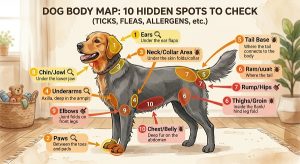
- Run your hands slowly over the whole body. You’re feeling for small bumps, like a grain of rice or a pea.
- Check the favorite spots first: inside and around the ears, between toes, armpits, groin, under the collar, around the tail base, and between the eyes and lips.
- Part the coat with a fine-tooth comb on thick or double-coated breeds, working in sections.
- Check your own clothes and the car seats too.
- Do it again before bed, because ticks can take hours to settle in.
Make it part of grooming and it stops feeling like a chore. Our dog grooming guide for puppies and adults covers a brushing routine that makes full-body checks automatic. If your dog trains or exercises hard outdoors, see our guide on how often to exercise a working dog, because more time in brush means more tick checks.
How to Remove a Tick (and What to Watch For After)
Found one? Stay calm. Skip the matches, nail polish and petroleum jelly. They can stress the tick and make it worse.
- Use fine-tipped tweezers or a tick-removal hook. Grip the tick as close to the skin as you can.
- Pull straight up with steady pressure. Don’t twist or squeeze the body.
- Clean the bite and your hands with antiseptic.
- Put the tick in a sealed bag or take a clear photo so your vet can identify the species.
- Mark the date on your calendar.
What to watch for after a bite
Signs often show up days or weeks later. These timelines are rough, and every dog is different.
| Disease | Typical time before signs | What you may see |
|---|---|---|
| Ehrlichiosis | about 1 to 3 weeks | Fever, low energy, nosebleeds, swollen glands |
| Anaplasmosis | about 1 to 2 weeks | Fever, joint pain, bruising |
| Babesiosis | about 1 to 3 weeks | Pale gums, weakness, dark urine |
| Lyme disease | often weeks to months | Limping that shifts legs, swollen joints, tiredness |
| Tick paralysis | within days of attachment | Wobbly back legs, breathing trouble. Emergency. |
Call your vet if you see any of these, especially pale gums, collapse, trouble breathing, or a dog that suddenly won’t eat. If you’re in Australia and find a paralysis tick, go to a vet straight away.
When Natural Isn’t Enough
I like natural methods, but I won’t tell you they equal prescription prevention. Vet-approved products go through controlled efficacy testing, usually report high kill rates in trials, and keep working through rain, swimming and heavy coats. A homemade spray fades in a few hours.
Here’s a simple way to decide:
| Your situation | My suggestion |
|---|---|
| Low risk: city dog, short walks, tick-free area | Natural layers can be enough. Check daily. |
| Medium risk: regular parks, occasional hikes | Natural layers every day, plus vet-approved prevention in peak season |
| High risk: Lyme, babesiosis or ehrlichiosis in your region, working dogs, or kennel dogs | Year-round vet-prescribed prevention as the base, natural methods as the bonus |
Not all products suit all dogs, and some are dangerous for cats. Read our handler review of K9 Advantix to see how one popular product measures up. Ask your vet about vaccines too. A Lyme vaccine exists in some countries.
Your 30-Day Natural Tick Plan
Week 1: Look. Do a tick check after every outdoor trip. Learn your dog’s hot spots.
Week 2: Clean up. Trim the yard, clear brush, and wash all bedding.
Week 3: Add repellent. Do the patch test, then try the bandana method for a week. Watch your dog’s skin and behavior.
Week 4: Review. Count ticks found this week versus week one. If you’re still finding several, or you live in a high-risk area, book a vet visit about proper prevention.
Handler’s Notes: Why You Can Trust This Guide
This guide comes from the ARFS K9 Team. Cpl. Rofiat Muritala has more than 14 years’ experience as a Nigerian Army military working dog instructor and handler at the Nigerian Army Dog Centre. In a working kennel, tick control is routine care, not a one-off event. It’s about daily inspections, clean runs and fast response.
This article isn’t a substitute for veterinary advice. It draws on guidance from the AKC, Consumer Reports and the ASPCA Animal Poison Control Center, and on published tick-repellent research. Have your vet review any plan for puppies, senior dogs, or dogs with health conditions.
FAQs
Is coconut oil a good natural tick repellent for dogs?
Not by itself. Coconut oil works well as a carrier for diluting essential oils, but the evidence for it as a standalone tick repellent is weak. Think of it as the base, not the active ingredient.
Does apple cider vinegar keep ticks off dogs?
There’s no solid proof that it does. Reports are anecdotal. A diluted rinse is generally safe, but treat it as a small bonus and never rely on it for protection.
Can I use the same tick spray on my dog and my cat?
No. Cats process many essential oils poorly, and some can be fatal. Permethrin dog products are also very toxic to cats. Keep products separate and ask your vet about safe cat options.
Do natural tick remedies work as well as vet prescriptions?
No. Some oils show real repellency in studies, but they fade within hours and haven’t had the same large-scale testing as veterinary products. In high-risk regions, use natural methods as a supplement.
How often should I check my dog for ticks?
After every outing in grass, bush or woods, and again before bed. Daily checks are the single most reliable natural tick protection you have.
Conclusion
Natural tick protection for dogs isn’t about picking “chemical” or “holistic” like a team. It’s about stacking small, safe layers. Check your dog thoroughly, every time. Use a conservative, well-diluted repellent if you choose one. Keep your yard, kennel and home hostile to ticks. And never use tea tree, pennyroyal, wintergreen, DEET or garlic, no matter how “natural” the recipe sounds.
If you live in a high-risk area, add vet-approved prevention and use these home methods as your extra shield.
Start today: do a full-body check tonight, and trim one overgrown corner of your yard this weekend. Small habits beat big plans.
Want more habits that catch small problems before they get costly? My e-book, Beyond the Bark, covers the daily handling routines professionals use. And to get a weekly roundup of our best dog health and training articles, subscribe to our newsletter.

Her work centres on obedience, detection, protection and operational readiness. She favours proven methods built on repetition, consistency and real-world conditioning, so that both dogs and handlers are prepared for high-pressure tasks.
Rofiat represented the Nigerian Army Dog Centre at the Nigerian Army Day Celebration (NADCEL) 2026, where she led demonstrations in obedience, explosive detection, agility and tactical movement. Through articles, training content and documentaries, she shares field-based insight into how structured training, clear communication and trust between handler and dog affect performance and reliability.
She is the author of Beyond the Bark: Inside a Pro Handler's Playbook for Raising the Ideal Dog, a practical guide that helps dog owners and handlers apply professional training principles in everyday situations.
- How to Enter the COBA National Dog Championship - October 20, 2026
- K9 Advantix Dosage Chart & Safety Guide for Dogs - October 19, 2026
- How to Set Up & Use Bousnic Dog Training Collar - October 18, 2026