Is K9 Advantix Safe for Dogs? A Handler’s Honest Review
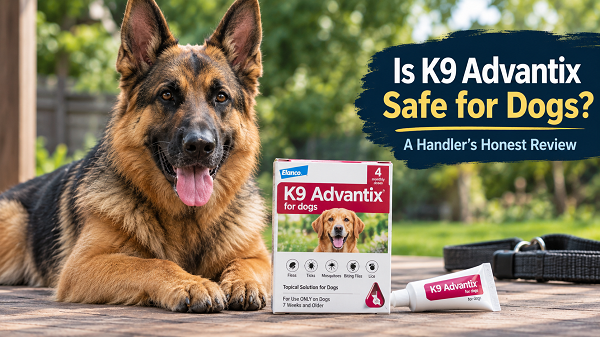
Yes, K9 Advantix II is safe for the vast majority of dogs when you use it exactly as the label says. It’s EPA-registered, vet-recommended, and has been on the market since 2004 with a strong safety record. The real risks aren’t hidden in the bottle, they’re in misuse: putting it on cats, using the wrong size for your dog’s weight, or applying it to a dog that’s already sensitive to pyrethroids. Get those three things right, and problems are rare.
Table of Contents
- What Is K9 Advantix II, Exactly?
- How K9 Advantix II Works on Your Dog’s Body
- Is K9 Advantix II Actually Safe? What the Data Shows
- Common Side Effects (And How Often They Really Happen)
- The Cat Danger: Why This Product Can Kill Cats
- Dogs Who Should NOT Use K9 Advantix II
- K9 Advantix vs. NexGard vs. Frontline vs. Seresto
- A Handler’s Note: Using Advantix on Working and Detection Dogs
- How to Apply It Correctly (Handler-Tested Method)
- Cost Breakdown: Is It Worth the Price?
- Frequently Asked Questions
- Final Verdict and Actionable Advice
Introduction
Ever squeezed that little tube open, hovered it over your dog’s shoulder blades, and paused? You’re not alone. I’ve had clients and honestly, other handlers, ask me the same question for years: “Is this stuff actually safe, or am I just poisoning my dog a little bit every month?”
It’s a fair question. K9 Advantix II is a pesticide. The box says so, right there in plain English. And once you start reading owner forums, you’ll find stories ranging from “best product I’ve ever used” to “my dog had a seizure after this.” That gap between marketing copy and real-world anecdotes is exactly why this review exists.
I’ve handled working dogs for over a decade, patrol, detection, and personal protection lines and flea and tick prevention isn’t optional for dogs that spend hours in tall grass, wooded training areas, or kennel environments where one infested dog can turn into a five-dog problem overnight. It’s part of the same routine as regular grooming for a healthy puppy, something a lot of new owners treat as optional until it isn’t. So I’ve used K9 Advantix, watched how different dogs react to it, and dug into the actual regulatory data behind it, not just the marketing page.
By the end of this article, you’ll know exactly who this product is safe for, who should avoid it, what the real (not exaggerated) side effect rates look like, and how it stacks up against the other big names in flea and tick prevention.
1. What Is K9 Advantix II, Exactly?
K9 Advantix II is a monthly topical (spot-on) flea, tick, and mosquito treatment made by Elanco (formerly Bayer Animal Health). It’s sold over the counter, no prescription needed, in the US, UK, Canada, and across Europe, and it’s one of the best-selling topical parasite preventives in the world.
It’s built around three active ingredients:
- Imidacloprid (8.8%–9.1%, depending on dog size) — a neonicotinoid insecticide that kills fleas and lice on contact.
- Permethrin (44%) — a synthetic pyrethroid that kills and repels ticks, mosquitoes, and biting flies, and also boosts the flea-killing effect.
- Pyriproxyfen (0.44%) — an insect growth regulator that stops flea eggs and larvae from developing, breaking the flea life cycle in your home and yard, not just on your dog.
All three are registered with the US Environmental Protection Agency (EPA Reg. No. 11556-142 for the medium-dog formulation, with size-specific registration numbers for each weight tier). That registration means Elanco had to submit toxicology, efficacy, and safety data before the product could legally be sold, this isn’t an unregulated home remedy.
What it treats: fleas, ticks (including the species that carry Lyme disease, Rocky Mountain spotted fever, and ehrlichiosis), mosquitoes, biting flies, and chewing lice.
Who it’s for: dogs and puppies 7 weeks or older, weighing at least 4 lbs.
Who it’s absolutely not for: cats. More on that in Section 5, because it matters a lot.
2. How K9 Advantix II Works on Your Dog’s Body
Here’s the part most product pages skip over, and it actually matters for the safety question.
When you apply K9 Advantix II to the skin between your dog’s shoulder blades, it doesn’t get absorbed into the bloodstream the way an oral flea pill does. Instead, it spreads across the skin’s surface through the natural oils in the hair follicles and sebaceous glands, forming a reservoir that redistributes over the coat for about four weeks. Fleas, ticks, and mosquitoes pick up the chemicals through contact with the skin or hair, they don’t need to bite your dog first, which is a real advantage over some older products that required a bite to work.
This “on the skin, not in the bloodstream” delivery is a big reason it’s generally well tolerated. Systemic absorption is minimal, which lowers (though doesn’t eliminate) the risk of the kind of whole-body reactions you sometimes see with oral medications.
3. Is K9 Advantix II Actually Safe? What the Data Shows
Let’s get specific instead of hand-wavy.
VCA Animal Hospitals, one of the largest veterinary hospital networks in North America, classifies the imidacloprid/permethrin/pyriproxyfen combination as “very well tolerated in dogs when used as directed on the label,” noting minimal risk of overdose or serious drug interaction at correct dosing.
PetMD and WebMD Pets both list it among vet-recommended topical options, with the standard caution that it’s for dogs only.
Here’s an important distinction that a lot of competing articles get wrong or leave out entirely: in 2018, the FDA issued a safety communication about neurologic adverse events (tremors, ataxia, seizures) linked to a specific class of flea and tick products, the isoxazoline class, which includes Bravecto, Credelio, NexGard, and Simparica. K9 Advantix II is not in that drug class. It doesn’t contain isoxazolines at all, it’s built on neonicotinoid and pyrethroid chemistry instead. That FDA warning gets pasted into a lot of “Advantix safety” articles as if it applies directly, and it doesn’t, at least not as a direct regulatory finding against this specific product. That’s a meaningful difference if you’re weighing your options.
That doesn’t mean K9 Advantix II has zero reported neurological incidents, owner reports of post-application seizures do exist on forums and in adverse-event databases, and I won’t pretend otherwise. But there’s no confirmed causal link established by FDA or EPA specifically tying Advantix to seizure disorders the way there is for the isoxazoline class. Most veterinary toxicologists treat these as rare individual sensitivities rather than a systemic product defect.
Bottom line: for a healthy dog over 7 weeks old, at least 4 lbs, with no known pyrethroid sensitivity, applied at the correct dose for their weight, K9 Advantix II carries a low risk profile backed by regulatory review and two decades of market use.
4. Common Side Effects (And How Often They Really Happen)
Most reactions to K9 Advantix II are mild and localized. According to manufacturer and veterinary product data, here’s the realistic breakdown:
Common (mild, usually resolve on their own):
- Redness, itching, or scratching at the application site
- Temporary hair thinning or a greasy patch where it was applied
- Mild restlessness in the first few hours as the dog notices the scent or sensation
Less common:
- Vomiting or diarrhea, typically if the dog licks the application site before it dries
- Lethargy for 24–48 hours
Rare, but serious enough to call your vet immediately:
- Excessive drooling, tremors, or wobbliness (ataxia)
- Skin reactions that spread beyond the application site or blister
- Any seizure activity
In my own experience running flea prevention across a working line, the skin-irritation category is genuinely the most common issue, and it’s almost always tied to one of two things: applying too much product to one spot instead of spreading it across the recommended number of points, or applying it to a dog that got wet or was bathed within 48 hours beforehand. Neither of those is a flaw in the product, they’re application errors.
Handler tip: If your dog has never used a permethrin-based product before, apply it in the evening and keep an eye on them for the first 2–3 hours rather than applying it right before you leave for work. Most reactions, when they happen, show up early.
Coat type matters here too. Dogs with dense double coats can mask early skin irritation longer than short-haired breeds, so if you own one of the low-maintenance breeds with thicker coats, part the fur and actually check the skin at the application site the next day, not just glance at the coat.
5. The Cat Danger: Why This Product Can Kill Cats
This is the single most important safety point in this entire article, so I’m not burying it.
Permethrin is highly toxic to cats. Cats lack the liver enzyme (glucuronyl transferase) that dogs and humans use to break permethrin down efficiently, so even a small amount, from direct application, or just from grooming a treated dog, can cause tremors, seizures, hyperthermia, and death in a cat. This isn’t a rare edge case; permethrin toxicosis in cats is one of the most common toxicology emergencies reported by the ASPCA Animal Poison Control Center every flea season, largely from accidental cross-species exposure or owners mistakenly grabbing a dog product for their cat.
If you have cats in the house:
- Never apply K9 Advantix II to a cat, under any circumstances.
- Keep treated dogs separated from cats for at least 24 hours after application, some vets recommend 48 hours to be extra safe.
- If a cat comes into contact with a treated dog and starts drooling, twitching, or seems wobbly, treat it as an emergency and call an emergency vet or the ASPCA Poison Control hotline immediately. Time matters.
If your household has both dogs and cats, this is genuinely worth thinking hard about before you buy K9 Advantix II, a cat-safe alternative for the household might be the smarter call.
6. Dogs Who Should NOT Use K9 Advantix II
Based on the label restrictions and standard veterinary guidance, hold off or check with your vet first if your dog is:
- Under 7 weeks old or under 4 lbs — the product isn’t labeled or tested for this group.
- Pregnant, nursing, or a breeding animal — without direct vet approval, since safety data for these groups is more limited.
- Elderly or debilitated — older dogs or dogs recovering from illness should be started under veterinary guidance.
- Known to have had a prior reaction to any pyrethroid or pyrethrin product — this includes some flea shampoos, sprays, and yard treatments, not just spot-ons.
- Currently on other medications — always mention any current medication to your vet before layering on a topical pesticide.
There isn’t strong published evidence tying specific dog breeds to elevated permethrin sensitivity the way, say, Collies and related herding breeds are known to be sensitive to certain other drugs through the MDR1 gene mutation (that’s a different pathway, relevant to drugs like ivermectin at high doses, not to K9 Advantix). Still, any dog, regardless of breed, can have an individual sensitivity, so the golden rule stands: watch closely after the first application, every time.
7. K9 Advantix vs. NexGard vs. Frontline vs. Seresto
Here’s a side-by-side most competing articles either skip or oversimplify.
| Feature | K9 Advantix II | NexGard | Frontline Plus | Seresto Collar |
|---|---|---|---|---|
| Format | Topical spot-on | Oral chew | Topical spot-on | Wearable collar |
| Active ingredients | Imidacloprid, permethrin, pyriproxyfen | Afoxolaner (isoxazoline) | Fipronil, (S)-methoprene | Imidacloprid, flumethrin |
| Protects against | Fleas, ticks, mosquitoes, biting flies, lice | Fleas, ticks | Fleas, ticks, lice, mosquito repellent (Plus) | Fleas, ticks (up to 8 months) |
| Duration | 4 weeks | 4 weeks | 4 weeks | Up to 8 months |
| Cat-safe household? | No, highly toxic to cats | N/A (dog only, oral) | Frontline for cats exists separately | Cat version exists separately |
| FDA isoxazoline warning applies? | No | Yes | No | No |
| Prescription needed? | No | No (vet-recommended) | No | No |
| Mosquito repellent? | Yes | No | No | No |
Where K9 Advantix wins: it’s one of the only OTC options that actually repels mosquitoes and biting flies, not just fleas and ticks, genuinely useful if you’re in a mosquito-heavy region or worried about heartworm-carrying mosquitoes.
Where it loses: households with cats, and dogs who need an oral option because they have sensitive skin or hate topical application.
8. A Handler’s Note: Using Advantix on Working and Detection Dogs
This is the section you won’t find on a consumer pet blog, and it’s where my actual field experience comes in.
If you’re running a scent detection, tracking, or narcotics/explosives K9, timing your flea and tick application matters more than the average pet owner realizes, especially if you’re following a serious daily exercise routine for a working dog that puts them in tick-heavy terrain for hours at a stretch. Permethrin has a noticeable odor for the first 24–48 hours after application, and while there’s no solid published research proving it interferes with a dog’s scent discrimination during actual detection work, most working K9 programs I’ve trained alongside apply topical parasite prevention after a training session or certification test, never right before one, just to eliminate any variable that could affect performance or throw off a young dog still building scent discrimination skills.
A few field-tested habits worth adopting if you handle a working dog:
- Apply after work, not before. Give your dog a full rest day post-application before any high-stakes training or cert run.
- Don’t apply near the muzzle or head area, this is already a label instruction, but it matters even more for a dog whose nose is a working tool.
- Log it. Working K9 teams should log every application (date, product, batch/lot number) the same way you’d log vaccinations, if a health issue ever comes up, that record is invaluable for your vet. It fits naturally alongside the rest of your essential K9 training and handling gear checklist.
- Watch for handler exposure too. If you’re the one applying product to multiple dogs in a kennel or unit, wear gloves and wash your hands. Permethrin exposure in humans is generally low-risk but avoidable irritation isn’t worth it.
- Coordinate with your kennel’s vet on a rotation schedule if you’re running multiple dogs, staggering application dates can help you isolate a reaction to a specific batch if something ever does go wrong.
None of this makes K9 Advantix “unsafe” for working dogs, plenty of police and detection units use imidacloprid/permethrin-based products successfully. It just means a working dog’s routine deserves a little more intention than tossing the tube open five minutes before a training block.
9. How to Apply It Correctly (Handler-Tested Method)
A huge share of “side effects” I’ve seen over the years actually trace back to incorrect application. Here’s the method that’s worked best for me:
- Make sure your dog is completely dry. No baths or swimming for at least 48 hours before application.
- Choose the correct size tube for your dog’s exact weight, not a guess, an actual scale weigh-in if you’re unsure. Underdosing reduces effectiveness; overdosing increases irritation risk.
- Part the fur down to visible skin, not just fur-deep, at the base of the neck between the shoulder blades.
- Apply in 2–4 spots along the back (depending on the tube size and label instructions) from shoulders to tail base, rather than dumping it all in one spot.
- Avoid the eyes, mouth, and any broken or irritated skin.
- Keep your dog from licking the area for at least 30 minutes, a quick walk or distraction toy works well here.
- Wait 24 hours before bathing or letting your dog swim so the product can fully bind to the skin’s oils.
10. Cost Breakdown: Is It Worth the Price?
Pricing varies by retailer and region, but as a rough global benchmark (US pricing, which most international retailers price close to):
- Small dogs (4–10 lbs): roughly $12–15 per month, or $70–90 for a 6-pack
- Medium dogs (11–20 lbs): roughly $13–17 per month, or $80–100 for a 6-pack
- Large dogs (21–55 lbs): roughly $15–20 per month, or $90–115 for a 6-pack
- Extra-large dogs (55+ lbs): roughly $18–24 per month, or $105–140 for a 6-pack
Compare that to the average cost of treating a full-blown flea infestation in the home, professional pest control typically runs $150–400 depending on home size and monthly prevention is the cheaper bet almost every time, before you even factor in vet bills for tick-borne disease treatment, which can run into the thousands for something like Lyme disease complications.
Trainer & Handler Note
This review was written from direct, hands-on experience applying and monitoring flea and tick prevention across working dog lines, patrol, detection, and personal protection, where consistent parasite control isn’t optional and reaction monitoring is part of daily handling routine. Product claims in this article are cross-checked against EPA registration data, FDA safety communications, and veterinary clinical guidance (VCA Animal Hospitals, PetMD, WebMD Pets) rather than manufacturer marketing copy alone. If your dog has a specific health condition or history of medication reactions, this article is not a substitute for a conversation with your veterinarian, who knows your dog’s individual history.
11. Frequently Asked Questions
Is K9 Advantix safe for puppies?
Yes, for puppies 7 weeks or older and weighing at least 4 lbs. Using it on younger or smaller puppies isn’t supported by label data and increases risk, wait until your puppy meets both thresholds.
Can K9 Advantix cause seizures in dogs?
Seizures are listed as a rare potential reaction, and some owners report them anecdotally, but there’s no confirmed regulatory finding (FDA or EPA) establishing a direct causal link the way there is for isoxazoline-class products. If your dog has a seizure history, talk to your vet before using any pyrethroid-based product.
How long does K9 Advantix II take to start working?
It starts killing existing fleas within 12 hours of application and begins killing ticks within 24 hours. Reinfesting fleas are killed within about 2 hours once the product has fully distributed across the coat (roughly 24–48 hours after application).
Is K9 Advantix the same as K9 Advantix II?
K9 Advantix II is the updated, current formulation, the original K9 Advantix was reformulated and rebranded years ago. If you’re buying today, K9 Advantix II is what you’ll find on shelves.
What should I do if my cat is accidentally exposed to K9 Advantix?
Treat it as an emergency. Bathe the cat with dish soap in lukewarm water to remove residue if you can do so safely, and contact an emergency vet or the ASPCA Animal Poison Control Center immediately, don’t wait to see if symptoms appear.
12. Final Verdict and Actionable Advice
So, is K9 Advantix safe for dogs? For the overwhelming majority of healthy dogs over 7 weeks old and 4+ lbs, yes, it’s a well-regulated, widely used product with a strong track record when applied correctly. The real risk sits in the details: wrong dog, wrong dose, wrong household (cats), or skipping the “watch your dog for a few hours after application” step that most owners rush past.
Before your next application, do this:
- Confirm your dog’s exact weight and match it to the correct tube size, don’t estimate.
- Check your home for cats and plan a 24–48 hour separation window.
- Apply it when you can actually monitor your dog for the next few hours, not right before you leave the house.
- Keep a simple log of application dates, especially if you’re running more than one dog.
- If anything looks off, excessive scratching that doesn’t fade, vomiting, wobbliness, call your vet the same day, not “if it gets worse.”
Flea and tick prevention isn’t a “set it and forget it” task, even with a product this well-established. Treat it with the same seriousness you’d give any other part of your dog’s health and grooming routine, the same core training equipment and handling checklist you already run through and K9 Advantix II is very likely to do exactly what it’s designed to do: keep your dog protected without becoming a problem of its own.
Want a complete, field-tested framework for raising and training a confident, well-rounded working or protection dog, from the fundamentals through advanced obedience? Check out our handler’s guide on Amazon for the full breakdown.

Her work centres on obedience, detection, protection and operational readiness. She favours proven methods built on repetition, consistency and real-world conditioning, so that both dogs and handlers are prepared for high-pressure tasks.
Rofiat represented the Nigerian Army Dog Centre at the Nigerian Army Day Celebration (NADCEL) 2026, where she led demonstrations in obedience, explosive detection, agility and tactical movement. Through articles, training content and documentaries, she shares field-based insight into how structured training, clear communication and trust between handler and dog affect performance and reliability.
She is the author of Beyond the Bark: Inside a Pro Handler's Playbook for Raising the Ideal Dog, a practical guide that helps dog owners and handlers apply professional training principles in everyday situations.
- Is K9 Advantix Safe for Dogs? A Handler’s Honest Review - October 2, 2026
- Australian Cattle Dog vs Blue Heeler: Any Difference? - October 1, 2026
- Bousnic Dog Training Collar Review: Is It Safe? - September 30, 2026