Puppy Bath Training: 5 Easy Steps That Work (2026)
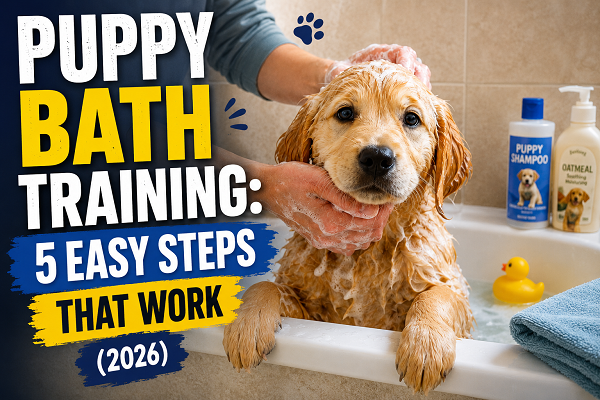
Puppy bath training works best when you introduce the tub gradually, starting around 8 weeks old, using lukewarm water, puppy-specific shampoo, and short 5–10 minute sessions paired with treats and calm praise. Most puppies fully accept bathing within 3 to 6 sessions, roughly 2 to 3 weeks, if you follow a consistent five-step routine: prep, desensitize, wash, rinse, and reward.
Table of Contents
- Introduction
- Why Puppy Bath Training Actually Matters
- When Can You Start Bathing a Puppy?
- What You’ll Need Before You Begin
- The 5 Easy Steps to Puppy Bath Training
- How Often Should You Bathe a Puppy?
- Common Puppy Bath Training Mistakes to Avoid
- Breed-Specific Bathing Notes
- FAQs
- Final Thoughts
Introduction
If you’ve ever chased a soap-slicked puppy around the bathroom while getting drenched yourself, you already know bath time can go sideways fast. Here’s the thing though: it doesn’t have to be a wrestling match every single time.
I’ve handled working dogs for years, and I can tell you that the dogs who grow into calm, cooperative adults on the grooming table almost always had one thing in common as puppies, someone took the time to teach them that baths aren’t scary. It’s not luck. It’s training, and it starts way earlier than most new owners realize.
In this guide, you’ll learn exactly when to give your puppy their first bath, what gear actually makes a difference, and a simple 5-step process that turns bath time from a dreaded chore into a bonding ritual. I’ll also cover the mistakes that create lifelong bath-time anxiety (I’ve seen them all), plus how often you really need to be doing this. Grab a towel, let’s get into it.
Why Puppy Bath Training Actually Matters
A lot of new dog owners think of bathing as just hygiene. It’s not, it’s a foundational training exercise that shapes how your dog handles being touched, restrained, and handled by strangers for the rest of its life.
Think about everything a bath involves: standing still, being held, having water poured over sensitive areas like the face and paws, tolerating noise from a faucet or dryer, and staying calm while someone messes with their ears and tail. That’s basically a dress rehearsal for vet visits, nail trims, and professional grooming appointments.
Groomers and trainers see this pattern constantly: dogs who never learned to enjoy (or at least tolerate) bathing as puppies often become the adult dogs who need to be muzzled for a simple trim, or sedated for routine grooming. On the flip side, a puppy that’s bathed calmly and positively from around 8 weeks old typically grows into a dog who barely reacts to the tub.
There’s a practical cost angle here too. Professional groomers in the US typically charge more for “difficult” or anxious dogs, some groomers add a $10 to $25 handling surcharge for dogs that fight the process. Ten minutes of patient training now can genuinely save you money later.
When Can You Start Bathing a Puppy?
Most veterinarians and canine behaviorists agree: wait until your puppy is at least 8 weeks old before their first full bath. Before that age, puppies can’t regulate their own body temperature well, and their immune systems are still developing, so a bath can chill them faster than you’d expect.
If your puppy gets into something messy before 8 weeks (mud, food, an unfortunate encounter with something smelly), skip the full bath. Use a warm, damp washcloth to spot-clean instead. It’s safer and honestly does the job just fine for small messes.
Once your puppy hits that 8-week mark and has settled into your home, that’s your window to start real bath training, not because they desperately need to be clean, but because this is when they’re most receptive to learning that water and handling aren’t threats.
One thing worth knowing: a dog’s skin sits at a more neutral pH (roughly 6.5 to 7.5) compared to human skin (around 5.5). That’s exactly why “just using a bit of my own shampoo” on a puppy is a bad idea, it disrupts their skin barrier and can lead to dryness, irritation, or itchiness. Always reach for a puppy-formulated shampoo.
What You’ll Need Before You Begin
Getting your setup right before the puppy is wet and squirming saves you a lot of stress. Here’s the short list:
- A non-slip mat or towel for the tub or sink, slipping is one of the top reasons puppies panic during baths
- Puppy-specific shampoo (never human shampoo, and go easy on “medicated” adult formulas unless a vet recommends them)
- A cup or handheld sprayer for controlled rinsing
- Cotton balls to gently protect the ear canal from water
- Treats, small, high-value ones your puppy doesn’t get anywhere else
- Two towels: one for a quick blot-dry, one as backup
- A rubber grooming mitt or soft brush (optional, but great for calming touch)
If you’re bathing a small or toy breed, a kitchen sink often works better than a full tub, it’s less overwhelming and easier on your back. For medium and larger puppies, a walk-in shower or a plastic kiddie pool outside (weather permitting) both work well.
If you want a deeper breakdown of grooming tools and routines beyond bathing, brushing schedules, nail care, ear cleaning, I put together a full walkthrough here: Essential Dog Grooming Tips for a Healthy Puppy.
The 5 Easy Steps to Puppy Bath Training
This is the process I recommend to every new puppy owner I’ve worked with. It’s simple by design, the goal isn’t a spa-level wash on day one, it’s building trust first and cleanliness second.
Step 1: Desensitize Before You Ever Add Water
Don’t start with a bath. Start with the idea of a bath.
For a few days before the actual bathing begins, let your puppy explore the empty tub or sink. Toss treats in there. Let them sniff around, climb in and out, and get comfortable with the space while it’s dry and unthreatening. Turn the faucet on briefly nearby (not on them) so the sound isn’t a surprise later.
This sounds like an unnecessary extra step, but it’s the single biggest predictor of whether a puppy tolerates bathing well long-term. Skipping straight to “puppy plus water plus soap” on day one is where most bath-time fear actually starts.
Time investment: 2–3 short sessions, 5 minutes each, over 2–3 days.
Step 2: Get the Water Right, Then Ease Them In
Fill the tub or sink with just a couple of inches of lukewarm water, test it on your wrist like you would for a baby, it should feel barely warm, never hot. Puppies overheat and chill much faster than adult dogs, so this isn’t a step to eyeball.
Place your puppy in gently, keep your tone upbeat, and let them stand for a moment before you touch them with water. Some puppies want to sit immediately; others try to climb out. Either way, stay calm and keep a hand lightly on them for security, not restraint.
Step 3: Wash With Purpose, Not Perfection
Wet your puppy from the neck down using a cup or low-pressure sprayer, working from the back toward the tail. Avoid blasting water directly at the face, instead, use a damp washcloth for the face and around the ears.
Apply a small amount of puppy shampoo and work it in with your fingers or a soft grooming mitt, focusing on paws, belly, and any visibly dirty spots. You genuinely don’t need to scrub hard, puppy coats are thinner and their skin is more sensitive than an adult dog’s.
Keep this whole washing phase to under 5 minutes for a first bath. You’re not going for showroom-clean; you’re teaching your puppy that this process ends and it wasn’t so bad.
Step 4: Rinse Thoroughly (This Step Gets Skipped Way Too Often)
Leftover shampoo residue is one of the most common causes of puppy skin irritation, and it’s completely avoidable. Rinse until the water runs clear and the coat feels squeaky rather than slippery.
Use lukewarm water, keep the cup or sprayer close to the coat rather than spraying from a distance (less startling), and always rinse from the head down to the tail, being careful around the eyes and ears throughout.
Step 5: Reward, Dry, and End on a High Note
The moment the bath is done, treat, praise, the whole celebration. This is the step that actually cements the training. Your puppy needs to associate the end of the bath with something genuinely good, not just relief that it’s over.
Towel-dry gently rather than rubbing hard (rubbing can tangle longer coats), and if your puppy tolerates it, a low-noise dryer on the cool setting can help, though many puppies do just fine air-drying in a warm room. Never use a human hairdryer on a hot setting; puppy skin burns easily.
Repeat this same five-step sequence every bath for the first month. Consistency is what turns “tolerating” into “actually doesn’t mind” and eventually, for a lot of dogs, into genuine enjoyment.
Most puppies I’ve worked with need somewhere between 3 and 6 repetitions of this sequence, spaced a few days to a week apart, before bath time stops triggering any stress response at all. That’s typically a 2 to 3 week window from first bath to “this is just normal now.”
How Often Should You Bathe a Puppy?
This is one of the most-asked questions I get, and the honest answer is: it depends on lifestyle more than a fixed calendar.
As a general guideline:
- Every 3 to 4 weeks for most puppies with average activity levels
- Weekly for puppies with skin conditions, allergies, or who are constantly outdoors and getting muddy
- Every 6 to 8 weeks for low-activity, mostly indoor puppies with short coats
The ASPCA generally recommends a baseline of quarterly baths for adult dogs unless there’s a specific reason for more frequent washing, but puppies in an active training phase usually land somewhere between monthly and biweekly, simply because bath training itself benefits from repetition.
Over-bathing is a real risk too, washing too frequently strips natural oils from the skin and coat, leading to dryness, flakiness, and irritation. If you’re bathing more than once a week without a medical reason, that’s usually too much.
Common Puppy Bath Training Mistakes to Avoid
I’ve corrected these same mistakes over and over with new owners, so let’s save you the trouble:
- Going straight for a full bath before any desensitization. This is the number one cause of long-term bath anxiety.
- Using water that’s too hot or too cold. Puppies can’t regulate temperature well, lukewarm, always.
- Spraying water directly in the face. Almost guaranteed to create a puppy who bolts at bath time forever after.
- Using human or adult dog shampoo. Wrong pH, often too harsh for developing puppy skin.
- Making the first few baths marathon sessions. Short and successful beats long and stressful every time.
- Skipping the reward at the end. The reward is what actually builds the positive association, don’t treat it as optional.
- Bathing right before a stressful event (like a vet visit or car ride). Keep bath time isolated from other stressors while you’re still building trust.
These same principles, short sessions, consistency, and ending on a positive note, apply to nearly every area of early puppy training, not just bathing. If your puppy is struggling with other routines at home, it’s worth checking whether you’re running into similar patterns elsewhere: 5 In-Home Dog Training Mistakes to Stop Now.
Breed-Specific Bathing Notes
Not every puppy needs the exact same approach. A few things worth knowing:
- Double-coated breeds (German Shepherds, Golden Retrievers, Huskies) need extra-thorough rinsing, trapped shampoo in the undercoat is a common cause of skin irritation in these breeds specifically.
- Wrinkly-faced breeds (Bulldogs, Pugs, Shar-Peis) need their facial folds dried completely after every bath to prevent bacterial or yeast infections in the skin folds.
- Hairless breeds (Chinese Crested, Xoloitzcuintli) often need more frequent bathing, sometimes weekly, since there’s no coat to absorb excess skin oils.
- Low-maintenance, short-coated breeds generally tolerate bathing more easily and need it less often overall, which is worth factoring in if you’re still choosing a puppy. I go into which breeds fall into that category here: 10 Best Low-Maintenance Dog Breeds with Basic Grooming Needs.
If bath training is going well but you’re also working on other early routines like crate training, it’s worth tackling them around the same time, the same calm, structured, reward-based approach applies. Here’s my full breakdown: How to Crate Train a Puppy: K9 Trainer Tips for Faster Results.
And if your puppy tends to get worked up around handling in general, not just baths, but leashes, brushing, or being restrained, that reactivity often traces back to the same root cause: not enough calm, positive exposure early on. This guide covers it well: How to Leash Train a Reactive Dog: Step-by-Step Guide.
If you want the full playbook, bathing, crate training, leash work, obedience, and the handler mindset behind all of it, that’s exactly what I cover in more depth in my e-book, Beyond the Bark. It’s written for owners who want their dog trained like a working K9, not just “well-behaved most of the time.”
FAQs
1. At what age should I give my puppy their first bath? Most vets and trainers recommend waiting until at least 8 weeks old. Before that, puppies struggle to regulate body temperature, so a full bath carries unnecessary risk. Spot-clean with a damp cloth if needed before then.
2. How long should a puppy’s first bath take? Keep it under 5–10 minutes. First baths are about building trust, not achieving a perfect wash, shorter, successful sessions lead to better long-term results than long, thorough ones.
3. Can I use regular shampoo on my puppy? No. Human shampoo and adult dog shampoo are both formulated for a different skin pH than a puppy’s developing skin, and can cause dryness or irritation. Always use a puppy-specific shampoo.
4. Why does my puppy shake, whine, or try to escape during baths? This is usually a sign the bath was introduced too fast, without desensitization, or that water hit their face unexpectedly. Slow down, go back to Step 1 (dry tub exploration with treats), and rebuild the association gradually.
5. How many baths does it take before a puppy stops being afraid? Most puppies need 3 to 6 consistent, positive bath sessions, roughly 2 to 3 weeks, before the fear response fades. Some pick it up faster; puppies with a rough first experience may need longer and more patience.
Final Thoughts
Puppy bath training isn’t complicated, but it does reward patience over speed. Start around 8 weeks, desensitize before you add water, keep early sessions short, rinse thoroughly, and always end with genuine praise or a treat. Do that consistently for a few weeks, and you’ll have a dog who walks into the bathroom without a fight, for life, not just for now.
If you take one thing away from this guide, let it be this: how your puppy feels about their first few baths shapes how every future bath, grooming appointment, and vet visit goes. It’s worth the extra ten minutes now.
Got a puppy who’s already fighting bath time? Go back to Step 1, slow everything down, and rebuild from there. It works more often than owners expect.

Her work centres on obedience, detection, protection and operational readiness. She favours proven methods built on repetition, consistency and real-world conditioning, so that both dogs and handlers are prepared for high-pressure tasks.
Rofiat represented the Nigerian Army Dog Centre at the Nigerian Army Day Celebration (NADCEL) 2026, where she led demonstrations in obedience, explosive detection, agility and tactical movement. Through articles, training content and documentaries, she shares field-based insight into how structured training, clear communication and trust between handler and dog affect performance and reliability.
She is the author of Beyond the Bark: Inside a Pro Handler's Playbook for Raising the Ideal Dog, a practical guide that helps dog owners and handlers apply professional training principles in everyday situations.
- Bousnic Dog Training Collar Review: Is It Safe? - September 30, 2026
- Gravy Train Dog Food Review: Ingredients & Recalls - September 30, 2026
- How to Spot Fake AKC Registered Dogs: 5 Warning Signs - September 29, 2026