How to Choose a Dog Trainer in Nigeria (2026 Guide)
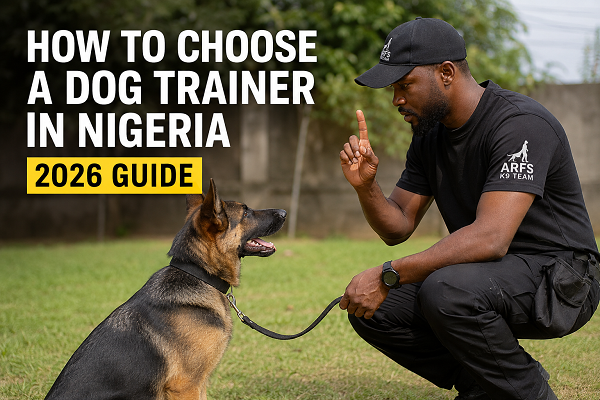
To choose a good dog trainer in Nigeria, look for someone with verifiable hands-on experience (military, police, or documented civilian training background), a clear training method they can explain in plain language, willingness to let you observe a session before paying, transparent pricing (typically ₦100,000–₦500,000+ depending on the program), and real client references you can actually call. Avoid anyone who guarantees results in days, refuses to show you their work, or insists on full payment upfront with no contract.
Table of Contents
- Introduction
- Why This Decision Matters More Than You Think
- The Trainer Landscape in Nigeria: What You’re Actually Choosing From
- Credentials That Actually Mean Something (And Ones That Don’t)
- Training Philosophy: Why This Matters More Than Price
- Red Flags to Walk Away From
- What Dog Training Actually Costs in Nigeria (2026)
- Questions to Ask Before You Pay Anyone
- Choosing a Trainer for Guard and Protection Work
- Trainer Insight: What 14 Years of Handling Taught Us
- FAQs
- Conclusion
Introduction
If you’ve ever typed “dog trainer near me” into Google at 11 p.m. after your Rottweiler dragged you across the compound for the third time that week, you already know the problem. Nigeria’s dog training space is growing fast but it’s still mostly unregulated, and that gap is exactly where the wrong trainer can cost you money, time, and in the worst cases, your dog’s safety or someone else’s.
This guide walks you through exactly how to vet a dog trainer in Nigeria in 2026, what real credentials look like here (since we don’t have a national trainer licensing body), what training should actually cost in Lagos, Abuja, Port Harcourt, and other cities, the difference between a trainer who “handles” dogs and one who genuinely understands behavior, and the specific red flags that show up again and again in the Nigerian pet space. You’ll also get a list of direct questions to ask before you hand over a single naira.
Why This Decision Matters More Than You Think
Here’s the thing nobody tells you when you’re googling “puppy training Lagos” for the first time: a bad trainer doesn’t just waste your money. A bad trainer can actively make your dog’s behavior worse.
I’ve lost count of the number of dogs that came through for rehabilitation work already carrying damage from a previous “trainer”, a dog that flinches when you raise your hand too fast, a dog that’s shut down and won’t engage with anyone, a dog that’s become genuinely dangerous because someone used heavy-handed correction on a fear issue instead of addressing what was actually driving the behavior.
Nigeria’s demand for trained dogs has grown a lot over the past few years, and it’s not hard to see why. Rising security concerns in cities like Lagos, Abuja, and Port Harcourt have pushed more households toward guard dogs, and rising disposable income among the emerging middle class has pushed more people toward keeping companion breeds properly trained instead of just chained in a corner. Both trends are good. But demand always attracts people who see an opportunity before they see a responsibility, and dog training in Nigeria has no central licensing body the way, say, the veterinary profession does under the Veterinary Council of Nigeria. Anybody can print a business card that says “Professional Dog Trainer.”
That’s not meant to scare you off. It’s meant to explain why you have to do the vetting work that a licensing board would normally do for you.
The Trainer Landscape in Nigeria
Broadly, you’ll run into four categories of trainer when you search locally or on platforms like Jiji, Instagram, or PetBacker:
- Ex-military or ex-police handlers. A large share of Nigeria’s most experienced working-dog trainers came up through the Nigerian Army, Nigerian Police Force K9 units, or private security firms before going independent or starting training companies. This background usually means real exposure to obedience, protection, and detection work under operational pressure but it doesn’t automatically mean they’re good at teaching pet dogs or working with families, which is a different skill entirely.
- Registered training companies. Businesses like Majestic K9 Group, registered with Nigeria’s Corporate Affairs Commission, operate more like formal outfits with structured programs, multiple trainers, and documented service histories. A CAC registration number is a small but genuinely useful thing to check, it tells you the business exists as a legal entity, not just a phone number.
- Independent freelance trainers. Found mostly through referrals, WhatsApp groups, or apps like PetBacker and Superprof, where hourly dog-training sessions in Nigeria currently average somewhere around ₦5,000–₦10,000 per hour for basic obedience work. Quality here varies enormously, some are excellent, self-taught through years of hands-on work; others learned from YouTube last month.
- Breeders who “also train. Common with guard-breed sellers. Be cautious here, a breeder knowing a breed well doesn’t automatically mean they know how to train temperament and behavior issues out of a specific dog in front of them.
None of these categories is automatically better than the others. I’ve met brilliant independent trainers with no formal company behind them, and I’ve met registered “K9 academies” whose actual training methods were outdated and borderline abusive. The category is a starting filter, not the final answer.
Credentials That Actually Mean Something
Since Nigeria doesn’t yet have a national certifying body for dog trainers, the credentials worth checking fall into two buckets.
International certifications — these aren’t common in Nigeria yet, but if a trainer holds one, it’s a strong signal they’ve invested real time and money in their craft:
- CPDT-KA (Certified Professional Dog Trainer, Knowledge Assessed), issued by the Certification Council for Professional Dog Trainers, requires 300+ hours of documented training experience plus a reference letter and exam.
- IAABC (International Association of Animal Behavior Consultants) certification, more focused on behavior modification than basic obedience.
- PPG (Pet Professional Guild) membership, which signals adherence to force-free training standards.
- AKC CGC Evaluator status, if they run Canine Good Citizen-style assessments.
Operational/experience credentials — more relevant to what you’ll actually find on the ground in Nigeria:
- Documented service in a military, police, or licensed private security K9 unit, ideally verifiable (unit name, years served, dogs trained).
- CAC registration if they run a company.
- A visible, dated portfolio of past dogs trained, video evidence matters far more here than testimonials alone, because video is much harder to fake convincingly.
- Membership or documented association with a recognised kennel club or working-dog organisation.
If a trainer’s entire pitch rests on “trust me, I’ve been doing this for years” with zero evidence to show for it, that’s not disqualifying on its own, some genuinely great trainers are just bad at marketing but it does mean you need to lean harder on the questions to ask before you commit.
Training Philosophy
This is the part most people skip, and it’s the one that matters most.
Ask any trainer you’re considering: “What’s your training philosophy, in your own words?” How they answer tells you almost everything.
Broadly, methods fall on a spectrum:
- Positive reinforcement / force-free training — rewards desired behavior, avoids physical correction, relies on marker training (clicker or verbal), management, and consistency. Backed heavily by modern behavioral science and standard in most Western training programs today.
- Balanced training — combines reward-based methods with corrections (leash pressure, verbal correction, sometimes tools like prong or e-collars) once a behavior is well understood by the dog. Common in working-dog and protection-dog circles, including most military and police programs.
- Compulsion-based / “dominance” training — relies heavily on correction, physical handling, and outdated pack-leader theory that most credible behaviorists have moved away from. This is where you see flooding, harsh leash pops for fear-based behavior, and punishment used to suppress symptoms instead of addressing the root cause.
None of the first two approaches is inherently wrong, reputable trainers disagree on this, and a lot depends on the dog, the goal, and the household. What is a problem is a trainer who can’t explain their method beyond “I know how to handle dogs” or one who uses correction as the answer to every single behavior, including fear and anxiety, which correction typically makes worse, not better.
A good trainer should be able to explain, in plain terms, why they’re doing what they’re doing with your dog. If they can’t, or get defensive when you ask, that’s information.
Red Flags to Walk Away From
Based on patterns we see repeatedly in the Nigerian dog space:
- Guarantees of “obedient in 3 days” or similar. Real behavior change, especially for guard/protection work or fear-based issues, takes weeks to months, not days. The Two Types of Dog Intelligence and how a dog actually learns is a topic we’ve broken down in more detail here, understanding it helps you spot unrealistic promises immediately.
- Refuses to let you watch a session before paying in full. Legitimate trainers are usually happy to have you observe, at least partially, it’s how you judge fit.
- No contract, no receipt, cash-only, full payment demanded upfront. Ask for at least a basic written agreement covering what’s included, timeline, and refund terms.
- Heavy use of fear or pain-based correction on a young puppy or a visibly frightened dog. This is one of the fastest ways to create a dog with long-term behavioral problems.
- Vague or contradictory answers about method. If you ask the same question twice, phrased differently, and get two different answers, be cautious.
- No verifiable past clients. Ask for at least two references you can actually call, not just Instagram comments.
- Pressure tactics, “this price is only for today,” “other people are waiting,” urgency language designed to stop you from thinking it through.
What Dog Training Actually Costs in Nigeria (2026)
Pricing varies a lot by city, trainer experience, and program type, but here’s a realistic range based on current market activity across Lagos, Abuja, and Port Harcourt:
| Service | Typical Range (₦) |
|---|---|
| Single obedience session (basic commands) | 5,000 – 15,000 |
| Hourly freelance training | 5,000 – 20,000/hr |
| Full basic obedience package (4–8 weeks) | 100,000 – 350,000 |
| Puppy socialization/foundation package | 50,000 – 100,000 |
| Guard/protection dog training program | 300,000 – 800,000+ |
| Board-and-train (dog stays with trainer) | 100,000 – 500,000+, depending on duration |
| Behavior rehabilitation (aggression, fear, reactivity) | Often priced per session; 20,000 – 50,000/session |
A few honest notes on pricing: cheap isn’t automatically bad, and expensive isn’t automatically good. What matters is whether the price matches a clear, explained program with milestones, not a vague “come and drop your dog” arrangement. If you’re working with a tight budget and want to build foundational skills yourself between paid sessions, a structured resource can genuinely stretch your money further; our own field-tested handler’s guide is built exactly for that gap, check it out here if you want a practical, step-by-step reference to work alongside whatever trainer you choose.
Questions to Ask Before You Pay Anyone
Keep this list on your phone for your first conversation with any trainer:
- How many years have you been training dogs professionally, and where did you learn?
- What’s your training method, and why do you use it?
- Can I watch a session with another client’s dog before I commit?
- What happens if my dog isn’t showing progress by the agreed milestone?
- Do you provide a written agreement or receipt?
- Can you share two references I can contact directly?
- What equipment do you use, and why (collar type, leash, muzzle)?
- How do you handle a dog that shows fear or aggression during training?
- What ongoing support do I get after the program ends?
A trainer who answers these clearly, without getting defensive, has already told you most of what you need to know.
Choosing a Trainer for Guard and Protection Work
Protection training deserves its own section because the stakes are higher, a poorly trained “guard dog” is a liability, not a security asset. When most people picture a protection dog, they think of something extreme, but properly done protection work looks nothing like the movies, it’s controlled, command-driven, and built on a stable temperament first.
For guard/protection specifically:
- Prioritise trainers with documented military, police, or licensed private security K9 experience over generalist dog trainers.
- Ask specifically how they assess “bite threshold” and impulse control before starting protection work, a dog with poor nerve stability should never be pushed into protection training, regardless of breed.
- Confirm the dog will still be safely manageable around family, staff, and visitors after training, not just aggressive toward strangers. If you’re weighing which breed suits this kind of work in the first place, it’s worth reading up on temperament differences before you even get to the training conversation.
- Get the trainer’s approach to off-switch training in writing, a protection dog that can’t be called off is far more dangerous than one that was never trained at all.
If you already have a working-line dog and want to understand the foundational obedience work that has to come before any protection training, our step-by-step breakdown of basic training techniques for military-style K9 work is a solid place to start before you even hire anyone.
Trainer Insight
This section reflects field experience from the ARFS K9 Team.
Cpl. Rofiat Muritala is a veteran military K9 handler and certified dog trainer with over 14 years of hands-on experience across military working dogs, security operations, and handler-dog development, including foundational training, behavior shaping, and performance evaluation in real operational environments. Her take, after over a decade of watching both good and bad training happen up close:
“The biggest mistake Nigerian dog owners make isn’t picking the wrong breed, it’s picking a trainer based on price or proximity alone, without ever watching that person actually work a dog. 99% of what you need to know about a trainer, you can see in the first ten minutes of watching them handle one. Does the dog relax around them or shut down? That tells you everything.”
You can read more about her background and the team’s approach on the ARFS K9 Team about page.
FAQs
1. How much does dog training cost in Nigeria in 2026?
Basic obedience packages typically run ₦100,000–₦350,000 for a 4–8 week program, while single sessions cost ₦10,000–₦30,000. Guard/protection training and board-and-train programs run considerably higher, often ₦250,000–₦800,000+, depending on the trainer’s experience and program length.
2. Is there a licensing body for dog trainers in Nigeria?
No. Unlike veterinarians, who are regulated by the Veterinary Council of Nigeria, dog trainers currently operate without a national licensing or certification requirement. This makes independent vetting, checking experience, watching a session, and confirming references, essential before hiring anyone.
3. What’s the difference between a “balanced” trainer and a “positive reinforcement” trainer?
Positive reinforcement trainers rely almost entirely on rewards and avoid physical correction. Balanced trainers combine rewards with corrections once a behavior is well understood. Neither approach is automatically wrong, but the trainer should be able to explain their reasoning clearly and adapt their method to your specific dog’s temperament.
4. Can I train a guard dog myself without hiring a professional?
Basic obedience and socialization, yes, many owners handle this successfully with consistency and the right resources. Protection-specific work (bite work, threat assessment, controlled aggression) should not be attempted without professional guidance, since mistakes here can create a genuinely dangerous, unpredictable dog.
5. How long does it take to train a dog in Nigeria?
Basic obedience typically takes 4–8 weeks of consistent work. Puppy foundation training runs similarly. Guard/protection training programs usually take 3–6 months depending on the dog’s age, breed, and starting temperament, and behavior rehabilitation for fear or aggression issues can take several months of ongoing sessions.
Conclusion
Choosing a dog trainer in Nigeria comes down to one habit more than anything else: slow down before you pay. Ask the questions, watch a session if you can, check for any evidence beyond a testimonial screenshot, and pay attention to how the trainer explains their method, not just how confident they sound.
A trainer who welcomes your questions and lets you see their work has nothing to hide. One who rushes you toward payment, guarantees fast results, or gets defensive when you ask for references is telling you something important, even if they don’t mean to.
Take your time, trust what you observe over what you’re told, and remember that the goal isn’t just an obedient dog, it’s a dog whose behavior actually holds up once the trainer isn’t standing next to you anymore.

Her work centres on obedience, detection, protection and operational readiness. She favours proven methods built on repetition, consistency and real-world conditioning, so that both dogs and handlers are prepared for high-pressure tasks.
Rofiat represented the Nigerian Army Dog Centre at the Nigerian Army Day Celebration (NADCEL) 2026, where she led demonstrations in obedience, explosive detection, agility and tactical movement. Through articles, training content and documentaries, she shares field-based insight into how structured training, clear communication and trust between handler and dog affect performance and reliability.
She is the author of Beyond the Bark: Inside a Pro Handler's Playbook for Raising the Ideal Dog, a practical guide that helps dog owners and handlers apply professional training principles in everyday situations.
- How to Enter the COBA National Dog Championship - October 20, 2026
- K9 Advantix Dosage Chart & Safety Guide for Dogs - October 19, 2026
- How to Set Up & Use Bousnic Dog Training Collar - October 18, 2026