Red Heeler Dog: 7 Things Owners Must Know
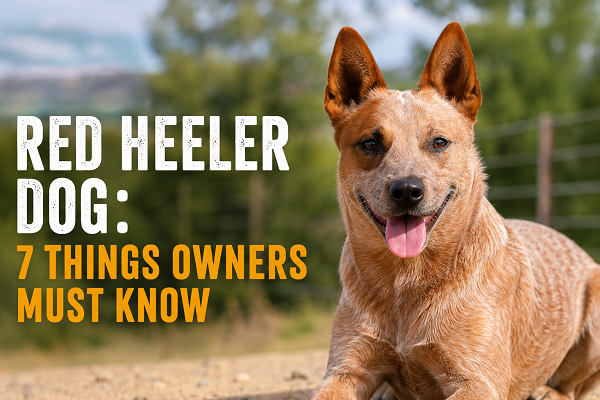
The most important things to know before owning a Red Heeler are that it needs 1-2 hours of daily exercise, has a strong instinct to nip at heels, is extremely intelligent (which means it gets bored fast), can live 12-16 years, is prone to hip dysplasia and hereditary deafness, sheds heavily twice a year, and forms an intensely loyal, almost velcro-like bond with one main person.
This guide breaks all of that down, plus a few things most breed profiles skip entirely, so you can decide if a Red Heeler actually fits your life, and if you already have one, how to set both of you up for success.
Table of Contents
- Introduction
- They Were Bred for Brutal, Independent Work, Not the Couch
- The Nipping Isn’t Bad Behavior, It’s Hardwired
- Exercise Isn’t Optional, It’s a Daily Requirement
- They’re Too Smart for Their Own Good
- Health Issues Every Owner Should Watch For
- Grooming Is Easy, but Shedding Season Isn’t
- They Bond Hard, Sometimes With Just One Person
- Trainer’s Notes: What I’d Tell a First-Time Heeler Owner
- FAQs About Red Heelers
- Final Thoughts
Introduction: Why This Breed Trips Up So Many Owners
Here’s the problem I see over and over. Someone falls in love with a Red Heeler puppy, maybe from a farm listing or a rescue photo, without realizing this dog was engineered, quite literally, to move half-ton cattle across the Australian outback for eight hours straight. Breeders in the 1800s crossed Dingoes with Collies and other herding dogs to create a dog tough enough for that job. That history doesn’t disappear just because the dog now lives in a suburban house.
So when a Heeler ends up bored, under-exercised, and cooped up, it doesn’t just get “a little restless.” It chews furniture, nips at kids’ ankles, herds the cat, and can become genuinely difficult to live with. None of that means the dog is broken. It means its needs weren’t met.
This article covers the seven things every current or prospective Red Heeler owner needs to know, backed by real breed data, health statistics, and lessons from handlers who’ve actually lived with this breed day in and day out. Let’s get into it.
They Were Bred for Brutal, Independent Work, Not the Couch
Red Heelers belong to the herding group, one of seven official dog breed groups recognized by kennel clubs worldwide (you can see how herding breeds compare to other working dog categories in our full guide to dog breed classifications). Officially called the Australian Cattle Dog, the breed got its start in 19th-century Australia when settlers needed a dog that could drive cattle over hundreds of miles of rough, hot terrain, often with almost no direct supervision.
That’s the key detail people miss: independence. Unlike a Border Collie that constantly checks in with its handler, or a Labrador bred to work hand-in-glove with a hunter, the Cattle Dog was bred to make its own calls out on the range. That independent streak is still very much alive in every Red Heeler you’ll meet today.
What this means for you:
- Expect a dog that questions instructions rather than blindly obeying them
- Expect a problem-solver that will find its own entertainment if you don’t provide it
- Expect a dog that thrives with a “job,” whether that’s herding, agility, or structured daily tasks
The American Kennel Club officially recognized the Australian Cattle Dog in 1980, and the breed has a dedicated following through organizations like the Australian Cattle Dog Club of America (ACDCA), which still hosts national herding trials, agility competitions, and conformation shows every year.
The Nipping Isn’t Bad Behavior, It’s Hardwired
Let’s address the elephant in the room. The name “Heeler” isn’t a cute nickname, it describes exactly how this breed was bred to move livestock: by nipping at the heels of cattle that wouldn’t budge. Red Heelers would duck low, snap at a hoof, and dodge the kick that came right after. That split-second timing and bite-to-move instinct is baked into the breed’s genetics.
In a pet home, that instinct doesn’t just vanish. It shows up as:
- Nipping at running kids or joggers
- Nipping at the heels of other pets
- Herding behavior toward moving cars, bikes, or skateboards
- Mouthing hands during play that can feel more intense than a typical puppy nip
I’ve seen this exact pattern show up in other heel-nipping herding breeds too. If you want a deeper breakdown of how to redirect this kind of instinct-driven mouthing without suppressing the dog’s natural drive, this guide on managing bite drive in working breeds walks through the same principles, even though it’s written with a different breed in mind, the underlying training approach carries over well.
Managing it in real life:
- Redirect the behavior onto a tug toy or flirt pole the moment you see the “stalk and chase” posture start
- Teach a rock-solid “leave it” and “off” from puppyhood
- Never let a puppy nip at ankles “because it’s cute,” it won’t stay cute at 40 pounds with adult teeth
- Supervise closely around small children until the dog has a proven, reliable track record
Most owners see real improvement within 8-12 weeks of consistent redirection training, though the instinct itself never fully disappears. It just gets properly channeled.
Exercise Isn’t Optional, It’s a Daily Requirement
This is the single biggest reason Red Heelers end up in shelters. According to breed data from veterinary and rescue organizations, Cattle Dogs need roughly 60-120 minutes of vigorous physical activity every single day, not a leisurely stroll around the block, but real, heart-rate-up exercise.
Historically, these dogs covered 20+ miles a day working cattle. You’re not going to replicate that in a backyard, but you do need to get creative:
- Structured runs or bike-jogging sessions (30-45 minutes)
- Fetch or flirt-pole sessions to burn energy fast in a small space
- Dog sports like agility, flyball, or herding trials, which the ACDCA actively promotes for the breed
- Off-leash time in secure areas where the dog can sprint freely
If you’re new to just how demanding a genuinely high-drive breed can be, it’s worth comparing notes with owners of other intense working lines. This breakdown comparing German Shepherds and Belgian Malinois covers exercise expectations across working breeds and is a useful gut check for anyone weighing whether they truly have the time for a dog like this.
Warning signs of an under-exercised Heeler:
- Destructive chewing, especially of furniture legs and drywall
- Excessive barking or whining
- Obsessive herding of children, pets, or vehicles
- Digging, escaping, or fence-jumping
They’re Too Smart for Their Own Good
Cattle Dogs consistently rank among the most intelligent dog breeds in working/obedience intelligence studies, the kind of research popularized by canine psychologist Stanley Coren, which ranked the breed in the top 10 for obedience and working intelligence out of over 130 breeds tested.
Here’s the catch: high intelligence in a working breed isn’t automatically a good thing for a first-time owner. It means the dog learns commands fast, sure, but it also means it learns bad habits just as fast, and it gets bored with repetitive training in a matter of minutes.
Signs of a bored, understimulated Heeler:
- Learning to open doors, gates, or crate latches
- Selective hearing on commands it’s known for years
- Inventing its own “games” (raiding the trash, stealing socks, herding the vacuum)
How to keep a Heeler’s brain engaged:
- Rotate training sessions every 5-10 minutes to prevent burnout and boredom
- Use puzzle feeders and scent work for low-impact mental exercise on rest days
- Teach new tricks regularly, not because you need them, but because the process of learning is what satisfies the dog
- Enroll in nose work, herding instinct tests, or agility classes, many ACDCA regional clubs offer instinct testing days for Cattle Dogs of any age
Health Issues Every Owner Should Watch For
Red Heelers are a generally hardy, long-lived breed, typically living 12 to 16 years, with the Guinness World Record for oldest dog ever recorded belonging to an Australian Cattle Dog named Bluey, who reportedly lived to 29 years old. That said, longevity doesn’t mean the breed is problem-free.
The main health concerns to screen for:
| Condition | What It Is | What to Do |
|---|---|---|
| Hip dysplasia | Malformation of the hip joint, common in medium/large working breeds | Ask breeders for OFA or PennHIP hip scores before buying |
| Progressive Retinal Atrophy (PRA) | Gradual, inherited vision loss | Request CERF/OFA eye clearances |
| Congenital deafness | Linked to the merle/piebald coloring gene | BAER hearing tests are standard for reputable breeders |
| Elbow dysplasia | Similar joint issue affecting the front legs | Screened alongside hip evaluations |
A 2026 telehealth data review from veterinary platform Dutch found that anxiety-related consults were notably over-represented in Cattle Dogs compared to the general dog population, which tracks with what most experienced handlers already know: this breed’s high drive and intelligence make it prone to stress and frustration-based behavior issues when its physical and mental needs aren’t consistently met.
Practical steps for new owners:
- Always ask breeders for hip, elbow, eye, and hearing clearances, reputable Cattle Dog breeders will have these on hand without hesitation
- Keep your dog lean; excess weight dramatically increases joint stress in a breed already prone to hip issues
- Schedule annual vet checks that include a joint and mobility assessment, especially past age 6
- If you’re building a broader wellness routine for a working-style dog, this guide to keeping working dogs fit and healthy covers nutrition and conditioning principles that apply just as well to an active Heeler at home
Grooming Is Easy, but Shedding Season Isn’t
If low-maintenance grooming was your deciding factor, good news: Red Heelers have a short, dense, weatherproof double coat that doesn’t need professional grooming, trims, or complicated coat care. A weekly brush is typically enough to keep the coat in good shape and control loose hair.
The catch is shedding season. Cattle Dogs “blow” their undercoat twice a year, spring and fall, and during those windows, the shedding is dramatic. Owners often describe it as going from a normal amount of hair to what feels like a second dog’s worth of fur in the house.
Coat care basics:
- Weekly brushing year-round with a slicker brush or de-shedding tool
- Daily brushing during the 2-3 week blowout periods each spring and fall
- Bathe only as needed, roughly every 6-8 weeks, over-bathing can strip the coat’s natural oils
- Regular nail trims and ear checks, standard for any active breed
Interesting bit of breed trivia: Red Heeler puppies are actually born almost entirely white. The red or blue coloring develops gradually over the first several weeks as the darker pigment comes in, so if you’re picking a puppy from a litter based on coat color alone, know that it’s still shifting at that age.
They Bond Hard, Sometimes With Just One Person
Cattle Dogs are famous for forming an intense, almost single-minded bond with one household member, often whoever handles their training, feeding, or daily exercise most consistently. This isn’t the breed sneaking off to make friends with every visitor. It’s loyal, sometimes to the point of being wary or standoffish with strangers and even other family members.
What that looks like day to day:
- Following their person from room to room
- Alert barking at visitors or unfamiliar sounds, this breed makes a genuinely excellent watchdog
- Some level of caution or reserve around people outside the immediate family, especially without early socialization
Early, structured socialization is non-negotiable with this breed. Puppies that get consistent, positive exposure to new people, sounds, environments, and handling between 8 and 16 weeks old grow into far more stable, confident adults. Skip that window, and you’re far more likely to end up with a Heeler that’s fearful or reactive with strangers rather than simply reserved. If you’re setting up a new puppy’s first weeks at home, the early-socialization framework in this guide on raising working-breed puppies applies directly, get the foundation right in the first 8 weeks and almost everything downstream gets easier.
A quick note on kids and other pets: Red Heelers can absolutely be wonderful, loyal family dogs, but they do best in households where kids are old enough to understand boundaries and where the dog has had proper socialization with children from puppyhood. Supervised introductions, not “toss them together and hope,” is always the right approach.
Trainer’s Notes: What I’d Tell a First-Time Heeler Owner
After years of working alongside high-drive herding and working breeds, here’s the honest, no-sugarcoating advice I give anyone considering a Red Heeler:
- Don’t get one because it’s “smart” alone. Smart without an outlet becomes destructive. Smart with structure becomes one of the most rewarding dogs you’ll ever own.
- This is a decade-plus commitment at full energy. Unlike some breeds that mellow out significantly by age 3-4, many Heelers stay driven and active well into their senior years.
- Structure beats punishment every time. These dogs respond far better to clear, consistent boundaries and positive reinforcement than to harsh corrections, which tend to create a defensive, distrustful dog rather than a well-behaved one.
- A tired Heeler is a good Heeler, but tired means both body and brain. A dog that’s only physically exhausted but mentally under-stimulated will still find ways to get into trouble.
FAQs About Red Heelers
1. Is a Red Heeler the same breed as an Australian Cattle Dog?
Yes. “Red Heeler” simply refers to the red-speckled coat coloring of the Australian Cattle Dog breed. A “Blue Heeler” is the same breed with a blue-gray speckled coat instead. Both are officially registered as Australian Cattle Dogs by kennel clubs.
2. Are Red Heelers good with kids?
They can be, especially when raised with children from puppyhood and given proper socialization and training. However, their natural instinct to nip at moving heels means young, unsupervised children can be at risk of being nipped during rough play, so supervision and boundary-setting are essential.
3. How much exercise does a Red Heeler need per day?
Most adult Red Heelers need 60-120 minutes of vigorous daily exercise, including running, structured play, or working-style activities like agility or herding. A short walk alone is not enough to meet this breed’s physical or mental needs.
4. Do Red Heelers bark a lot?
They’re not typically excessive barkers compared to some breeds, but they are naturally alert and will bark to signal visitors, unfamiliar sounds, or perceived threats, making them excellent watchdogs. Boredom-driven barking can become an issue if the dog isn’t getting enough exercise and mental stimulation.
5. What is the average lifespan of a Red Heeler?
Red Heelers typically live between 12 and 16 years, making them one of the longer-lived medium-sized breeds. The oldest verified dog in history, according to Guinness World Records, was a Red Heeler named Bluey, who lived to 29 years old.
Final Thoughts
A Red Heeler isn’t a dog you can set and forget. It’s a breed that was built, quite literally over more than a century of selective breeding, to think independently, work relentlessly, and stay loyal to its person through brutal conditions. Bring that dog into a home that respects what it was bred for, and you’ll end up with one of the most devoted, capable, and genuinely fun dogs you could ask for.
Bring it into a home expecting a low-key couch companion, and you’re setting both yourself and the dog up for frustration.
Before you commit to a Red Heeler, make sure you can honestly say yes to these:
- I can commit to 60-120 minutes of real exercise, daily, for the next 12-16 years
- I’m ready for consistent, positive-reinforcement training from day one, not occasional correction
- I understand the nipping instinct and have a plan to redirect it early
- I’ll prioritize hip, eye, and hearing health screening before or after adoption
- I have the time to properly socialize a puppy through those critical first 16 weeks
Get those pieces right, and a Red Heeler won’t just be a pet. It’ll be one of the hardest-working, most loyal dogs you’ll ever share a home with.

Her work centres on obedience, detection, protection and operational readiness. She favours proven methods built on repetition, consistency and real-world conditioning, so that both dogs and handlers are prepared for high-pressure tasks.
Rofiat represented the Nigerian Army Dog Centre at the Nigerian Army Day Celebration (NADCEL) 2026, where she led demonstrations in obedience, explosive detection, agility and tactical movement. Through articles, training content and documentaries, she shares field-based insight into how structured training, clear communication and trust between handler and dog affect performance and reliability.
She is the author of Beyond the Bark: Inside a Pro Handler's Playbook for Raising the Ideal Dog, a practical guide that helps dog owners and handlers apply professional training principles in everyday situations.
- How to Enter the COBA National Dog Championship - October 20, 2026
- K9 Advantix Dosage Chart & Safety Guide for Dogs - October 19, 2026
- How to Set Up & Use Bousnic Dog Training Collar - October 18, 2026