Best Dog Trainer in Lagos: K9 Obedience Guide
The best dog trainer in Lagos is one who holds a recognized canine certification (such as CPDT-KA, IACP-CDT, or an equivalent K9/military background), uses force-free or balanced methods matched to your dog’s temperament, and gives you a written training plan with a realistic timeline. Expect basic obedience to run 4–8 weeks and cost anywhere from ₦80,000 to ₦450,000+ depending on whether training happens at home, in a group class, or as a board-and-train residency. Protection and guard dog work takes 3–6 months longer and costs significantly more.
Table of Contents
- Introduction
- What Makes a Dog Trainer “The Best” in Lagos?
- Best Dog Breeds for Obedience & Protection Work in Nigeria
- Training Methods: Positive Reinforcement vs. Balanced Training
- What to Expect: The Basic Obedience Timeline
- Advanced & Protection Dog Training
- How Much Does Dog Training Cost in Lagos?
- How to Choose the Best Dog Trainer in Lagos (Checklist)
- 5 Obedience Drills You Can Start at Home Today
- Real Case Study: From Reactive Rescue to Reliable Family Dog
- Trainer Note: Who’s Behind This Guide
- FAQs
- Conclusion
Introduction
Here’s the thing: a smart, energetic dog with zero obedience training isn’t a safer dog. It’s a liability. An undertrained guard dog can bite the wrong person, panic at the gate, or simply ignore commands the one time it actually matters. On the flip side, a properly trained K9, whether it’s a family pet learning to sit and stay or a Boerboel learning controlled protection work, becomes calmer, more predictable, and genuinely more useful.
There’s no single body in Nigeria that licenses dog trainers the way, say, the Nigerian Bar Association licenses lawyers. That means literally anyone can call themselves a “professional K9 trainer”, which is exactly why you need to know how to choose a reliable dog trainer.
This guide pulls together what actually separates a serious dog trainer from someone who just “grew up around dogs.” You’ll learn the certifications worth looking for, realistic training timelines, what obedience and protection training actually costs in Lagos right now, red flags that should send you running, and five drills you can try with your dog this evening, no trainer required.
We wrote this the way we’d explain it to a friend standing at our gate with a leash in hand, not the way a textbook would.
What Makes a Dog Trainer “The Best” in Lagos?
There’s no single body in Nigeria that licenses dog trainers the way, say, the Nigerian Bar Association licenses lawyers. That means literally anyone can call themselves a “professional K9 trainer”, which is exactly why you need to know what to look for.
Credentials that actually mean something
Globally recognized dog training certifications include:
- CPDT-KA (Certified Professional Dog Trainer – Knowledge Assessed) — issued by the Certification Council for Professional Dog Trainers (CCPDT). Requires a minimum of 300 logged training hours over three years and a 200-question exam covering learning theory and ethology.
- IACP-CDT — offered by the International Association of Canine Professionals; requires at least two years of hands-on experience plus IACP membership.
- NASDU accreditation — the UK’s National Association of Security Dog Users standard, common among trainers with a security or police-dog background.
- Military/police K9 handler background — trainers who’ve handled explosive detection, narcotics, or patrol dogs (for example, through Nigerian Army, Nigeria Customs, or Nigeria Police Force K9 units) bring operational discipline that’s hard to fake.
None of these certifications are mandatory to legally train dogs in Nigeria, but a trainer who’s invested time and money into one is telling you something real: they take this seriously enough to be tested by someone other than themselves.
Questions a credible trainer should answer without flinching
- What method do you use, and why?
- Can I watch a session before I commit to a full package?
- What happens if my dog doesn’t respond to the standard approach?
- Do you have client references I can actually call?
- What’s your plan if my dog shows fear-based aggression rather than dominance-based behavior?
If a trainer gets vague or defensive here, that’s data. Walk away.
Best Dog Breeds for Obedience & Protection Work in Nigeria
Not every breed learns the same way, and not every breed is suited to every household. Here’s how the most common working and companion breeds in Lagos homes typically respond to training:
| Breed | Trainability | Common Use in Lagos Homes | Notes |
|---|---|---|---|
| German Shepherd | Very high | Personal protection, obedience, family | Highly food/toy motivated; needs mental stimulation or develops destructive habits |
| Rottweiler | High | Guard/protection | Confident, needs early socialization to avoid over-guarding |
| Boerboel | High, but strong-willed | Property/estate protection | South African breed, increasingly popular for compound security; needs an experienced handler |
| Caucasian Shepherd | Moderate-high, independent | Estate/perimeter guarding | Large, territorial, not ideal for first-time owners |
| Lagos/Nigerian local (mixed-breed “bush dogs”) | Surprisingly high | Companion, alert-barking | Often underestimated; naturally street-smart and food-motivated, responds very well to positive reinforcement |
| Labrador Retriever | Very high | Family companion, therapy | Best for households wanting obedience without protection work |
Insight most local guides miss: Nigeria’s local mixed-breed dogs, often dismissed as “just local dogs”, are frequently easier to train for basic obedience than imported guard breeds, because they’re naturally more food-driven and less prone to the genetic guarding instincts that make protection breeds harder for first-time owners to manage. If your goal is a calm, obedient companion rather than a bite-trained protector, don’t overlook the dog already sleeping under your car.
Training Methods: Positive Reinforcement vs. Balanced Training
You’ll hear two broad philosophies from trainers in Lagos, and it’s worth understanding the difference before you sign up for anything.
Positive reinforcement (reward-based) training
This uses treats, toys, and praise to reward the behavior you want, and simply withholds the reward (rather than punishing) when the dog gets it wrong. It’s the standard taught by CCPDT-certified trainers worldwide and tends to work exceptionally well for obedience basics, sit, stay, recall, loose-leash walking.
- Pros: Builds trust, reduces fear-based aggression, works well with puppies and nervous dogs.
- Cons: Can take longer for dogs with strong existing bad habits; requires consistency from the owner.
Balanced training
This combines rewards with corrective tools, check chains, prong collars, or e-collars, usually reserved for advanced obedience or protection work with adult, high-drive dogs.
- Pros: Often faster for correcting entrenched problem behaviors like fence-fighting or leash reactivity in strong protection breeds.
- Cons: Done poorly, it can create fear or suppress a symptom without solving the underlying issue. This is where a trainer’s actual skill (not just their tools) matters most.
Our take: For basic obedience and puppy training, positive reinforcement should be the default. For protection and guard dog work with an adult, high-drive breed like a Boerboel or Caucasian Shepherd, a skilled balanced approach, introduced only after the foundational obedience is solid, tends to produce more reliable results. Any trainer who uses only corrections, from day one, on a puppy, is not someone you want handling your dog.
What to Expect: The Basic Obedience Timeline
Here’s a realistic breakdown based on how most structured obedience programs are paced, whether you’re in Lagos, London, or Los Angeles:
- Weeks 1–2: Foundation and bonding. Name recognition, marker/clicker training, basic sit and down, house manners. This is where the trainer is also reading your dog’s temperament.
- Weeks 3–4: Core commands under mild distraction. Sit, stay, down, come, loose-leash walking, now tested with people, other dogs, or noise nearby (a genuinely useful test in Lagos traffic and gate-side chaos).
- Weeks 5–6: Reliability and duration. Commands held for longer periods, off-leash recall in enclosed spaces, impulse control around food and visitors.
- Weeks 7–8: Real-world proofing. Practicing commands at the gate, around delivery riders, other pets, and household staff, the actual environment your dog lives in.
Military and police working dog programs run far longer for a reason: the Nigerian Air Force’s K9 handler training, for example, has run as an intensive multi-week program combining overseas specialist instruction with in-country adaptation, a good reminder that serious detection and patrol work takes months, not days, to build reliably. Don’t expect a household obedience program to move at that pace, but don’t expect protection-level reliability from an 8-week course either.
Advanced & Protection Dog Training
Protection training is where Lagos pet owners most often get misled. A dog that barks aggressively at strangers is not a trained protection dog, it’s an anxious dog with no impulse control, and that’s genuinely dangerous.
Real personal or property protection training typically includes:
- Bite work on command — the dog engages and, critically, releases on command.
- Controlled aggression — the dog escalates only when a genuine threat is presented, not at every visitor.
- Obedience under pressure — the dog must hold a “down-stay” or “heel” even with adrenaline elevated.
- Handler-specific bonding — protection-trained dogs usually work best with one primary handler, which matters if your domestic staff will be the ones managing the dog day-to-day.
Realistic timeline: 3–6 months beyond basic obedience, and only recommended for dogs 12–18 months or older, once basic obedience is fully reliable. Any trainer offering to turn your 4-month-old puppy into a “guard dog” in two weeks is selling you something that isn’t real protection training, it’s a liability with teeth.
Realistic timeline: 3–6 months beyond basic obedience… For a deeper look at professional K9 handler training, including team development, drills, certification and maintenance, see our field-tested handler guide.
How Much Does Dog Training Cost in Lagos?
Pricing in Nigeria’s dog training market is far less standardized than in the US or UK, where trainers publish rate cards. Based on the current Lagos market and comparable international pricing, here’s a realistic range:
| Training Type | Typical Lagos Range | Comparable US/UK Range |
|---|---|---|
| Group obedience classes (per course) | ₦60,000 – ₦150,000 | $75 – $250 |
| Private/in-home obedience (per session) | ₦25,000 – ₦60,000 | $75 – $150 |
| Full board-and-train (4–8 weeks, obedience) | ₦250,000 – ₦600,000 | $2,000 – $5,000 |
| Guard/protection dog training (add-on, 3–6 months) | ₦400,000 – ₦1,200,000+ | $3,000 – $10,000+ |
| Puppy socialization package | ₦40,000 – ₦100,000 | $100 – $300 |
A few honest notes on cost:
- Cheaper isn’t automatically worse, and expensive isn’t automatically better. What matters is the trainer’s method, experience, and whether they give you homework you can follow between sessions.
- Board-and-train costs more because it costs more to run, feeding, housing, and daily one-on-one time with your dog for weeks adds up. If a board-and-train quote in Lagos feels suspiciously cheap, ask hard questions about facility conditions.
- Ongoing “maintenance” sessions (monthly refreshers) are worth budgeting for, especially with high-drive protection breeds, obedience that isn’t reinforced fades within months.
Training is just one line item in the overall cost of dog ownership, for a fuller picture of feeding, vet care, and upkeep.
How to Choose the Best Dog Trainer in Lagos (Checklist)
Use this before you commit to any package:
- [ ] Ask to observe a live session (in-person or via video) before paying in full
- [ ] Confirm their method matches your dog’s age and temperament (puppy vs. adult, nervous vs. confident)
- [ ] Request at least two client references you can actually contact
- [ ] Get the training plan and cost breakdown in writing
- [ ] Ask what happens if your dog doesn’t progress on the standard timeline
- [ ] Check whether they separate obedience training from protection/bite work (a trainer who jumps straight to “guard training” for any dog, any age, is a red flag)
- [ ] Ask how they handle fear-based reactivity versus genuine aggression, these require different approaches entirely
Red flags to walk away from:
- Guarantees of a “fully trained guard dog in 2 weeks”
- Refusal to let you watch or ask questions
- Heavy reliance on punishment with no explanation of the dog’s underlying behavior
- No willingness to put anything in writing.
5 Obedience Drills You Can Start at Home Today
You don’t need a trainer on-site to start building good habits. Try these tonight:
- The “sit for everything” rule. Before feeding, opening the gate, or clipping the leash, ask for a sit. This single habit builds more baseline obedience than almost anything else.
- Name recognition game. Say your dog’s name; the moment they look at you, reward instantly. Repeat 10 times a day. This becomes the foundation for recall.
- Threshold training at the gate. Practice having your dog wait calmly before crossing the gate threshold, genuinely useful in a city where gates open and close constantly.
- Leave-it with low-value items. Place a piece of food on the floor, cover it with your hand if needed, and reward calm behavior, not grabbing.
- Five-minute “settle” practice. Ask your dog to lie on a mat near you while you do something else (eat, work, watch TV). Reward calmness, not just commands.
Consistency across everyone in the household, including domestic staff and children, matters more than any single technique. A dog that gets away with jumping on the gateman but not on you is a confused dog.
Consistency across everyone in the household, including domestic staff and children, matters more than any single technique. If you’re also raising a puppy, our guide to puppy training and bite inhibition covers the foundation for stopping inappropriate mouthing before it becomes a bigger problem.
Real Case Study: From Reactive Rescue to Reliable Family Dog
One case that sticks with anyone who’s spent real time training dogs in Lagos: a rescued mixed-breed adopted from a shelter came into a new home lunging at okada riders and refusing to walk past the gate without a full-blown panic. Eight weeks of consistent, reward-based obedience work, starting with simple name recognition inside the compound before ever attempting a walk past the gate, turned that same dog into one that could sit calmly at the roadside while traffic passed.
The lesson isn’t that eight weeks fixes everything. It’s that the dogs people give up on fastest are often the ones responding to fear, not stubbornness and fear responds to patient, structured training far better than it responds to punishment.
Trainer Note: Who’s Behind This Guide
This guide draws on hands-on K9 handling and obedience training experience, cross-referenced against internationally recognized training standards from the CCPDT (Certification Council for Professional Dog Trainers), the IACP (International Association of Canine Professionals), and NASDU (National Association of Security Dog Users, UK), the same frameworks used to certify professional trainers and security K9 handlers globally. Real-world Lagos pricing and case examples reflect current market conditions in the local pet and security-dog training industry as of 2026.
If you want a deeper, structured framework for training and understanding your dog’s behavior at home, our team put together a practical training resource available here: K9 Obedience & Behavior Guide (eBook), useful whether you’re prepping your dog before a trainer arrives or reinforcing what you’ve already learned.
FAQs
1. How long does it take to train a dog for basic obedience in Lagos?
Most dogs reach reliable basic obedience, sit, stay, down, come, loose-leash walking, within 6–8 weeks of consistent training, whether through group classes, private sessions, or board-and-train.
2. What is the average cost of hiring a dog trainer in Lagos?
Private in-home sessions typically run ₦25,000–₦60,000 per session, while full board-and-train obedience programs range from ₦250,000–₦600,000. Protection/guard dog training costs significantly more due to the longer timeline.
3. Which dog breed is best for home security in Lagos?
German Shepherds, Rottweilers, and Boerboels are the most commonly trained protection breeds in Lagos due to their trainability and confidence, though any of them requires proper obedience training first, an untrained guard breed is a liability, not an asset.
4. Can local Nigerian mixed-breed dogs be trained as well as imported breeds?
Yes. Local mixed-breed dogs are often highly food-motivated and street-smart, which makes them respond very well to positive reinforcement obedience training, sometimes faster than purebred guard breeds with strong independent instincts.
5. Is positive reinforcement or correction-based training better for guard dogs?
Positive reinforcement should form the foundation for all dogs, including protection breeds. Correction-based (balanced) methods are typically introduced later, only for advanced protection work with adult dogs that already have solid obedience, not as a starting method for puppies.
Conclusion
Finding the best dog trainer in Lagos isn’t about picking the flashiest Instagram page or the cheapest quote you can find, it’s about matching a trainer’s method, credentials, and honesty to what your dog actually needs. A puppy learning house manners needs a completely different approach than an adult Boerboel being prepared for property protection, and any trainer who treats every dog the same way probably isn’t the right one.
Start with the basics: watch a session before you pay, ask for real references, get your training plan in writing, and be honest with yourself about whether your dog needs obedience training, protection training, or simply more consistency at home. Whichever path you take, the five home drills in this guide cost nothing and can start building better habits tonight, before your first paid session even begins.

Her work centres on obedience, detection, protection and operational readiness. She favours proven methods built on repetition, consistency and real-world conditioning, so that both dogs and handlers are prepared for high-pressure tasks.
Rofiat represented the Nigerian Army Dog Centre at the Nigerian Army Day Celebration (NADCEL) 2026, where she led demonstrations in obedience, explosive detection, agility and tactical movement. Through articles, training content and documentaries, she shares field-based insight into how structured training, clear communication and trust between handler and dog affect performance and reliability.
She is the author of Beyond the Bark: Inside a Pro Handler's Playbook for Raising the Ideal Dog, a practical guide that helps dog owners and handlers apply professional training principles in everyday situations.
- Can You Handle a Cane Corso Puppy? 7 Hard Truths - October 23, 2026
- How to Train a Stubborn Pug: A K9 Trainer’s Real Guide - October 22, 2026
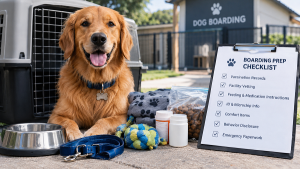
- Dog Hotel Prep: 7 Must-Haves Before Boarding - October 21, 2026