Rottweiler: Family Guardian or Liability? Honest Truth
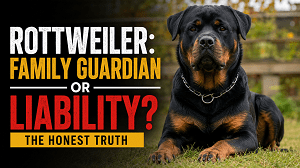
When you’re choosing a guard dog for your family, the Rottweiler often comes up in conversation. But you’ve probably heard conflicting stories, some people call them gentle, loving guardians, while others warn they’re a dangerous liability. I’ve worked with dozens of Rottweilers over the years, from family companions to professional protection dogs, and I’m here to give you the honest truth.
The reality is: a well-bred, properly trained Rottweiler is an incredible family guardian, but an poorly bred or undertrained one can absolutely become a liability. This isn’t about the breed being “good” or “bad”, it’s about ownership, breeding, and training. In this article, you’ll get real stats, specific training timelines, actual costs, and the facts you need to decide if a Rottweiler fits your family.
Table of Contents
What Makes a Rottweiler a Natural Guardian
Are Rottweilers Naturally Aggressive? The Real Data
Rottweiler Temperament: What You’re Actually Getting
American vs. German vs. Roman: Which Rottweiler Fits You?
Training Timeline: How Long Does It Really Take?
Rottweilers and Small Children: Safety First
Real Costs: Puppy Price + First-Year Expenses
Homeowners Insurance: Will They Cover Your Rottweiler?
Red Flags: When a Rottweiler Becomes a Liability
Conclusion: Your Action Plan
FAQs
What Makes a Rottweiler a Natural Guardian
If you’ve ever worked with a Malinois, you’ll know that not every breed has the natural drive for protection work. The Rottweiler does. Here’s what makes them special:
Rottweilers belong to the group of breeds historically developed for demanding jobs involving protection, livestock management, and security. If you’re unfamiliar with working breeds, read our complete guide explaining what makes a dog a working dog and why these breeds require a different ownership approach.
The breed’s history proves their working ability. Over 2,000 years ago, Roman drover dogs accompanied legions through Europe, protecting cattle and soldiers. In medieval Rottweil, Germany, they became the “Rottweiler Metzgerhund” (Butcher’s Dog), driving livestock, guarding money pouches, and protecting homes. By the early 20th century, the German Police Dog Association employed Rottweilers alongside German Shepherds and Dobermans as police dogs.
However, natural protective instincts alone are not enough. A family guardian must also learn control, boundaries, and obedience. Our guide on basic protection commands for family dogs explains how to develop a reliable protector without encouraging aggression.
Are Rottweilers Naturally Aggressive? The Real Data
This is the question everyone asks, and the answer requires nuance.
What the Studies Show
A 2008 study surveying breed club members found that Rottweilers were average in aggressiveness toward owners and other dogs, but more aggressive than average toward strangers. This aggression correlates with their watchdog and territorial instincts, not random aggression.
Bite Statistics: The Hard Numbers
Here’s what the data actually says about fatal bites:
Rottweilers account for more than 6% of fatal dog bite attacks in the United States.
From 2005–2019, Rottweilers ranked second in bite-related fatalities at 9.8% .
A JAVMA study found Rottweilers were responsible for 10% of dog bite-related fatalities, making them the second most common breed involved.
But here’s the critical context: These statistics reflect the Rottweiler’s size and strength, not necessarily frequency of aggression. When a 120-lb dog bites, it causes more damage than a 15-lb dog. The breed doesn’t bite more often than average,it just bites harder.
The Truth About “Naturally Aggressive”
Rottweilers are not naturally aggressive toward their family. Any aggression or overprotectiveness stems from:
Lack of rules or boundaries
Inconsistent leadership
Training to fight (which is unethical and illegal in most places)
Fear, overstimulation, resource guarding, or frustration
When you’ve trained Rottweilers properly, you’ll see they’re bold, confident, and can even be shy around strangers, but they won’t attack unless someone threatens their family.
Many owners mistakenly believe a strong breed like the Rottweiler requires “dominance.” In reality, successful Rottweiler ownership depends on structure, consistency, and discipline rather than intimidation. Learn more in our article on dominance vs discipline in dog training.
Rottweiler Temperament: What You’re Actually Getting
When you bring a Rottweiler into your home, you’re getting a dog with specific traits. Here’s what to expect:
Core Temperament Traits
Loyal and affectionate with their family
Protective without being aggressive
Confident and alert with natural guardian instincts
Patient and gentle with children when properly socialized
Reserved around strangers (especially American Rottweilers)
What I’ve Seen in Real Training
When I worked with a Rottweiler named “Diego” for a client in Texas, he was confident and courageous but knew not to run toward danger. People on the street wanted to pet him and were amazed at how “silly and soft-hearted” he was. That’s the Rottweiler you want, one who can tell the difference between threatening and non-threatening behavior.
Another Rottweiler I trained, “Berte,” could run barking and snarling toward a roof noise to protect the yard, but during therapy visits, he climbed gingerly onto a bed beside a frail, bedridden woman without stepping on her. That’s the temperament balance you’re looking for.
American vs. German vs. Roman: Which Rottweiler Fits You?
You might have heard there are different “types” of Rottweilers. Let’s clarify what’s real and what’s marketing.
The Reality: One Breed, Different Variants
American, German, Roman, and Serbian Rottweilers are variants of the same breed, not different breeds. They have slight differences in size, appearance, and origin.
Regardless of the variant, the Rottweiler remains part of the Working Group, a category known for strength, intelligence, and protective instincts. If you’re comparing breeds, our guide to the seven major dog groups provides a useful overview.
Key Differences
Which Should You Choose?
First-time Rottweiler owners: Go with a German Rottweiler for their more easygoing temperament.
Experienced handlers wanting a guardian: An American Rottweiler may fit your needs.
Avoid Roman Rottweilers unless you’re an experienced handler, they’re the largest and can be more challenging.
Training Timeline: How Long Does It Really Take?
This is where most people underestimate the work. A Rottweiler isn’t a breed you can “figure out” later. Here’s the realistic timeline:
Puppy Obedience (8–20 weeks)
Duration: 2–4 weeks of consistent daily practice
What you’ll learn: Name recognition, sit, down, place, leash manners, crate training
Critical window: Socialization occurs between 8–16 weeks, with 11–16 weeks being especially important.
Adolescent Dogs (6–18 months)
Duration: 4–8 weeks of structured training
What you’ll learn: Focus, impulse control, leash discipline as hormones and confidence grow
Note: The critical socialization window closes around 16 weeks, start positive exposure early
Adult Rottweilers (1+ year)
Duration: 3–6 weeks of focused work
What you’ll learn: Correct bad habits, improve reliability, reset household rules
Real-World Reliability
Basic commands: 2–4 weeks with consistent daily practice
Reliable behavior in real-world distractions: 6–12 months of proofing
What You Must Train
Territorial control — Since they’re “very territorial,” you must regularly work with your dog to control this instinct.
Socialization — Expose your puppy to wide variety of people, dogs, environments, sounds, and surfaces.
Impulse control — Critical for a powerful breed.
Protection discrimination — Teaching them when protection is appropriate vs. when it’s not.
Professional working-dog programs place enormous emphasis on discrimination, obedience, and control before any protection work begins. You can see how this process works in our breakdown of how military working dogs are trained.
Rottweilers and Small Children: Safety First
This is where many families make dangerous mistakes.
The Honest Answer
Rottweilers can be excellent family dogs with small children when properly trained and socialized. However:
They require experienced ownership
They need consistent training
They require constant supervision due to their size and strength
They’re generally better suited for families with older children who can understand and follow dog safety rules
Why Young Children Risk Higher Danger
The UK’s PDSA explicitly states: “We wouldn’t recommend Rottweilers for families with younger children and babies, as young children sometimes don’t understand how to behave around dogs”.
Here’s why:
Setting Up for Success
If you have children and want a Rottweiler:
Start socialization early with controlled exposure to children of different ages.
Reward calm, gentle behavior using positive reinforcement.
Establish clear boundaries and consistent rules.
Create designated rest areas for your dog.
Supervise all interactions regardless of how well-trained your dog is.
Teach children to respect the dog’s space and signals.
Provide regular exercise and mental stimulation, a tired Rottweiler is a well-behaved Rottweiler.
Real Costs: Puppy Price Plus First-Year Expenses
Let’s talk numbers. This isn’t cheap, and you should know what to expect.
Puppy Price from Reputable Breeder
Source: (breeds101).
As of 2026, a Rottweiler puppy from a reputable breeder typically costs between $1,000 and $2,500.
First-Year Expenses (Beyond Puppy Price)
Don’t forget these ongoing costs:
Veterinary care: $500–$1,000 (vaccinations, checkups, potential emergencies)
Food: $600–$900 annually (high-quality large-breed formula)
Training: $500–$1,500 (puppy classes + professional obedience)
Insurance/pet insurance: $400–$600 annually
Supplies: $300–$500 (crate, bed, toys, leash, collar)
Total first-year cost (excluding puppy): $2,300–$4,500
Avoid Puppy Scams
Always verify breeder credentials. Look for:
AKC-registered breeders
Health testing for parents (hips, elbows, heart)
Breed club membership
References from previous buyers
Homeowners Insurance: Will They Cover Your Rottweiler?
This is a critical consideration many people overlook.
The Reality: Yes, Many Insurers Exclude Rottweilers
Some homeowners insurance policies generally do not allow Rottweilers, along with:
Akitas
Mastiffs
Chow Chows
Great Danes
German Shepherds
Doberman Pinschers
Staffordshire Terriers (pit bulls)
Wolf breeds or crosses
Why Insurers Exclude Them
“Since dog bite statistics show that certain breeds are more prone to biting than others, there are specific dog breeds homeowners insurance won’t cover”. The commonly excluded breeds include Rottweilers because of their bite statistics.
What This Means for You
Owning a Rottweiler may make your homeowners coverage more expensive or restrictive
Some insurance companies won’t insure homeowners who own these breeds
Some companies require dog owners to sign liability waivers for dog bites
Some companies charge more for owners of breeds such as pit bulls and Rottweilers
State Laws That Protect You
As of May 2024, several states have laws prohibiting insurance companies from denying coverage based on a dog’s breed, including New York. Check your state’s laws before purchasing.
Action Steps
Call your insurance company before buying to confirm they cover Rottweilers
Get written confirmation of coverage
Consider pet liability insurance if your homeowner’s policy excludes bites
Research breed-friendly insurers in your area
Red Flags: When a Rottweiler Becomes a Liability
Not all Rottweilers are created equal. Here’s when you’re dealing with a potential liability:
Warning Signs in the Dog
Warning Signs in the Breeder
No health testing on parents
Won’t let you meet the puppy’s parents
No breed club membership
Selling puppies under 8 weeks (puppies need to stay with mom until at least 7 weeks, preferably longer )
No questions about your experience or home
“Rare” colors at premium prices (blue, white, red, these are not standard and often indicate poor breeding)
What Happens If You Ignore These Signs
“If its leadership is inconsistent and it has been trained to fight, Rottweilers can be very dangerous and seriously injure others”. Any aggression in a Rottweiler is attributable to naturally inherited traits developed when no rules or boundaries are present.
Conclusion: Your Action Plan
Here’s the honest truth: A Rottweiler can be either a loving family guardian OR a dangerous liability and the difference isn’t the breed. It’s the owner.
If You Want a Rottweiler as a Family Guardian:
Buy from a reputable breeder who health-tests parents and raises puppies with proper socialization ($1,000–$3,500)
Start training at 8 weeks with puppy classes and daily practice
Socialize aggressively during the 8–16 week window
Work with a professional trainer especially as a first-time owner
Train territorial control regularly since they’re naturally very territorial
Supervise all child interactions regardless of training level
Verify homeowners insurance covers Rottweilers before purchasing
Choose a German Rottweiler if you’re a first-time owner (more easygoing)
If You’re Not Ready for This Commitment:
Consider a different breed. A Rottweiler isn’t a puppy you’ll “train later.” They need experienced ownership from day one.
The Bottom Line
When properly bred, trained, and owned, Rottweilers are loyal, intelligent, courageous, and give off an “air of nobility”. They can form deep bonds with children while maintaining appropriate boundaries. But they require dedication to proper training, socialization, and management.
Responsible ownership is key. Commit to ongoing training, maintain consistent supervision, and create an environment where both your Rottweiler and family can thrive safely.
FAQs
1. Are Rottweilers naturally aggressive?
No, Rottweilers are not naturally aggressive toward their family. A 2008 study found they’re average in aggressiveness toward owners and other dogs but more aggressive toward strangers, which correlates with watchdog and territorial instincts. Any aggression stems from inconsistent leadership, lack of boundaries, fear, overstimulation, or resource guarding, not inherent breed aggression. When properly trained, they’re loyal, protective, and affectionate with their family.
2. Is a Roman Rottweiler a different breed?
No, the Roman Rottweiler is not a different breed. American, German, Roman, and Serbian Rottweilers are variants of the same breed with slight differences in size, appearance, and origin. The Roman Rottweiler is the largest, with a bulkier head, heavier body, longer legs, and Mastiff-like appearance. They can stand several inches taller than other Rottweilers.
3. Are Rottweilers good with small children?
Rottweilers can be excellent with small children when properly trained and socialized, but they’re generally better suited for families with older children. They require experienced ownership, consistent training, and constant supervision due to their size (95–135 lbs for males) and strength. The UK’s PDSA explicitly doesn’t recommend Rottweilers for families with younger children and babies because young children sometimes don’t understand how to behave around dogs.
4. How much does a Rottweiler cost from a breeder?
As of 2026, a Rottweiler puppy from a reputable breeder typically costs between $1,000 and $2,500. A quality Rottweiler from a reputable breeder can cost $1,000–$3,500, while puppies with championship heritage can reach up to $7,000+. Don’t forget first-year expenses beyond the puppy price: veterinary care ($500–$1,000), food ($600–$900), training ($500–$1,500), and supplies ($300–$500), totaling $2,300–$4,500 additional.
5. Do Rottweilers need special homeowner’s insurance?
Yes, many homeowner’s insurance policies exclude Rottweilers. Some insurers generally don’t allow Rottweilers, along with Pit Bulls, German Shepherds, Dobermans, Chow Chows, and Great Danes. Owning a Rottweiler may make your coverage more expensive or restrictive, and some companies won’t insure homeowners who own these breeds. Some companies require liability waivers or charge more for owners of Rottweilers. Call your insurance company before buying to confirm coverage, and check if your state has breed-discrimination laws (New York and several others prohibit breed-based denial as of 2024).

Her work centres on obedience, detection, protection and operational readiness. She favours proven methods built on repetition, consistency and real-world conditioning, so that both dogs and handlers are prepared for high-pressure tasks.
Rofiat represented the Nigerian Army Dog Centre at the Nigerian Army Day Celebration (NADCEL) 2026, where she led demonstrations in obedience, explosive detection, agility and tactical movement. Through articles, training content and documentaries, she shares field-based insight into how structured training, clear communication and trust between handler and dog affect performance and reliability.
She is the author of Beyond the Bark: Inside a Pro Handler's Playbook for Raising the Ideal Dog, a practical guide that helps dog owners and handlers apply professional training principles in everyday situations.
- Bousnic Dog Training Collar Review: Is It Safe? - September 30, 2026
- Gravy Train Dog Food Review: Ingredients & Recalls - September 30, 2026
- How to Spot Fake AKC Registered Dogs: 5 Warning Signs - September 29, 2026