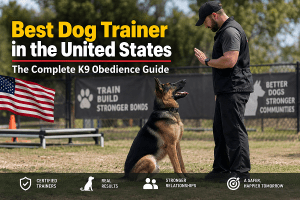
Meet the Heroes: Fort Collins K9 Police Dogs in Action

Fort Collins Police Services runs one of Colorado’s most active K9 units, seven dog-handler teams, six of them dual-purpose patrol and narcotics dogs plus one explosives detection specialist. These dogs are deployed over 1,000 times a year, and the unit’s presence alone convinces roughly 97% of resisting suspects to surrender without a single bite. If you want to understand how a modern police K9 program actually works, training, gear, real cases, and the bond between dog and handler, this is a genuine, on-the-ground look at it.
Table of Contents
- Introduction
- Why Fort Collins Is a Great Case Study for K9 Policing
- Meet the Unit: How Many Dogs, What Breeds, What Jobs
- From Holland to Old Town: How a Fort Collins K9 Is Trained
- Real Dogs, Real Stories: Yago, Ivo, and the Legend of Inox
- What a Deployment Actually Looks Like
- The Gear That Keeps These Dogs Alive
- Retirement: What Happens When a K9 Hangs Up the Vest
- How Fort Collins Compares to Other K9 Programs Worldwide
- FAQs About Fort Collins K9 Police Dogs
- Conclusion: What These Dogs Teach Us About Loyalty and Work
Introduction
If you’ve ever stood on a sidewalk in Old Town Fort Collins and watched a patrol car roll by with a German Shepherd’s head poking out the back window, you’ve seen one half of one of the most effective partnerships in American law enforcement. The other half is a person like Sergeant Ryan Barash, who spent almost eight years trusting his life to a dog named Inox.
I’ve spent a good chunk of my career around working dogs, and Fort Collins keeps coming up as one of the programs worth studying closely. It’s not the biggest K9 unit in the country. It’s not the most famous. But it’s a mid-sized city department that has quietly built a K9 program with real depth, dual-purpose dogs, an explosives specialist, a strong training pipeline, and a genuinely low-force philosophy that gets suspects to surrender before anyone gets hurt.
In this article, I’m going to walk you through exactly how the Fort Collins Police Services K9 Unit operates: how many dogs they run, where those dogs come from, how they’re trained, what a real deployment looks like, and some of the actual cases that show why this work matters. Whether you’re a casual dog lover curious about police K9s, a handler-in-training, or someone thinking about what it takes to raise a working dog of your own, you’ll walk away with a clear, honest picture, not a Hollywood version.
Why Fort Collins Is a Great Case Study for K9 Policing
Fort Collins is a city of roughly 170,000 people at the base of the Rockies in northern Colorado, home to Colorado State University. It’s not a place most people associate with elite law enforcement units. That’s exactly why it’s such a good example, it shows what a well-run K9 program looks like at a normal, mid-sized American police department, not just at a mega-city force with unlimited budget.
According to the Fort Collins Police Services K9 Unit, the team is made up of seven dog-handler teams: six dual-purpose dogs trained in patrol work and narcotics detection, plus one single-purpose dog dedicated to explosives detection. Every one of those dogs lives with its handler full-time, on duty and in retirement, which tells you a lot about how the department treats these animals, as partners, not equipment.
Next door, the Larimer County Sheriff’s Office runs its own eight-team K9 unit, and the two agencies frequently support each other along with regional partners like the Northern Colorado Drug Task Force, the FBI, the DEA, and the ATF. Larimer County estimates that each K9 team saves between 800 and 1,000 man-hours of police work per year by doing in minutes what would otherwise take an entire search team hours to accomplish.
If you’re new to the broader world of working dogs and want the bigger picture, where police K9s fit among service dogs, therapy dogs, and other working breeds, this breakdown of what defines a working dog is a solid place to start before diving deeper here.
Meet the Unit: How Many Dogs, What Breeds, What Jobs
Fort Collins K9s are almost entirely European imports, and there’s a good reason for that. German and Dutch breeding programs have spent decades selecting for the specific drive, nerve strength, and trainability that police work demands, traits that are much harder to reliably find in dogs bred purely as pets.
The department’s roster over the years reads like a who’s who of classic working breeds:
- German Shepherds — Bia, Inox, and others have carried the bulk of the patrol and narcotics workload.
- Belgian Malinois — Ivo, a 4-year-old Malinois, was one of the unit’s dual-purpose dogs before his sudden death from cancer.
- Dutch Shepherds — Eleiko, a Dutch Shepherd born in Holland, joined the force as a 1-year-old dual-purpose dog.
Most of these dogs come from Holland and Germany, imported specifically for police work and often arriving in the U.S. only after already showing strong prey drive, nerve stability, and scent discrimination during early testing overseas. Once selected, a new K9 and its assigned officer typically go through around 10 weeks of intensive academy training before hitting the streets, based on the timeline the department followed with Eleiko, which included eight weeks at DNA K9 in North Carolina, a well-known private K9 training facility that supplies and trains dogs for law enforcement agencies across the country.
Every dog in the unit is dual-purpose unless it’s specifically assigned to explosives work. That means the same dog that finds narcotics in a vehicle during a traffic stop is also the dog sent to track a fleeing suspect through a backyard an hour later. It’s a demanding standard, the dog has to switch between a calm, methodical detection mindset and a high-arousal apprehension mindset, sometimes within the same shift.
For readers curious about how these role distinctions map onto broader classification systems, patrol dogs, detection dogs, and the historical development of military and police canine ranks, this piece on military working dog ranks and roles covers the structure in more depth.
From Holland to Old Town: How a Fort Collins K9 Is Trained
Here’s the thing people often get wrong about police dog training: it’s not about making a dog aggressive. It’s about making a dog reliable. A K9 that bites indiscriminately is a liability, not an asset. What departments like Fort Collins actually want is a dog with strong natural drive that has been shaped, through months of repetition, to only act on a specific command, in a specific context, and to disengage the instant it’s told to.
A typical training pipeline for a Fort Collins K9 looks something like this:
- Selection — Dogs are chosen young, usually between one and two years old, based on scent drive, courage, and handler focus rather than raw aggression.
- Foundational academy training — Roughly 8 to 10 weeks pairing the new dog with its handler, often at a specialized facility, covering obedience, agility, and basic detection or apprehension work.
- Narcotics or explosives imprinting — The dog learns to associate specific target odors with a reward, then practices searching increasingly complex environments: vehicles, buildings, luggage, open fields.
- Bite work and apprehension training — Controlled exercises using padded sleeves and suits teach the dog exactly when to engage and, just as importantly, when to release on command.
- Certification — Most agencies require annual re-certification through organizations like the United States Police Canine Association (USPCA) or the North American Police Work Dog Association (NAPWDA) to keep the dog’s skills court-defensible.
- Ongoing maintenance training — Even a fully certified K9 trains multiple times a week for the rest of its career, because scent and bite skills degrade without regular practice.
One detail that surprises a lot of people: the department’s K9 sergeant, Sean Giddings, has pointed out that new K9s bring “significant capability to Patrol” specifically because of the officer-safety advantage they provide on deployments, not just their detection skills. That officer-safety angle is really the whole point of the program.
If you’re the kind of reader who wants to go deeper on the science behind what these noses can actually do, including some myths about water and metal blocking scent, this article on how far a dog’s nose can really reach is worth a read.
Real Dogs, Real Stories: Yago, Ivo, and the Legend of Inox
Statistics only tell you so much. The real weight of this work comes through in the individual cases.
Yago, one of the unit’s dogs, worked with handler Officer Brett Dollar for years. Before ever sending Yago after a suspect, Dollar would always give the person a chance to surrender peacefully first. Officer Dollar has noted that about 90% of the time, simply having Yago present, barking and showing his teeth, is enough to end a standoff without a fight.
K9 Ivo, a 4-year-old Belgian Malinois trained in narcotics and patrol work, died suddenly in 2021 after veterinarians at Colorado State University discovered rapidly developing cancer during what should have been a routine procedure. Ivo, originally from Holland, was escorted from the CSU veterinary facility with an honor guard that included Fort Collins officers, Larimer County Sheriff’s deputies, UCHealth medics, and Poudre Fire Authority firefighters, a reminder that these dogs are treated with the same respect given to any fallen officer.
But the story that really captures what these dogs are capable of is Inox, a German Shepherd who served with Sergeant Ryan Barash for almost eight years starting in March 2016. By the time Inox retired, his record included:
- Helping seize more than 100 pounds of illegal drugs
- Helping arrest more than 600 people
- More than 60 surrender apprehensions, cases resolved just by his presence
- Only 10 actual bite apprehensions in nearly eight years of service
- More than 1,000 deployments
Twice, Inox is credited with saving Barash’s life directly. In July 2021, Barash sent Inox after a fleeing felony suspect who, as it turned out, had a loaded gun hidden in his car door, a gun the man later admitted he planned to use on the first officer who reached him. Inox got there first. Then in November 2021, during a standoff with a knife-wielding suspect barricaded on a hotel escape staircase, Inox was stabbed mid-apprehension but didn’t let go until the suspect was in custody. He was wearing a donated protective vest at the time, which is credited with saving his life.
“He saved my life, which allows me to go home to my family,” Barash said, “and that’s exactly what we have them for.”
Inox retired in 2023 due to age, arthritis, and Barash’s promotion to sergeant, a rank that, after a department restructuring, no longer comes paired with a K9 partner. These days, Inox spends his time rolling around in clean laundry and running through sprinklers in the backyard.
What a Real Deployment Actually Looks Like
A lot of what people imagine about police K9 work comes from movies, where the dog is sent to attack on sight. Real deployments look almost nothing like that.
Fort Collins’ own numbers back this up: the department reports a 97% surrender rate whenever a K9 is brought out to deal with a resisting suspect. In practice, that usually means an officer walks the dog toward the scene, lets it bark a few times, and the suspect gives up. No contact, no injury, situation resolved.
The actual bite, what handlers call an “apprehension”, is the last resort, used only when a suspect keeps fleeing or becomes actively dangerous after every other option has been tried. Inox’s career is a good illustration of the ratio: over nearly eight years and more than 1,000 deployments, he had just 10 bite apprehensions. That’s a K9 doing its job correctly, using presence and pressure to end confrontations before force becomes necessary.
Beyond suspect apprehension, deployments regularly include:
- Vehicle and building searches for narcotics during traffic stops or search warrants
- Tracking missing or endangered people, including children and vulnerable adults
- Building clears when officers suspect someone is hiding inside after a break-in or alarm
- Explosives sweeps for large public events, a task handled by the unit’s single-purpose detection dog
- Backup support for SWAT operations and regional task forces
The Gear That Keeps These Dogs Alive
Inox’s story makes something clear that a lot of dog owners don’t think about: the right equipment genuinely saves lives, whether you’re running a police K9 or just a high-energy working breed at home.
For police dogs specifically, ballistic and stab-resistant vests, like the one that protected Inox during his knife encounter, are often funded by community donations rather than city budgets, which is why departments regularly thank residents by name for gear contributions.
You don’t need a law enforcement budget to apply the same thinking to your own working or high-drive dog, though. A few pieces of gear that make a real difference for active dogs:
- A GPS tracking collar for any dog that works off-leash, tracks scent trails, or has a habit of covering serious ground during exercise. The Garmin Alpha TT 25 GPS Dog Tracking and Training Collar is built for exactly this kind of working-dog use, with a long-range signal and built-in training functions.
- An evaporative cooling vest for dogs that work hard in the heat, patrol dogs sitting in a warm patrol car, or your own dog on a long summer hike. The Ruffwear Swamp Cooler Dog Vest uses the same soak-and-wear evaporative principle that keeps working dogs from overheating in the field.
If you want more detail on the durable equipment side of things, harnesses, tug toys, and gear built to survive a genuinely high-drive dog, our roundup of indestructible gear used by professional K9 handlers goes further into how handlers outfit their dogs for demanding work.
Retirement: What Happens When a K9 Hangs Up the Vest
One thing Fort Collins does well is retirement policy. Every K9 in the department lives with its handler for its entire career and stays with that same family after retirement. There’s no kenneling out a retired K9 to a stranger or, worse, putting one down simply because it’s aged out of active duty.
Inox’s retirement is a good example of what this looks like in practice: age-related arthritis and a change in his handler’s rank prompted the decision, and Barash made it clear the priority was simple, “I wanted him to be able to enjoy retirement and not just be in pain.” Retired K9s in this program get walks, fetch, sprinkler time, and a permanent spot on the bed, even if their handler’s spouse isn’t thrilled about the clean laundry situation.
Most working K9s retire between 8 and 10 years old, depending on breed and physical wear, since the strain of years of tracking, jumping, and apprehension work adds up on joints the same way it would for a human athlete.
How Fort Collins Compares to Other K9 Programs Worldwide
Because this isn’t just a Colorado story, K9 policing looks broadly similar wherever it’s done well, with regional differences in scale and breed preference.
- United Kingdom: Most UK police forces run German Shepherd and Belgian Malinois dual-purpose teams similar to Fort Collins, alongside specialist Springer Spaniels and Cocker Spaniels for detection work, since their smaller size and intense drive suit confined-space searching.
- Germany: As the birthplace of Schutzhund (now IGP) training standards, German police and Bundespolizei units set much of the training methodology that American departments, including Fort Collins, still draw from today.
- Malaysia: The Royal Malaysia Police K9 Unit, active since 1968, runs roughly 68 dogs across suspect apprehension, search and rescue, narcotics, cadaver recovery, and even electronic storage device detection, showing how far detection specialties have expanded beyond drugs and explosives.
- Larimer County, Colorado: Right next door to Fort Collins, the Sheriff’s Office runs an eight-team K9 unit with a nearly identical mission, proving that even neighboring agencies build slightly different but equally effective programs.
The consistent thread across all of these programs, regardless of country, is the same one you see in Fort Collins: dual-purpose dogs, European working-line breeding, months of imprinting and certification, and a deep, career-long bond between one dog and one handler.
If breed classification is something you’re curious about more broadly, which breeds fall into “working dog” categories and why, this guide to the seven types of dogs and how they’re classified breaks it down clearly.
FAQs About Fort Collins K9 Police Dogs
How many K9 dogs does Fort Collins Police have?
Fort Collins Police Services runs a K9 unit of seven dog-handler teams: six dual-purpose dogs trained in patrol and narcotics detection, and one single-purpose explosives detection dog.
What breeds are used in the Fort Collins K9 unit?
The unit primarily uses German Shepherds, Belgian Malinois, and Dutch Shepherds, breeds selected and imported largely from Germany and Holland for their scent drive, nerve strength, and trainability.
How long does it take to train a police K9?
New K9-handler teams typically complete around 8 to 10 weeks of intensive academy training before being certified for street deployment, followed by ongoing weekly maintenance training for the rest of the dog’s career.
Do Fort Collins police dogs live with their handlers after retirement?
Yes. Every K9 in the Fort Collins unit lives with its assigned handler throughout its working career and stays with that same family permanently after retirement.
What percentage of suspects surrender when a K9 is deployed?
According to the department, roughly 97% of resisting suspects surrender simply from a K9’s presence, meaning most deployments end without the dog ever making physical contact with a suspect.
Conclusion
What stands out most about the Fort Collins K9 Unit isn’t the drama, it’s the discipline. A 97% surrender rate and a career like Inox’s, with just 10 bites across more than 1,000 deployments, tells you these dogs aren’t trained to be weapons. They’re trained to be the safest possible option in a dangerous situation, both for the officers they work with and, honestly, for the suspects they’re sent after.
If you’re a dog owner rather than a handler, the takeaway still applies at home: invest in real training, invest in the right gear, and treat your dog as a genuine partner rather than a tool. That mindset is exactly what separates a good working relationship from a great one, whether the “job” is finding narcotics in a stolen vehicle or just being a reliable, well-adjusted family dog.
If this kind of hands-on, real-world approach to raising and training a working-minded dog is something you want to dig into further, our e-book, Beyond the Bark: Inside a Pro Handler’s Playbook for Raising the Ideal Dog, walks through the same principles professional K9 handlers use, translated for everyday dog owners who want a calmer, more capable dog at home.
Disclosure: This article contains affiliate links. As an Amazon Associate, we may earn a commission from qualifying purchases at no extra cost to you.

Her work centers on applied training across obedience, detection, protection, and operational readiness, with a strong focus on Military Working Dogs (MWDs) and security K9 programs. Rather than relying on theory alone, Rofiat emphasizes proven training methods built on repetition, consistency, and real-world conditioning principles that prepare both dogs and handlers for high-pressure tasks.
Through articles, training content, and documentaries, she shares experience-based insights from the field, highlighting how structured training, clear communication, and trust between handler and dog directly impact performance and reliability.
Drawing from years of frontline experience, she is also the author of “Beyond the Bark: Inside a Pro Handler’s Playbook for Raising the Ideal Dog,” a practical guide designed to help dog owners and handlers apply professional training principles in everyday situations.
She remains committed to responsible K9 development, continuous skill refinement, and practical education for handlers, trainers, and dog professionals.
- How to Stop Puppy Biting Fast: 5 Proven Steps - September 12, 2026
- Best Dog Trainer in the US: K9 Obedience Guide (2026) - September 11, 2026
- Blue Heeler Dog Training: 5 Secrets to Control High Energy - September 11, 2026