What Shots Do Puppies Need? Core Vaccines & Schedule Guide
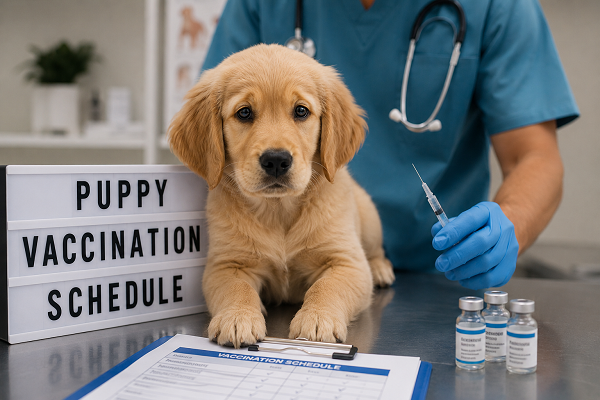
Every puppy, no matter the breed or where you live, needs the DHPP (or DA2PP) combination vaccine, which covers distemper, hepatitis, parvovirus, and parainfluenza, plus a rabies vaccine. The core series typically runs in three or four rounds between 6 and 16 weeks of age, followed by a booster at one year and then boosters every one to three years for life. Non-core vaccines like leptospirosis, Bordetella (kennel cough), canine influenza, and Lyme disease get added based on your dog’s lifestyle and where you live.
Table of Contents
- Introduction
- Why Your Vet Won’t Just Give One Shot
- Core Vaccines: The Non-Negotiables
- Non-Core (Lifestyle) Vaccines
- The Complete Puppy Vaccine Schedule
- Why Puppies Need a Series, Not a Single Dose
- What Puppy Vaccines Actually Cost
- What Happens If You Skip or Delay a Shot
- Vaccine Reactions: What’s Normal, What’s Not
- Vaccinating Working, Protection, and Sport Puppies
- Titer Testing: The Alternative Everyone’s Asking About
- Building Good Vet-Visit Habits Early
- FAQs
- Conclusion
Introduction
Bringing home a new puppy is one of those experiences that’s equal parts joy and low-grade panic, especially the first time your vet hands you a vaccination card with four or five appointments already scheduled over the next couple of months. If you’ve ever sat in a vet’s waiting room wondering why does my eight-week-old puppy need another shot when he just got one three weeks ago?, you’re not alone. It’s the single most common question new puppy owners ask, and honestly, it’s a good one.
In this guide, I’m going to break down exactly what shots your puppy needs, when they need them, what each one protects against, what it actually costs in 2026, and what happens if you fall behind schedule (spoiler: it’s not something to gamble with). I’ve spent years around working dogs, shelter intakes, and first-time puppy owners, and the vaccine conversation is where I see the most confusion and the most preventable heartbreak when it’s ignored. By the end, you’ll know exactly what to expect at every vet visit and why the timing matters more than most people realize.
Why Your Vet Won’t Just Give One Shot
Here’s the thing that trips up most new owners: a puppy’s immune system isn’t working alone for the first few months of life. When a puppy nurses from its mother in the first 24-48 hours, it absorbs antibodies through her first milk (colostrum). Those “maternal antibodies” protect the puppy early on, but they also block vaccines from working properly, because the puppy’s immune system doesn’t need to build its own defenses while mom’s antibodies are still active.
The problem is that nobody knows exactly when those maternal antibodies fade in any individual puppy. It could be 6 weeks. It could be 14. This “window of vulnerability” is different for every puppy, even littermates, which is exactly why vets don’t rely on a single shot. Instead, they vaccinate every 2-4 weeks through the risk window so that whenever maternal protection does fade, a vaccine dose is already there to take over.
Core Vaccines: The Non-Negotiables
Veterinary bodies like the World Small Animal Veterinary Association (WSAVA) and the American Animal Hospital Association (AAHA) both classify vaccines into two buckets: core (every dog, everywhere, needs these) and non-core (recommended based on lifestyle and regional risk). Let’s start with core, because this is where there’s zero room for skipping.
DHPP (also called DA2PP or 5-in-1)
This combination shot covers four diseases in one injection:
- Distemper — A virus that attacks the respiratory, GI, and nervous systems. It’s often fatal, and dogs who survive can be left with permanent neurological damage like twitching or seizures.
- Adenovirus (Canine Hepatitis) — Causes liver damage and can be fatal in young puppies.
- Parvovirus — I’ll go deeper on this one below because it’s the disease I get asked about the most, and for good reason.
- Parainfluenza — A respiratory virus that contributes to kennel cough.
Rabies
Rabies is 100% fatal once symptoms appear in dogs and in humans. It’s legally required in all 50 U.S. states and in most countries worldwide, which makes it the one vaccine that isn’t really optional or even really a personal choice. The first rabies dose is typically given between 12 and 16 weeks, then boosted at one year, then every one to three years depending on local law and the vaccine brand used.
Non-Core (Lifestyle) Vaccines
These aren’t given to every puppy, they’re given based on where you live, whether your dog will be around other dogs, and what kind of environment your dog is growing up in.
- Leptospirosis — Bacterial disease spread through contaminated water or wildlife urine. Increasingly recommended even for suburban dogs because raccoons, rats, and other wildlife carry it more often than people assume.
- Bordetella (kennel cough) — Required by almost every boarding facility, groomer, and daycare. If you’re planning to board your puppy or take him to group training classes, expect this one.
- Canine Influenza (H3N2/H3N8) — Relevant if you’re in a high-density dog environment: shows, daycares, or areas with reported outbreaks.
- Lyme Disease — Recommended in tick-heavy regions, particularly the northeastern and upper midwestern U.S., and parts of the UK and Europe with high tick exposure.
Your vet is really the right person to decide which of these your specific puppy needs, it depends heavily on geography, and what’s “must-have” in rural Minnesota might be optional in a high-rise apartment in central London.
The Complete Puppy Vaccine Schedule
Here’s the schedule as laid out by AAHA’s 2022 Canine Vaccination Guidelines and WSAVA’s 2024 Vaccination Guidelines, the two bodies that most vets worldwide base their protocols on.
| Puppy Age | Vaccines Given | Notes |
|---|---|---|
| 6-8 weeks | DHPP (1st dose) | Can start as early as 6 weeks if weaned |
| 10-12 weeks | DHPP (2nd dose), Leptospirosis (if recommended) | Bordetella often added here if socializing |
| 14-16 weeks | DHPP (3rd dose), Rabies (1st dose) | Final dose must be at or after 16 weeks |
| 12 months | DHPP booster, Rabies booster | “1-year booster”, don’t skip this one |
| Every 1-3 years (adult) | DHPP, Rabies boosters | Rabies interval depends on local law |
| As needed | Lepto, Bordetella, Influenza, Lyme | Annual or biannual depending on exposure risk |
A quick note on why that 16-week minimum matters so much: even if your puppy got three “perfect” doses at 6, 9, and 12 weeks, if maternal antibodies were still active at 12 weeks, that third dose might not have actually built immunity. That’s why current guidelines insist the final dose in the series lands at 16 weeks or later, it’s the only way to guarantee the puppy’s own immune system, not mom’s leftover antibodies, is doing the work.
Why Puppies Need a Series, Not a Single Dose
I like explaining this to new owners with a simple picture: think of it like a relay race. Mom’s antibodies run the first leg. The vaccine series is there to take the baton the moment she drops it but since nobody knows the exact handoff point, the series covers every possible moment it could happen.
Give the shot too early, and maternal antibodies can neutralize it before the puppy’s immune system even notices. Space doses too far apart, and there’s a gap where neither mom’s protection nor the vaccine is fully covering the puppy, which is exactly the gap where outbreaks happen. This is also the biological reason vets get strict about “no dog parks, no pet stores, no unfamiliar dogs” until the full series is done. It’s not overcaution, it’s math about when the immune system is actually online.
What Puppy Vaccines Actually Cost
Cost is the part nobody wants to talk about but everyone wants to know. Numbers vary a lot by country and clinic, but here’s what to reasonably expect in 2026:
- DHPP series (3-4 doses): roughly $75-160 total in the U.S., often bundled into a wellness package with a physical exam
- Rabies vaccine: typically $15-30 per dose, sometimes required to be given as a standalone appointment by law
- Full first-year puppy vaccine package (including non-core options and exam fees): commonly $200-350 in the U.S., somewhat less in the UK and much of Europe through NHS-style low-cost clinics or charities like the PDSA
- Leptospirosis and Bordetella add-ons: usually $20-35 each per dose
Now compare that to the cost of treating a preventable disease. Hospitalization for parvovirus alone commonly runs $1,500-$5,000 for IV fluids, anti-nausea medication, antibiotics, and round-the-clock monitoring and that’s if your dog survives, which isn’t guaranteed even with treatment. Vaccines are, without exaggeration, the cheapest insurance you’ll ever buy for your dog.
What Happens If You Skip or Delay a Shot
I want to be direct here because this is where I’ve seen real heartbreak. Canine parvovirus is the disease that shows up most often in unvaccinated or under-vaccinated puppies, and the numbers are sobering. Multiple veterinary studies put the untreated mortality rate at roughly 90%. Even with aggressive, round-the-clock hospital treatment, survival isn’t guaranteed, a long-term shelter study out of Austin Pets Alive!, which treated over 5,000 parvo-positive dogs across more than a decade, reported an 86.6% survival rate with intensive protocols, and that’s considered a strong outcome.
Puppies are hit hardest between 6 weeks and 6 months old, exactly the window the vaccine series is designed to cover. Backyard-bred and unvaccinated puppies show up in parvo statistics far more often than puppies from vaccinated, health-screened litters, which tells you almost everything about where the real risk lives: not bad luck, but missed or delayed shots.
The takeaway isn’t to panic, it’s to keep the schedule. If you miss an appointment window, call your vet immediately rather than waiting for the “next” one. Depending on how much time has passed, they may need to restart part of the series rather than just resume it.
Vaccine Reactions: What’s Normal, What’s Not
Most puppies handle vaccines just fine. A little soreness at the injection site, mild lethargy, or a slightly reduced appetite for 24-48 hours is normal and not a cause for alarm.
Call your vet right away if you see:
- Facial swelling, hives, or repeated vomiting within a few hours of the shot
- Difficulty breathing or collapse (rare, but it’s an emergency)
- Swelling or a lump at the injection site that doesn’t shrink after a few days
- Lethargy or fever that lasts more than 48 hours
Severe reactions are genuinely rare, most vets will tell you they see them far less often than owners expect but knowing the difference between “normal grogginess” and “get to the clinic now” is worth five minutes of your time.
Vaccinating Working, Protection, and Sport Puppies
If you’re raising a puppy for K9 work, protection training, or competitive sport, a Malinois, German Shepherd, Dutch Shepherd, Rottweiler, or similar breed, the vaccine timeline matters even more, because socialization and vaccine timing are directly in conflict during the most important developmental window (roughly 8-16 weeks).
Here’s how experienced trainers and working-dog programs handle it: they don’t wait until the full series is complete to start socialization, they just control the environment. That means structured, low-risk exposure (calm, healthy, fully-vaccinated adult dogs; clean, controlled spaces) rather than dog parks or pet store floors until the final DHPP dose has had time to take effect (usually 1-2 weeks after the 16-week shot). Military and police K9 programs generally follow this exact model, because a puppy that misses its critical socialization window due to over-caution can end up with behavioral issues that are just as hard to fix as a preventable illness.
If you’re raising a working-line puppy right now, you might find it useful to also read our guide on how military working dogs are trained and our breakdown of essential K9 training equipment, since both tie directly into building a solid foundation during this same early window.
Titer Testing: The Alternative Everyone’s Asking About
Titer testing measures the actual antibody levels in your dog’s blood rather than assuming a vaccine “worked” just because it was given. It’s a legitimate option for some core vaccines in adult dogs who are already fully vaccinated, and it can sometimes reduce unnecessary re-vaccination.
Where it doesn’t apply: the initial puppy series. Titer testing during the puppy series doesn’t tell you what you actually need to know, whether the vaccine successfully triggered immunity at that exact moment and most vets won’t recommend replacing the core puppy schedule with titers. Think of it as a tool for adult maintenance, not a shortcut for puppyhood.
Building Good Vet-Visit Habits Early
Vaccine visits are also your best early opportunity to build calm, cooperative vet-visit behavior for life, something that matters just as much for a family pet as it does for a working dog. A few things that genuinely help:
- Bring high-value treats to every vet visit, not just for training sessions at home
- Practice gentle handling (ears, paws, mouth) at home so a vet exam doesn’t feel like the first time
- Keep post-vaccine days low-key, this is a good window to focus on calm settling behavior. Our guide on crate training a puppy covers exactly this kind of low-stress, structure-first approach
- Track every dose on paper and digitally, boarding kennels, groomers, and new vets will all ask for proof, and “I think it was sometime in spring” doesn’t cut it
Good nutrition also plays a quieter but real role in how well a puppy’s immune system responds to vaccines. If you haven’t already, it’s worth reading through some practical tips for raising a well-rounded puppy and knowing the early warning signs of puppy bloat, since both intersect with the same general window of vulnerability we’ve been talking about here.
Trainer Insight: A Note From the ARFS K9 Team
I’ve handled and helped raise more puppies than I can count at this point, family dogs, protection prospects, and working K9 candidates alike and if there’s one pattern I keep seeing, it’s this: owners who get anxious about vaccines tend to either delay the schedule out of caution (bad idea) or skip socialization out of caution (also a bad idea, just a quieter one). The real answer is neither extreme. Follow the schedule your vet gives you, control the environment during the gap weeks, and don’t let one fear cancel out the other. That balance is what actually produces a healthy, well-adjusted dog by six months old.
Frequently Asked Questions
1. What is the very first shot a puppy needs? The first shot is typically the DHPP combination vaccine (covering distemper, hepatitis, parvovirus, and parainfluenza), given between 6 and 8 weeks of age, often at the same visit as the puppy’s first full physical exam and deworming.
2. Can I take my puppy outside before the vaccine series is finished? Yes, with limits. Most vets recommend avoiding dog parks, pet store floors, and areas with unknown dog traffic until roughly 1-2 weeks after the final DHPP dose at 16 weeks. Controlled outings, your own yard, a friend’s fully-vaccinated dog, quiet walks avoiding high-traffic dog areas, are generally fine and important for socialization.
3. How much does the full puppy vaccine series cost? In the U.S., the complete first-year package (DHPP series, rabies, exam fees, and often lepto or Bordetella) typically runs $200-350, though costs vary by region and clinic. Many low-cost clinics, shelters, and charities like the PDSA in the UK offer reduced-price options.
4. What if I miss a scheduled puppy vaccine appointment? Call your vet as soon as possible rather than waiting for the “next” scheduled date. Depending on how much time has passed, they may recommend simply giving the missed dose or, in some cases, restarting part of the series to make sure immunity is properly established.
5. Are puppy vaccines safe? Yes. Modern vaccines go through rigorous safety testing, and severe reactions are rare. Mild, short-term side effects like soreness or slight lethargy for a day or two are normal. The risk of a serious reaction is far lower than the risk of an unvaccinated puppy contracting a disease like parvovirus or distemper.
Conclusion: The Bottom Line on Puppy Shots
If you take one thing away from this guide, make it this: your puppy needs the DHPP series (distemper, hepatitis, parvovirus, parainfluenza) in three or four rounds between 6 and 16 weeks, plus a rabies shot around 12-16 weeks, followed by a one-year booster and then regular boosters for life. Everything else, leptospirosis, Bordetella, canine influenza, Lyme, depends on your dog’s lifestyle and where you live, and your vet is the right person to fine-tune that part.
Here’s your actionable checklist:
- Book the first vet visit by 6-8 weeks, don’t wait for “the right time”
- Keep every single appointment in the series; missed doses create real immunity gaps
- Control your puppy’s environment during the gap weeks instead of isolating him completely
- Track every vaccine on paper and digitally from day one
- Watch for reaction symptoms for 48 hours after each shot, and call your vet if anything seems off
- Don’t skip the 16-week final dose, it’s the one that actually confirms immunity took hold
Vaccines aren’t the fun part of puppyhood. But they’re the part that makes sure your puppy is around for all the fun parts that come after.
Have questions about vaccinating a working dog puppy, or want hands-on guidance building structure alongside your vet schedule? Reach out to the ARFS K9 Team, we’re always happy to talk it through.

Her work centres on obedience, detection, protection and operational readiness. She favours proven methods built on repetition, consistency and real-world conditioning, so that both dogs and handlers are prepared for high-pressure tasks.
Rofiat represented the Nigerian Army Dog Centre at the Nigerian Army Day Celebration (NADCEL) 2026, where she led demonstrations in obedience, explosive detection, agility and tactical movement. Through articles, training content and documentaries, she shares field-based insight into how structured training, clear communication and trust between handler and dog affect performance and reliability.
She is the author of Beyond the Bark: Inside a Pro Handler's Playbook for Raising the Ideal Dog, a practical guide that helps dog owners and handlers apply professional training principles in everyday situations.
- Is K9 Advantix Safe for Dogs? A Handler’s Honest Review - October 2, 2026
- Australian Cattle Dog vs Blue Heeler: Any Difference? - October 1, 2026
- Bousnic Dog Training Collar Review: Is It Safe? - September 30, 2026