Dog Breed Chinese Shar-Pei: Is It a Good Family Dogs?
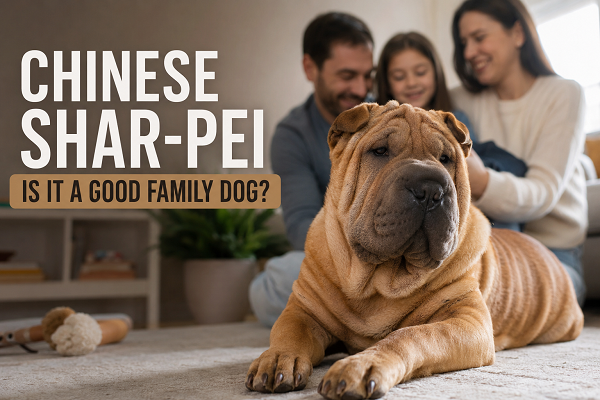
Yes, a Chinese Shar-Pei can make a good family dog, but only for the right household. They’re fiercely loyal, calm indoors, and protective of their people, which is why so many families fall for them. The catch? They’re independent, wary of strangers, prone to expensive skin and health issues, and not naturally patient with rowdy toddlers. If you’re an experienced owner who can commit to early socialization, consistent training, and ongoing skin care, a Shar-Pei will reward you with one of the most devoted companions in the dog world.
Table of Contents
- What Is a Chinese Shar-Pei? Quick Breed Snapshot
- Chinese Shar-Pei Temperament: What They’re Really Like at Home
- Are Chinese Shar-Peis Good With Kids?
- Shar-Pei vs. Other Popular Family Breeds
- Living With a Shar-Pei: Exercise, Grooming, and Training
- Health Problems Every Shar-Pei Family Should Know
- From Near-Extinction to Family Favorite: A Quick History Lesson
- What Does a Shar-Pei Actually Cost?
- Is a Shar-Pei Right for Your Family? A Quick Checklist
- Trainer’s Notes: What I’ve Learned Working With Wrinkled Breeds
- FAQs
- Final Verdict
Introduction
If you’ve ever seen a Shar-Pei waddle down the street looking like it’s wearing someone else’s skin, you already know why this breed stops people in their tracks. Those deep wrinkles, the blue-black tongue, the little hippo-like face, it’s a look nothing else in the dog world quite matches.
But here’s the question that actually matters if you’re considering one: is a Chinese Shar-Pei a good family dog, or just a good-looking one?
I get this question a lot from families who’ve fallen for a Shar-Pei puppy at a breeder’s or seen one on Instagram and started imagining it curled up with their kids. The honest answer is more nuanced than a yes or no. Shar-Peis are loyal to the bone, low-drama indoors, and surprisingly protective, but they also come with a strong independent streak, a wariness toward strangers, and a health bill that catches a lot of new owners off guard.
In this guide, you’ll learn exactly what living with a Shar-Pei is really like: how they behave with kids, what they cost to keep healthy, how they compare to other family-friendly breeds, and the specific things a first-time owner needs to know before bringing one home. I’ll also share what I’ve picked up firsthand from working with independent, strong-minded breeds like this one.
1. What Is a Chinese Shar-Pei? Quick Breed Snapshot
Before we get into temperament and family life, here’s the breed at a glance.
| Trait | Details |
|---|---|
| Origin | Guangdong Province, Southern China |
| Breed Group | AKC Non-Sporting Group (recognized 1991) |
| Size | 18–20 inches tall, 40–55 lbs |
| Coat | Short, harsh, and prickly (“horse coat”) or slightly longer (“brush coat”) |
| Lifespan | 8–12 years (UK primary-care data puts median longevity closer to 7.3 years) |
| Temperament | Loyal, independent, calm, reserved with strangers |
| Shedding | Low to moderate |
| Good for first-time owners? | Generally not recommended |
| Best suited for | Experienced owners, single-dog households, families with older children |
The name Shar-Pei roughly translates to “sand skin,” a nod to their rough, sandpaper-like coat. It’s one of the oldest dog breeds in the world, with images resembling the Shar-Pei appearing on Chinese pottery dating back over 2,000 years.
2. Chinese Shar-Pei Temperament: What They’re Really Like at Home
Here’s the thing about Shar-Pei temperament, it’s a bit of a paradox. They’re deeply affectionate with their own family, yet they can be almost indifferent, even standoffish, toward everyone else.
With their people, Shar-Peis tend to be:
- Intensely loyal — they bond hard to one or two primary caregivers and like to be near them, not necessarily on top of them
- Calm and dignified — this isn’t a bouncy, in-your-face breed; they carry themselves with a kind of quiet confidence
- Intuitive — many owners describe their Shar-Pei as almost reading the room, picking up on mood shifts in the household
- Independent-minded — they’re happy to nap in another room rather than shadow you everywhere, which some owners love and others find distant
With strangers and new dogs, they tend to be:
- Reserved, sometimes outright suspicious, until they’ve had time to assess a person
- Prone to same-sex dog aggression if not socialized early and carefully
- Naturally protective, which is a double-edged sword, since it makes them excellent watchdogs but also means an under-socialized Shar-Pei can misread a friendly guest as a threat
This is exactly why breed clubs and veterinary behaviorists hammer the same point over and over: early socialization isn’t optional with this breed. A Shar-Pei that meets dozens of new people, dogs, sounds, and environments before 16 weeks of age grows into a far more stable, trustworthy adult than one that doesn’t.
I always tell new owners the same thing I’d tell someone raising any strong-willed, independent breed, the goal isn’t to break that independence, it’s to channel it. A Shar-Pei that respects your leadership from puppyhood becomes a calm, controlled adult. One that doesn’t gets pushy, territorial, and hard to manage. If you want a structured, step-by-step way to build that foundation early, our guide on how to crate train a puppy the right way is a good place to start, crate training does more for a Shar-Pei’s confidence and house manners than most owners expect.
3. Are Chinese Shar-Peis Good With Kids?
This is the question most families actually came here to ask, so let’s be direct.
Short answer: Shar-Peis can be good with kids, but they do best in homes with older, calmer children rather than toddlers or very young kids.
Here’s why. Shar-Peis are devoted to their families, but they have a low tolerance for rough handling, ear-pulling, chasing, or the general chaos that comes with small children. They’re not the type of dog that shrugs off a faceful of toddler enthusiasm the way a Labrador might. Most breed experts and veterinary sources specifically caution against pairing Shar-Peis with children under 10, and recommend supervision any time kids and Shar-Peis interact, regardless of age.
What makes a Shar-Pei work in a family with kids:
- Children who understand boundaries and gentle handling
- A household that starts socialization and obedience early
- Parents who actively supervise dog-child interactions rather than assuming the dog will “just deal with it”
- A calm home environment, Shar-Peis don’t love chaos or unpredictability
What tends to go wrong:
- Toddlers who grab, climb on, or startle the dog
- Kids who don’t respect the dog’s space when it retreats (a Shar-Pei walking away is a warning sign, not an invitation to follow)
- Skipping socialization, which leaves the dog more reactive to unfamiliar kids (like your children’s friends)
If you’ve got older kids who already know how to read a dog’s body language, and you’re committed to structured introductions, a Shar-Pei can absolutely become a devoted, protective family member. If you’ve got toddlers or a house full of neighborhood kids running through constantly, you might want to look at a more classically tolerant family breed instead, our piece on low-maintenance dog breeds for busy families covers a few gentler, easier-going options worth comparing.
4. Shar-Pei vs. Other Popular Family Breeds
Numbers help put the Shar-Pei’s family-friendliness in context. Here’s how it stacks up against three commonly recommended family breeds.
| Trait | Shar-Pei | Golden Retriever | Labrador Retriever | Cavalier King Charles Spaniel |
|---|---|---|---|---|
| Tolerance for rough play | Low | High | High | Moderate-High |
| Friendliness to strangers | Reserved | Very friendly | Very friendly | Very friendly |
| Trainability (first-timer friendly) | Moderate-Low | High | High | High |
| Grooming demands | High (skin folds) | Moderate | Low | Moderate |
| Exercise needs | Moderate | High | High | Moderate |
| Best age of kids in home | 10+ | Any age | Any age | Any age |
| Known health cost risk | High | Moderate | Moderate | Moderate-High |
This doesn’t mean the Shar-Pei is a “worse” dog, it just means it fills a different niche. It’s closer to a loyal, watchful guardian than a bouncy, everybody’s-best-friend companion. If your family wants the latter, you might be a better match with a retriever-type breed. If you want deep, one-family loyalty and don’t mind a bit of aloofness with outsiders, the Shar-Pei starts to make a lot more sense.
5. Living With a Shar-Pei: Exercise, Grooming, and Training
Exercise Needs
Shar-Peis aren’t a high-energy breed. A couple of 20–30 minute walks a day, plus some mental stimulation, usually covers it. They actually do fine in apartments, which surprises a lot of people who assume a “guard-type” dog needs acres to run. Just watch them in heat, their short muzzle and heavy skin folds make them prone to overheating, so hot, humid days call for shorter, shadier outings.
Grooming: The Part Nobody Warns You About
This is where Shar-Pei ownership gets real. Those wrinkles are adorable, but they’re also warm, moist pockets where bacteria and yeast love to set up shop. If you’re not prepared for a grooming routine, this breed will humble you fast.
A realistic weekly grooming routine looks like this:
- Fold checks 2–3 times a week, gently open each skin fold (face, neck, tail) and look for redness, odor, or discharge
- Wipe-downs with a vet-approved, pH-balanced wipe or damp cloth for folds that trap moisture
- Monthly bathing with a gentle, hypoallergenic shampoo, more often can strip natural oils and worsen skin issues
- Thorough drying after every bath, including inside the folds, a low-heat blow dryer works well here
- Ear checks weekly, Shar-Peis have narrow ear canals prone to infection
Skip this routine and you’re looking at recurring skin infections, which are one of the most common (and most preventable) reasons Shar-Pei owners end up at the vet. If grooming discipline isn’t something you’ve built into your routine before, our guide on essential grooming habits for a healthy puppy is a solid starting point, even if you’re adapting it for an adult Shar-Pei’s specific fold-care needs.
Training: Patience Over Force
Shar-Peis are intelligent but stubborn, a combination that trips up a lot of first-time owners who expect a golden-retriever level of eagerness to please. They respond far better to calm, consistent, reward-based training than to forceful corrections. Push too hard, and a Shar-Pei will dig in rather than comply.
A few things that actually work with this breed:
- Short, focused training sessions (10–15 minutes) rather than long drills
- Positive reinforcement such as food, praise, and play, not punishment
- Consistency from every member of the household, not just one “main” trainer
- Starting obedience and socialization in puppyhood, ideally between 8–16 weeks
If you want a deeper, structured framework for building obedience and household leadership with an independent breed like this, it’s worth checking out a dedicated resource like our Beyond the Bark e-book, it walks through the exact handler mindset and training sequencing we use with strong-willed working and companion breeds alike.
6. Health Problems Every Shar-Pei Family Should Know
This is the section I wish every Shar-Pei buyer read before falling in love with a puppy photo. The breed’s signature wrinkles come from a genetic trait called cutaneous mucinosis (excess hyaluronic acid in the skin), and that same trait is behind most of the breed’s health challenges.
The most common issues, based on veterinary and breed-health data:
- Entropion (inward-rolling eyelids) — This is huge in the breed. A UK primary veterinary care study of nearly 2,000 Shar-Peis found entropion affects roughly 18% of the breed under general vet care, and breed-specific registries put lifetime prevalence closer to 39%, compared to a fraction of a percent in most other breeds. It’s usually caught and surgically corrected before a puppy turns one.
- Familial Shar-Pei Fever (FSF), also called “swollen hock syndrome”, a hereditary autoinflammatory condition unique to this breed, causing recurring fevers and swollen ankles. There’s no definitive test for it, and severe cases can progress to kidney complications (amyloidosis) if not managed proactively.
- Skin infections, bacterial and yeast infections in the folds are extremely common without consistent care.
- Ear infections, the same UK study found ear disorders in roughly 1 in 6 Shar-Peis seen by vets.
- Hypothyroidism, often a secondary, “tertiary” form specific to the breed, caused by the same hyaluronic acid overproduction interfering with thyroid signaling.
- Hip dysplasia and joint issues, common in medium-to-large breeds generally.
On lifespan: most breed sources quote 8–12 years, though a large UK primary-care study found the median age at death was closer to 7.3 years, with kidney disease, cancer, and behavioral euthanasia among the leading recorded causes. That’s a meaningful gap worth being aware of when you’re planning for the long term with this breed.
The takeaway isn’t “avoid the breed.” It’s “budget for it, and buy from a breeder who health-tests.” Reputable breeders now test breeding stock for the FSF-linked genetic marker, and responsible ones won’t breed dogs that carry it. If a breeder can’t tell you about health testing, that’s a red flag worth walking away from.
7. From Near-Extinction to Family Favorite: A Quick History Lesson
Here’s a piece of Shar-Pei history that explains a lot about the breed’s cautious, guarded personality.
The Shar-Pei was originally a multipurpose farm and guard dog in Guangdong Province, used for hunting, herding, ratting, and protecting property. Its skin folds and bristly coat weren’t just cosmetic, they were functional, making it difficult for another dog to get a solid grip during confrontations, which unfortunately also made the breed a target for the dogfighting trade in some periods of its history.
When the Chinese Communist government came to power in 1949, dog ownership was heavily taxed and discouraged, and the Shar-Pei population collapsed. By the early 1970s, the breed was in genuine danger of disappearing entirely. In 1973, a Hong Kong businessman named Matgo Law published an appeal in an American dog magazine, warning that the Shar-Pei was on the brink of extinction and asking American fanciers for help. A small number of dogs were exported to the U.S. that year, and the Chinese Shar-Pei Club of America formed in 1974 to organize breeding efforts.
The gamble worked. The AKC accepted the Shar-Pei into its Miscellaneous Class in 1988 and granted full recognition in the Non-Sporting Group in 1991. Today the breed has tens of thousands of dogs registered with the AKC as foundation stock, a genuine comeback story for a breed that was, at one point, one of the rarest dogs on the planet.
That history is worth knowing because it explains the temperament you’re working with. This isn’t a breed developed for centuries to be endlessly friendly to every visitor, it was bred to guard, assess, and protect. The wariness you see in a modern pet Shar-Pei isn’t a flaw; it’s a few thousand years of purpose showing through.
8. What Does a Shar-Pei Actually Cost?
Families often underestimate the ongoing cost of this breed, so let’s put real numbers on it.
Upfront costs:
- Puppy from a health-tested, reputable breeder: roughly $1,000–$2,500 USD depending on region and lineage
- Initial vet visits, vaccinations, and spay/neuter: $300–$600
Ongoing monthly costs (a realistic range):
- Food: $35–$55
- Pet insurance (strongly recommended for this breed given its health profile): $30–$50
- Skin-fold care supplies (wipes, medicated shampoo, ear cleaner): $20–$40
- Routine vet visits and preventive care: varies, but budget above the average dog
All told, many owners find themselves spending $85–$145 a month on baseline care, before factoring in the cost of treating something like entropion surgery (often $300–$800 per eye) or a flare-up of Familial Shar-Pei Fever. This is a breed where pet insurance genuinely earns its premium.
9. Is a Shar-Pei Right for Your Family? A Quick Checklist
Run through this honestly before you commit:
- [ ] You have prior dog ownership experience, or you’re willing to work closely with a trainer from day one
- [ ] Your children are older (generally 10+) or you can guarantee close supervision with younger kids
- [ ] You can commit to a consistent, several-times-weekly skin fold care routine
- [ ] You’re financially prepared for above-average vet costs, including possible surgery
- [ ] You can prioritize early, thorough socialization in the puppy’s first four months
- [ ] You want a loyal, watchful companion more than an outgoing, everybody’s-friend type of dog
- [ ] You have a calm household rather than a constant stream of visitors and chaos
If you checked most of these boxes, a Shar-Pei could genuinely thrive in your home. If you’re missing several, it’s worth being honest with yourself, plenty of other loyal, loving breeds will fit your lifestyle with a lot less friction.
10. Trainer’s Notes: What I’ve Learned Working With Wrinkled, Independent Breeds
Over years of working with strong-willed, independent dogs, the kind that don’t hand you their trust automatically, one pattern shows up again and again: owners who treat independence as defiance struggle, and owners who treat it as a personality trait to work with succeed.
The Shar-Pei is a textbook example. Push a Shar-Pei with harsh corrections and you’ll get a dog that shuts down or pushes back. Give that same dog calm, consistent leadership and clear boundaries, and you get a settled, confident companion who’s genuinely a pleasure to live with. The breed doesn’t need you to dominate it. It needs you to be predictable, patient, and fair, the same qualities that build trust with any strong-minded working breed, honestly.
The other lesson worth sharing: don’t wait for problems to show up before you start managing this breed’s specific needs. Skin checks, socialization, and structured training aren’t reactive measures with a Shar-Pei, they’re preventive maintenance, the same way you’d service a car before it breaks down rather than after.
FAQs
1. Are Chinese Shar-Peis aggressive?
Not inherently. They’re naturally reserved and protective, which can look like aggression if a dog isn’t properly socialized. With early, consistent exposure to new people and situations, most Shar-Peis are calm, controlled, and only alert when something genuinely warrants it.
2. Do Shar-Peis bark a lot?
Generally no, they’re a fairly quiet breed day-to-day, though they will bark to alert you to something unusual, which is part of what makes them decent natural watchdogs.
3. Are Shar-Peis good for first-time dog owners?
Most breed experts and veterinary sources recommend against it. Their independent nature, socialization needs, and health-management demands make them a better fit for owners with some prior dog experience.
4. How much grooming does a Shar-Pei really need?
More than their short coat suggests. Skin fold checks 2–3 times a week, monthly bathing, and thorough drying after every bath are non-negotiable to prevent painful, recurring skin infections.
5. What is the biggest health risk in Shar-Peis?
Entropion (inward-rolling eyelids) and Familial Shar-Pei Fever are the two conditions most specific and most common to this breed, alongside general skin and ear infections from their fold-heavy coat.
Final Verdict: Is the Chinese Shar-Pei a Good Family Dog?
The honest answer is: it depends on your family, not the dog. A Chinese Shar-Pei can be an incredibly loyal, calm, and protective companion for a household that’s ready to meet it halfway, with early socialization, consistent training, and a genuine commitment to skin and health care. It’s not the breed for a home full of toddlers, first-time owners hoping for an easy ride, or families who aren’t prepared for above-average vet bills.
If you’ve read this far and you’re still nodding along, you might just be the right kind of owner for this breed. If a few red flags jumped out at you along the way, that’s useful information too, better to know now than after you’ve brought a puppy home.
Whatever you decide, do your future dog a favor: buy from a health-tested breeder, start socialization the day you bring your puppy home, and build a skin care routine before you need one, not after. That’s the difference between a Shar-Pei that struggles and one that genuinely becomes one of the best dogs your family ever had.

Her work centres on obedience, detection, protection and operational readiness. She favours proven methods built on repetition, consistency and real-world conditioning, so that both dogs and handlers are prepared for high-pressure tasks.
Rofiat represented the Nigerian Army Dog Centre at the Nigerian Army Day Celebration (NADCEL) 2026, where she led demonstrations in obedience, explosive detection, agility and tactical movement. Through articles, training content and documentaries, she shares field-based insight into how structured training, clear communication and trust between handler and dog affect performance and reliability.
She is the author of Beyond the Bark: Inside a Pro Handler's Playbook for Raising the Ideal Dog, a practical guide that helps dog owners and handlers apply professional training principles in everyday situations.
- Australian Cattle Dog vs Blue Heeler: Any Difference? - October 1, 2026
- Bousnic Dog Training Collar Review: Is It Safe? - September 30, 2026
- Gravy Train Dog Food Review: Ingredients & Recalls - September 30, 2026