Is the Yorkie Poo Dog Breed Right for You? (Full Guide)
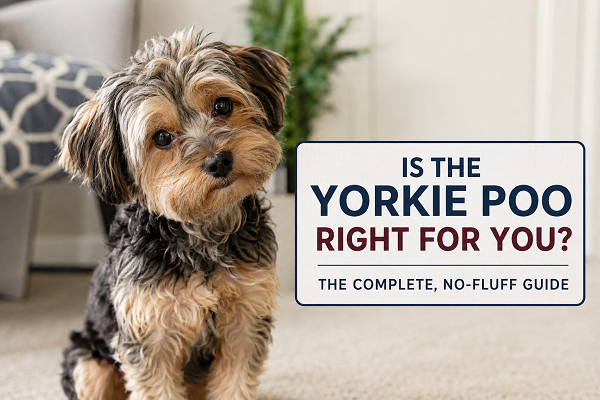
A Yorkie Poo, the Yorkshire Terrier or Poodle mix is a good fit if you want a small, low-shedding, affectionate companion who’s happy in an apartment and doesn’t need hours of exercise. It’s not the right fit if you’re gone all day, want a dog that’s fine being left alone, or you’re not prepared for a barky little dog with a stubborn streak. Expect a 12-15 year commitment, $500-$2,500+ upfront, and roughly 20-30 minutes of daily exercise once grown.
If you want the full picture, real costs, training timelines, health risks, and the questions breeders won’t bring up on their own, keep reading. I’ve spent years around working and companion breeds alike, and this is the breed rundown I wish more people got before they signed a deposit check.
Table of Contents
- What Exactly Is a Yorkie Poo?
- Yorkie Poo Temperament: What They’re Really Like Day to Day
- Size, Appearance, and Coat Types
- Training Difficulty and Timeline
- Grooming Needs and Shedding
- Health Concerns and Lifespan
- How Much a Yorkie Poo Actually Costs
- Is a Yorkie Poo Right for Your Lifestyle?
- Where to Find a Reputable Yorkie Poo
- FAQs
- Final Verdict
What Exactly Is a Yorkie Poo?
If you’ve ever worked with or around toy breeds, you’ll know the “designer dog” boom of the early 2000s produced a lot of crosses, some thoughtful, some just marketing. The Yorkie Poo is one of the older and more established ones in that group.
It’s a first-generation (or multi-generation) cross between a Yorkshire Terrier and a Toy or Miniature Poodle. Neither parent breed was bred for size or looks alone, they both come from working lineage. The Yorkshire Terrier was developed in 19th-century Yorkshire, England, by mill workers who needed a small, scrappy dog to hunt rats in textile factories. The Poodle, despite its fancy reputation today, was originally a German and French water retriever, “Pudel” literally means “to splash” in German. That working history is part of why both parent breeds, and by extension the Yorkie Poo, tend to be sharper and more trainable than people expect from a “lap dog.”
Because it’s a crossbreed, the American Kennel Club (AKC) does not recognize the Yorkie Poo as an official breed. It is recognized by hybrid registries like the American Canine Hybrid Club (ACHC) and the Designer Breed Registry (DBR), which is worth knowing if a breeder promises “AKC papers” for a Yorkie Poo, that’s a red flag, not a bonus.
Quick facts:
- Other names: Yorkipoo, Yorkiepoo, Yo-Yo Poo
- Parent breeds: Yorkshire Terrier x Toy or Miniature Poodle
- Group: Designer/hybrid (not AKC-recognized)
- Popularity: Consistently ranks among the top 10 most searched designer dog breeds in the US and UK since around 2015.
Yorkie Poo Temperament: What They’re Really Like Day to Day
Here’s the thing most breed profiles gloss over: Yorkie Poos inherit personality traits unevenly. Two puppies from the same litter can lean more “Yorkie” (feisty, vocal, a little suspicious of strangers) or more “Poodle” (eager to please, food-motivated, quick learner). Most land somewhere in between.
What you can generally count on:
- Affectionate to the point of clingy. These dogs bond hard with their people. Separation anxiety is common if you don’t work on independence early.
- Smart. Poodles rank as the 2nd most intelligent dog breed for working/obedience intelligence in Stanley Coren’s widely-cited The Intelligence of Dogs study, that intelligence carries over strongly in the mix.
- Vocal. The Yorkshire Terrier side brings a tendency to bark at doorbells, strangers, and squirrels through the window. This is trainable but rarely disappears completely.
- Good with older, gentle kids. Because of their small bone structure, most vets and trainers recommend supervised interaction with kids under 6, who can accidentally injure a 5-8 pound dog during rough play.
- Mixed history with other pets. Some Yorkie Poos do fine with cats and other dogs; others retain a bit of terrier prey drive toward small animals. Early socialization matters a lot here.
A quick anecdote: I’ve spoken with several small-breed handlers over the years who describe the same pattern, a Yorkie Poo that’s a velcro dog at home but turns into a tiny watchdog the second someone knocks. It’s not aggression, it’s alertness. Managed well with training, it actually makes them decent “doorbell dogs” for apartment dwellers who want a heads-up when someone’s at the door, without needing anything close to real protection-dog training.
Size, Appearance, and Coat Types
There’s no fixed breed standard because the Yorkie Poo isn’t a purebred, so expect variation:
| Trait | Toy Yorkie Poo | Mini Yorkie Poo |
|---|---|---|
| Weight | 3-7 lbs | 8-15 lbs |
| Height | 7-9 inches | 9-15 inches |
| Poodle parent | Toy Poodle | Miniature Poodle |
Coat can range from the silky, straight hair of the Yorkshire Terrier to the tight curls of the Poodle, and most puppies land somewhere in the wavy middle. Coat color is genuinely unpredictable, black and tan, apricot, cream, silver, and parti-color (patches of two or more colors) all show up regularly, even within the same litter.
Most Yorkie Poos reach full adult size by 10-12 months, though toy-sized ones may finish filling out closer to 8 months.
Training Difficulty and Timeline
This is where the Poodle genetics really pay off. In my experience talking with trainers who work with small breeds, a Yorkie Poo puppy started on basic obedience (sit, stay, come, potty training) at 8-10 weeks old typically shows solid command reliability within 4-8 weeks of consistent, short (5-10 minute) daily sessions using positive reinforcement.
That said, two things trip owners up:
- Potty training takes longer than people expect. Toy breeds have small bladders and fast metabolisms. Where a medium breed might be reliably house-trained in 4-6 weeks, toy-sized dogs like the Yorkie Poo often need 8-16 weeks of consistent crate training and scheduled bathroom breaks before accidents stop.
- “Small dog syndrome” is real, and it’s on the owner, not the dog. Because they’re tiny and cute, a lot of owners skip boundary-setting they’d never skip with a bigger dog. That’s how you end up with a 6-pound dog that growls at guests and refuses to walk on leash. The training principles are identical to any other breed, consistency, clear communication, and not accidentally rewarding pushy behavior with attention.
Grooming Needs and Shedding
Yorkie Poos are frequently marketed as “hypoallergenic.” Here’s the honest version: no dog is 100% hypoallergenic. All dogs produce a protein called Can f 1 in their saliva, skin cells, and urine, and that’s what triggers most allergic reactions, not the hair itself. What the Yorkie Poo does have going for it is a coat that grows continuously like human hair rather than shedding in seasonal cycles, which means far less loose hair around your home. For many mild allergy sufferers, that’s enough of a difference to matter. For anyone with a serious dog allergy, it’s still a gamble, spend time with the specific puppy before committing.
Grooming reality check:
- Brushing: 3-4 times per week minimum to prevent matting, especially behind the ears and around the legs
- Professional grooming: Every 4-6 weeks for a trim
- Bathing: Every 3-4 weeks
- Dental care: Daily brushing is strongly recommended, small breeds are prone to periodontal disease, and vets frequently cite dental issues as one of the most under-treated problems in toy breeds
- Ear checks: Weekly, since floppy, furry ears trap moisture and are prone to infection.
Health Concerns and Lifespan
Yorkie Poos typically live 12 to 15 years, with some individuals reaching 17-18 years, not unusual, since both parent breeds are long-lived toy breeds. That longevity is one of the strongest selling points of the breed.
Because they’re a cross, Yorkie Poos generally benefit from “hybrid vigor” and tend to be somewhat healthier than either purebred parent. Still, there are conditions worth watching for, inherited from both sides:
From the Yorkshire Terrier side:
- Tracheal collapse (chronic coughing, especially with collar pressure, a harness is strongly recommended over a collar)
- Portosystemic liver shunt
- Progressive retinal atrophy
From the Poodle side:
- Patellar luxation (loose kneecaps, common in toy breeds generally)
- Hip dysplasia
- Addison’s disease
Common to both:
- Dental disease
- Hypoglycemia in very small puppies (especially toy-sized ones under 4 lbs, who need frequent small meals as pups)
A responsible breeder should be able to show you health clearances for both parent dogs, particularly patella and eye checks. If a breeder can’t produce any documentation and brushes off health questions, that’s a dealbreaker, not a minor concern.
How Much a Yorkie Poo Actually Costs
This is the part most breed guides skip, and it’s usually the part that surprises new owners the most.
Upfront cost:
- Reputable breeder: $800 – $2,500, depending on region and coat/size rarity (teacup or “micro” sizes are often priced higher, though I’d caution against seeking out extreme small size, it correlates with more health problems, not less value)
- Rescue or adoption: $150 – $500 (Yorkie Poos do show up in rescues and mixed-breed shelters, though less often than purebreds)
First-year costs (vaccines, spay/neuter, crate, initial supplies, training): typically $1,500 – $3,000
Ongoing annual costs:
- Food: $300-$500/year (small dogs eat less, but quality small-breed formula isn’t cheap per pound)
- Routine vet care: $200-$400/year
- Grooming: $360-$600/year if using a professional groomer every 4-6 weeks
- Pet insurance (optional but increasingly common): $250-$450/year
Over a 13-year average lifespan, total lifetime cost typically lands somewhere between $18,000 and $28,000, factoring in inevitable unplanned vet visits. That’s not meant to scare anyone off, it’s meant to help you budget honestly before falling for a puppy photo.
Is a Yorkie Poo Right for Your Lifestyle?
Here’s a straightforward gut-check.
A Yorkie Poo is likely a good fit if you:
- Live in an apartment or have limited outdoor space
- Want a dog that needs only 20-30 minutes of exercise a day
- Are home often, or can bring your dog with you regularly
- Have mild dog allergies and want lower shedding (not zero-risk, but lower)
- Want a dog that’s genuinely easy to travel with
- Have older kids or no kids, and can supervise interactions with a fragile small dog
A Yorkie Poo is probably not a good fit if you:
- Work long hours away from home with no one to check on the dog
- Have very young children who haven’t learned gentle handling
- Want a dog that can hike, run, or handle rough outdoor play for hours
- Are on a tight budget and can’t absorb unplanned vet costs
- Live somewhere with strict noise regulations and can’t tolerate occasional barking
If you’re weighing a Yorkie Poo against a working breed instead, say you actually want a dog for more active duty, like alerting to intruders or accompanying you on long runs, it’s worth understanding the real difference between a companion dog and a true working dog before you decide. We break that distinction down in detail here, since the two require very different training, exercise, and expectations.
Where to Find a Reputable Yorkie Poo
Because the Yorkie Poo isn’t AKC-recognized, there’s no central registry policing breeders, which unfortunately means the designer-dog market attracts more backyard breeders and puppy mills than purebred markets do. A few non-negotiables:
- Ask to see both parent dogs, or at minimum recent photos and health documentation for both.
- Insist on health clearances for patellas and eyes at minimum.
- Visit in person if at all possible. A breeder who refuses visits or only communicates through payment apps is a red flag.
- Check for a health guarantee in writing.
- Ask how puppies are socialized before 8 weeks, early exposure to household noises, handling, and gentle play matters enormously for temperament later.
For general nutrition and wellness guidance once you bring a puppy home, our health and nutrition section covers feeding schedules, common toy-breed health mistakes, and preventive care that applies well beyond working dogs.
Trainer’s Note (E-E-A-T / Author Insight)
A note from the ARFS K9 Team: our background is primarily in working and protection dog training, but we get asked about companion and toy breeds constantly, usually from families who already have, or are considering, a small dog alongside a working breed, or who simply want the same structured, no-nonsense training approach applied to a lap dog. The core training principles don’t change with size: consistency, clear boundaries, and positive reinforcement work whether you’re handling an 80-pound Malinois or an 8-pound Yorkie Poo. The stakes are just different. This guide draws on veterinary and breed-registry sources cross-checked against real owner and breeder experiences, not just marketing copy from puppy sellers.
FAQs
1. Are Yorkie Poos good for first-time dog owners?
Yes, generally. They’re trainable, don’t need advanced experience, and their small size makes them manageable. First-time owners should still commit to consistent training early to prevent small-dog behavioral issues like excessive barking or leash reactivity.
2. How big does a full-grown Yorkie Poo get?
Most Yorkie Poos weigh between 5 and 15 pounds and stand 7 to 15 inches tall, depending on whether the Poodle parent was a Toy or Miniature Poodle. They typically reach full size by 10-12 months old.
3. Do Yorkie Poos bark a lot?
They tend to be more vocal than average, largely due to the Yorkshire Terrier side. Consistent training from puppyhood, along with enough mental stimulation, can significantly reduce excessive barking, though most Yorkie Poos will always alert-bark at doorbells and strangers.
4. Are Yorkie Poos hypoallergenic?
No dog is completely hypoallergenic. Yorkie Poos shed minimally thanks to Poodle genetics, which reduces airborne allergens compared to heavy-shedding breeds, but people with true dog allergies should spend time with a specific dog before adopting.
5. How much does a Yorkie Poo cost to own per year?
Budget roughly $1,000 to $1,800 per year for food, grooming, and routine vet care, not including emergencies. First-year costs run higher, typically $1,500-$3,000, due to vaccines, spay/neuter, and initial supplies.
Final Verdict
So, is the Yorkie Poo right for you? If you want a smart, affectionate, low-shedding companion that fits apartment life and doesn’t demand hours of exercise, it’s genuinely one of the better small designer breeds out there, the Poodle intelligence makes training easier than most toy breeds, and the 12-15 year lifespan means a long partnership if you put in the care.
Go in with realistic expectations, though: budget for real costs (not just the puppy price tag), commit to early socialization to manage barking and clinginess, and find a breeder who can back up health claims with actual documentation, not just a cute Instagram page.
If you’re already a dog person building out your home with more than one dog, or comparing a companion breed against something with a working background, our security and family safety guides and training resources can help you figure out what setup actually fits your household, whether that’s one small lap dog or a very different kind of canine partner.

Her work centres on obedience, detection, protection and operational readiness. She favours proven methods built on repetition, consistency and real-world conditioning, so that both dogs and handlers are prepared for high-pressure tasks.
Rofiat represented the Nigerian Army Dog Centre at the Nigerian Army Day Celebration (NADCEL) 2026, where she led demonstrations in obedience, explosive detection, agility and tactical movement. Through articles, training content and documentaries, she shares field-based insight into how structured training, clear communication and trust between handler and dog affect performance and reliability.
She is the author of Beyond the Bark: Inside a Pro Handler's Playbook for Raising the Ideal Dog, a practical guide that helps dog owners and handlers apply professional training principles in everyday situations.
- Is K9 Advantix Safe for Dogs? A Handler’s Honest Review - October 2, 2026
- Australian Cattle Dog vs Blue Heeler: Any Difference? - October 1, 2026
- Bousnic Dog Training Collar Review: Is It Safe? - September 30, 2026