Shih Tzu Poodle Mix: Do They Really Shed?
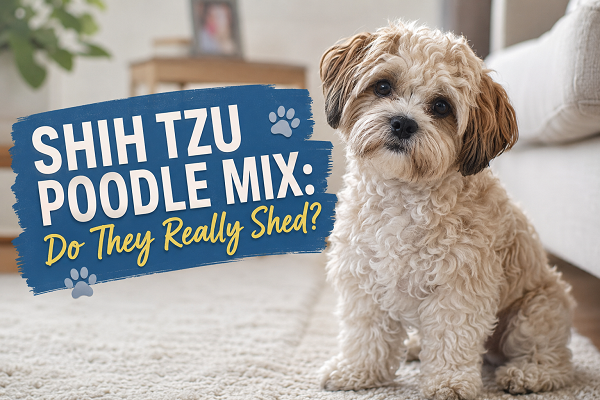
Most Shih-Poos are low to non-shedding because they inherit the Poodle’s curly, single-layer coat, but shedding varies a lot within the same litter. A Shih-Poo with a tight, curly coat sheds very little and is closer to hypoallergenic, while one that takes after the Shih Tzu’s straighter coat will shed more and release more dander into your home.
Table of Contents
- Introduction
- What Exactly Is a Shih-Poo?
- So, Do Shih-Poos Shed? The Real Answer
- The 3 Shih-Poo Coat Types and How Each One Sheds
- Shih-Poo vs. Shih Tzu vs. Poodle: Shedding Compared
- Are Shih-Poos Actually Hypoallergenic?
- Grooming a Shih-Poo: What It Really Takes
- 5 Factors That Affect How Much Your Shih-Poo Sheds
- A Trainer’s Honest Take: What I Tell New Shih-Poo Owners
- Common Shedding Myths, Busted
- FAQs About Shih-Poo Shedding
- Final Thoughts
Introduction
If you’ve been eyeing a Shih-Poo puppy and typing “does a Shih Tzu Poodle mix shed” into Google at 11 p.m. because you’re allergic but you’re also completely in love with those teddy-bear photos, you’re not alone. This is one of the most searched questions about the breed, and the honest answer isn’t a simple yes or no.
I’ve spent years around working dogs and family pets alike, and if there’s one thing I’ve learned from handling coats of every type, from double-coated Shepherds to curly-coated retrievers, it’s that shedding is never as simple as “this breed sheds, that one doesn’t.” The Shih-Poo is a perfect example of why. So let’s get into exactly what determines whether your Shih-Poo will leave hair on your couch or not.
What Exactly Is a Shih-Poo?
A Shih-Poo (also called a Shoodle in some parts of the UK and Australia) is a designer crossbreed between a purebred Shih Tzu and a Toy or Miniature Poodle. The mix started gaining traction in North America in the 1990s, when breeders wanted a small, affectionate companion dog with the Poodle’s easier-care coat and the Shih Tzu’s famously loyal, laid-back personality.
Because it’s a hybrid and not a breed recognized by the American Kennel Club (AKC) or The Kennel Club (UK), there’s no official “Shih-Poo standard.” That’s actually the whole reason shedding questions get complicated, every litter, and sometimes every puppy in that litter, can lean more toward one parent than the other.
A few quick facts to set the stage:
- Size: Typically 8–18 lbs (3.6–8 kg) and 8–15 inches tall, depending on whether the Poodle parent was a Toy or Miniature.
- Lifespan: 10–16 years.
- Origin: Shih Tzus trace back roughly 1,000 years to Tibet, later refined in China; Poodles were developed in Germany as water retrievers before the French adopted and popularized them.
- Popularity: The Shih-Poo regularly ranks among the top designer/hybrid breeds searched in the US, UK, and Australia, largely because of its reputation as a low-shedding lap dog.
So, Do Shih-Poos Shed? The Real Answer
Here’s the thing, genetics doesn’t work like a light switch. When you cross a Poodle (which has a curly, single coat and barely sheds) with a Shih Tzu (which has a long, silky double-ish coat and sheds lightly), the puppies land somewhere on a spectrum rather than neatly copying one parent.
In practice, that means:
- Roughly 60–70% of Shih-Poo puppies end up with a wavy-to-curly coat that sheds minimally, based on breeder and rescue observations across multiple Shih-Poo-focused communities.
- The rest may have a straighter coat closer to the Shih Tzu, which sheds noticeably more, though still far less than a heavy-shedding breed like a Labrador or a German Shepherd.
- Even “low-shedding” doesn’t mean “no-shedding.” Loose hair gets trapped in the curls instead of falling to the floor, which is why regular brushing matters so much (more on that below).
If you want the short version for a dinner party: a Shih-Poo sheds far less than most dogs, but which one you bring home is a bit of a genetic lottery.
The 3 Shih-Poo Coat Types and How Each One Sheds
This is the part most articles skip over, and it’s honestly the most useful thing you can know before picking a puppy. Shih-Poo coats generally fall into three categories:
1. Curly Coat (Poodle-Dominant)
Tight, dense curls almost identical to a Poodle’s. This coat type sheds the least of the three and is considered the closest thing to hypoallergenic in the litter. The trade-off? It mats fast if you skip brushing, and it needs professional trimming every 4–6 weeks to avoid turning into a matted mess.
2. Wavy Coat (50/50 Blend)
A soft, loosely curled texture, the most common Shih-Poo coat you’ll actually meet. It sheds moderately: less than a Shih Tzu, more than a pure curly-coated pup. It’s also the easiest of the three to maintain day-to-day since it doesn’t mat quite as aggressively as tight curls.
3. Straight Coat (Shih Tzu-Dominant)
Silky and smooth, closely resembling the Shih Tzu parent. This coat sheds the most of the three types and is the one allergy sufferers should be cautious about. It still needs frequent brushing to prevent tangles around the ears, armpits, and bell, areas where Shih Tzus are notorious for matting.
Handler tip: If a breeder tells you “all Shih-Poo puppies are 100% non-shedding,” that’s a red flag. A responsible, experienced breeder will tell you upfront which parent a specific litter favors and let you meet the mom (and dad, if possible) so you can get a feel for the coat you’re likely to end up with.
Shih-Poo vs. Shih Tzu vs. Poodle: Shedding Compared
| Breed | AKC Shedding Scale (1–5) | Coat Type | Allergy-Friendly? |
|---|---|---|---|
| Poodle (Toy/Miniature) | 1 | Curly, single coat | Best of the three |
| Shih-Poo (curly/wavy) | 1–2 | Curly to wavy | Good |
| Shih-Poo (straight) | 2–3 | Silky, straight | Moderate |
| Shih Tzu | 1–2 | Long, semi-double coat | Fair |
| Average double-coated breed (e.g., Labrador) | 4–5 | Double coat | Poor |
Numbers reflect general shedding-scale rankings used by breed reference guides such as the AKC’s coat and grooming resources; individual dogs will vary.
Are Shih-Poos Actually Hypoallergenic?
Short answer: no dog is 100% hypoallergenic, not a Shih-Poo, not even a purebred Poodle. Here’s why that label gets thrown around so loosely.
Dog allergies aren’t just triggered by loose hair on your floor. The real culprit is usually a protein called Can f 1, found in dog saliva, urine, and skin dander (dead skin flakes). Every dog produces dander, no matter how little hair they shed. What makes low-shedding breeds easier on allergy sufferers is that their loose hair, and the dander riding along with it, stays trapped in the coat instead of scattering through your house and settling into carpets, sofas, and air vents.
So when a Shih-Poo is marketed as “hypoallergenic,” what that really means is:
- Less airborne dander compared to heavy shedders.
- Fewer hair tumbleweeds around the house.
- Still enough allergen exposure to bother people with severe dog allergies.
My advice if allergies are a real concern: spend real time with the specific puppy (or an adult Shih-Poo, ideally a curly-coated one) before committing. A couple of hours petting, cuddling, and letting the dog lick your hands will tell you more than any breed label ever will. Reputable breeders and rescues are usually happy to arrange this and if one refuses, that’s worth noting.
Grooming a Shih-Poo: What It Really Takes
Low-shedding doesn’t mean low-maintenance. In fact, it’s almost the opposite, because loose hair doesn’t fall out on its own, it has to be physically removed, or it mats.
Here’s a realistic grooming routine and what it costs:
- Daily: A quick 5–10 minute brush-through with a slicker brush, focusing on the ears, armpits, belly, and behind the legs, the classic mat-prone zones.
- Weekly: A more thorough comb-out to catch tangles before they tighten into mats.
- Every 4–8 weeks: A professional grooming appointment for a trim, bath, ear cleaning, and nail trim. In the US, this typically runs $45–$75 per session; in the UK, expect roughly £30–£50.
- Annual grooming cost: Budget somewhere around $400–$700 USD (£300–£500) a year once you factor in professional visits plus at-home tools (slicker brush, metal comb, detangling spray).
- Eye and face care: Because Shih-Poos often inherit the Shih Tzu’s shorter muzzle, tear staining around the eyes is common and needs daily wiping with a damp cloth or dog-safe eye wipe.
Skip grooming for even a few weeks and you’ll likely be dealing with painful mats close to the skin, which can trap moisture and lead to hot spots or skin infections, something I’ve seen happen more than once with owners who assumed “low-shedding” meant “low-effort.”
5 Factors That Affect How Much Your Shih-Poo Sheds
- Which parent the coat favors — the single biggest factor, as covered above.
- Generation of the cross — F1 (first-generation, Shih Tzu x Poodle) Shih-Poos have the widest coat variation. F1B Shih-Poos (a Shih-Poo bred back to a Poodle) tend to shed less and lean more hypoallergenic because they carry more Poodle genetics.
- Season and hormones — like most dogs, Shih-Poos can blow a bit more coat during seasonal transitions (spring/autumn) or after a heat cycle in unspayed females.
- Diet and skin health — poor nutrition, food allergies, or skin conditions can all increase shedding regardless of coat type. A diet rich in omega-3 and omega-6 fatty acids genuinely helps coat quality.
- Stress and health issues — thyroid problems, parasites, and anxiety can all cause abnormal shedding. If your low-shedding Shih-Poo suddenly starts leaving noticeable hair everywhere, it’s worth a vet visit rather than assuming it’s just “the Shih Tzu side coming out.”
A Trainer’s Honest Take: What I Tell New Shih-Poo Owners
I work hands-on with dogs of all coat types, from tactical working breeds to family companions, and one pattern shows up again and again: people choose low-shedding breeds for the wrong reason and then get caught off guard by the grooming bill. A Shih-Poo genuinely is a great choice if you want less hair around the house, but budget for regular professional grooming from week one, not after the first matting emergency.
If you’re the hands-on type, invest in a good slicker brush and a metal greyhound comb early, and get your puppy used to being brushed daily from 8–10 weeks old. Puppies that learn grooming is normal (not scary) grow into adults that tolerate trims, nail clips, and vet exams far better, a principle that holds true whether you’re raising a Shih-Poo or a working K9. If you want a deeper look at building calm, confident behavior into a dog from puppyhood, including handling and coat care routines that actually stick, our essential grooming guide for puppies walks through the exact steps I use.
Common Shedding Myths, Busted
- “Poodle mixes never shed.” False. Even F1B Shih-Poos with heavy Poodle genetics shed a small amount, they just don’t scatter it around the house.
- “Curly coat means no allergies at all.” False. Curly-coated Shih-Poos are easier on allergy sufferers, not allergen-free.
- “You only need to groom them a couple of times a year.” False, and this is the myth that causes the most mats and vet bills. Daily or near-daily brushing is non-negotiable for this coat type.
- “Shaving them down solves shedding.” Partially true but risky, shaving reduces visible shedding short-term but can affect coat regrowth texture and doesn’t reduce dander production, which is what actually triggers most allergies.
FAQs About Shih-Poo Shedding
1. Do Shih-Poo puppies shed more than adult Shih-Poos?
Yes, often. Puppy coats (“puppy fuzz”) can shed as the adult coat comes in, usually between 6–12 months old. This is a normal coat change, not a health problem.
2. Which Shih-Poo coat type sheds the least?
The curly, Poodle-dominant coat sheds the least and is considered the closest to hypoallergenic. F1B Shih-Poos (bred back to a Poodle) are your best bet if minimal shedding is the priority.
3. Are Shih-Poos good for people with severe dog allergies?
Not necessarily. Low-shedding helps with mild-to-moderate allergies, but people with severe dog allergies can still react to a Shih-Poo’s dander and saliva. Spend time with the specific dog first.
4. How often should I brush my Shih-Poo to control shedding?
Daily brushing (5–10 minutes) is ideal, especially for wavy and curly coats, since loose hair gets trapped rather than falling out on its own.
5. Do Shih-Poos need professional grooming, or can I do it at home?
You can handle daily brushing at home, but most owners still need a professional groomer every 4–8 weeks for trimming, especially around the eyes, ears, and paws, to prevent matting and overgrowth.
Final Thoughts
So, do Shih-Poos really shed? A little, sometimes barely noticeably, sometimes more than you’d expect and it all comes down to which parent’s coat genetics won out. If minimal shedding and allergy-friendliness are top priorities, look for a curly-coated or F1B Shih-Poo, meet the parents if you can, and spend real time with the puppy before bringing it home.
Whichever coat type you end up with, commit to the grooming routine from day one. A brush, a comb, a consistent schedule, and an occasional trip to the groomer will keep your Shih-Poo comfortable, mat-free, and shedding as little as its genetics allow. It’s a small, manageable trade-off for a dog this affectionate and this good at curling up on your lap. For more on raising a well-adjusted, low-maintenance companion breed, you might also enjoy our guides on 10 best low-maintenance dog breeds, the Cavapoochon (another hypoallergenic Poodle-mix option), and our Goldendoodle puppy feeding schedule if you’re comparing Poodle-mix breeds before deciding. And if you’re weighing a Shih-Poo against other designer mixes, our breakdown of Husky Pitbull mix puppies shows how differently coat and care needs can vary across crossbreeds.
If you’d rather go deeper into hands-on training and behavior fundamentals that apply across every breed, from a tiny Shih-Poo to a full working K9, check out our e-book, Beyond the Bark, for real, field-tested handler techniques.

Her work centres on obedience, detection, protection and operational readiness. She favours proven methods built on repetition, consistency and real-world conditioning, so that both dogs and handlers are prepared for high-pressure tasks.
Rofiat represented the Nigerian Army Dog Centre at the Nigerian Army Day Celebration (NADCEL) 2026, where she led demonstrations in obedience, explosive detection, agility and tactical movement. Through articles, training content and documentaries, she shares field-based insight into how structured training, clear communication and trust between handler and dog affect performance and reliability.
She is the author of Beyond the Bark: Inside a Pro Handler's Playbook for Raising the Ideal Dog, a practical guide that helps dog owners and handlers apply professional training principles in everyday situations.
- Is K9 Advantix Safe for Dogs? A Handler’s Honest Review - October 2, 2026
- Australian Cattle Dog vs Blue Heeler: Any Difference? - October 1, 2026
- Bousnic Dog Training Collar Review: Is It Safe? - September 30, 2026