Local Dog Breeds: Temperament, Health & Training Guide
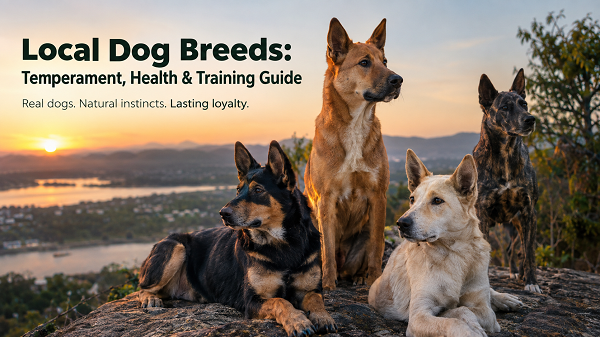
Local dog breeds, also called indigenous, native, or landrace dogs, are populations that developed naturally in a specific region through survival pressure rather than deliberate human breeding. They tend to be intelligent, independent, alert, and unusually hardy, with fewer inherited disorders than many standardized breeds, but they need early socialization and reward-based training to manage their strong guarding and prey instincts.
Table of Contents
- What Is a “Local Dog Breed,” Exactly?
- Why Local Breeds Look and Act the Way They Do
- Local and Indigenous Dog Breeds Around the World
- Temperament: What to Really Expect
- Health: The Genetic Advantage (and the Myths)
- Training a Local or Indigenous Dog
- Local Breed vs. Purebred: A Side-by-Side Comparison
- Daily Care Tips for Local Breed Owners
- Common Myths About Local Dogs, Debunked
- Trainer’s Notes: Real Experience With Local Breeds
- FAQs
- Conclusion
Introduction
I’ve spent years working alongside working dogs of every shape, size, and pedigree, from imported Belgian Malinois on protection details to scruffy, unregistered village dogs that could out-think half the “smart” breeds on a kennel club list. And here’s something most breed guides won’t tell you: some of the toughest, healthiest, most trainable dogs I’ve handled never had a pedigree paper in their life. They’re local dogs, the ones that built themselves.
This guide breaks down what “local dog breed” actually means, profiles indigenous breeds from six continents, and gives you real, usable information on their temperament, health risks, and training, the kind you can’t get from a five-minute Google search.
What Is a “Local Dog Breed,” Exactly?
A local dog breed, also known as an indigenous breed, native breed, or landrace, is a population of dogs that developed in a particular region over generations without a formal breeding program shaping it. No breeder sat down and drew up a standard for ear shape or coat color. Instead, climate, terrain, disease, food scarcity, and the local human community’s needs did the selecting.
Think of it as evolution with a job description. A dog that couldn’t tolerate the heat, couldn’t fend off jackals, or ate too much for what a village family could spare simply didn’t get to reproduce. Over centuries, sometimes thousands of years, that pressure produced remarkably consistent, self-sufficient dogs that are shaped by their function and environment, not a show ring.
This is different from a “purebred” in the Kennel Club sense. Purebreds are the product of closed studbooks and deliberate selection for appearance and specific traits, often over just the last 150–200 years. Landrace dogs are older, more genetically diverse, and in most cases, never had their gene pool artificially narrowed.
You’ll also hear local breeds called village dogs, street dogs, pariah dogs, or aboriginal dogs, depending on the region. These aren’t insults, they’re accurate descriptions of how the population developed: living alongside, but not fully owned by, human settlements.
Why Local Breeds Look and Act the Way They Do
Ever notice how so many indigenous breeds, regardless of continent, look strikingly similar? Medium size, upright ears, wedge-shaped head, short coat, curled tail. Researchers call this the “pariah morphotype,” and it shows up in the Indian Pariah Dog, the Africanis of Southern Africa, the Carolina Dog in the United States, and the Canaan Dog in Israel, despite these populations having zero direct contact with each other.
That’s not a coincidence, it’s convergent evolution. When dogs are left to breed naturally in a warm-to-temperate climate without human interference in mate selection, they tend to converge on the same efficient, low-maintenance body plan: nature keeps reinventing the same functional design because it’s the one that survives.
This matters for owners because it means a local breed’s temperament is a survival trait, not a personality quirk. Wariness of strangers, strong territorial instincts, and independent problem-solving weren’t bred in for a dog show, they kept the dog and its pack alive. Understanding that origin story changes how you approach training, and I’ll get into exactly how further down.
Local and Indigenous Dog Breeds Around the World
Let’s go region by region. This is the part most articles skip, or reduce to a single country. I’m giving you a genuinely global picture because local breeds exist on every inhabited continent.
Africa
- Africanis (Southern Africa): A landrace found across South Africa, Botswana, Zimbabwe, and neighboring countries. Medium-built, short-coated, and famously low-maintenance, the Africanis Society of Southern Africa (founded 1998) actively works to protect the population from being “improved” into a standardized show breed, arguing that natural selection already did the job better. Africanis dogs are known for territorial alertness balanced with genuine affection toward their family unit.
- Basenji (Central Africa): Originating in the Congo Basin, the Basenji is famous for being nearly barkless (they yodel instead) and for retaining a strong prey drive and independent streak.
- Azawakh and Sloughi (North & West Africa): Sighthound-type landraces bred by nomadic and pastoral communities for speed and guarding livestock over open terrain.
Asia
- Indian Pariah Dog / Desi Dog (South Asia): Archaeological evidence places this breed in the Indian subcontinent for over 4,500 years, making it one of the oldest continuously existing dog populations on Earth. It’s frequently cited as one of the healthiest dog populations alive, owing to generations of unmanaged natural selection.
- Canaan Dog (Israel/Middle East): Once feral in the Negev desert, the Canaan Dog was semi-domesticated by Bedouin communities and later used by Israeli defense forces for sentry and mine-detection work in the 1930s-40s. It’s now recognized by major kennel clubs but retains its sharp, independent working instincts.
- Jindo (South Korea): Native to Jindo Island, this breed is so culturally significant it’s a protected national treasure. Loyal to a fault, Jindos have well-documented cases of traveling extraordinary distances to return to previous owners.
- Chow Chow and Xoloitzcuintli also trace back to ancient regional landraces (China and Mexico, respectively), though selective breeding has reshaped both over centuries.
The Americas
- Carolina Dog (Southeastern United States): Sometimes called the “American Dingo,” this breed was discovered living semi-wild in remote swampland in the Southeastern U.S. and shares striking physical and behavioral similarities to Australian dingoes and Asian pariah dogs.
- American Indian Dog: A modern re-creation project aiming to reconstruct the temperament and build of the dogs that lived alongside Indigenous peoples of North America before European colonization. Known for strong pack bonding and above-average trainability.
- Chihuahua and Xoloitzcuintli (Mexico): Both trace ancestral roots to pre-Columbian Mesoamerican dog populations.
The Pacific & Southeast Asia
- New Guinea Singing Dog: A highly primitive landrace from the New Guinea highlands, known for a unique vocalization pattern more similar to wolf howls than typical barking.
- Philippine Forest Dog (Asong Gubat): Currently being formally documented by the Philippine Canine Club in partnership with the Philippine Forest Dog Legacy Club, with the long-term goal of international recognition, a useful case study in how a “local dog” can transition toward formal breed status.
Europe
Village and farm landraces are rarer in Europe today because of centuries of selective breeding, but pockets remain, regional sheepdogs and farm guardians in parts of the Balkans, rural Portugal, and Eastern Europe still function largely as landraces, bred more for working ability on a specific farm than for a written standard.
If you want to go deeper on how specific breed lines diverge even within a single working type, our piece on Red Heeler vs. Blue Heeler: What’s Really Different? is a good companion read, it shows how coat color myths get attached to a breed the same way misconceptions get attached to local dogs.
Temperament: What to Really Expect
Local breeds share a temperament profile that shows up again and again across continents, because, as we covered above, it was shaped by the same survival pressures. Here’s the honest breakdown:
- High intelligence and independent problem-solving. These dogs had to figure things out without a human giving commands every step of the way. That makes them quick learners but also quick to get bored of repetitive drills.
- Strong territorial and guarding instinct. Most local breeds default to wary rather than instantly friendly with strangers. This isn’t aggression, it’s information-gathering. Give them time to assess before forcing interaction.
- Deep loyalty to an established pack. Once bonded, local breed dogs are often intensely devoted, the Jindo “returns home” stories aren’t folklore, they’re a documented pattern.
- Lower food motivation than you’d expect. Dogs that evolved scavenging inconsistent food sources are often less driven by treats than working breeds like Labradors, which changes how you should structure training rewards (more on that below).
- Moderate-to-high energy with a strong off switch. Unlike some high-drive working breeds bred purely for stamina, many landrace dogs conserve energy efficiently, active when needed, genuinely restful otherwise.
This is a good moment to note that temperament in any dog, local breed or otherwise, is shaped by more than genetics. Training, socialization, health, and environment all play a role, and no two individual dogs, even from the same litter, will behave identically. If you’re navigating a specific behavioral issue rather than general breed tendencies, our guide on obedience vs. instinct explains how to tell the difference between a dog that “won’t” and a dog that genuinely “can’t” yet.
Health: The Genetic Advantage (and the Myths)
Here’s where local breeds genuinely earn their reputation, but not in the way most blog posts explain it.
The prevailing myth is “local dogs never get sick.” That’s an oversimplification. What’s actually true is more interesting and more useful.
A landmark study out of UC Davis (Bellumori et al., 2013), which reviewed medical records for more than 90,000 purebred and mixed-breed dogs treated at the university’s veterinary hospital between 1995 and 2010, found that 10 out of 24 tracked genetic disorders (42%) occurred significantly more often in purebred dogs, including elbow dysplasia, dilated cardiomyopathy, epilepsy, and hepatic portosystemic shunt. Only one condition, cranial cruciate ligament rupture, was found more frequently in mixed and landrace-type populations. The remaining disorders, including hip dysplasia and most cancers, appeared at similar rates across both groups, because those mutations are old enough to be widespread across almost all dog lineages.
The takeaway: local and landrace breeds generally carry a wider gene pool, which dilutes the concentration of harmful recessive mutations that get amplified in closed purebred studbooks. That’s a real, measurable health advantage, not folklore.
That said, local breeds are not immune to health problems. What they typically face instead includes:
- Parasitic and vector-borne diseases (ticks, fleas, heartworm), especially relevant for landrace populations in tropical and subtropical regions.
- Nutritional deficiencies when transitioned from a scavenging diet to a commercial one too abruptly.
- Untreated injuries from their semi-independent, free-roaming history, if adopted as adults from street or village populations.
- Zoonotic disease exposure (like rabies) in regions with inconsistent vaccination access, a genuine public health consideration, not a knock against the breed itself.
Practical health checklist for a local/indigenous breed dog:
- Get a full veterinary workup within the first two weeks of adoption, including a fecal parasite screen and heartworm test.
- Vaccinate on a standard core schedule (rabies, distemper, parvovirus) even if the dog “looks” healthy, resilience isn’t immunity.
- Transition diet gradually over 7–10 days if the dog previously scavenged or ate an inconsistent diet.
- Budget for routine care rather than emergency care: local breeds are typically cheaper to maintain long-term (fewer breed-specific conditions), but they still need the basics.
Training a Local or Indigenous Dog
This is where I see the most owners get it wrong, usually because they either treat a local breed like a blank slate (it isn’t) or assume it’s untrainable because it’s “just a mutt” (also wrong).
Here’s a realistic training timeline based on what I’ve seen work:
| Stage | Timeframe | Focus |
|---|---|---|
| Foundation | Weeks 1–3 | Name recognition, marker word/clicker, safe-space crate or den training, no forced socialization |
| Basic obedience | Weeks 3–8 | Sit, down, recall, loose-leash walking, kept short (5–10 min sessions), high-value rewards |
| Socialization | Weeks 4–12 | Controlled exposure to new people, dogs, and environments at the dog’s pace, not yours |
| Impulse control | Months 2–4 | “Leave it,” settle on a mat, managing guarding triggers around food or territory |
| Ongoing refinement | 6+ months | Advanced recall, off-leash reliability (where legal/appropriate), continued enrichment |
Five training principles that consistently work with local breeds:
- Lead with trust, not dominance. Local breeds evolved to assess risk independently. Heavy-handed corrections tend to increase wariness rather than compliance. Positive reinforcement, rewarding what you want to see more of, builds faster, more durable results.
- Keep sessions short and varied. Boredom kills progress with intelligent, independent dogs faster than almost anything else. Ten focused minutes beats forty-five distracted ones.
- Respect the assessment period. Don’t force a local breed dog into contact with strangers or unfamiliar dogs before it’s ready. Let it observe from a distance first, this single adjustment resolves a huge share of “aggression” complaints that are really just under-socialized wariness.
- Use functional rewards, not just treats. Because many local breeds have lower food drive than working breeds bred for retrieving or herding, sniffing time, play, and access to a preferred spot can be more motivating than another cube of chicken.
- Socialize early if you have the choice. The critical socialization window (roughly 3–14 weeks) matters just as much for a local breed puppy as any other. Adult rescues from a street or village background can absolutely still be trained, it just takes longer and more patience, often 3–6 months of consistent work before you see the full personality settle.
If your local breed dog is showing more serious behavioral resistance, persistent fear aggression, extreme separation anxiety, or resource guarding that doesn’t respond to basic management, it’s worth bringing in a certified professional rather than troubleshooting alone. Our guide on how to choose a dog behavior therapist walks through exactly what credentials to look for.
If you want a deeper, structured breakdown of reading and shaping canine behavior beyond basic obedience, our e-book Beyond the Bark: Inside a Pro Handler’s Playbook for Raising the Ideal Dog covers the psychology behind why dogs, local breeds especially, respond the way they do, and how handlers can use that knowledge instead of fighting against it.
Local Breed vs. Purebred: A Side-by-Side Comparison
| Factor | Local/Indigenous Breed | Standardized Purebred |
|---|---|---|
| Genetic diversity | High, wide gene pool | Lower, closed studbook |
| Predictability of appearance | Low to moderate | High |
| Predictability of temperament | Moderate (shared instincts, variable expression) | High (selected for consistency) |
| Common health risks | Parasites, injury history, vector-borne disease | Breed-specific inherited disorders |
| Veterinary cost over lifetime | Generally lower | Can be higher (specialist care for known conditions) |
| Trainability | High, but requires patience and trust-building | High, often faster initial compliance |
| Documentation/registration | Usually none or breed-society only | Kennel club registered |
| Availability | Often free or low-cost via shelters/rescues | Purchase price varies widely, often high |
Neither column is objectively “better”, it depends entirely on what you need from a dog and how much time you can invest in understanding its background.
Daily Care Tips for Local Breed Owners
- Feed for function, not fashion. Local breeds often do well on straightforward, protein-forward diets without needing boutique formulations, but always transition gradually and consult a vet for portion sizing.
- Provide a job. Scent work, puzzle feeders, and structured walks satisfy the problem-solving drive that idle local breed dogs will otherwise redirect into digging, chewing, or escape attempts.
- Secure your yard properly. Many local breeds are excellent, persistent escape artists, a trait that kept their ancestors fed. A six-foot fence with a buried barrier at the base is a reasonable baseline for a determined digger.
- Don’t skip routine vet visits just because the dog “seems fine.” Resilience masks pain and illness far more effectively in these breeds than in dogs bred to be visibly dramatic about discomfort.
- Respect the “off switch.” Local breeds generally don’t need or want, 24/7 stimulation. Overscheduling can create as much stress as under-stimulation.
Common Myths About Local Dogs, Debunked
- “Local dogs are aggressive.” Wary, yes, often. Aggressive, rarely, and usually only when a wariness signal was ignored or punished rather than managed.
- “They can’t be trained.” They train differently, with more patience and less repetition-based drilling but their intelligence generally works in your favor once you adjust your method.
- “They’re always healthier, no matter what.” Healthier on average for inherited genetic disorders, yes. Immune to disease, parasites, or injury, no.
- “A local breed dog can’t do real work.” Indigenous breeds have served as guard dogs, livestock protectors, sentries, and even mine-detection dogs (the Canaan Dog’s military service record is well documented). Function was quite literally their reason for existing.
Trainer’s Notes: Real Experience With Local Breeds
I want to be upfront about where this guide comes from. Working with security and protection dogs day to day means working with a huge range of temperaments, imported, pedigreed working lines alongside dogs with no paperwork at all. The pattern I’ve seen repeated across years of hands-on training is consistent: a local or mixed-heritage dog with a stable temperament and consistent handling will out-perform a “papered” dog with poor socialization, every time. Genetics loads the gun; environment and training pull the trigger and that’s just as true for a Rottweiler as it is for a village-born mongrel.
This article draws on veterinary research (UC Davis’s genetic disorder study), documented breed history from organizations like the Africanis Society of Southern Africa and the Philippine Canine Club, and practical field experience training working and protection dogs of mixed and unknown heritage.
FAQs
1. What exactly makes a dog a “local breed” instead of a mixed breed?
A local breed (landrace) is a population that developed consistent traits over generations in one region through natural and community-driven selection, it’s a recognizable, self-sustaining type, not a one-off mix of two random parents. A mixed breed can be a single litter’s unpredictable combination of two known breeds, while a landrace is a stable population with predictable general traits, even without formal registration.
2. Are local dog breeds good with children and families?
Many are, once properly socialized. Their loyalty to an established household is typically strong. The key is early, gradual introduction and supervision, since their default caution with unfamiliar people or situations can look like unfriendliness before trust is built.
3. Do local breeds live longer than purebred dogs?
On average, dogs with greater genetic diversity tend to have fewer inherited disorders, which can translate to longer, healthier lives but lifespan also depends heavily on size, diet, healthcare access, and individual health history, so it’s not a guarantee.
4. How long does it take to train an adult local breed dog adopted from the street?
Expect a longer runway than with a puppy, typically 3 to 6 months of consistent, patient work before you see full trust and reliable obedience, though basic commands can often be established within the first 4–8 weeks.
5. Can a local breed dog be trained for protection or security work?
Yes, provided the individual dog has the right temperament (confidence, stability, and appropriate drive), many countries’ historical guard and sentry dogs were exactly this type of dog before formal training programs existed. Temperament testing before starting protection-specific training is essential regardless of pedigree.
Conclusion
Local dog breeds, the indigenous, landrace, and village dogs found on every continent, aren’t a lesser category of dog. They’re often the original blueprint: intelligent, independent, genetically diverse, and shaped by real survival pressure rather than a show ring standard. Understanding where a local breed comes from changes how you read its behavior, how you train it, and how you care for its health.
If you’re bringing a local or indigenous breed dog into your home, start with patience over punishment, a proper veterinary baseline, and training that respects its instincts instead of fighting them. Do that consistently, and you’ll likely end up with one of the most loyal, resilient dogs you’ll ever own.
Want more practical, field-tested K9 training and breed insight like this delivered weekly? Subscribe to our newsletter for hands-on guides straight from working dog handlers.

Her work centres on obedience, detection, protection and operational readiness. She favours proven methods built on repetition, consistency and real-world conditioning, so that both dogs and handlers are prepared for high-pressure tasks.
Rofiat represented the Nigerian Army Dog Centre at the Nigerian Army Day Celebration (NADCEL) 2026, where she led demonstrations in obedience, explosive detection, agility and tactical movement. Through articles, training content and documentaries, she shares field-based insight into how structured training, clear communication and trust between handler and dog affect performance and reliability.
She is the author of Beyond the Bark: Inside a Pro Handler's Playbook for Raising the Ideal Dog, a practical guide that helps dog owners and handlers apply professional training principles in everyday situations.
- How to Safely Approach Stray Dogs: 5 Field Rules - November 22, 2026
- Food Aggression Dog Training: Pro K9 Guide - November 21, 2026
- DIY Dog Scent Training: Easy 4-Week Home Guide - November 20, 2026